
Crypto Surge Sparks Establishment Panic: Bans, Crackdowns, & Fatwas As Bitcoin “Undermines Governments, Destabilizes Economies”


 12/04/2017 - India, Turkey, South Korea, Netherlands, France, UK, U.S. Governments Begin To Crack Down On Bitcoin And Cryptocurrencies
 Crypto Surge Sparks Establishment Panic: Bans, Crackdowns, & Fatwas As Bitcoin “Undermines Governments, Destabilizes Economies”
12/04/2017 - Danielle DiMartino Booth: Governments Will Not Allow Private-based Cryptocurrencies To Co-Exist Alongside Government-based Cryptocurrencies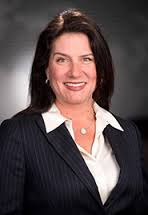
FRA: But would governments necessarily allow private-based cryptocurrencies to coexist with government-based cryptocurrencies?
Danielle DiMartino Booth: I would have to say no. What we have seen with the parabolic thousand point increase, and we are at a thousand points at 8:26pm EST on November 29th, Bitcoin crossed the $10,000 mark and it didn’t even take it 12 hours to go across the $11,000 dollar mark. What we are witnessing is clearly a bubble that is going to implode on its own weight. I think that we can all hopefully agree on that; we are all adults in the room. But I think that central bankers know good and well that once these cryptocurrency bubbles burst, laying in their wake will be a very refined technology that allows central bank cryptocurrencies to rise up where they have left off. To your question, do I think that they will be allowed to coexist? – I think not.
FRA: So you see a phasing out or an abolishing of Bitcoin and other types of private-based cryptocurrencies?
Danielle DiMartino Booth: I hate to inflammatory words like abolishing, but you could certainly see a sequence of events whereby if the Bitcoin bubble ends up bleeding into other overvalued asset classes that then bleed into an economic contraction leading to recession, and then causing the central banks of the world, starting with the Fed, to go back to the zero-bounded interest rates. Once we get to that point, and I hope we don’t, I hope that our new chairman, Jay Powell, is going to say, “You know what, zero-interest rates didn’t work. We are not going to go back there.” But if we get to the point where we are back to zero-interest rates or worse, negative interest rates, the next logical step for central bankers is the eradication of cash and controlling our buying which can only really be done electronically with this emerging cryptocurrency technology.
12/04/2017 - Charles Hugh Smith: “The Fear By A Lot Of People Is Governments Issue Their Own Cryptocurrencies Or Governments Try To Ban Existing Cryptocurrencies”
“The fear on a lot of people’s part is that the central banks and central governments are not going to just stand still. They’re either going to issue their own blockchain currency and require their citizens to use only that Cryptocurrency or that they will try to ban or outlaw the existing Cryptocurrencies as an extension of the financial repression.”
12/04/2017 - The UK Will Regulate Bitcoin And Other Cryptocurrencies “The UK Treasury has now said it intends to begin regulating the virtual currency, which has a total value of £145 billion, to bring it in line with rules on anti-money laundering and counter-terrorism financial legislation.”
12/04/2017 - The Federal Reserve Warns Private-based Cryptocurrencies Could “Pose Serious Financial Stability Issues” The Federal Reserve’s Vice Chariman of supervision, Randy Quarles, warns that digital currencies like Bitcoin pose “serious financial stability issues” as they grow… “Today, the vast majority of our payments by volume and value are processed by regulated financial institutions. In the U.S. payment system, digital currencies are a niche product that sometimes garners large headlines. While these digital currencies may not pose major concerns at their current levels of use, more serious financial stability issues may result if they achieve wide-scale usage.”
12/02/2017 - James Grant Interviews Alan Fournier: “Pension Funds Are So Desperate For Yield, They’re Systemically Selling Vol…”
“The central banks have succeeded in pushing people out on the risk curve. They’re taking people that are managing the pensions of state pensioners and they have them in negative earning sovereign instruments. And now they have them– they’re so desperate for some yield, they’re systemically selling volatility, which is remarkable.”
12/01/2017 - Nobel Prize Economist Joseph Stiglitz: “Bitcoin Ought To Be Outlawed .. It Is Successful Because Of Its Lack Of Oversight”
Stiglitz: “Bitcoin is successful only because of its potential for circumvention, lack of oversight .. So it seems to me it ought to be outlawed .. It’s a bubble that’s going to give a lot of people a lot of exciting times as it rides up and then goes down.”
LINK HERE to the article/reference
11/30/2017 - Will Private-based Cryptocurrencies Be Allowed To Coexist With Government-based Cryptocurrencies?
We posed this question to former Federal Reserve Advisor Danielle DiMartino Booth on Wed Nov 29 – her answer is very interesting and we will post the podcast interview shortly ..
11/27/2017 - Mike Novogratz On Bitcoin And Cryptocurrencies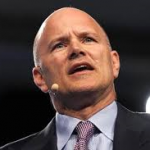
Mike Novogratz on Bitcoin and Cryptocurrencies:
“This whole revolution came out of a breakdown of trust. It came out of the ’08 financial crisis when people said we no longer trust financial institutions, we don’t trust governments and, in parts of the world, today still. If you’re in Venezuela, it’s really hard to trust the central bank, or in Zimbabwe. So, the decentralised revolution, which Bitcoin is really the poster child of, is a response to the breakdown in trust.”
11/27/2017 - Danielle DiMartino Booth On The Federal Reserve’s Biggest Fears “The Fed’s biggest fear is they know darn well this much credit has built up in the background, and the ramifications of the un-wind for what has happened since the great financial crisis is even greater than what happened in 2008 and 2009. It’s global and pretty viral. So, the Fed has good reason to be fearful of what’s going to happen when the baby boomer generation and the pension funds in this country take a third body blow since 2000, and that’s why they are so very, very intimidated by the financial markets and so fearful of a correction.”
“Look back to last year when Deutsche Bank took the markets to DEFCON 1. Maybe you were paying attention and maybe you weren’t, but it certainly got the German government’s attention. They said the checkbook is open, and we will do whatever we need to do because we can’t quantify what will happen when a major bank gets into a distressed situation. I think what central banks worldwide fear is that there has been such a magnificent re-blowing of the credit bubble since 2007 and 2008 that they can’t tell you where the contagion is going to be. So, they have this great fear of a 2% or 3% or 10 % (correction) and do not know what the daisy chain is going to look like and where the contagion is going to land. It could be the Chinese bond market. It could be Italian insolvent banks or it might be Deutsche Bank, or whether it might be small or midsize U.S. commercial lenders. They can’t tell you where the systemic risk lies, and that’s where their fear is. This credit bubble is of their making.”
“I don’t think any of us know what the implications are for a $50 trillion debt build since the great financial crisis (of 2008). It is impossible to say. We have never dealt with anything of this magnitude.”
“To me, Bitcoin is a reflection of panic. It’s a reflection of people trying to get money into a safe place knowing the major governments of the developed world have got their printing presses running 24/7. It is a reflection of anxiety in fiat currencies and the fact it’s not practical to go back to a gold standard. What scares me about Bitcoin is the central bankers are studying it to figure out how the blockchain works. . . .They are going to be controlling our spending with blockchain technology that is being perfected in the crypto currency universe.”
“2017 is the record for quantitative easing (money printing) globally. We have never, not even in the darkest days of the financial crisis, central banks have never injected as much money as they have into the markets. . . . I am not a gold bug, but we do know that in times of corrections that there is no place to hide in traditional asset classes that you can get at your Merrill Lynch brokerage. Gold and silver in the precious metals complex are the only places to hide and get true diversification and safety.”
11/27/2017 - Citi: “There Is A Growing Fear Among Central Bankers They’ve Lost Control”
“In a fairy tale, turning points come suddenly and unexpectedly. Everything that has long been taken for granted is suddenly in pieces. In that sense markets are not all that different. People have gotten used to the paradigm that has been built up since the Great Financial Crisis. It has been tested on several occasions – 2011, 2012 and 2015 – and on each occasion central banks have overcome the challenge, thus ultimately reinforcing the regime.
The emperor in Andersen’s story was only able to parade around naked because the social norms, customs, conventions and vested interests that had built up over time were so strong that even the blatantly obvious was better left unspoken.
Similarly, the low risk premia, the low level of volatility, the lack of responsiveness to tail risk and spillover of systemic events, the reluctance to sell etc. to us are all indications that the market now has an almost Pavlovian response to central bank liquidity. The mere thought of it is enough to still leave us salivating, even when it is patently in the process of being turned off. Yes, excess liquidity will remain in the system even after central bank net asset purchases fall to zero, but as we have argued, if that money has chosen to stay out of the securities market now, then why should it seamlessly come flowing in at these valuations when the backstop is moving out the money?”
11/23/2017 - Yra Harris: Central Bank Policies Are Causing Massive Distortions In The Credit Markets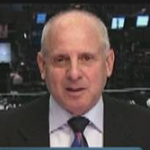
“Corporations are able to borrow for stock buybacks and increased dividends but creditors are accumulating assets based on risk premiums established by central banks’ QE programs and are causing massive distortions in the credit markets. Central bank policies initially prevented a liquidation of global assets and a world depression, but its robotic response to keep the presses rolling is causing a dangerous crushing of risk premiums. Also, the financial repression has resulted in even-greater wealth inequality as the world’s wealthy are much better situated to ride the tsunami of wave of central bank QE programs. The distortions caused by financial repression are being felt in the rise of fringe political parties appealing to the very visible outcomes of asset inflation caused by the endless infusions of liquidity. It seems Mario Barada Nikto is necessary for the Salvator Mundi.”
11/22/2017 - The Great Debate About Bitcoin, Cryptocurrencies and Gold – David Kotok & Others David Kotok: “Following up on our recent commentary, and with permission, we continue to quote the excellent work of Nick Colas and Jessica Rabe of DataTrek Research .. ‘Do cryptocurrencies like bitcoin meet the definition of an ‘Asset class’ for investors that care about that designation? At the moment, the answer has to be ‘No’. A few reasons why:
• They are too small ..
• Cryptocurrencies do not yet have as robust a regulatory framework around them as stocks, bond, currencies or other traditional asset classes ..
• Cryptocurrency exchanges and wallet operators around the world operate with varying levels of know-your-customer and anti-money laundering laws. There is no absolute assurance, for example, that a bitcoin you just purchase online didn’t have a member of the North Korean military or Iranian Revolutionary Guards ultimately on the other side of the trade ..
• An asset class needs some level of homogeneity among its constituent investments. GM and Facebook are wildly different companies, but the equity of each represents the same type of claim on residual corporate cash flows. Bitcoin and Ethereum – the two largest cryptocurrencies by market cap – are not the same in terms of structure or purpose. In fact, they aren’t even close ..
• There is not enough history to assess the price relationship between cryptocurrencies to other asset classes.’ ..
Meanwhile, Kerry Smith, a retired Stanford law graduate and serious student of the electricity grid, emailed an observation about how crypto is a large consumer of electricity. He notes that risk. We contrast it with a gold linked token which can use block chain successfully but is not subject to the electricity constraint. We shall see if gold tokens catch on. The turmoil in the Middle East may be the catalyst.”
Oliver Garrett in Risk Hedge:
#1: Cryptocurrencies Are More Similar to a Fiat Money System Than You Think.
#2: Gold Has Always Had and Will Always Have an Accessible Liquid Market.
#3: The Majority of Cryptocurrencies Will Be Wiped Out
#4: Lack of Security Undermines Cryptocurrencies’ Effectiveness.
#5: Hype and Speculation Continue to Drive Cryptocurrencies’ Value
#6: Cryptocurrencies Do Not Have Gold’s History as a Store of Value
Mike Novogratz on Bitcoin and Cryptocurrencies:
“This whole revolution came out of a breakdown of trust. It came out of the ’08 financial crisis when people said we no longer trust financial institutions, we don’t trust governments and, in parts of the world, today still. If you’re in Venezuela, it’s really hard to trust the central bank, or in Zimbabwe. So, the decentralised revolution, which Bitcoin is really the poster child of, is a response to the breakdown in trust.”
11/20/2017 - European Central Bank Proposes End To Deposit Protection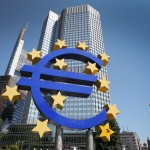
‘covered deposits and claims under investor compensation schemes should be replaced by limited discretionary exemptions to be granted by the competent authority in order to retain a degree of flexibility.’
11/20/2017 - Dr. Albert Friedberg Sees Accelerating Inflation Ahead, Will Be Problematic For Central Banks
LINK HERE to the quarterly podcast
11/11/2017 - The Roundtable Insight: Yra Harris And Peter Boockvar On The Trends In The Financial Markets And Monetary Policy FRA: Hi welcome to FRA’s Roundtable Insight. This is Richard .. Today we have Yra Harris and Peter Boockvar. Yra is an independent trader, a successful hedge fund manager; global macro consultant trading foreign currencies, bonds commodities in equities for over 40 years. He was also CME director from 1997 to 2003. And Peter is the Chief Market Analyst with The Lindsey Group and the co-chief Investment Officer with Bookmark Advisors. Peter has a newsletter product called The Boock Report. Spell book B-O-O-C-K-REPORT.COM. It offers great macroeconomic insight and perspective with lots of updates on economic indicators. Welcome gentlemen.
Peter Boockvar: Thanks Rich.
Yra Harris: Thanks. Rich.
FRA: It’s great today to start off with a quote that you had in your recent writings, Yra, on flattening yield curve. “It’s the ECB and Bank of Japan policy that is flattening global yield curves as investors search for extra yields” and you made the analogy to something similar which may be happening to the 1994 Orange County bond disaster. Just wondering if you can elaborate on your thoughts.
Yra Harris: OK. So when we look at this you know we were comparing it to Orange County. I do because that was a classic case .. it was actually a meltdown as the Fed started to raise rates and everybody was crowded into a bond trades. We saw first of all the yield curve seeping out dramatically even though it was a shortened because so many people crowded into that trade. But what you really found out what Orange County exposed is that Robert Citron, who was the Treasurer for the Orange County at the time, was busy chasing a little bit extra yield 25-30 basis points and there are many sell side firms who came to him and they were offering him these products and they were exotic products, very exotic at the time. And so in order to please his bosses he chased extra yield, very little. So at 25, 30, 35 basis points and I know this from Sheila Bair’s committee, which I sat on in Washington, in which we analyzed what went wrong there. So I had a pretty good behind the scenes look at it and it reflected in that. So when I look at the world today and I know Peter’s written to me this is a real problem in that people are taking on so much risk in an effort to chase so little return when you’re in a world where Italian bonds are yielding 1.75. You take on all kinds of risk as you search for an extra 30, 35 basis points because 35 basis points in today’s world is a lot. And for those who are trying to outperform the market and these are people who manage institutional money and big pension funds and insurance companies. They are taking on a lot of risk and that’s what keeps me up at night. And I think we’re getting close to crunch time in which some of these trades you know as Warren Buffet would say you know when the tide goes you can find swimmers naked. Well I don’t think there’s many babies who have been sold at all so I think we’re probably more what is it called the hedonism. I’m too old to know and to partake in that. But I think we’ll find out that there’s a lot of nudity in the waters of central bank liquidity.
FRA: Peter do you see a similar 1994 Orange County environment.
Peter Boockvar: I like that analogy. That was great. Yeah I do. It’s good to follow the money. OK so next year even in January when the ECB cuts their QE in half and the Fed goes from draining 10 billion a month to 20 billion a month. Liquidity is going to go to almost zero. Between those two central banks. So that’s a major change. I mean this year on a run rate the ECB was buying net of 700 billion euros of securities and you cut that in half next year and then you subtract what the Fed is taking out and that is almost going to nothing. And that is a really big deal. At the same time the Fed is raising interest rates and the BOJ is buying less ETFs and they’re buying less JGBs. That liquidity flow is going to turn into a drip next year and leaves no room for error anywhere else.
FRA: What about if we look at the U.S. Yra you asked how does the Fed deal with a flattening yield curve in your most recent writing. Noting it’s gone lower than 73 basis points. Any thoughts on that? I mean you did suggest something on the cutting the short term rates on that to make it similar steepened like the German 2/10s.
Yra Harris: Yeah because I compared, Peter and I actually went back and forth of this yesterday on this because I showed them that German 2/10 versus U.S. And if you were a wagering person you say well the ECB is doing all this buying. The Fed is as Peter says has stopped. And in fact is now in contraction. You say well the curve should actually be steepening in the U.S. based on those mechanics. And we should be flattening in Germany, but it’s absolutely the opposite. German curve is out to three year highs and 110 basis points while the U.S. curves was at 70 basis points and flattening. So when you look at this it was a word you used yesterday. You’re absolutely right. They said this is like wild. I said yeah that’s exactly what it is. It makes very little sense and makes in fact no logical sense whatsoever and I don’t know how the Fed, Ron Paul going to have to face this because the Fed has already told us they don’t understand that their models have been wrong and they really don’t understand what’s going on in the inflation world. They don’t understand it. So now they are going to tell us that they don’t understand why the curves are flattening. Because when you look at it and you throw in this tax plan is not tax reform it’s a tax cutting and it’s stimulative by everything that I hold dear to me. This curve should be seeping dramatically. Bond should be getting terrified of what they’re facing. And as Peter says you know next year they’re going to be shrinking. This curve should be steepening and yet it’s not. So if they do and then they’re going to tell us they don’t understand what’s going on with the curve and I know that the curve is one of the big indicators. So if you don’t understand that, you don’t understand inflation. You’ve made a four and a half trillion-dollar wager on the effectiveness of the QE programs. That doesn’t go well with me. So I think that’s what it was. So you can either cut rates which would throw the markets in absolute turmoil. That’s just the way it is there’s nothing else they can do or they can as I say they could increase the amount that you know .. I say if next January if the ECB was cutting to 30 billion or maybe the Fed should be always be selling more than the ECB is buying and you get the curve to steepen and I guarantee that.
FRA: Peter your thoughts?.
Peter Boockvar: Yeah I agree. You know just to quantify the dramatic effect that the ECB had on the entire yield curve in Europe relative to the U.S. and the Fed is that the Fed when they were doing QE infinity, they never bought more than the net issuance of debt that the U.S. government was issuing. In Europe the ECB was buying 7 times the net issuance. It was just so dramatic it was literally the elephant that was stomping everything in its sight. And granted having negative interest rates continuing into 2019 will certainly keep a big anchor on the short end. But because of the dramatic extent that the ECB was buying bonds I have to believe that there is going to be some response when they stop buying bonds. Now again the negative interest rates in the short end will be an anchor. But you know imagine even when that ends. I mean one thing that that we have to take notice, Draghi is now becoming more defensive about negative interest rate. He’s now having to explain himself. Here we are this is three and a half years after he initiated negative interest rates and he is still defending negative interest rates. You have the European Bank Stock Index that is still below where it was three and a half years ago. So I think that the politics around negative interest rates will get more and more difficult as bank profitability continues to be under pressure. And you know that there’s no question that accidents are going to occur here. I just know none of us are smart enough to know how it exactly plays out. But come January when things are shifting in a more dramatic fashion, I think everyone has to be really really careful.
FRA: And so what will happen, your thoughts on the new Federal Reserve chairman nominee Jeremy Powell. How do you see his policies and what will his monetary policies be like in the coming years? Yra you want to start?
Yra Harris: You know I’m not sure .. when I had the opportunity last year to directly ask a question, you know about who guarantees the ECB. It was a two-part question that I asked was who guarantees the ECB and do you think that all sovereigns should be carrying zero weight. Because I know what his expertise, his strength is within the Fed and he was subdued. I was wild about the answer so I would have given him some crap, but I do think that he’s a good choice because he’s very pragmatic and I think he’ll know how to adjust or hopefully. So his response to me on the ECB was they have a printing press, which he didn’t even have to think about that and that came right to him. And the fact that there’s zero weighted. That’s all we have to care about. They are zero weighted and I was never comfortable with those answers, but I think he brings more to the table. I think he is unlike some of the people who do sit in that room with their high level math and Ph.D.’s are too arrogant for the job ..
FRA: And Peter?
Peter Boockvar: Yeah I mean I think while he is very similar to Yellen in that he voted for every QE, he voted for keeping interest rates at zero for as long as they did. So he voted for the committee every single time. There is talk that he was not a big fan of QE. So that’s a positive for the sake of manipulating markets. It won’t necessarily be a positive for markets when we get the next 10 to 20 percent decline and everyone’s screaming oh the Fed save us, the Fed save us. I think he’d be less inclined to be the markets sugar-daddy, which I think is a good thing, but maybe it’s not what the market necessarily wants to hear. Now he’s not going to obviously be as potentially hawkish as Taylor or Warsh would have been. But I think if the market thinks he’s a Yellen look like I think they may be a bit disappointed that he’s going to be thinking more outside the box and he’s not going to believe in John Maynard Keynes to the same extent that Yellen has.
FRA: Just going along the discussion from Europe. Peter you’ve written recently on how higher inflation in the Eurozone is a very under-appreciated risk. Can you elaborate?
Peter Boockvar: Yeah. I follow the market monthly numbers and I like to read their commentary now it’s very anecdotal. So we have to separate the anecdotal commentary from business surveys that they do from the actual consumer price index that the Eurozone comes out with. But on Monday we had the Eurozone services and manufacturing composite index come out and I’ll just read to you what the inflation commentary was. Inflationary pressures have meanwhile lifted higher with price charges for goods and services rising at a rate not seen for over six years. Some price rises merely reflect the pressures of higher cost, but companies are also reporting stronger pricing power as demand conditions continue to improve. Which suggests underlying inflationary pressures are becoming more ingrained than yesterday. Market came out an index on German construction and they talked about intense supply chain constraints contribute to a sharp rise in input costs. The incidence of delivery delays is one of the greatest seen for over a decade while purchase price inflation was pushed to a six and a half year high. And they also reported a retail Purchasing Managers Index for the region and they talked about gross margins facing Eurozone retailers continue to be squeezed. Contributing to this was another rise in average input prices. Moreover, the rate of inflation quickened to a fifty seven month high and remained substantially greater than the long run average. So how that translates into actual inflation. I don’t know what PPI will eventually look, like what CPI will eventually look like I don’t know. But to me when I read that tells you that there’s price pressures that are .. any potential surprise on the inflation numbers in Europe I think will be to the upside using this as as potential evidence. And even with cutting QE by 50 percent there’s still going to be buying 30 billion a month and they still have interest rates deeply negative. So they’re wholly unprepared for a multi-month march to lets just say 2 percent CPI. And I think that that is a major risk for the European bond market. And to me the European bond market is the epicenter of of of the global credit bubble.
FRA: Do you see similar conditions Yra as the biggest bubble being the European bond market?
Yra Harris: Well yeah Peter’s been on the strength of growth and on Europe as he says you know he’s been very bullish in European equity markets, but he’s a more than a little concerned as he’s just talked about about what the banks have done because the interest rate policy is of course the ECB. But you know the issue where we may differ is do I think that Draghi cares about what inflation is? I don’t think so because you know as I’ve talked to Peter and I have discussed I think I’m with you Richard that he has a bigger thing going here and that he’s trying to load that ECB up with as much debt as possible because it’s the only outcome can be of course would be the creation of a Eurozone bond .. The European Commission has not been able to move it forward and you know the talks that came from the Crown was to push it farther and faster. And you know there is of course Germany is more than reticent because they know what’s going to be settled here. So he keeps going and going and going. I agree with Peter once we get over 2 percent inflation. I know what the response is going to be because that’s what you know. They basically use the same kind of dynamic stochastic models that the Fed does and others well you know they’ll call transitory they’ll call this so if it’s the same .. Then if it’s the same for three or four months they’ll have a serious problem and you could see that there is pushback. You know he didn’t talk about it at meetings but there were five dissenting votes to even the cut of 30 of 30 billion, only big movie from 60 to 30 billion and leaving the negative interest rates. And with all that forward guidance so there was pushback and the pushback is coming from just where were the sources from the Dutch the Austrians and now we’ll see even more from Austria because of their political situation. But Merkel’s in severe trouble .. Germany may have to go to a new election because they cannot put together a coalition here because the Free Democrats, they want the Ministry of Finance which, Schäuble used to run and he was fairly hawkish. But they want more. And their issue is you know of course you know with the ECB and their overall policy and that’s the effect on German savers. So this is very very dangerous. In fact, one of Merkel’s ministers, one of her close people came out .. They’re trying to load back the Social Democrats. I don’t think that’s possible. So because the Social Democrats would have to eat such a phenomenal crow it would be it would be the end of them. They could be in this coalition. Well they’ll continue to lose power, but if Germany winds up going into a new election, Merkel is going to get trounced because there’s no way .. So there’s a lot of things yet to play out in Europe again and this is more laid out as Peter and I started the discussion offers her new letters. There were of course was that there’s so much complacency in the world and yet these things are on the boil and I know we haven’t even gotten to the next topic you’re going to go to which puts it more, but Germany is still an unknown yet. And it’s the unknown not because of anything really positive for Europe. It’s a negative for Europe. So she’s got to figure out just what’s going to go on here and who’s going to get one. And she’s trying so hard not to give the free Democrats win there the Ministry of Finance because then he’ll really have a voice. And it’s not going to be a pro-European voice. So a lot of things to be played out here. And as Peter has talked about, where are the banks .. who have really so badly underperformed with this .. the banks are way under-performer as they are in Japan. I mean I’ve been owning Japanese stocks for longer than I care to admit but at least I’ve had some dividends in earnings and they haven’t done anything. But if things are so good why aren’t the banks rising. We’ve seen fairly significant rallies this year in the U.S. Banks and that’s you know even with a quote unquote flattening yield curve. So there are so many uncertainties.
Peter Boockvar: I mean just just to quantify the Japanese TOPIX Bank Index is still 20 percent below its 2015 high. I mean I think the reaction of banks has basically repudiated negative interest rates and central bankers desire to basically destroy their yield curves. And if banks are the transmission mechanism of this sort of policy you wonder how central bankers can contain the circle of damage and profitability of the banks, but continuing on the same path of monetary easing.
FRA: What about now the effect of Saudi Arabia. We’re seeing some incredible events happen over the last week. And you know given all the complacency well how could Saudi Arabia, what’s evolving there affect the financial markets and the global economy. Yra do you want to start.
Yra Harris: Well I believe that you know and I’ve blogged about this the other day too. And this is truly one of my areas is the great strength is the geopolitical events are taking place. And usually it’s for the North Korea statements or nurse those are one off things and I always caution people you know what those moves you can trade them, but don’t look at them as anything longer than a one-day trade or two-day trade because wars don’t push gold higher; wars you know or let’s say some type of conflict. Those are quick one off moves, but what’s going on and I go back to October 5th when we had a seminal event in international relations which is that the King, not the crown prince, but the King of Saudi Arabia went to Russia to meet with Putin for the first time. And as I tongue in cheek say it’s like Nixon going to China. Very unexpected. And ever since that day you can plot a chart take a look at it. Oil prices have risen eight dollars in a steady upward beat and then you had what came out this weekend. But it’s been a steady thing the oil keeps rallying. It’s not a headline grabber. But there are movements of foot here and the Saudis are very concerned about the Shiite influence throughout the Middle East. The role in Syria, the role in Iraq, the role in Lebanon. And then you get of course you know Hariri, who is the Lebanese prime minister, who was in Saudi Arabia and resigned on Saturday night. Now really is interesting because Hezbollah actually assassinated his father. And Hezbollah is a Shiite militia and you know somewhat of a governing group that the Saudis are very worried about as are others in the region. And that has now shown to be even more and then of course you have the downing of a helicopter. So on the Yemen-Saudi Arabian border with some high level Saudi officials supposedly .. You know as I say it’s like the Gulf of Tonkin. We don’t know certain things, but there are movements afoot here and that is you know the Middle East is still a very significant area. It’s significant for China not as much of the United States is used because we don’t get as much oil there. But this is a very dangerous time. And again the equity markets don’t price any of this risk in. It’s like you know I watched Sunday night with what went on and I was amazed that the market was short gold. And I said I’m getting I figured I was going to lose 10 or 20 dollars. It opened basically unchanged and lower. I got this a reprieve I actually turned around and went long. So you know but the market none of this is like if it doesn’t occur on Twitter nobody cares. These are the type of systemic events that take place underneath the radar screens that will when they start to be exposed.
FRA: Peter do you see similar impact from Saudi Arabia and what will be the effect on oil prices?
Peter Boockvar: Well I agree. I think Yra said everything there was to say. I just want to add on that what’s going on with the oil is you know we’ve also had multiple years of a big reduction in the rate of them investment in oil production particularly offshore. You’ve had trillions of dollars of projects get canceled. Yes. And we’ve seen that also in the mining space in the industrial metal space. You know that’s what their markets do and that’s when companies start to focus on returns on capital and cash flow. They spend less on drilling and mining and I think it’s really been the supply side that’s been under more discipline that has created a lift in oil and industrial metals and this rising commodity prices. So I think that’s something to pay attention to that. Yeah this is partly geopolitical, but I think there has been a concerted effort in trying to control at least the supply side and even in yet in the U.S. I think people are waking up to the economics of shale and that markets aren’t necessarily going to be so friendly to continue to finance all the shale drilling where a lot of these companies aren’t generating any cash flows. So while U.S. production will grow over time I think a lot of it’s going to be cash flow driven and less of that just the reckless spending just to drill a hole and create more barrels ..
Yra Harris: And you know what Peter brings up a very good point. For another reason but with the rise in oil prices has pushed the high yield debt of energy companies to the highest levels not yields levels but price levels. And yet when I look I’m looking at JNK the high yield ETF HYG and JNK and those are both have moved underneath the 200 day moving averages which is another warning. There are signs that are developing because what would drag them down, you know last year we did or what sent high yields of course when the energy bonds and all the structured notes that they did were under trouble. Now they rise in the value and yet the high yield indexes, the yields are rising .. So that’s another one of these divergences that really is flashing for me.
Peter Boockvar: Yes, I agree. I think this rise in the cost of capital and expansion .. But you have to remember that the rise in short term interest rates is a really big deal because there’s hundreds of billions of dollars that are seeing a rise in their cost of capital every single day. With this rise in short term interest rates I mean the one-year T-bill is yielding 152 today, the S&P 500 dividend yield is 1.9 percent. These are still obviously very low numbers, but in a world of many years of zero interest rates ..
Yra Harris: In what Peter said that’s such a great point. You know that I’m celebrating 152. I mean world where you know I’m dancing and I’m doing this just because you know.
Peter Boockvar: It’s like shocking to say.
Yra Harris: It’s shocking.
FRA: And maybe we can end with your thoughts on New York Federal Reserve president William Dudley stated “we had a woefully inadequate regulatory regime, it as much better now in place, there is still more work to do” .. In reference to the financial crisis and what’s happened since. Yra you mentioned that was pure rubbish.
Yra Harris: I mean really it’s pure rubbish because the Fed had all the macro prudential tools that they needed, if they wanted to put a halt ..
Peter Boockvar: Yeah and I think Dudley’s comments reflect just an extreme level of delusion that Bernanke had as well. And that for them to, with a straight face, saying that it was regulation that was not in place. That was the cause of the crisis, I’m trying to think the right word, but it’s actually dangerous because they’re deflecting any self blame on monetary policy. I mean monetary policy is the liquor that feed the drunks and where for Dudley and Bernanke before to say well it was the lack of regulation that was the cause. It’s actually scary to hear because it tells you that they don’t understand. They don’t understand and they don’t want to admit the unintended consequences of price fixing the cost of money and that typically goes awry and it has in the past and it is now and it will again. And to think that it’s a regulatory structure in place and that a bunch of bureaucrats are going to somehow manage the economy from that perspective and and create these buffers around economic cycles is just I don’t know if it’s hubris or just complete delusion.
Yra Harris: Really That’s like sums it up and it was a when somebody responded in a blog and I wrote look at Greenspan not only did he not try to curb it he encouraged it. He said use your house as a piggy bank .. refinance it and create demand by spending the money that you can extract from this taking out of course more debt at the same time .. And number two Bernanke he didn’t, as Peter rightly said, they fueled this; this is contained which is no worry here .. They did nothing. I mean at first blush they could have raised reserve requirements to start squeezing the leverage that the banks were employing … Well how do you know it’s a bubble and what if we’re wrong. Because monetary is a blunt instrument you know squeezes the entire economy. Well you know what. Don’t tell me that you didn’t have the tools and you had the tools.
FRA: Exactly agree very much on those thoughts. And that’s great insight. Gentlemen how can our listeners learn more about your work Yra.
Yra Harris: Send money. No Bitcoin .. J just kidding .. I post blogs and Notes From Underground. If you can find register to look up to you but that is a little humor.
FRA: Peter?
Peter Boockvar: You can go to boockreport.com – you can see my daily writings and also you can go to bookmarkadvisors.com.
FRA: Great. Thank you very much gentlemen.
Submitted by Boheira Manochehrzadeh <bmanoche@ryerson.ca>
11/05/2017 - Yra Harris On The Greatest Act Of Financial Alchemy
“The Swiss National Bank (SNB) has pulled off the greatest act of alchemy by printing copious amounts of Swiss francs (CHF) and turning the currency into real corporate assets. The SNB has grown its balance sheet to CHF800 billion from CHF500 billion in 2015, 85 percent of which is foreign exchange holdings in various forms. As the SNB struggled to weaken the franc to prevent the ultimate safe-haven currency from strengthening and putting the Swiss economy into a DEFLATIONARY SPIRAL. The Swiss experiment began January 15, 2015 .. The recent rally in BITCOIN pales in comparison to the wealth created by the Swiss printing presses.”
https://yragharris.com/2017/10/25/alchemy/
11/05/2017 - Dr. Albert Friedberg: Military Conflicts And Inflation Remain The Two Largest Risks Facing The Market “We remain very bullish about our present positions, though ever cognizant of the possibility of sharp setbacks on the way to final heights . Military conflicts and inflation remain the two largest risks facing the market; the former is difficult to hedge but not so the latter, where we feel the risks are manageable and may even lead to trades that will be conducive to interesting profits.”
11/03/2017 - Chris Whalen On The Return To Derivatives By Big Wall Street Banks To Manufacture The Appearance Of Profitability
“For some time now, we have been concerned that the FOMC’s overt manipulation of credit spreads has embedded future credit losses on the balance sheets of US banks. But now we are starting to see even greater signs of stress as the large Wall Street banks again return to derivatives in order to manufacture the appearance of profitability ..
The moral of the story with Citi and other large banks is that there is no free lunch, but sadly no one on the FOMC seems to appreciate this subtlety. When the Fed pushes down interest rates and then manipulates credit spreads to achieve some illusory goal in terms of monetary policy, the result is a change in the behavior of investors and lenders that is profound.”
10/27/2017 - New Zealand Bans Foreigners From Owning Property – Is Canada Next?


The Financial Repression Authority (FRA) educates investors, funds and retirees on the adverse risks resulting from good-intentioned macroprudential central bank policies, government fiscal policies and financial regulations focused on controlling excessive government debt, attempting to stimulate economic growth, and minimizing the potential for financial and economic crises. FRA provides consulting services, lead generation services and retirement solutions.
(*: indicates required .. Click on "Contact Us" once and your email will be sent to us. We will reply to you ASAP.)
Terms of Use and Disclaimer © 2015-2023 - Financial Repression Authority