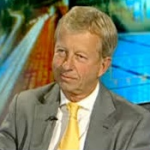
– Thorsten Polleit, Austrian School Economist
04/06/2016 - Austrian School Economist Thorsten Polleit: Cash Banned, Freedom Gone

04/04/2016 - The Economist on Financial Repression
04/04/2016 - Hans-Werner Sinn: Europe’s Emerging Bubbles Are Caused By Negative Interest Rates & QE
“The European Central Bank’s latest policy moves have shocked many observers. While the goal – to prevent deflation and spur growth – is clear, the policies themselves are setting the stage for severe instability. The policies in question include setting the interest rate on the ECB’s main refinancing operations to zero; raising monthly asset purchases by €20 billion ($22.3 billion) to €80 billion; and pushing the interest rate on money that banks deposit with the ECB further into negative territory – to -0.40%. Moreover, theECB has launched a new series of four targeted longer-term refinancing operations, which also carry negative interest rates. Banks receive up to 0.4% interest on ECB credit that they take themselves, provided they lend it out to private businesses .. The inflationary credit bubble spurred in southern European countries by the persistence of lower interest rates undermined their competitiveness and drove asset and property prices to unsustainably high levels. When the bubble burst, the ECB tried to prevent the excessive prices from returning to their equilibrium levels by using its printing press and promising unlimited coverage to investors. The latest ECB measures are just more of the same .. Neither monetary nor fiscal policy can substitute for structural reform. On the contrary, the more Keynesian and monetarist drugs are administered, the feebler the self-healing power of the markets and the weaker the willingness of policymakers to impose painful detoxification treatments on the economy and populace .. The worst effects of the ECB policy may be yet to come, if the eurozone’s still-sound economies also become credit junkies.”
– Hans-Werner Sinn*
04/01/2016 - Forbes Essay On Financial Repression
Forbes essay highlights how investing today is a lot of about guessing what the policy of central banks will be going forward .. “What is going on? It’s called ‘financial repression.’ It’s a technique whereby government transfers private wealth into public coffers by raiding savings and capital by the fixing of interest rates. If a saver is paid less interest than their money is worth, it is effectively being drained away to the benefit of borrowers. We of course know who the biggest borrowers are: the bosses of central banks, their governments. It is this draining of wealth from the private sector into the public sector that is causing the bubbling rage in America. Many know they are getting poorer but don’t know how it happened. Financial repression is the tool that is strangling the American middle classes and after all these years most are none the wiser.” .. explains how financial repression is going to be around for a long time – resulting in economic stagnation .. “The core problem underlying this situation is that ‘financial repression’ is building up ever deeper channels for economic difficulty. While removing the volatility of markets with a ‘curated’ economic reality, it removes one of the key drivers of economic progress, the link between risk and reward.”
04/01/2016 - Financial Repression Is Redistributing Wealth From Creditors To Debtors
“There is no real economic growth and the actual real inflation rate is likely 4x the rate officially reported by the government. If economic growth will not pay down the debt and avoid default, then how is the government doing it? The answer is the financial repression of investors and savers. Financial repression is the back door method of paying down government debt by surreptitiously taxing private savings … the financial repression tax is a mechanism to transfer wealth from savers and investors to government on an extraordinary scale but without ever saying they are doing it. To make sure it works, government uses a series of interlocking law and regulations which traps savers and investors making them effectively, ‘penned in sheep to be shorn’ .. What is the United States government doing to impose the financial repression tax? The Federal Reserve and Treasury have imposed explicit or indirect caps on interest at zero or near zero rates. Even if you accepted the government’s numbers, the official interest rate is lower than the official inflation rate. This alone proves that capital is being mispriced and misallocated .. Inflation is required because the government intends to pay off its debt obligations by reducing the value of U.S. dollars .. Financial institutions—banks, credit unions, insurance companies– are being incentivized by government to buy a lot of government debt and penalized when they don’t. The regulators require higher capital reserves which can only be met by having certain approved assets. Government debt is issued at capped rates. Officially this is being done to maintain the integrity and safety of the financial industry and its shareholders .. To make sure nobody escapes, the U.S. government has imposed a world-wide curb on U.S. investors and savers who want to escape this system. Financial repression works best when everybody is held captive and financially controlled .. Maintaining a regime of financial repression enables the redistribution of enormous amounts of wealth from investors and savers to the government. The public may not know exactly what is going on since financial repression operates in the background. But they know that something is taking a heavy toll on their portfolios and savings.
– Denis Kleinfeld, wealth protection lawyer
03/31/2016 - Amin Rajan: HOW PENSION PLANS ARE COPING WITH FINANCIAL REPRESSION
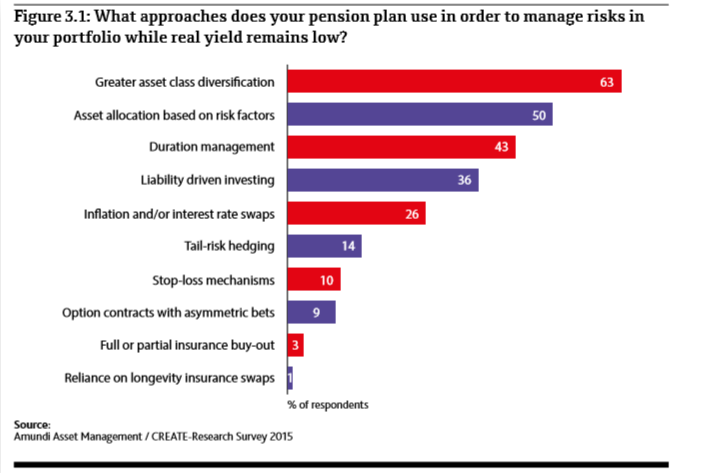
Professor and CEO of Create-Research Amin Rajan shares his knowledge with an in depth interview on Risk Mitigation and how European Pension Plans are Coping with Financial Repression with FRA Co-Founder Gordon T Long .
Amin Rajan worked as an economic forecaster in the UK treasury for over 8 years, and since then has been focusing on investment matters driven by macro investment behaviors catering to pension funds, insurance companies and wealth managers.
What Structural Solutions Are Being Adopted to Cope With Financial Repression.
Personalization of Risk
Amin Rajan thinks that there are two leading principles that must be noted when looking to mitigate risk in the future, since the risk in the past is much different from today with a huge emphasis on macro risk.
Firstly, the sources of risk in the future will be different from the past, referring to the debt crisis and the threat to the Chinese markets.
Secondly, he believes that a portfolio investment should be looked at as a whole and protected as a whole, instead of looking at individual positions of your investments.
“The next crisis will be caused by systemic forces and will not be your usual crisis”
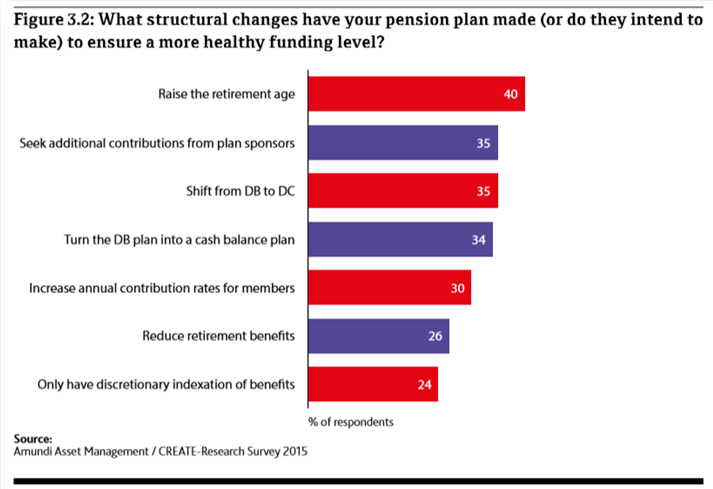
Currently pension funds are facing a very difficult situation where they are experiencing negative cash flows, due to the changing demographics in the United States. They are using up all their money on current retirees and not leaving enough behind for the later generations. The non investment approach would be to change your retirement age, you can reduce your liability by 3-5% each year of increase in retirement age. But it is not very easy to change benefits because these funds come fixed and are for the most part impossible to change.
“These pension funds are turning themselves into a ponzi scheme.”
Lately most employers are changing their employment plans and membership requirements, the new employees are no longer open to the retirement benefit plans. They are freezing the future accruals for existing employees; meaning your benefits are fixed today and your benefits are not a result of your future retirement level. Furthermore, they are moving away from employee’s final salary towards career average salary to further decrease the amount of benefits provided upon retirement. However even with all these new policies being taken place there is still not enough cash for them to sustain because the level of debts are too big for pension funds to solve on their own, and Amin expects Washington to step in soon.
“We are transferring risk from people who couldn’t manage it (governments and employees) to people who don’t even understand it”
Retirement Taxation
Europe always had high taxation; retirees were always paying taxes on top of their social security income. In Australia however once the individual retires they take out all their money and spend it. Storing it away, buying property for their children instead of keeping it with the banks. This personalization of risk is nobody’s first choice it is their only choice because of their situation. Employers do not have the money to put into equity; governments are facing imperishable levels of deficits. So individuals are now facing more responsibility when they do not have the right degree of financial knowledge to do so, putting us all in a downwards spiral where no one can help anyone else when everyone is faced with ultimatums.
Amin thinks that there is a fourth leg coming up in the new generation of retirees, which is working a part time job after retiring because they are not able to sustain their lives on just their retirement benefits.
Amin Rajan tells us that we should question everything; we live in an environment where we must approach everything with an open mind. Do not assume things are automatically going to get worse in the future nor should we take anything for granted so always weigh your options before making crucial financial decisions.
All of Amin Rajan’s research journals and papers are available for free and online to contact him and inquire about Amin’s research please visit www.create-research-UK.com.
ABSTRACT WRITER: Saad Gohir sgohir@ryerson.ca
VIDEO EDITOR: Sarah Tung sarah.tung@ryerson.ca
03/27/2016 - Michael Lebowitz: Negative Interest Rates Are An Expense Paid On Savings
Michael Lebowitz of 720 Global Research explains how central banks are lowering interest rates to encourage additional borrowing to drive consumption & lift asset prices; all in the hope of ultimately achieving economic growth .. “Years of policy designed to encourage spending and discourage savings is likely reaching the end game; the point where those exhibiting prudence must be punished to keep the game going. At some point, and likely soon, central bankers will be forced to realize the efficacy of lowering interest rates is vanishing and is hindering achievement of their goals. When this occurs a paradigm shift in the way monetary policy is conducted will likely occur. Investors that understand this dynamic, and what it portends, will be in a much better position to protect and profit from the asset price adjustments that lie ahead.”
LINK HERE to the analysis
03/27/2016 - Jeff Deist & Jay Taylor On Negative Interest Rates & A Cashless Society
Central banks — and central bankers — are in uncharted waters. They don’t know how to create economic growth, they don’t know how to fight the great bogeyman of deflation, they don’t know how — or if — they’ll ever be able to return to a time of “normal” monetary policy. Their pretense of knowledge, of being able to effectively control currencies used by billions of people, is coming to an end. But it’s not just an academic issue — all of us are affected by the possibility of negative interest rates, prohibitions on cash, and bank bail-ins. Will you be able to get cash out of your bank or money market account if the economy suffers another crash? Will governments force us into cashless, digital-only payment systems, tracking our every purchase & creating black markets in the process? Will you have to pay your bank, in the form of negative interest rates, for the privilege of holding your money? And will your deposits take a haircut if your bank suffers losses from its bad loans? .. 19 minutes
03/27/2016 - Financial Repression Pillar – Obfuscation In Inflation Measurement
One of the great pillars of financial repression is obfuscation of data .. Over the past decade, we’ve been told that inflation has been tame — actually below the target the Federal Reserve would like to see. But if that’s true, then why does the average household find it harder & harder to get by? .. The ugly reality is that the true annual cost of living is far outpacing the governments reported inflation rate. By nearly 10x in many parts of the country .. This week, we welcome Ed Butowsky, developer of the Chapwood Index, to the program. His index is a ‘real world’ measure of how prices are increasing much faster than the wages of the 99% can afford .. 38 minutes
03/23/2016 - Michael Lebowitz: NIRP & Central Banks Are Driving People To GoldWall St For Main St interviews Michael Lebowitz on the Federal Reserve & Janet Yellen announcement this week that they will not try to aggressively raise interest rates & on the potential for going to negative interest rate policy (NIRP) in the U.S. .. Lebowitz thinks the Federal Reserve will likely start reversing interest rate hikes & cut towards 0 & into negative territory this year .. says central bank policies from the U.S., Japan, China & Europe are driving people into gold along with the threat of NIRP .. 44 minutes
03/23/2016 - Stephen Roach: Negative Rate Policies Are Irresponsible
Economist Stephen Roach explains how central banks are bringing “terror & mayhem” through negeative interest rates .. “you are changing the relationship between borrowers & lenders” .. the risk is banks make bad loans – this is what Japan did .. it will distort…. 4 minutes
03/21/2016 - Dr. Marc Faber: Negative Interest Rates Will Not End Well
Faber emphasizes the power of free market forces .. says it would have been better to allow the economy & the financial markets to run their course during the financial crisis – it would have prevented an even bigger credit crisis .. on negative interest rates & helicopter money: “The magicians at central banks, they always come out with a new trick and these negative interest rates that we have today, this is for the first time in recorded human history from the times of Babylon up to today that we have negative interest rates, and it’s not going to end well. That, I can tell you. But the sequence of how it will not end well, I’m not so sure. But they still have a lot of ammunition. What they can do is helicopter money. In other words, they can send you and Mr. Bloomberg and me and everybody, say a check for $10,000, and that is like throwing gasoline into a fire…. will it help the economy? That is the question. It won’t help in the long run. You cannot grow an economy by just throwing money at people.” .. 2 clips
03/21/2016 - Federal Reserve – 3 Emergent Monetary Policies With Unintended Consequences: Financial Repression
The Daily Bell highlights the increasing trend of central bank-driven economies .. “This New 21st Century Economy features a tripartite stool of emergent monetary policies. The stool is supported by three legs. One is low or negative interest rates. The second is the ‘cashless’ society. The third is the ‘basic income.’ .. These policies represent a fundamental shift in how economies operate. It changes the way we think about money and use it. We will need to consider it regularly when making plans for generating and retaining wealth .. Between depriving people of circulating money (cash), forcing people to consume via NIRP and providing people with a basic income for their lifestyle needs, central bankers intend to entrench the system so thoroughly that it will never be rooted out.”
03/20/2016 - John Ing: Gold Is A Beneficiary Of Negative Interest Rates
John Ing discusses the political & economic drivers of gold prices this year .. “Gold is a beneficiary of negative interest rates. Confidence in our central banks is fading fast as they attempt another unorthodox maneuver to revive the global economy. The dilemma for central banks is that their creation of money has been unsuccessful to boost spending but instead created bubbles while debt keeps mounting. What ballasts the U.S. monetary system is debt. In today’s volatile world, the metal is back in fashion due in part to the world’s central banks having exhausted the familiar false remedies. That toxic combination is good for gold, as is the coming election in the United States.”
03/20/2016 - German Response To Negative Interest Rates: Safety Deposit Boxes
Article highlights the natural response by German bank depositors to negative interest rates in Europe – take your money out of the bank & put it into safety deposit boxes to avoid the negative interest rates .. “The Japanese response to negative interest rates was to buy personal safes. The German response is to pull money out of bank accounts and stick it in safe deposit boxes. Both are perfectly understandable reactions to the prospect of having to pay interest to a bank for holding deposits. It is particularly interesting in Germany, where the Bundesbank a few years ago admitted that the average real rate of return on savings deposits has been negative for nearly the past 40 years. Now that nominal rates have turned negative too, the facade of savings accounts as a safe place to park money to earn a little bit of income has finally been ripped away.” .. the article warns of a dire potential: “All it takes is just one more rate cut, one more move into further negative territory to push enough people off the edge, to get them to withdraw their deposits, which will result in a severe banking panic. Central banks are playing with fire when they institute negative interest rates and we’re all at risk of getting burned.”
03/20/2016 - Yra Harris: Savers & Pension Funds Are Getting Shafted By Central Bank Policies
“There are many news stories circulating about the severity of the underfunded public pension funds. It seems that the ultra-low yields on sovereign bonds are preventing pension funds from meeting their funding requirements, especially as equity markets have been roiled by extreme volatility, which has led to diminished returns. Many pension funds have covenants preventing the use of high-risk assets and thus are subjected to the REPRESSIVE YIELDS SET BY CENTRAL BANKS. Fed Chairmen Ben Bernanke and Janet Yellen have told the ‘complainers ‘ to silence themselves about low yields because there have been many benefits to the policy of financial repression: Housing prices are higher; equity markets have risen dramatically; your grandchild or neighbor has a job and so on. But the bottom line is that the burden has fallen on middle class savers as their pensions have been the recipients of the Fed’s financial repression. It is not the wealthy who live off pension fund cash flows. This is a classic case of what Fyodor Dostoyevsky so beautifully detailed in the chapter from the Brothers Karamazov, “The Grand Inquisitor.” The story is the object of authority, miracle, mystery for it is the Fed’s authority that allows it the miracle of levitating the equity markets and its financial repression is but a mystery. After all, the FED has created the ultimate perpetual money machine as it earns profits that are handed over to the U.S. Treasury. So ends another week where we are hypnotized by the government’s ability to take our BREAD with the left hand and return the bread with the right hand and we buy more of the value stretched assets.” – Yra Harris
03/16/2016 - Egon von Greyerz: “THE WAR ON CASH IS REAL!”
Gordon T Long, Co-Founder of FRA interviewed Egon von Greyerz in Zurick. Egon Von Greherz is the founder of Matterhorn Asset Management who has worked as a financial director for over 17 years in Geneva, and has been advocating for wealth preservation through Gold for over 13 years. MAM now has plans in over 40 countries for investors to place their savings into physical Gold storage for preservation in the world’s largest Gold vault in Switzerland.
Wealth Preservation
Egon says that approximately less than half a percent of assets are invested in Gold today by the people and that most of them do not own any Gold whatsoever. Even with the risky stock market in recent months we have not seen a significant increase in the purchase of Gold as an investment itself. However the increase in Gold purchases is linked more closely to the retail market for public use. Von Greyerz expects the market stocks to drop further down below their current value and is viewing the current spike in stocks as a mere bear trap, insisting that following this we may see a rise in purchases for gold.
“Less than half a percent of world financial assets are of gold today and that’s absolutely nothing!”
It is necessary to understand that gold is not to be viewed as an investment but for insurance purposes against all the property investments and bonds that you may have currently. For over 5000 years the price of gold has only gone up and the value of money has been decreasing ever since. With the expectation of the stock market dropping by at least 50% in its current state, having even 10% of your assets in gold will ensure the safety of your portfolio. The reason being that with the drop in stocks the price of gold compared to the dollar could be at a 1:1 ratio like the 1980’s meaning Gold will outperform all the other assets.
With only a .5% of current assets invested in Gold there is no current risk of a shortage of physical Gold. However, in the near future with the price of Gold expected to rise rapidly there is a certainly a risk of there being a shortage. If institutions, governments and pension funds begin to hedge their assets in gold there will never be enough Gold to satisfy their needs. Alongside rapid printing of money there will be no way to control the rapid increase other than to increase the price of gold itself to purchase smaller amounts of physical gold but for much larger prices to ensure that there is no shortage of real Gold.
“In the next few years it will be hard to get a hold of gold, as there will be a time when there will be no price offered in the market for gold due to its shortage”
Thoughts on NIRP and the cashless society
There are no positive consequences for this situation, Japan had other options but chose this disease which again will make no difference to either economy in the world. The negative interest rate will however stop withdrawals and place cash limits in Europe since people would rather take the money out and hold on to it rather than pay interest on it. But we should still expect more countries to go into negative interest rates even though it is hard to imagine this central bank policy to solve our economic problems.
Unfortunately there are not many other options for investors at the moment to encourage them to place their money elsewhere outside of the collapsing banking system. To avoid possible ‘bailins’ people can invest in property, fine art, and precious metals but not much else to be safe from this risk. Gold on the other hand has not seen a significant price increase and shows just how powerful it can be in the future. It is like holding real money it has the equivalent purchasing power to any currency in its history for the past 5000 years and does not devalue over time.
Even in the event that a bank does not have money to exchange for your gold you may still use it as barter, it has had this function throughout its history and will remain this way. It is an excellent opportunity for insuring your wealth and having liquidity at the same time. This is away from the banking regime and does not need to be declared to the IRS either for further taxation.
Furthermore, there is no safe spot currently to store your wealth other than a select few countries with good law and politics to ensure you get to keep what you’ve earned. Switzerland currently holds 70% of all the gold bars in the world and is by far the most secure location for storing wealth in long term.
Egon does not think that the current primary elections going on in the United States will have any effect on the current economic situation of the world. Referring to the fact that there is simply too much debt at this point and no difference will come from the selection of a new president. He suggests that there needs to be a complete systemic overhaul of the way the economic system works. Egon von Greherz publishes several articles weekly and you can find his research and upcoming investment opportunities online at www.matterhorn.gold or at www.goldswitzerland.com
ABSTRACT BY: Saad Gohir sgohir@ryerson.ca
VIDEO EDITING BY: Min Jung Kim minjung.kim@ryerson.ca
03/15/2016 - Egon von Greyerz: Wealth Confiscation Through ZIRP, NIRP, Bank Bailins, Forced Savings, Currency Debasement
Egon von Greyerz explains how ZIRP & NIRP is essentially confiscation of your money & it is happening now .. highlights also the growing potential for more bank bailins across the indebted western world .. negative interest rates leading to a cashless society leading to bank bailin confiscation of bank deposits – it is all related & connected .. “The biggest reason for creating a cashless society is stop bank runs. The banking system is insolvent and leveraged up to fifty times and even more if derivatives are included. This means that there is only enough money in the bank for one client in fifty or two percent of clients in total to take out their money. If more people tried, the bank would have to close its doors because it would be bankrupt. By stopping clients to take cash out, bank runs are no longer possible. In theory clients could transfer their money to another bank but that would also be stopped. So now the bank has your money, it charges you for that pleasure and you can’t get your money out because your money is frozen or confiscated. This is what has become of the bankrupt banking system .. When a bank becomes insolvent, depositors money will be used to save the bank and to pay the bank’s losses .. Another method that bankrupt governments will apply is to use bank deposits for forced savings. Every depositor will be obliged to put some or all of his cash into long term government bonds, probably for at least thirty years. It is easy to imagine that the money will be totally worthless after thirty years .. And if your money hasn’t been lost already after all the above, central banks are guaranteed to print enough money in coming years that most currencies will reach their intrinsic value of zero. Governments will have no other option in their attempt to save the financial system. We know of course that money printing can never save the world. All it will do is to add more debt, thus making the final collapse even bigger.”
03/15/2016 - Negative Interest Rates Are Driving Demand For Gold
The economic uncertainty & negative interest rate policies being implemented in various economies are a boost to gold, & in turn, asset management firm Sprott. For perspective, BNN is joined by Peter Grosskopf, CEO, Sprott .. 5 minutes
Bloomberg reports that Japan’s biggest bullion retailer sees gold demand being driven by deepening negative interest rates in Japan .. “Many customers are wagering that it’s better to turn their savings to gold as a safe asset rather than deposit money at banks that offer low interest rates .. Many customers usually sell gold, but we get the feeling that more customers are buying gold even at prices exceeding 5,000 yen.” .. Bloomberg: “In a bid to stimulate bank lending, the BOJ has joined the European Central Bank in setting rates below zero. While that should also spur investment in higher-yielding assets, it may also have had the unintended consequence of households squirreling away cash — or turning to a traditional store of value such as gold. Sales of safes in Japan are surging, suggesting as much.”
LINK HERE to the article
03/15/2016 - Paul Brodsky: Negative Rates Are A Negative Sign For Investors
Macro Allocation Founder & Chief Strategist Paul Brodsky thinks it’s time investors prepare for this unconventional world .. Brodsky notes it is irrational to expect economic expansion .. “After seven years of major exogenous monetary stimulus concluding in negative rates around the world, investors today would be irrational to expect an economic expansion in the coming years or even a mild recession followed by a garden variety expansion .. If we assume that high and rising global leverage (as measured by debt-to-GDP or debt-to-base money) will eventually crowd-out global consumption and demand growth, then we can also assume that the purveyors of money and credit will be able to selectively apply austerity within their economies.” .. Negative rates are a negative sign for investors .. “Negative sovereign yields and policy rates (NIRP) might be ringing the proverbial bell.” .. It is time to find value not just in stocks that have been overlooked & are at low valuations, but also time to project into the future & see stocks that are at unsustainably high valuations .. “Longs, shorts and arbitrage opportunities are presenting themselves clearly .. Prudence demands that wealth seeking investors (as opposed to those matching liabilities or trying to beat indexes) position themselves accordingly.”