05/23/2016 - Assuming Big Returns On Pension Funds: A Lot Can Go Wrong
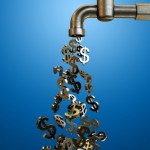
Article highlights the challenges & pitfalls of pension funds who are assuming year-over-year returns of say 4% or even 8% in a world of negative interest rates & low investment yields .. worse is the use of pension funds by governments to borrow money, invest it with the pension funds & get “yield” from the pension funds as it were free money .. “Take the Ontario government’s $5-billion deficit. The province can issue long bonds paying interest at 2 per cent in real terms. If the ORPP can reliably earn 4-per-cent real, let’s lever the two-percentage point difference: Borrow $250-billion, invest it with the ORPP and the profit will balance the budget. Better yet, borrow $500-billion, invest with the ORPP, and – presto – a $5-billion surplus! The federal government can do even better. The real yield on their long bonds is zero. If the Canada Pension Plan Investment Board (CPPIB) can reliably earn 4-per-cent real, Ottawa can borrow, say, $500-billion, invest with the CPPIB, and boost their bottom line by $20-billion. Free money! What could go wrong? Well, nothing – if 4-per-cent real, year-in year-out, is really a slam-dunk. But in reality, plenty. In fact, many U.S. state and local plans, including the Detroit plan that went bust in 2013, tried this trick – so beguiled by assumed high returns that they forgot their duty to make actual payments. It is one thing for individuals to shoot for the moon – gamble their own money and retirement. It is something else to do it on others’ behalf – especially millions of others, with failure meaning not just individual but societal hurt.”
Disclaimer: The views or opinions expressed in this blog post may or may not be representative of the views or opinions of the Financial Repression Authority.
05/23/2016 - Jim Rickards: How Central Banks May Raise Inflation To Address The Burden Of Government Debt
Jim Rickards highlights that government authorities are beginning to talk about bidding up the prices of gold to bolster inflation rates in an attempt t inflate away government debt .. “The global monetary elites had a conference in Zurich, Switzerland, last week. Among the speakers were William Dudley, president of the Federal Reserve Bank of New York, and Claudio Borio, chief economist of the Bank for International Settlements. The topic of the conference was the prospect of multiple reserve currencies in the international monetary system. The speakers generally agreed that a system with more reserve currencies (such as the Australian dollar, Canadian dollar and possibly certain emerging markets’ currencies in addition to the Chinese yuan) would be a desirable one. There’s only one problem… It’s a zero-sum game. All of the reserve currencies in the world add up to 100% of the reserve currencies. If new currencies have a larger share, then the U.S. dollar must have a smaller share. It’s just basic math. That means a long-term process of selling dollars and buying the new reserve currencies. That selling lowers the value of the dollar and imports inflation into the U.S. .. It also means a higher dollar price for gold. The elites won’t tell you that, but it’s true .. The key takeaway is that a higher dollar price for gold is just a lower value for the dollar. And that’s what the elite’s want. It’s part of their global inflation plan.”
Disclaimer: The views or opinions expressed in this blog post may or may not be representative of the views or opinions of the Financial Repression Authority.
05/22/2016 - Financial Repression How Savers & Investors Are Being Penalized
What We Have Now Isn’t Capitalism
Wall St for Main St interviews Erik Townsend on Wall Street & the hedge fund industry .. Townsend thinks all the major central banks like the U.S., Japan, ECB, etc are trapped but predicting the timing of any collapse or market crash is almost impossible. He cautions people to avoid making big bets on the stock market crashing in the short term .. Townsend gives an excellent explanation of financial repression & how savers and investors, who have tried to do the right thing financially in their lives, are being penalized. Jason and Erik discuss how negative interest rates & a cashless society are following financial repression .. 54 minutes
Disclaimer: The views or opinions expressed in this blog post may or may not be representative of the views or opinions of the Financial Repression Authority.
05/20/2016 - Charles Hugh Smith: The Unintended Consequences Of Financial Repression
Charles Hugh Smith* explores the concept of property taxes on real estate .. do you really own your house if you have to pay $260,000 in property taxes over 20 years? .. “Owning a home no longer makes financial sense because the property taxes consume any appreciation other than the transitory ‘wealth’ generated by a housing bubble” .. Property tax is not based on consumption or income, but on “the presumed wealth & income of property owners. In effect, property taxes are a wealth tax: if you can afford a house, you can afford property taxes.” .. the problem with this is household income does not rise with housing valuation .. the unintended consequences of financial repression: “As pensions dry up and blow away under the relentless erosion of the Federal Reserve’s zero-interest rate policy (ZIRP), unaffordable property taxes may well start evicting homeowners from the ‘asset’ they mistakenly thought they ‘owned.’ If your Social Security pension can barely pay your property tax, never mind your Medicare, healthcare costs, food and other living expenses, then what exactly do you own?”
Disclaimer: The views or opinions expressed in this blog post may or may not be representative of the views or opinions of the Financial Repression Authority.
05/18/2016 - Kristin Tate: WHAT THIS ELECTION TELLS US ABOUT HER MILLENNIAL GENERATION
FRA Co-founder Gordon T. Long is joined by Kristin Tate in discussing her book and the outlook of Millennials on the upcoming US election.
KRISTIN TATE is is a political columnist and author of “Government Gone Wild”.
In her book she says D.C. politicians are shipping our friends and family overseas to fight in wars we shouldn’t be fighting. They monitor our emails, record our phone calls, and peer into our snail mail. They spend our hard-earned cash on things no disciplined family would buy. They tell us who we can marry and what we can put in our bodies. They throw us in overcrowded prisons for smoking pot. They take lavish trips around the world, staying in five-star hotels… and it comes straight out of our paychecks. This isn’t freedom?
Government Gone Wild is a brash, bold ride through the carnival of absurdities that our broken system has become. This isn’t about Democrats vs. Republicans… it’s about inspiring hard working Americans to give a damn so we can take our country back. This is your wakeup call. You’re not anywhere near as free as you think you are – but you can be. We’re not as prosperous as we once were – but we can be.
GOVERNMENT GONE WILD
“You could really open my book on any random page and start reading and not be confused.”
If you want Millennials to not be apathetic you have to get their attention in a way that will let you keep their attention. They grew up with technology and have a shorter attention span, so it’s unrealistic to expect a young person who’s not already politically involved to pick up some long boring book.
The book takes the reader through various topics; everything from social issues to taxes to foreign affairs.
“The main message throughout this book is that whenever too much government gets involved, usually our freedoms are eroded.”
Once you get young people interested, once you get the conversation going, it’s usually easier to keep their attention. The battle’s getting their attention initially.
The book is a really light read, filled with a lot of shocking facts that a lot of people don’t know about our government, but it’s presented in a very fun way.
“One thing I really try to show Millennials is how we really need to start demanding accountability from our politicians.”
We’re scraping to get by and all this money we’re using to pay our taxes are going toward these sanctimonious politicians to live like kings and queens. There’s a lot of things we can do to turn this country around, but you’ve got to show young people why they have to care and why they need to demand accountability from our politicians.
ON THE SPECTRUM BETWEEN BERNIE SANDERS AND DONALD TRUMP
Poll after poll shows that Millennials tend to be more socially accepting of diverse lifestlyles, so maybe more socially to the left, but we’re also fiscally conservative. It’s kind of libertarian.
“I would say that I tend to be a representation of that – socially more liberal and fiscally conservative. It’s kind of libertarian.”
Even if they don’t know what the word ‘libertarian’ means, if you ask them about these issues many young people want the government to stay out of our personal lives and out of our wallets.
A few decades ago, something like gay marriage was very controversial, but this generation has grown up with these social issues and they are a little closer to home than previous generations.
“I see the future of the Republican party as being a little bit more libertarian, and if these older Republicans don’t start understanding that you’re going to keep seeing younger Millennials flock to the Democrats because they really see these social conservative issues as deal-breakers.”
CURRENT ELECTION ISSUES
You have a record number of Millennials living with their parents, the job market is awful, and you do have a lot of young people who do have college degrees working low wage jobs. We’re depressed, and that’s why Bernie Sanders is doing so well. He’s sending a message that sounds positive to young people about the future, even though socialism would destroy this generation. A lot of young people don’t realize that when they hear him talk about income inequality and wealth distribution.
“If the Republicans or Hilary Clinton want to grab some of this Millennial vote, they need to start showing young people how their policies will lead to jobs… and how their policies will bring prosperity to all Americans. That’s what young people care about.”
They get these soundbites of positivity from Bernie and that sounds better than anything else they’ve heard. That’s why they’re so excited about Bernie. It’s depressing, but young people are all about bumper sticker politics; if you want to get their attention you need to spread your message in catchy, easy to understand ways. Bernie Sanders doesn’t really need to show young people how he’s going to make these things a reality because right now he’s the only one giving them any hope at all.
“There’s a lack of understanding of what capitalism is, but the fact that young people say they like free enterprise gives me home that fiscal conservatives can still spread their message to young people effectively.”
The movements behind Bernie and Trump are very similar. People are fed up with the Republicans and the Democrats. The voters are fed up with these establishment bureaucrats who do not look out for the people, on both sides of the aisle. That’s why they flock to Bernie Sanders.
“Although I don’t love Trump or Bernie, the fact that both of them are so popular does give me hope because they’re both outsiders and it shows me that people want something new and that they understand that the system is broken.”
LOOKING FORWARD
If Hilary gets the nomination, young people will continue to be frustrated. Hopefully they’ll start to understand once they get into the job market, they’ll understand that we need more capitalism and less socialism.
“I do think that politics as we know it is changing forever in the US. I think this whole notion of having two establishment parties is crumbling… I see more apathy than ever, but I also see in some other way more awareness of what’s going on.”
It’s easier to hold people more accountable because of technology, and this increased awareness of what our politicians are doing and this connectiveness because of technology will only make the two party system crumble even more. We’re seeing this huge movement toward outsiders, toward politicians who are not career bureaucrats, and we’ll continue to see that in future elections.
“More government involvement is not what we need; we have too much socialism right now… capitalism is our friend, the job market is our friend, a great corporate environment is our friend. I want Millennials to wake up to this stuff and hopefully vote in a way that would lead to these for a free market policy down the road.”
Disclaimer: The views or opinions expressed in this blog post may or may not be representative of the views or opinions of the Financial Repression Authority.
05/16/2016 - John Rubino: QE & Negative Interest Rates Have Adverse Unintended Consequences
“QE and negative interest rates turned out to have unintended consequences, one of which is a drying up of bond trading. If governments buy up all the high-grade bonds then obviously there aren’t many left to trade. And if the yield on new bonds is negative, holders of existing positive-coupon bonds have no incentive to sell them. Hence, eerily silent trading desks around the world .. The financialization of the global economy has created a vast sea of hot money that flows mindlessly from one location and asset class to another on a scale that exceeds traders’ ability to predict and/or manipulate. Put another way, in a world where it’s impossible to know what’s going to boom or crash next, it’s irrationally dangerous to place big bets on anything .. Where do we go from here? Probably into a crisis in which the world stops trusting markets, and financial assets are devalued accordingly.”
LINK HERE to the article
Disclaimer: The views or opinions expressed in this blog post may or may not be representative of the views or opinions of the Financial Repression Authority.
05/16/2016 - Yra Harris: Authorities Reveal Their Intentions To Financially Repress The Germans
“ECB President Draghi and IMF Director Lagarde HOPE to punish and repress the German saving class in an effort to salvage the EU via the alleviation of debt owed by the so-called peripheral nations .. German intransigence on the issue of budget profligacy means that the ECB will extract German wealth through financial repression, which means the that the frugal burghers will be taxed through negative interest rates to bail out the debt-burdened peripherals. Germany will be forced to share its current account and budget surpluses with the entire EU by direct transfer payments or financial repression .. The IMF is attempting to push Germany to undertake massive fiscal stimulus through welfare payments for the settling of refugees as wells public investment on significant infrastructure projects. The IMF has coupled with Larry Summers in promoting fiscal stimulus as an alternative to the questionable effectiveness of NIRP. At this juncture, a massive program of infrastructure investment would lead to an increase in German inflation because the German economy is just about at full employment. The end of German negative output gaps with the commencement of fiscal stimulus would mean pressure on German prices to rise .. At this juncture it appears that the IMF and ECB are both searching for ways to debase the wealth of German citizens either through NIRP or an inflation-creating infrastructure program instituted when the German economy has little excess capacity. The more debt the ECB purchases the greater the responsibility of German authorities to bear the burden of a tragically flawed EURO. Creating the unified currency without a harmonized budgetary process has led to a massive bundling of potential problems .. The elites are terrified of vox populi. For the European bond markets and its sovereign debt. The question will become more germane: WHO GUARANTEES THE ECB?” – Yra Harris
Disclaimer: The views or opinions expressed in this blog post may or may not be representative of the views or opinions of the Financial Repression Authority.
Financial Repression and the Structural Concerns for the Retail Market
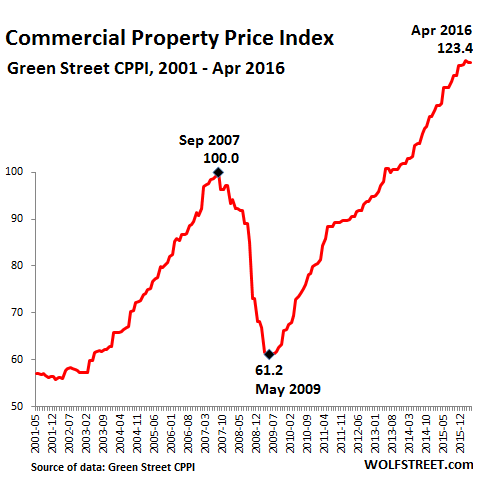
FRA co-founder Gordon T. Long is joined by Wolf Richter to discuss the struggling retail market and its subsequent impact on the U.S economy as a whole which are a result of the recent financial crisis.
Wolf Richter is the founder of Wolf Street Corp. In his cynical, tongue-in-cheek manner, he muses on wolfstreet.com about economic, business, and financial issues, Wall Street shenanigans, complex entanglements, and other things, debacles, and opportunities that catch his eye in the US, Europe, Japan, and occasionally China. You can subscribe to his free emails and keep in touch with Wolf Richter’s research and news through his cynical, tongue-in-cheek manner, he muses on wolfstreet.com about economic, business, and financial issues.
He has over twenty years of C-level operations experience, including turnarounds and a VC-funded startup. He earned his BA and MBA in Texas and his MA in Oklahoma, worked in both states for years, including a decade as General Manager and COO of a large Ford dealership and its subsidiaries. But one day, he quit and went to France for seven weeks to open himself up to new possibilities, which degenerated into a life-altering three-year journey across 100 countries on all continents, much of it overland. He has written two books: BIG LIKE: CASCADE INTO AN ODYSSEY and TESTOSTERONE PIT.
Concerns of Financial Repression
Under financial repression the money that you earn does not compensate for the forward inflation on your investment. This is slowly eating up the savings of investors and bond holders in a period of low inflation, and is done so by the central bank to help aid governments and debtors in paying off the massive pileups of debt. We can expect this trend of financial repression is to go on for the time being due to the position most corporate firms and the government is in right now, as most economists believe a slight increase in interest rates would be catastrophic for the economy.
Retail Space
We are in a booming online retail environment which is not going to slow down any time soon. The problem with retail space is a structural problem due to the surge in online shopping. Everywhere we look in urban environments there are strip malls on every corner of the neighborhood and multiple outlets for the same retail store exist all across the states. With the drop in consumption in goods and services, a recession in the goods produced within the U.S. On a weekly basis we are seeing more and more stores shed employees and closing stores all across the country in order to cut operation costs and stay afloat.
“This creation of demand is just smoke and mirrors”
At the same time consumers are growing older, and had planned to live off their savings However, over the past years due to the shocks to the FIRE economy we have seen virtually zero growth in their savings. Causing shifts in their purchasing patterns towards cheaper and more affordable goods, trying to save on all levels and spend as less as possible. This all stems from financial repression, there have been no increases in demand but we still see an immense amount of retail space, creating a false sense of demand to consumers, showing promise of a improving economy at a time where it is nearly impossible to thrive.
Transportation Recession
“When you have a transportation recession like this, it tells you something about the goods produced in the economy in the United States, and it’s not over.”
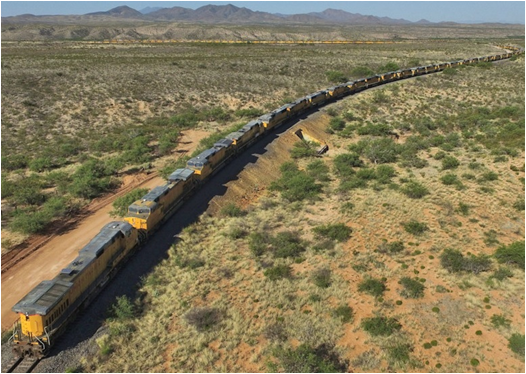
There has been a large increase in stalled transportation vehicles including trucks and trains which simply have gone out of business due to a lack of demand in the market. This shows us the effects of the 2008 financial crisis still linger on heavily even today. The lack of demand and surplus of supply in many sectors of the economy including retail is continuously putting the U.S economy in a downward spiral and has kept it on the brinks of another recession.
“If service economy gives, if it starts to break apart even in a minor way I think we’ll have a recession.”
Luckily the service economy is still holding on and showing signs of improvement and growth. However, if the service economy gives out even in a minor way, the impact on the rest of us considering the tight situation at the moment will certainly throw the U.S into another recession within the coming fiscal year. Factoring the decline in goods produced is a great concern for the U.S since the goods consumed market is already collapsing.
This causes an alarm for even more concern in the economy, since the financial crisis even under financial repression we are still seeing a steady rise in debt. This debt carried over from the financial crisis affects every major company in the world. When these companies can no longer hold their own Wolf Richter believes that we will have a real risk for credit default.
The Changing of the credit cycle
“What concerns me the most; the amount of corporate debt, the amount of government debt and state municipal debt that’s out there since the financial crisis”
Credit rating companies have begun downgrading almost everything, meaning companies are no longer able to lend, and losing faith in many companies which can no longer continue doing business. The rise in bankruptcy alone should be a definitive sign of the turning credit cycle. This is not limited to any single industry, oil, energy, and retail especially companies are going bankrupt as their debts and expenses simply cannot keep up with the demand that is required to keep them running.
“In total there were about 3500 commercial bankruptcies, and that’s up 33% from a year ago”
Right now it is the number of small companies that are making headlines in failure to overturn their debt into sustainability. So even though there has been an increase in bankruptcies filed this year there is still a large sum of debt which is held in majority by the big fish of the sea. This provides us with further affirmation of the psychological behaviors of consumers in the economy hinting it to a difficult time for not only continuing to run business as usual but also for entrepreneurs. As the demand is simply not as it used to be in the past, and should expect a slow and painful recovery out of this worldwide debt.
Disclaimer: The views or opinions expressed in this blog post may or may not be representative of the views or opinions of the Financial Repression Authority.
05/13/2016 - FINANCIAL SURVIVAL NETWORK: Gordon T. Long – “Never Mis-underestimate the Follies of Central Banks!
Gordon T. Long – Never “Misunderestimate” the Follies of Central Banks
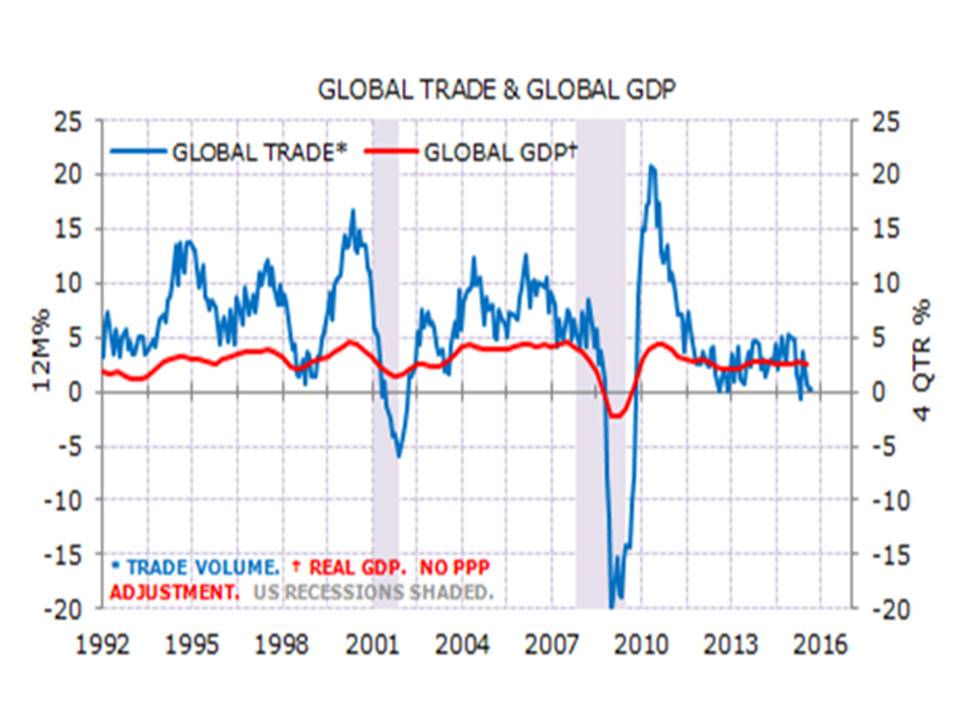
Gordon T. Long says that the world’s central banks are on a mission to drive the US Dollar down lower. The world’s economy is in precarious condition and it cannot afford an escalating dollar. They’ve been brow beating the dollar to keep it down and are hoping that it will stay there. Yellen is trapped and there’s nary a rate increase on the horizon. It’s a global problem, global trade is in collapse. What’s a poor central banker to do?
Disclaimer: The views or opinions expressed in this blog post may or may not be representative of the views or opinions of the Financial Repression Authority.
05/13/2016 - FINANCIAL SENSE NEWSHOUR: Gordon Long on Secret ‘Shanghai Accord’
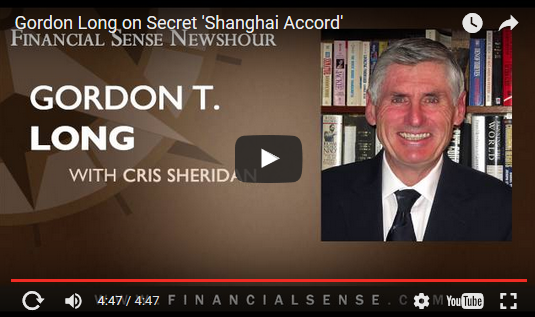
FINANCIAL SENSE NEWSHOUR: Gordon T. Long on Secret ‘Shanghai Accord’
Speculation abounds of a closed-door meeting between leaders of the world’s largest economies to take down the US dollar. The reason: to provide relief to commodities, oil, and emerging markets. Gordon Long, co-founder of Financial Repression Authority, discusses the so-called Shanghai Accord and, if such a deal was struck, why it won’t have the same success compared to other accords formed in the past for the same purpose.
Disclaimer: The views or opinions expressed in this blog post may or may not be representative of the views or opinions of the Financial Repression Authority.
05/12/2016 - Satyajit Das: DISCUSSES FINANCIAL REPRESSION & THE AGE OF STAGNATION
FRA Co-founder Gordon T. Long is joined by Satyajit Das in discussing the consequences of financial repression and current policy making, along with the effects of the Chinese economy.
SATYAJIT DAS is an internationally respected expert in finance, with over 35 years’ experience. Das presciently anticipated many aspects of the global financial crisis in 2006. He subsequently proved accurate in his warnings about the ineffectiveness of policy responses and the risk of low growth, sovereign debt problems (anticipating the restructuring of Greek debt), and the increasing problems of China and emerging economies. In 2014 Bloomberg nominated him as one of the fifty most influential financial thinkers in the world.
Mr. Das is the author of a number of key reference works on derivatives and risk management. Das is the author of two international bestsellers, Traders, Guns & Money (2006) and Extreme Money (2011). His latest book is A Banquet of Consequences (2015) (published in North America as Age of Stagnation).
He was featured in Charles Ferguson’s 2010 Oscar-winning documentary Inside Job, the 2012 PBS Frontline series Money, Power & Wall Street, the 2009 BBC TV documentary Tricks with Risk, and the 2015 German film Who’s Saving Whom.
VIEWS ON FINANCIAL REPRESSION
It started around 2008 and prices relate to debt. Fundamentally, the way the surprises were dealt with were in a very old fashioned way to grow and inflate their way out of debt. As we know, this process hasn’t really worked, and there’s really only two choices left. One of them is to default, which is hugely unpalatable because writing off peoples’ savings like that has consequences for future consumption, and a huge amount of wealth loss in the world. The other option is financial repression, which is a way of managing excess debt. The most common way is by very high levels of taxation.
“I don’t think people, when talking about financial repression, are talking about taxation as being something that shouldn’t happen.”
There’s obviously a point of taxation which is to run social services and infrastructure and government, but at some point under the condition of high debt it starts to bring taxation rates up for the simple reason of using the state to absorb everyone’s debt, in other words socialize the debt and then try to use the taxes to pay it off. That can be hugely unproductive for the economy but we’re starting to see it happen around the world.
The next stage is what we call financial repression, where we start to devalue the debt. The most important way we can see that is through a period of low interest rates.
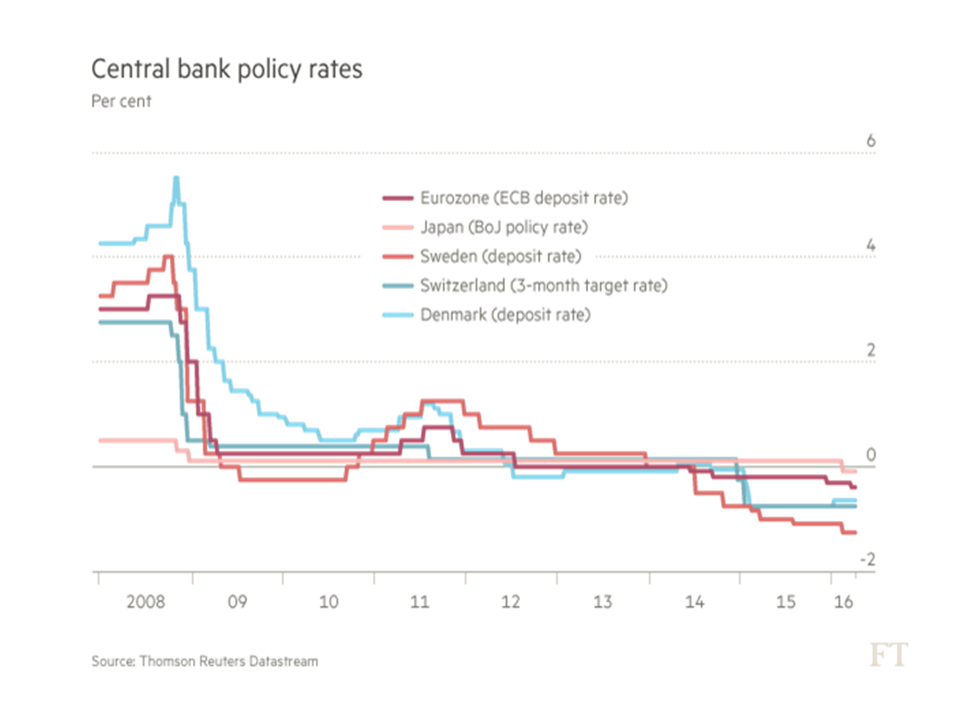
“People forget that since 2008, we’ve had over 600 interest rate cuts globally. Interest rates are pretty much around zero around the world.”
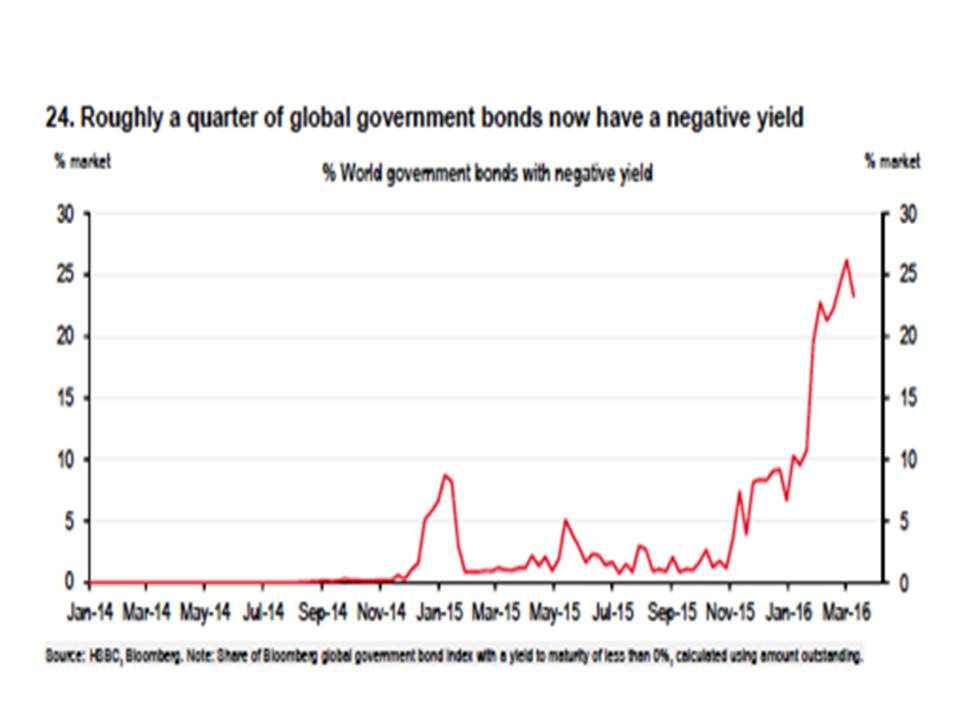
Roughly 30% of global government bonds are trading at negative yields. Either you have nominal yields that are positive but below the rate of inflation to use that to try and ease the purchasing power of debt. Alternatively as we’re now finding that because inflation is low and the debt levels are so high, we’ve gone to negative interest rates. There’s something perverse about negative interest rates because people get very technical about it. This is actually a way of writing down the debt, and are very dangerous, as the market’s reaction to the negative interest rates in Japan and Europe have proven.
Firstly, there’s no real proof that these types of policies are going to create growth or inflation. They’ve been put in place to write down the debt. First we have -5% interest rates, and after ten years we’ve written off half the debt. That’s now a sort of stealth tactic the central banks and policy makers have put in place. Everybody knows that they said, look, in the next crisis we’re going to cut interest rates and interest rates are so low that we’re going to have to go to negative territory, but we all know that if we go to negative territory people are just going to take money out of the bank and just hold the cash.
“They’re going to have to stop people from taking out cash, and the interesting way that’s being channeled by policy makers is that they’re pretending that banning cash is necessary to prevent criminality or terrorism.”
There are also other forms of financial repression as well, like redirecting investment. There’s a whole variety of these measures that we see come into play, and it all has to do with the fact that they try to use these measures to deal with the debt crisis.
“I would argue that it’s not going to be able to be dealt with, and it creates enormous social and political pressures… What we’re going to see is a period of financial repression, which is very, very dangerous.”
POLITICAL EXTREMISM AND POLICY MAKING
We’re starting to see signs of this via the political extremism that’s starting to come about. The reason these popular extremist policies are being promoted in the United States and elsewhere is because financial repression and the lack of honesty of dealing with the world’s financial and economic problems.
If you look at this period of history and the way the Europeans have deal with the European Debt Crisis, it’s almost single-handedly created parties like Ciudadanos in Spain, but in Germany these policies would never have gotten any sort of traction. Even the German Finance Minister has said that these parties are really the creation of the economic policies that people are playing around with, and that’s setting up this confrontation we see in play between Germany and the European Central Bank.
“I honestly don’t know how it’s going to end. In the 1920s and 1930 when similar pressures built up, it didn’t actually have a very good ending.”
THOUGHTS FOR THE NEXT YEAR (12-14 MONTHS)
“I think, fundamentally, we know what the problems are: it’s debt.”
It built up in the system, it’s not properly funded, we know the global imbalances are unsustainable, and add on top of that the financialization of the economy where people are rewarded for trading claims on real cash flows and real assets.
“You have financial institutions which are too big to fail but too big to jail, and frankly, too big to regulate or too big to manage.”
So all of those we know, and on top of that there’s climate issues, resource scarcity, so we’ve got a very toxic set of problems. Things are going to play out in one of three scenarios. One is the ‘Lazarus economy’, where all the skeptics are wrong and everything goes back to normal. It’s not likely, but it might happen. The most likely one is a period of stagnation, which might happen with a 70% chance. What happens is we’re stuck in this environment of very low growth, disinflation, the debt keeps building up, we use policies like financial repression and low interest rates in a predominant way, and we stretch this out for as long as we possibly can. One lesson we learned from Japan is that we can’t do this for a very long time. The policy makers are going to try to keep this game going for as long as possible. The problem is that it’s not sustainable.
The last scenario is the one with the 30% chance, which is the crash. The question is whether that happens suddenly, or if we get gradually to where the system breaks down. You have all these nodes of instability going on and it’s all held together by chicken wire, which is basically central banks putting more and more money in and coming up with more and more far fetched and less effective schemes.
The crucial thing that people forget is that this is the ultimate act of faith. The central bankers who completely misread things in the lead-up to 2007 and contributed to the crisis have suddenly after that becomes the saviors.
“At some point in time it’ll turn into, ‘oh dear, the emperor has no clothes, they don’t actually know what they’re doing’.”
What people need to keep in mind is that it’ll be very different from 2007-2008. The problem is much bigger, and the emerging markets that were a source of strength in 2008 and provided demand for the people in advanced economies, along with abundant savings that helped push the problem, are no longer a source of strength. The third thing is the fact that the policy makers are all wrong. The social and political pressures are in a much worse place than 2007-2008 and socially the tensions are starting to build up.
“Whatever happens now will be far more difficult to control than they were in 2007-2008 and I think essentially we are at a very dangerous inflection point… And the one thing I do know is if something cannot go on, it won’t go on, and if something happens it happens suddenly.”
The central banks have this under control for the moment, but in complex systems they tip over extremely suddenly and extremely quickly, and none of us know what the trigger will be, but there will be a trigger and in hindsight it would be obvious it was the trigger.
“Everyone now is chasing risky assets because it’s the only way they can feed themselves.”
INVESTMENT DIRECTION AND PREPARATION
“In this crazy world of the 1980s onward, we sort of reversed priority and put capital gains first, income next, and security of capital last.”
You have to think about how to recover, rather than worry about capital gain. One of the key things is to find things that people need: food, oil, scarce resources, and guns (security).
“You’re looking for areas that are absolutely crucial in the terms of the actual needs of ordinary people, and that will be protected.”
The policies are hugely repressive because they’re forcing people to take risks with their savings, and intentionally they’re going to go broke or grow poorer over time.
“I’m actually astonished, when you mentioned pitchforks earlier, that investors haven’t picked up their pitchforks and gone after some of these policy makers, though given time I suspect that’s going to happen.”
VIEWS ON CHINA
The pre-2008 period was very sound, but after that the Chinese Public Bureau placed a strong emphasis on social stability and launched a program to create employment opportunities. What that’s done is increased the amount of debt in China. In 2000 the amount of debt was $2T. In 2007 it went to $7T. In 2014 it’s $28T. It’s gone up by a factor of 14 times.
“You can’t have that kind of growth being leveraged by debt in a financial system without consequences.”
If you look at where the money’s gone, it’s this massive overcapacity in their industries, there’s a lot of real estate; about 15-20% of China’s GDP is tied up in real estate. It’s inevitable that they’re going to have some problems. The last few debt crises that happened in China, the States stepped in, created asset management companies, bought the bad loans to the banks, selected government guarantees on some bonds, and sold it back to the same banks and let time to take care of the problem.
The problem now is the bad debt problem is much larger, and they’re not going to have the same GDP growth that they had. The way that they’re trying to deal with this is by keeping deposit rates low and the system very liquid so the banks can gradually absorb these losses.
“I think the best case is that China becomes like Japan, which is putting all these bad debts on their balance sheet and gradually slowing down.”
The problem is if they miscalculate, the problem is bigger and comes upon them in a way that is much quicker that you could potentially get a banking meltdown. The problem with that is that would spread from China out very quickly because there’s about a trillion dollars of exposure that far end lenders have to Chinese banks and Chinese companies.
Disclaimer: The views or opinions expressed in this blog post may or may not be representative of the views or opinions of the Financial Repression Authority.
05/12/2016 - Charles Hugh Smith – WHY OUR STATUS QUO FAILED & IS BEYOND REFORM
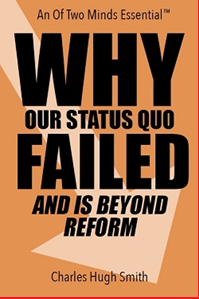
The Financial Repression Authority is delighted to have Charles Hugh Smith, prolific writer on the web and author of the highly acclaimed book, Why Our Status Quo Failed and is Beyond Reform. FRA Co-Founder, Gordon T. Long delineates with Charles on the core topics that are mentioned in his book as well as go over key diagrams to supportive diagrams.
Charles Hugh Smith is the Publisher of the site “Of Two Minds”. From its humble beginnings in May 2005, Of Two Minds now attracts some 200,000 visits a month and has been listed No. 7 in CNBC’s top alternative financial sites. His commentary is featured on a number of sites including: Zerohedge.com. The American Conservative, Peak Prosperity and AOL’s Daily Finance site (www.dailyfinance.com. He has written eight books. Charles Hugh Smith graduated from the University of Hawaii, Manoa in Honolulu. Charles Hugh Smith currently resides in Berkeley, California and Hilo, Hawaii.
Mr. Smith’s articles, which critique the status quo, had influence from Braudel’s historical account of early capitalism. Smith’s economic works stress the value and efficacy of decentralizing power and wealth, the individual’s power of self-determination and the value of community, which in his view has been diminished by the state. His blog covers an eclectic range of timely topics: finance, housing, Asia, energy, long term trends, social issues, health/diet/fitness and sustainability.
“I wanted to encapsulate in a very short form that the status quo is broken and it is not going to be able to solve the problems. In order for us to move forward we first need to accept this reality.”
The core thesis in this book is that humanity has 6 problems which are interconnected:
Entrench poverty: There are hundreds of millions of people who remain in severe poverty and they do not have access to resources to better their situations.
“The idea that we are going to reach every human on the planet has been proven incorrect.”
Using more of everything in a world of finite resources: We have to adopt a ‘de-growth model,’ which is to make better use of the resources we have instead of just relying on consuming more.
Wages is the only way we have of distributing the output of an economy:
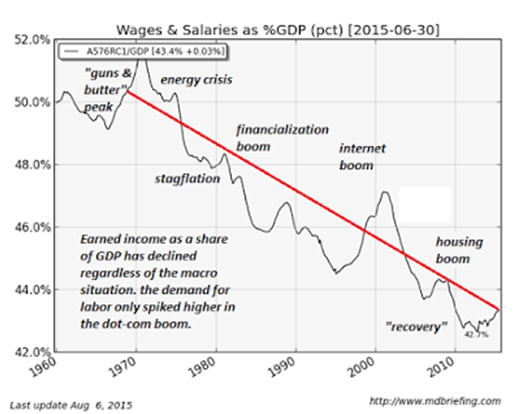
“The share of our national output that is going to wages is declining. The rise of automation and technology has decreased the demand for human labour and this will continue as a trend into the indefinite future.”
When you consolidate power in a central state you consequently give an upper hand to the wealthy to have influence over that centralized power:
“I call it cartel state capitalism and we see it everywhere where the industries are controlled by a handful of players who have a great degree of influence.”
Depending on credit for everything.
“We are borrowing from the future to fund present day consumption.”
The current system pays people regardless of their productivity and contribution:
“People need work, they need livelihoods and they need a positive social role within their community. Paying them to sit home and do nothing creates a whole new assortment of problems. People need work and a sense of importance and contribution.”
THE NEW NORMALS
It is all the central planning arrangements and policies that have been implemented since the 2008 Financial Crisis. One new normal is the federal government ownership of student debt. It is now on this incredible increase where the government is buying all of the student loans because it is the only way to mask the bankruptcy of the student loan system. The GDP in the US, EU, Japan and other developed economies has been subpar. It has been barely over 1% and it is being driven by extraordinary expansion of debt. More debt is working against us because there is not enough real wealth being generated to pay for it. Throwing more debt at it does not work. Another new normal is this increasingly popular practise of growing more debt to hide your nonperforming loans.
“The problem is that the debt is inextinguishable. The central banks can do a great job in creating liquidity but they cannot solve solvency problems. And this is suggesting the central issue that debt is a solvency problem now”
The fed creates money out of thin air and buys more assets and then it levels off until markets and the economy weaken. Then the Fed ramps up the balance sheet again which is shown by the stair step pattern of the figure. The Feds’ balance sheet never declines it only plateaus briefly and then goes up again. The new normal is that central banks are cropping up markets because if the markets collapse to their true value it would reveal the bankruptcy of the entire system.
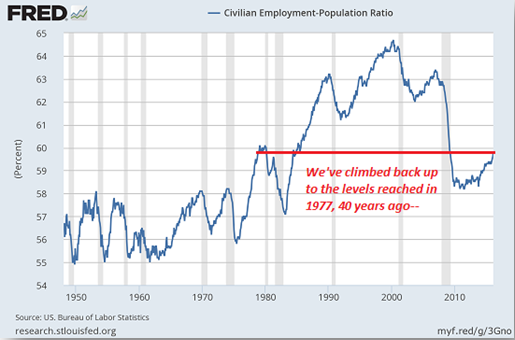
In The New Normal “recovery,” the percentage of the population with a job has advanced all the way back up to where it was 40 years ago, in the late 1970s. During booms eras many more people were employed, but today we are at employment levels similar to that of the 1970s. Fewer people are working and they are earning less money if we were to adjust for inflation, it’s stagnation.
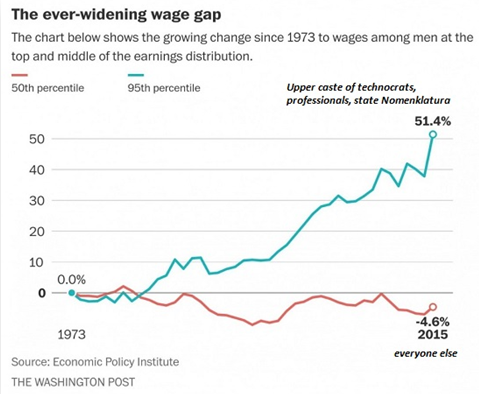
“Most of the gains that have been registered are flowing to the top 5%. This is not just because of a few greedy people at the top have taken the gains, but also the factor of mixing global competition with technology places a premium on workers who have the skillet set to generate value with increasing technology. Just working in a factory or doing some white collar job does not create a premium in an economy that is pressured by global competition and automation. “
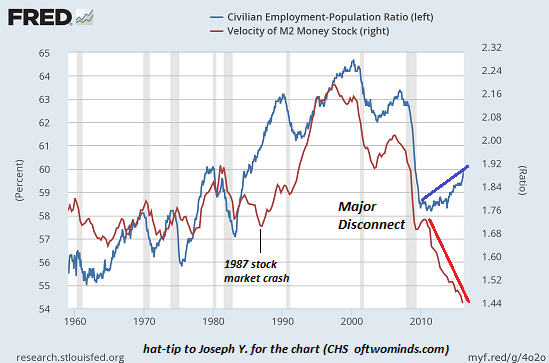
Money velocity has been falling and everybody is concerned as to why it is doing so, but the fact of the matter is that there is no growth. The jobs themselves are paying minimal which is why people are dropping out of the labour force to start their own personal endeavour of sorts.
“A notable feature of the chart is the divergence being shown in 2008-2009 and this is when we went into hyper printing of money to put the system on life support. The productivity numbers in the developed world has fallen off; there is lack of growth. Growth in present day is not real, the growth we are seeing is artificial.”
STRUCTURAL REFORM
“We all know the system broke since the last crisis. We now need structural reform of entitlements. We need a new form of capitalism that is more accessible to people and that is not just controlled from the top through central planning. We are having a hyper-monetary policy where the status quo is looking to central banks to solve all the problems by issuing more debt and liquidity. These problems cannot be solved this way; we have to deal with the reality that we need deep structural reforms.”
If you observe caterpillars in construction sites you will notice the driver has many levers in front of him to control. An economy is managed the same way, there are many levers to pull, but we are running the economy pulling the same lever and that is monetary policy. The other levers are fiscal policy which we are not using, public policy, and taxation policy and so on. These are elements that come out of the political process, it is on political leaders to realize this and make appropriate decisions.
“One of the things you can have a lot of faith in is mankind. It will reset, we will survive and we will come out of it, but unfortunately it leads to crises and it is always the innocent that are most burdened.”
Disclaimer: The views or opinions expressed in this blog post may or may not be representative of the views or opinions of the Financial Repression Authority.
05/10/2016 - Financial Repression Pillar: Forced Inflation To Reduce The Burden Of Government Debt
Donald Trump Advocates
Financial Repression To Reduce
The Burden Of Government Debt:
Inflate It Away By Printing Money
“If interest rates go up, we can buyback debt at a discount if we are liquid enough as a country. People say I want to default on debt – these people are crazy. First of all you never have to default because you print the money I hate to tell you, so there is never a default. It was reported in the NYT that I want to default on debt – you know I am the king of debt, I love debt, but debt is tricky and its dangerous. But let me just tell you: if interest rates go up and bonds go down, you can buy debt – that’s what I’m talking about. So here is the story, if we have an opportunity where interest rates go up and you can buy back debt at a discount. I always like to be able to do that if you can do that. That’s all I was talking about, they have it like I’m going to go back to creditors and I am going to renegotiate or restructure debt. It’s ridiculous.”
Disclaimer: The views or opinions expressed in this blog post may or may not be representative of the views or opinions of the Financial Repression Authority.
05/09/2016 - Jim Bianco: Gold Is A “High Yield” Asset In A Negative Rate World
“The amount of debt yielding negative is now $8.1 trillion…65% of which is in Japan and pretty much the rest of it is in Europe right now. 20% of world sovereign bond markets are now at negative interest rates. If you exclude the U.S., it’s about 50%… My friend Jim Grant likes to say that the problem with the barbarous relic is for 5,000 years…it’s always yielded zero; it had no yield, and that’s always been the argument against owning it: ‘Why would you want to put your money in something that doesn’t yield you anything?’ Well, guess what? Today, a zero yield as gold has is a high-yield alternative when compared to $8 trillion dollars’ worth of investment options in sovereign bonds. So we are really in an alternative universe where the high yield is now zero.”
Disclaimer: The views or opinions expressed in this blog post may or may not be representative of the views or opinions of the Financial Repression Authority.
05/05/2016 - Larry Lindsey: The End Game Consequences Of Financial Repression
“Our training and bias have always been toward policy activism — that tweaking this or changing the dial on that can always make things better. But critics of activism, often lumped into the ‘Austrian School,’ argue that this will inevitably end badly .. Tweaking and dialing are addictive, both to the policymaker and to the governing class. Inevitably, this will lead to an unsustainable amount of tweaking and dialing and an endgame in which policymakers become powerless as the state’s monetary and fiscal dials are no longer functional and the state is, in effect, bankrupt. But as states never go bankrupt, they then must seize the assets under their dominion through either inflation, taxation and confiscation .. The Roman Empire tried all three. The medieval popes had their Jubilee Years in which all debts, particularly their own and those of other sovereigns, were forgiven. Debasement, grinding taxation, and confiscation from disfavored groups (often the Jews) were all part of the process .. The growth of societies trying these schemes diminishes. Long-term capital moves from growth-enhancing productive investment, which dries up as it increasingly gets channeled into the hands of the state.” – Larry Lindsey
Disclaimer: The views or opinions expressed in this blog post may or may not be representative of the views or opinions of the Financial Repression Authority.
“These so-called ‘free trade agreements’ are not trade agreements. The purpose of the ‘partnerships,’ which were drafted by global corporations, is to make corporations immune to the laws of sovereign countries in which they do business. Any country’s sovereign law whether social, environmental, food safety, labor protections—any law or regulation—that impacts a corporation’s profits is labeled a ‘restraint on trade.’ The ‘partnerships’ permit corporations to file a suit that overturns the law or regulation and also awards the corporation damages paid by the government of the country that tried to protect its environment or the safety of its food and workers. The lawsuit is not heard in the courts of the country or in any court. It is heard in a corporate tribunal in which corporations serve as judge, jury, and prosecutor .. In other words, the ‘partnerships’ give global corporations the power to overturn democratic outcomes All of the blather about free trade and tariff reduction is mere cover for the only purpose of TTIP, which is to establish American economic imperialism over the peoples whose governments sold them out for money.” – Dr. Paul Craig Roberts, Former Assistant Secretary to the U.S. Treasury
Disclaimer: The views or opinions expressed in this blog post may or may not be representative of the views or opinions of the Financial Repression Authority.
05/05/2016 - GREENPEACE LEAK: Exposes Corporate “Regulatory Ring Fencing” Through TTIP
The secret documents represent roughly two-thirds of the latest negotiating text, and in several cases expose for the first time the position of the U.S.
Confirming that the TransAtlantic Trade and Investment Partnership (TTIP) amounts to “a huge transfer of power from people to big business,” Greenpeace Netherlands on Monday leaked 248 secret pages of the controversial trade deal between the U.S. and EU, exposing how
Environmental regulations,
Climate protections, and
Consumer rights
are being “bartered away behind closed doors.”
The documents represent roughly two-thirds of the latest negotiating text, according to Greenpeace, and on some topics offer for the first time the position of the United States.
“Total secrecy was the only way the European Commission could keep the European people from learning the truth about these appalling negotiations, and now the cat is out of the bag.” —John Hilary, War on Want
Before Monday, elected representatives were only able to view such documents under guard, in a secure room, without access to expert consultation, while being forbidden from discussing the content with anyone else. This secrecy runs “counter to the democratic principles of both the EU and the U.S.,” the website ttip-leaks.org declares.
And in the absence of transparency, “hard won environmental progress is being bartered away behind closed doors,” said Faiza Oulahsen, campaigner for Greenpeace Netherlands.
“Whether you care about:
Environmental issues,
Animal welfare,
Llabor rights or
Internet privacy,
you should be concerned about what is in these leaked documents,” Oulahsen said. “They underline the strong objections civil society and millions of people around the world have voiced:
TTIP is about a huge transfer of democratic power from people to big business.
Greenpeace Netherlands zeroes in on four aspects of serious concern in the obtained texts, including:
The apparent omission of the so-called “General Exceptions rule,” which allows nations to regulate trade “to protect human, animal and plant life or health” or for “the conservation of exhaustible natural resources;”
The absence of language about climate protection, plus provisions that would “stimulate imports and exports of fossil fuels—like shale gas from fracking or oil from tar sands—while clean energy production for local communities and associations would be considered unfair competition and a barrier to trade.”
A clear threat to the “precautionary principle,” which requires regulatory caution where there is scientific doubt, shifting the burden of proof on whether a product is safe to public authorities, not on those who seek to sell it;
The heretofore shrouded “high degree” of corporate influence over the talks.
According to the Guardian, which saw the original documents (retyped by Greenpeace and available here):
U.S. proposals include an obligation on the EU to inform its industries of any planned regulations in advance, and to allow them the same input into EU regulatory processes as European firms.
American firms could influence the content of EU laws at several points along the regulatory line, including through a plethora of proposed technical working groups and committees.
“These leaks confirm what millions of people across Europe have suspected all along—that this toxic trade deal is essentially an enormous corporate power grab,” said Global Justice Now trade campaigner Guy Taylor on Monday.
“It’s no secret that the negotiations have been on increasingly shaky ground,” Taylor continued, citing petitions signed by millions of Europeans and ongoing public protests. “These leaks should be seen as another nail in the coffin of a toxic trade deal that corporate power is unsuccessfully trying to impose on ordinary people and our democracies.”
Similarly, War on Want executive director John Hilary declared: “Today marks the end of TTIP.
Total secrecy was the only way the European Commission could keep the European people from learning the truth about these appalling negotiations, and now the cat is out of the bag.”
“We have long warned that TTIP is a danger to democracy, food safety, jobs and public services,” Hilary continued. “Now we see it is even worse than we feared. Today’s leak shows the European Commission preparing to sell us down the river, doing deals behind closed doors that will change the face of European society for ever.
It is simply unacceptable that a group of unelected officials should be allowed to contemplate such a thing without any public scrutiny.”
The 13th round of TTIP talks took place last week in New York. U.S. President Barack Obama, who was stumping for the deal last month in Germany, had hoped to wrap up negotiations by the time he left office—a timeline that looks increasingly unrealistic.
Public support on both sides of the Atlantic has plummeted; leading U.S. presidential candidates oppose the deal and others like it; and President François Hollande on Sunday became just the latest French official to express skepticism about the deal.
Disclaimer: The views or opinions expressed in this blog post may or may not be representative of the views or opinions of the Financial Repression Authority.
05/03/2016 - ALERT: PIMCO’S Global Economic Advisor, Joachim Fels Suggests QE Should Buy Equities Next
Speaking at a panel in the Milken conference titled “Monetary Policy: Out Of Ammunition” moments ago Pimco’s global economic advisor Joachim Fels, formerly of Morgan Stanley and Goldman Sachs, had a few observations on QE vs NIRP, not surprisingly nudging central banks that explicitly central bank buying, i.e., QE, is far more powerful than the implicit deflationary signal which is NIRP.
FELS: QE IS A MORE POWERFUL TOOL THAN NEGATIVE RATES
He then proceeded to point out the obvious;
FELS: PROBLEM IS INFLATION IS TOO LOW
By which he was of course referring to wages; as we showed recently rent inflation is currently running at a record 8% Y/Y (ignoring the double digit increases in health insurance costs).
He then had some more big picture ideas of how the world can get rid of its excess debt: central banks should just buy it all up and then “cancel it” (of course by doing so they would also cancel the offsetting balance sheet entry which is bank reserves which also happen to prop up global capital markets).
FELS: TO ERASE DEBT, CANCEL IT ON CENTRAL BANK BALANCE SHEET
And finally, he hinted what he, and/or Pimco, would prefer that the Fed should buy next. Stocks.
FELS: QE SHOULD FOCUS ON CREDIT AND POTENTIALLY EQUITY BUYING
What he did not note is that by the time it’s all over, central banks will be buying not just credit and equities, but virtually every asset class, both directly and indirectly through helicopter money. That said, we prefer that “other” proposal by Pimco’s Harley Bassman from two weeks ago, according to which the Fed should monetize gold to a price of about $5,000 to “shock” inflation expectations higher. However, somehow we doubt if given the option of buying gold or stocks (directly as opposed to through Citadel), the Fed will pick the former.
Disclaimer: The views or opinions expressed in this blog post may or may not be representative of the views or opinions of the Financial Repression Authority.
05/03/2016 - Better Finance: Financial Repression Destroys Savings – European Savers Bailed In By ECB
At the end of 2013, at the occasion of the publication of its yearly report on the real return of pension savings, Better Finance warned of the risk of a disastrous eradication of European savings across the board. Nearly two and a half years later and the warning goes unheeded, with the European Central Bank intensifying the financial repression of European Savers by further lowering its main interest rate from 0.5 to 0.25 percent. Now this fear is spreading to all actors – savers and retirees, insurers, pension funds, even bankers – threatening the whole edifice of pensions and savings.
Axel Kleinlein, the head of Germany’s Association of Insured Persons (BdV) and member of Better Finance, stresses the fact that lowering interest rates even further effectively crushes all hopes of decent pensions in the future and has started a campaign against the role of the ECB, which was relayed by the media all over Europe.
What is at stake is the entire monetary policy of the European Central Bank. This is the climax of financial repression.
Financial Repression refers to a set of governmental or central bank policies that keep real interest rates artificially low or negative and regulate or manipulate a captive audience into investing in government debt. Central banks started to fund banks at very low interest rates, most often asking for government debt as eligible collateral. Then central banks engaged in quantitative easing campaigns buying up sovereign bonds directly on the market. To complete the picture central banks try to keep inflation alive through quantitative easing policies in an attempt to further reduce the weight of sovereign debt in the EU Member States, but in the process also obliterating the value of all savings.
Indeed, we know that inflation is the weapon of mass destruction of savings and savers. Today, thankfully, the desired inflation has so far failed to materialise. Policymakers believe that low interest rates will encourage consumption but fail to take into account basic human nature: a small saver faced with low or even negative returns, is more likely to brace for hard times, tighten the belt and stow money under the mattress for a rainy day.
As President Jean Berthon says: “It is more than time to oppose by all means this disastrous policy and we call on all Member Associations of Better Finance to actively campaign in their home country to force the central banks to drastically change their policy.”
Disclaimer: The views or opinions expressed in this blog post may or may not be representative of the views or opinions of the Financial Repression Authority.
05/03/2016 - Kroll Bond Rating Agency: “ECB Doubles Down on Financial Repression”
They preface the report with this interesting comment:
We just posted a comment on the situation in the EU, where financial repression is still increasing. Big concern from my perspective is that negative rates and central bank market intervention seem to be frightening investors and convincing savers to abandon the financial system. Look at the earnings reports from UBS and the other large EU banks. Banks are 80% of the EU balance sheet and virtually all are shrinking. It is hard to envision how this situation does not end in tears for the nations of Europe given the policy mix. Or to put it another way, should we worry about Brexit or Gexit?
The economic policy debate seems comprised of a binary choice. On the one hand, we are offered radical action by global central banks including the forced transfer of value from savers to debtors, and on the other, increased fiscal spending funded via either more debt or higher taxes. We believe that there is a third choice, namely to make public policy pro-growth as well as pro-consumer, with a balanced approach that is constructive rather than punitive. Good luck getting the current cast of characters in the global central banking community to start talking about growth. But if we don’t see a change in policy by the ECB, there could be a German-led political crisis in Europe before end of the year.
Disclaimer: The views or opinions expressed in this blog post may or may not be representative of the views or opinions of the Financial Repression Authority.


 05/23/2016 - Assuming Big Returns On Pension Funds: A Lot Can Go Wrong




 Click Here to Download to Listen to the Audio