07/21/2016 - Mish Shedlock: KEY TAKE AWAY FROM BREXIT IS ONE THING, VOTERS ARE FED UP!
FRA Co-founder Gordon T. Long is joined by Mish Shedlock in discussing the details of Brexit, the BoJ, the current state of Illinois and much more.
Mike Shedlock is a registered investment advisor representative for SitkaPacific Capital Management. Sitka Pacific is an asset management firm whose goal is strong performance and low volatility, regardless of market direction. He is also a contributing “professor” on Minyanville, a community site focused on economic and financial education.
SOCIAL UNREST AND BREXIT
“Key take away from Brexit is one thing, voters are fed up.”
What’s unique about Italy is that it’s a lot of individual people buying bank bonds and they can literally lose everything. Furthermore social unrest in the US explains the rise of Donald Trump and the popularity of a socialist, Bernie Sanders. This explains why Clinton, Sanders, and Trump are all against the Trans-Pacific Trade Partnership. It is a 5500 page document, there is absolutely no way it is simply about free trade. Free trade can fit on a napkin; it doesn’t take 5500 pages to enforce a free trade agreement. Make no mistake the TPP is about much more.
“Brexit is not the cause, it is the symptom.”
Speaking of real household income, the top 5 % have done very well, the top 20% have done good, but the bottom 80% have done horribly in comparison and this all began in 1971 when Nixon took the US off the gold standard. This is the same time when you had an explosion in credit, an explosion in corporate profits; all of this began at the same time. People are not blaming the Fed or the public union, they are blaming free trade when in fact we started losing manufacturing jobs long before NAFTA. The number of people it takes to build anything is dramatically lower and this began well before any of the agreements happened. The politicians can’r make accurate decisions because they don’t get it, they are a part of the wealthy class; they are exempt from Obamacare and rules and regulations that the ordinary citizen abides to. They live in their own isolated world and they just don’t get it.
“The EU isn’t about free trade, just look at the carve outs they have on France for agriculture. Everyone in Europe pays more for agriculture just to protect the inefficient French market.”
Then we had all these warnings that the UK was still going to have to abide by the migration rules of the EU if the UK wanted to work out any trade agreement, don’t these arrogant politicians realize that this is exactly why the UK left? Then if you look at bilateral trade, the UK has most of its trade with the rest of the world; the UK runs a huge trade deficit with Europe and especially Germany. Because of this the UK has the upper hand in negotiations due the bilateral balance of trade it has with the rest of Europe.
LABOR REPORTS
There is certainly a story behind the numbers they are putting out. The household survey numbers have been bad for 4 straight months; meanwhile there is this volatility in the establishment survey. We need to see another month or two of both surveys and maybe we will see a new trend.
Throughout America, people are working multiple jobs because companies do not want to hire them full time and provide them full time benefits. Another example, New England nursing homes are facing problems keeping staff because of their 24/7 operations. Workers cannot live off of one salary and so they are working 2-3 jobs.
STATE OF ILLINOIS
“Every 5 mins somebody is leaving Illinois.”
The people leaving the most are the millennials and those a little bit older. It is a sad environment, property taxes here are totally out of this world, and in Illinois you down own your own home because of property taxes. The solution without a doubt is bankruptcy. The Chicago public school system is bankrupt, period. All that needs to happen is recognition of that fact but it is not even possible to declare bankruptcy because Illinois doesn’t allow it.
JAPAN STICKING WITH THE OLD
“Japan is a bug in search of a windshield.”
I believe people are increasingly questioning whether central banks have things under control. Japan just doesn’t get it; they are trying to work something that hasn’t worked for 30 years. The only thing they know how to do is print more money and push liquidity out. But the bigger problem is central banks can fix liquidity but they can’t fix solvency.
Disclaimer: The views or opinions expressed in this blog post may or may not be representative of the views or opinions of the Financial Repression Authority.
07/20/2016 - Ronnie Stoeferle: “IN GOLD WE TRUST!”
Ronald-Peter Stöferle, Managing Partner & Investment Manager at Incrementum discusses with FRA Co-founder Gordon T. Long, the key points of his recent 2016 report, “In Gold we Trust.”
Ronald was born 1980 in Vienna, Austria, is a Chartered Market Technician (CMT) and a Certified Financial Technician (CFTe). During his studies in business administration and finance at the Vienna University of Economics and the University of Illinois at Urbana-Champaign, he worked for Raiffeisen Zentralbank (RZB) in the field of Fixed Income/Credit Investments. After graduation, he participated in various courses in Austrian Economics.
In 2006, he joined Vienna-based Erste Group Bank, covering International Equities, especially Asia. In 2006, he also began writing reports on gold. His six benchmark reports called ‘In GOLD we TRUST’ drew international coverage on CNBC, Bloomberg, the Wall Street Journal and the Financial Times. He was awarded 2nd most accurate gold analyst by Bloomberg in 2011. In 2009, he began writing reports on crude oil. Ronald managed 2 gold-mining baskets as well as 1 silver-mining basket for Erste Group, which outperformed their benchmarks from their inception. In 2014 he published a book on Austrian Investing
“One of the main aspects of the report is that we are in a bull market again.”
Gold Price Target for June 2018: USD 2,300
Hedge fund managers and investors were buying gold and mining shares a couple of months ago and now we are entering what the Dow Theory calls ‘the public participation pace.’ $2,300 USD is our long term target which is based on the fact we are expecting rising inflation rates. Right now we have a tremendous global slowdown and the strong USD has further fueled this slowdown.
It is confirmed however that gold is rising in every currency. And this is a strong sign for a bull market. The world believed that the Fed would hike interest rates but that didn’t happen and now with the Brexit we will definitely be in this current interest rate environment for longer, the US may even implement negative interest rates.
“The one obvious thing in the midst of this all is that central banks are really good at finding excuses for not raising rates’ now their excuse is Brexit.”
The strength of the dollar has had enormous consequences for commodities. There is a very high negative correlation between the strength of the USD and the health of commodity markets. Furthermore we have seen the effects in emerging markets that are highly dependent on a cheap dollar, the rising dollar acted as a rate hike.
Expansion of Central Banks Balance Sheet: 2007 vs 2015
“There have been rumors about helicopter money and I am almost certain it will be implemented.”
With monetary experiments, central banks have been engaging into an all-or-nothing gamble, hoping it will eventually bring about the long promised self-supporting and sustainable recovery. The central banks‘ leverage ratios and the sizes of the balance sheets relative to GDP have enormously risen in the aftermath of the 2008 financial crisis. Lastly it doesn’t help Bank of Japan (BoJ) has taken this insanity several steps further than their peers have managed; the ECB has been comparably conservative, but is currently doing its best to catch up.
5,000 Years of Data Confirm: Interest Rates Have Never Been as Low as Nowadays
“The longer interest rates stay this low, the more fragile the system will become.”
Negative interest rates are one of the last hopes to which policymakers cling. Meanwhile 5 currency areas (government bonds valued at more than USD 8 trillion have negative yields to maturity). When the centrally planned bubble in bonds finally bursts, it will be abundantly clear how valuable an insurance policy in the form of gold truly is
“Lose-lose situation for central bankers.”
The long-term consequences of low/negative interest rates are disastrous (e.g. aggravation of the real estate and stock market bubbles, potential bankruptcies of pension funds and insurers)
Normalizing interest rates would risk a credit collapse or rather a recession
Trade-weighted US Dollar Index (lhs) and the Effective Federal Funds Rate (rhs)
“A strong dollar undoubtedly has consequences for the manufacturing industry, while a strong USD is also deflationary.”
The Fed wants a weaker dollar, but this doesn’t happen in one day, it is a process. We are making a really strong case for a recession happening in the US and it will have global consequences. A recession is a very normal thing; it is akin to your need for sleep. It is a way for the system to replenish.
“If the Fed fails with the normalization of interest rates, the already crumbling narrative of economic recovery could collapse.”
We are comparing this year’s oil prices to last year’s and last year the big plunge in oil prices started in July, so just do to that we will have rising inflation rates. But it is not only this there are many factors that indication rising inflation rates. The fact that gold and mining shares have done so well since the beginning of the year is indicative that inflation is going to be a big topic.
Value of Gold Production vs. Volume of ECB and BoJ QE purchases 2016
“Gold has to be physically mined, its global supply is exceedingly stable – holding it provides insurance against monetary interventionalism and an endogenously unstable currency system”
At a price of USD 1,200 per ounce, the ECB would have bought 4,698 tons of gold in the first quarter of 2016 (which is more than 6 times the value of globally mined gold). If the European QE program is continued as planned, it would be equivalent (assuming prices don’t change) to the value of 21,609 tons of gold (~12% of the total stock of gold of 183,000 tons ever mined). Adding the volume of the BoJ: the equivalent would be 39,625 tons of gold in 2016
Incrementum Inflation Signal
“In the Long Term: If Currencies Depreciate, Gold Should Appreciate.”
It is a guide for investment allocations in our funds – depending on the signal’s message we shift allocations into or out of inflation-sensitive assets.
Proprietary signal based on market-derived data as a response to the importance of inflation momentum
Shorter reaction than the common inflation statistics
For the first time in 24 months the Incrementum Inflation Signal indicates a full-fledged inflation trend is underway
Closing Remarks
“The market is a pain maximizer.”
In poker you have to bring some chips to the table and it’s no coincidence that China is massively buying gold. Not only has the central banked, but individuals as well. Central bankers just don’t like talking about gold. They pretend that it’s just lying around in the basement. I think we are already in the early stages of an inflationary pattern, but it is important to never rule out a deflationary event. Going forward we should prepare for much more government intervention and intervention from central banks. We are seeing that the medicine doesn’t work yet they will continue to give doses of it.
“In this current global monetary experiment that we are in, it just makes sense to hold gold.”
Disclaimer: The views or opinions expressed in this blog post may or may not be representative of the views or opinions of the Financial Repression Authority.
07/15/2016 - Jeff Snider: HOW LONG CAN BUYBACKS CONTINUE TO SUPPORT A MARKET WHICH IS STANDING ON A FUNDAMENTALLY FLAWED PREMISE?
FRA Co-Founder Gordon T.Long and Jeffrey Snider, Head of Global Investment Research at Alhambra Investment Partners discuss earnings, the Chinese Yuan, Japanese Yen and the falling credibility of central banks.
As Head of Global Investment Research for Alhambra Investment Partners, Jeff spearheads the investment research efforts while providing close contact to Alhambra’s client base. Jeff joined Atlantic Capital Management, Inc., in Buffalo, NY, as an intern while completing studies at Canisius College. After graduating in 1996 with a Bachelor’s degree in Finance, Jeff took over the operations of that firm while adding to the portfolio management and stock research process.
In 2000, Jeff moved to West Palm Beach to join Tom Nolan with Atlantic Capital Management of Florida, Inc. During the early part of the 2000′s he began to develop the research capability that ACM is known for. As part of the portfolio management team, Jeff was an integral part in growing ACM and building the comprehensive research/management services, and then turning that investment research into outstanding investment performance. As part of that research effort, Jeff authored and published numerous in-depth investment reports that ran contrary to established opinion. In the nearly year and a half run-up to the panic in 2008, Jeff analyzed and reported on the deteriorating state of the economy and markets. In early 2009, while conventional wisdom focused on near-perpetual gloom, his next series of reports provided insight into the formative ending process of the economic contraction and a comprehensive review of factors that were leading to the market’s resurrection. In 2012, after the merger between ACM and Alhambra Investment Partners, Jeff came on board Alhambra as Head of Global Investment Research.
EARNINGS
“It is no doubt that earnings have been under-performing.”
What’s even more concerning is that not even is the top line falling off, but the cash flow is falling dramatically and this impacts credit along with everything else. With no earnings and no cash flow it puts us in a high risk environment. The only thing that has been holding up the market has been excessive corporate buybacks which has come out of cash flow, and to a lesser degree, borrowing. But to borrow is tough when you don’t have the cash flow to justify the credit ratings.
“How long can buybacks continue to support a market which is standing on a fundamentally flawed premise?”
We have had 4 to 5 quarters of falling revenue but the US market seems to ignore it. At some point reality has got to set in. But it is also important to note that trade problems are a systemic factor to the decline in earnings. China’s imports are down 17% year over year, but these imports are coming from basically the emerging markets and commodity markets. They have also borrowed upwards of 9 trillion USD in the last 7 years that has suddenly gotten very expensive for them, I think there is more pain to come.
CHINESE YUAN
“The health of the Yuan is tied into the global economy and the fact that the global economy is stumbling.”
Less growth in China combined with less growth around the world again increases financial risk which fuels more reluctance to funnel dollars into China; it has become a vicious cycle. The Chinese have no choice but to continue going in one direction, they are in a rock in a hard place. As the Chinese Yuan has been falling, the Yen has been rising in strength. This has become a huge issue for Japan to add to their already lost list of issues to deal with. A fracture is likely around the corner, China and Japan cannot go long without devaluing the Yen.
The markets are reassessing what central banks can actually do. And what markets found was that central banks aren’t actually as powerful as everyone believes them to be and Japan is a perfect example of that. No matter what the BOJ does that Yen continues to move on up. It fits into the paradigm of the economy, the financial risk, everyone reevaluating what central banks are capable of etc. The markets are reevaluating central banks because they see that a tight money environment despite efforts from central banks to fuel stimulation.
“Some major European bank stocks are indicative of an incoming banking crisis. We see already low interest rates around the world getting lower with each passing day; this is indicative of tight money conditions. Low rates are not stimulating.”
TROUBLING MATTERS OF DEBATE
“Most troubling thing to me currently is that there are not many answers available.”
What I see is an unstable global currency regime which we are completely unprepared for. There is no solution that has been presented that would allow for a stable currency to take over Euro dollars which clearly doesn’t work. Generally the central banks can fix liquidity problems, but they cannot fix solvency problems. We see that the credit cycle has turned from non-performing loans so on and so forth.
The idea behind QE for Japan, America and Europe was to kick start a robust recovery. Now that central banks has lost credibility as well as support. Then you have all the unintended consequences that come with almost zero money. We have nearly zero price discoveries and risk is greatly mispriced.
“Policy makers and economists have simply run out of ideas.”
Desperation is a big role of why markets are reevaluating central banks. If we go back 20 years where Alan Greenspan was a genius and he didn’t even do anything, all he did was talk and he made a career out of not talking. No matter what he did he was taken as a genius. Whereas 20 years later, Janet Yellen sounds like a fumbling idiot no matter what she does. All her actions come across as desperate because the credibility has been blown away. The Fed has been forced into action and by being forced into action it has only highlighted what the Fed can’t do.
“Resource allocation is the main benefit of price discovery; it is the life blood of the economy. The more we damage price discovery the more fatal situations will become.”
We need to look at this as an opportunity in the long run. Now that the power of central banks has come to surface and credibility has been shot, it in turn opens the door to credible solutions. The fact of the matter is that the economy is nothing like what it should be and people know that something is wrong and change is needed.
Disclaimer: The views or opinions expressed in this blog post may or may not be representative of the views or opinions of the Financial Repression Authority.
06/30/2016 - Ellen Brown: WHAT YOU NEED TO KNOW ABOUT THE TRANS-ATLANTIC TRADE AND INVESTMENT PARTNERSHIP (TTIP)
The Financial Repression Authority is joined by Ellen Brown, a well renown author and advocate of financial reforms. FRA Co-founder, Gordon T. Long sits with Ellen to discuss a myriad of topics including the TTIP, Monsanto, Blockchain Technology, and bank bail-in’s. Ellen Brown is an American author, political candidate, attorney, public speaker, and advocate of alternative medicine and financial reform, most prominently public banking. Brown is the founder and president of the Public Banking Institute, a nonpartisan think tank devoted to the creation of publicly run banks. She is also the president of Third Millennium Press, and is the author of twelve books, including Web of Debt and The Public Bank Solution, as well as over 200 published articles. She has appeared on cable and network television, radio, and internet podcasts, including a discussion on the Fox Business Network concerning student loan debt with the Cato Institute’s Neil McCluskey, a feature story on derivatives and debt on the Russian network RT,[6] and the Thom Hartmann Show’s “Conversations with Great Minds.” Ellen Brown ran for California Treasurer in the California June 2014 Statewide Primary election.
TRANS-ATLANTIC TRADE AND INVESTMENT PARTNERSHIP (TTIP)
The Transatlantic Trade and Investment Partnership (TTIP) is a proposed trade agreement between the European Union and the United States, with the aim of promoting trade and multilateral economic growth. The American government considers the TTIP a companion agreement to the Trans-Pacific Partnership (TPP). The agreement is under ongoing negotiations and its main three broad areas are: market access; specific regulation; and broader rules and principles and modes of co-operation
The controversial agreement has been criticized and opposed by unions, charities, NGOs and environmentalists, particularly in Europe. The Independent describes the range of negative impacts as “reducing the regulatory barriers to trade for big business, things like food safety law, environmental legislation, banking regulations and the sovereign powers of individual nations”, or more critically as an “assault on European and US societies by transnational corporations”; and The Guardian noted the criticism of TTIP’s “undemocratic nature of the closed-door talks”, “influence of powerful lobbyists”, and TTIP’s potential ability to “undermine the democratic authority of local government”
Kangaroo Court
A weaker element of this trade agreement is the ISDS, an investor dispute which is a ‘guaranteed kangaroo court.’ Corporations whose profits have been hurt by some actions of government can take these local governments to court. But it is not a true court; moreover it’s a panel of 3 lawyers who are paid by the corporations. The issue is that these corporations can sue the government but the government cannot sue the corporations. It is a one way street, in which these corporations do not have to pay attention to legal authorities. It is a court set up for the betterment of the corporations. Furthermore they can not only sue for their lost profits, but they can also sue for lost projected future profits.
“This is not government by the people for the people; rather it is government by the corporations and for the corporations.”
MONSANTO AND THE TTIP
“Monsanto can now start a factory in Europe, which goes completely against what Europeans have been fighting for years. This agreement squanders everything Europeans have achieved in this sort of protection.”
One of the goals of these agreements is to enforce the world to use our rules rather than the rules of the BRICS. As soon as Gaddafi started talking about his gold backed banking system for northern Africa he became a target. Saddam Hussein did the same thing that was going to take euros for oil which is counter to the whole petro dollar. History shows that anybody who steers away from this system becomes a target. If you go through the banking, the ones that control their own creation, Venezuela, Brazil, and Russia etc. are facing high waters. Furthermore there is not enough money in the system because of the nature of the system, where banks create the money and charge interest. But ideally you need a central authority that can put some money out there. I think the national dividend is a great idea, the Swiss just had a referendum but it didn’t pass. Nonetheless it’s great for them to consider this at all.
“The money shouldn’t be coming from us, from our elected representatives, or from our central banks which should be representing us, but they don’t; they only represent themselves. The Federal Reserve isn’t there to serve our interest; they are there to serve the banks.”
BLOCKCHAIN TECHNOLOGY
The blockchain is seen as the main technological innovation of Bitcoin, since it stands as proof of all the transactions on the network. A block is the ‘current’ part of a blockchain which records some or all of the recent transactions, and once completed goes into the blockchain as permanent database. Each time a block gets completed, a new block is generated. There is a countless number of such blocks in the blockchain. Blocks are linked to each other in proper linear, chronological order with every block containing a hash of the previous block. To use conventional banking as an analogy, the blockchain is like a full history of banking transactions. Bitcoin transactions are entered chronologically in a blockchain just the way bank transactions are. Blocks, meanwhile, are like individual bank statements. Based on the Bitcoin protocol, the blockchain database is shared by all nodes participating in a system. The full copy of the blockchain has records of every Bitcoin transaction ever executed. It can thus provide insight about facts like how much value belonged a particular address at any point in the past.
Block chain technology can definitely revolutionize the banking system. It is important to understand that at this point, nearly all alternatives are better than what we currently have in place. The banks haven’t been able to come up with a valid plan because they don’t have the money; they are creating lots of money only to give off the appearance.
“Banks create money on their books in response to our request for a loan.”
We now know that we basically create the money. When we take out a loan, the bank takes your IOU and turns it into money, and that’s where money comes from. We, the borrower are the ones monetizing our own IOU; the bank merely just makes it official.
BANK BAIL-IN
“We are moving towards a cashless society.”
The argument for going cashless is this whole monetarist theory that there is specific amount of money in the system, and the central banks control the money that’s out there by playing with interest rates. They lowered the interest rate to zero and still we have deflation, and now the theory is to lower it below zero which clearly makes it worse. That means you’re paying money to keep your own money in the bank.
The reason people are waking up now is because they have been screwed. The balance is tipping; the people who are suffering are beginning to wake up to the reasons why.
Disclaimer: The views or opinions expressed in this blog post may or may not be representative of the views or opinions of the Financial Repression Authority.
06/15/2016 - Richard Duncan: CHINA’S HARD LANDING HAS ALREADY BEGUN!
The Financial Repression Authority is joined by Richard Duncan, an esteemed author, economist, consultant and speaker. FRA Co-founder, Gordon T. Long discusses with Mr. Duncan about the current Chinese situation and the ramifications being imposed on the global economy.
Richard Duncan is the author of three books on the global economic crisis. The Dollar Crisis: Causes, Consequences, Cures (John Wiley & Sons, 2003, updated 2005), predicted the current global economic disaster with extraordinary accuracy. It was an international bestseller. His second book was The Corruption of Capitalism: A strategy to rebalance the global economy and restore sustainable growth. It was published by CLSA Books in December 2009. His latest book is The New Depression: The Breakdown Of The Paper Money Economy (John Wiley & Sons, 2012).
Since beginning his career as an equities analyst in Hong Kong in 1986, Richard has served as global head of investment strategy at ABN AMRO Asset Management in London, worked as a financial sector specialist for the World Bank in Washington D.C., and headed equity research departments for James Capel Securities and Salomon Brothers in Bangkok. He also worked as a consultant for the IMF in Thailand during the Asia Crisis. He is now chief economist at Blackhorse Asset Management in Singapore.
Richard has appeared frequently on CNBC, CNN, BBC and Bloomberg Television, as well as on BBC World Service Radio. He has published articles in The Financial Times, The Far East Economic Review, FinanceAsia and CFO Asia. He is also a well-known speaker whose audiences have included The World Economic Forum’s East Asia Economic Summit in Singapore, The EuroFinance Conference in Copenhagen, The Chief Financial Officers’ Roundtable in Shanghai, and The World Knowledge Forum in Seoul.
Richard studied literature and economics at Vanderbilt University (1983) and international finance at Babson College (1986); and, between the two, spent a year travelling around the world as a backpacker.
THE CHINESE FINANCIAL CRISIS
“China’s economy resembles a spinning top that is running out of momentum. It is wobbling and gyrating erratically.”
China is really just running into a brick wall. If they continue to have more and more credit growth, it will only exaggerate their problem. This is essentially the nature of China’s current problem. A stock market crash, diminishing returns on credit, a plunge in imports, capital flight and currency volatility are all signs that China’s great economic boom is now coming to an end. In all probability, this is just the beginning of what is likely to be a very protracted economic slump.
China’s economy need not collapse into a Chinese Great Depression to produce a global economic crisis, although the possibility of economic collapse in China cannot be ruled out. The 17% contraction in Chinese imports last year was already enough to tip the global economy into recession. The consequences of this economic hard landing in China will be felt in ever corner of the world.
CONSEQUENCES OF INCREASING CREDIT IN AMERICA
Despite the efforts of quantitative easing, it did not help or facilitate much benefit to China. This is largely due to the fact that China’s economy is so large. There is a large gap between how much China produces and how much China consumes. From 2005 to 2014, China invested $4.6 trillion more than it consumed. If we look at aggregate financing it reveals a much more detailed story of the credit growth situation in China. Since 2009 credit growth has been significantly slowing, and once this began, so too did nominal GDP growth begin to decline.
“China is increasingly misallocating and wasting credit.”
During the last 25 years in China:
If credit growth in China continues to grow then by 2021, total credit growth in China will be more than the peak credit growth the US had back in 2008.
The Gross Output Value of Construction increased by 134 times, growing at an average annual rate of 21%.
Building Area Under Construction increased by 33 times, at an average annual rate of 15%.
Steel Production increased by 12 times, at an average rate of 11% growth per year. Consequently, China now has 50% of global steel capacity.
Cement Production increased 12-fold, growing by an average annual rate of 11%. During just three years (2011 to 2013), China produced more cement than the United States did during the entire 20th Century. China now has 59% of global cement capacity.
On the other hand many would believe that if China devalued the yuan, it would bring in more capital investment, but this is not the case. If they had one big devaluation it would make china much more competitive in the global economy. The trade surplus will soar and bring in more money into china. But at the same time China’s trading partners would not be pleased because China already has a large trade surplus with the rest of the world. So too devalue further only to make the already large trade surplus even larger would be unfair by anyone’s standards.
FALLING FOREX RESERVES
“Rather than the reserves shrinking, the more important thing to note is that they have not been growing.”
The buyers who are absorbing the treasuries being sold at are really people just fleeing negative interest rates. Rather than take a negative yield, they would rather buy US treasuries at a pathetic 1.7% on a 10yr. The reason China’s forex reserves are falling is because Chinese people want to sell Chinese yuan and buy dollars. And with these dollars they want to buy treasury bonds.
I do expect there to be a steady depreciation in the yuan coming in the near future. But much of this depends on what happens to the dollar. It is very clear that if the dollar goes up, the yuan is going to go down and this is a problem because the more the yuan goes down then the cheaper the Chinese goods will become compared to the US. Therefore making it more difficult for the fed to reach its mandate of 2% inflation.
JOB CREATION AND SUSTAINMENT IN CHINA
The green shows that China’s’ economy made up 13% of the global economy. But Chinese household consumption made up only 9% of global consumption, while investment made up 24.4% of global investment. This is mind boggling because its telling of investment in all kinds of structures which create jobs.
“If global investment and Chinese investment grow at the same rate as they are now, then within 10 years; Chinese investment will make up 60% of global investment. Of course this is not possible, it just won’t happen, so the investment is going to have to slow. “
What Chinese authorities are telling is that they are consequently going to move from investment driven growth into consumption driven growth, but this again is just not possible because if you begin laying off factory workers, then these people will consume less, not more. If investment slows as it must, then consumption will also slow. So in order to have any growth at all, Chinese spending will need to sharply increase.
“For the rest of the world it does not matter how much China’s economy is growing by, but that matter is how much their imports are growing by.”
When Chinese imports are growing, china then becomes a significant driver for global economic growth. But last year Chinese imports contracted by a staggering 17%. Brazil is now suffering the world depression in 100 years because commodity prices have crashed due to lack of Chinese demand. The effects of this import contraction are clearly being felt and it will be global. All around the world we are seeing a rapidly growing backlash against free trade and the rise of anti-free trade candidates on both the right and the left.
“We need to push up wages in the manufacturing industries around the world. Currently the average wage rate globally is $8/day, and there are hundreds of millions of people who would be happy to work for $5/day. We now live in a global economy, we are very much interconnected and we have to find a way to increase wages in the manufacturing sector.”
Disclaimer: The views or opinions expressed in this blog post may or may not be representative of the views or opinions of the Financial Repression Authority.
05/27/2016 - John Rubino: DEFLATION IS A DIRECT RESULT OF OUR ATTEMPTS TO CREATE INFLATION THROUGH EASY MONEY!
John Rubino of DollarCollapse.com and FRA Co-founder, Gordon T. Long discuss the effects of the rise in eCommerce along with the rise of technology and the consequences we are facing from flawed perceptions of financial authorities.
John Rubino is author of Clean Money: Picking Winners in the Green Tech Boom (Wiley, December 2008), co-author, with GoldMoney’s James Turk, of The Collapse of the Dollar and How to Profit From It (Doubleday, January 2008), and author of How to Profit from the Coming Real Estate Bust (Rodale, 2003). After earning a Finance MBA from New York University, he spent the 1980s on Wall Street, as a currency trader, equity analyst and junk bond analyst. During the 1990s he was a featured columnist with TheStreet.com and a frequent contributor to Individual Investor, Online Investor, and Consumers Digest, among many other publications. He now writes for CFA Magazine and edits DollarCollapse.com and GreenStockInvesting.com.
The big retail chains are generally seen as pretty good barometers of the health of “the consumer.” And since — in today’s late-cycle debt-binge pseudo-capitalism — the consumer drives the economy, the numbers coming out of the aforementioned retail chains should be cause for worry. Ecommerce companies like amazon are making it easier and easier to stay at home. Women now are more and more buying their clothes from the comfort of their homes which will soon make the need for malls obsolete.
Furthermore by increasing the minimum wage rate in America, all of the fast food chains have begun automating cashiers with kiosks. McDonalds’ has already begun doing this and this new direction has highlighted the lesser need for human labor within the retail sector. Warehouses and factories used to employ many people throughout the world, now with the rise of technology, and particularly in America these places have become vastly automated. In many cases you do not need bartenders, waiters, and cashiers. All of these tasks can be automated through technology.
“I hate to be apocalyptic but the fact of the matter is we have multiple storms that are all playing in the same direction and they are feeding on each other as a link. To link monetary policy and cheap money to robotics. If you are a CEO and money is this cheap, you are going to invest into robotics. These trends have accelerated the shift to robotics and this wave is going to shock people and leave many without jobs.”
MONETARY POLICY
When interest rates are low it is a signal to the market to borrow lots of money. Over the past couple of decades due to these low interest rates, the businesses of the world have begun mass borrowing of money to build factories. This mass overcapacity in turn leads to deflation. for example when you build too much steel you cannot just stop operations at the given plant; the plant must continue to run to at least break the variable cost, which in the long run drops the price of steel.
“Deflation is a direct result of our attempts to create inflation through easy money.”
Cheap money was not going to bring demand forward any more than two years, but what it would do is create a dramatic over supply. We have had $9 trillion leveraged into the emerging markets that basically went into fueling overcapacity for the past several years. When you get overcapacity you lose price power and then cash flows begin to be depleted. This was easily predictable, there was no economist that would say otherwise, however the mistake was that they thought we had some sort of recovery happening or they ignored that and thought Japan had the right approach.
“The people making high level financial decisions the past decade are clueless. They have no idea what the consequences of their decisions are. The people in charge now are getting exactly the opposite of what their predecessors expected when they implemented QE, and ran massive government deficits.”
This is going to force another wave of major layoffs. We already have a gutted middle class; we are killing the golden goose that actually buys consumer products. Maybe what was really missed is that all of this economics was based on a standalone country. We live in a globalized economy now that has labor arbitrage, and the central banks have underestimated the global impacts of these policies.
“We are at the point where there are no more options. Anything we do from now on will have some sort of unintended consequences that will come back to bite us.”
The Japanese Central Bank and the ECB both took steps to devalue their currencies and they got the opposite result; the currencies went up. If we have gotten to the point where all the emergency measures central banks implement do not seem to work then it can’t be interpreted as a sign that we are coming or have come to the end of this process.
THE NEW NARRATIVE
“The narrative has now been shifted to a massive move of increasing central banks’ balance sheets that will be based on fiscal spending of infrastructure.”
James Rickards in his new book, ‘The New Case for Gold’ argues that to get the dollar down and force inflation into the system a way to do it is for the government to drive up the price of the gold. The enemy of the government has been gold, but it can also be the friend of the government in a crisis situation. Similarly, Catherine Austin Fitts argues the 1% has sucking wealth out of the US society for the past few decades and they have basically stolen just about as much as they think they can steal. Now it is in their interest to go back to sound money to protect what they have stolen. This is another reason for the gold standard to eventually look useful to the people in charge.
Disclaimer: The views or opinions expressed in this blog post may or may not be representative of the views or opinions of the Financial Repression Authority.
05/12/2016 - Charles Hugh Smith – WHY OUR STATUS QUO FAILED & IS BEYOND REFORM
The Financial Repression Authority is delighted to have Charles Hugh Smith, prolific writer on the web and author of the highly acclaimed book, Why Our Status Quo Failed and is Beyond Reform. FRA Co-Founder, Gordon T. Long delineates with Charles on the core topics that are mentioned in his book as well as go over key diagrams to supportive diagrams.
Charles Hugh Smith is the Publisher of the site “Of Two Minds”. From its humble beginnings in May 2005, Of Two Minds now attracts some 200,000 visits a month and has been listed No. 7 in CNBC’s top alternative financial sites. His commentary is featured on a number of sites including: Zerohedge.com. The American Conservative, Peak Prosperity and AOL’s Daily Finance site (www.dailyfinance.com. He has written eight books. Charles Hugh Smith graduated from the University of Hawaii, Manoa in Honolulu. Charles Hugh Smith currently resides in Berkeley, California and Hilo, Hawaii.
Mr. Smith’s articles, which critique the status quo, had influence from Braudel’s historical account of early capitalism. Smith’s economic works stress the value and efficacy of decentralizing power and wealth, the individual’s power of self-determination and the value of community, which in his view has been diminished by the state. His blog covers an eclectic range of timely topics: finance, housing, Asia, energy, long term trends, social issues, health/diet/fitness and sustainability.
“I wanted to encapsulate in a very short form that the status quo is broken and it is not going to be able to solve the problems. In order for us to move forward we first need to accept this reality.”
The core thesis in this book is that humanity has 6 problems which are interconnected:
Entrench poverty: There are hundreds of millions of people who remain in severe poverty and they do not have access to resources to better their situations.
“The idea that we are going to reach every human on the planet has been proven incorrect.”
Using more of everything in a world of finite resources: We have to adopt a ‘de-growth model,’ which is to make better use of the resources we have instead of just relying on consuming more.
Wages is the only way we have of distributing the output of an economy:
“The share of our national output that is going to wages is declining. The rise of automation and technology has decreased the demand for human labour and this will continue as a trend into the indefinite future.”
When you consolidate power in a central state you consequently give an upper hand to the wealthy to have influence over that centralized power:
“I call it cartel state capitalism and we see it everywhere where the industries are controlled by a handful of players who have a great degree of influence.”
Depending on credit for everything.
“We are borrowing from the future to fund present day consumption.”
The current system pays people regardless of their productivity and contribution:
“People need work, they need livelihoods and they need a positive social role within their community. Paying them to sit home and do nothing creates a whole new assortment of problems. People need work and a sense of importance and contribution.”
THE NEW NORMALS
It is all the central planning arrangements and policies that have been implemented since the 2008 Financial Crisis. One new normal is the federal government ownership of student debt. It is now on this incredible increase where the government is buying all of the student loans because it is the only way to mask the bankruptcy of the student loan system. The GDP in the US, EU, Japan and other developed economies has been subpar. It has been barely over 1% and it is being driven by extraordinary expansion of debt. More debt is working against us because there is not enough real wealth being generated to pay for it. Throwing more debt at it does not work. Another new normal is this increasingly popular practise of growing more debt to hide your nonperforming loans.
“The problem is that the debt is inextinguishable. The central banks can do a great job in creating liquidity but they cannot solve solvency problems. And this is suggesting the central issue that debt is a solvency problem now”
The fed creates money out of thin air and buys more assets and then it levels off until markets and the economy weaken. Then the Fed ramps up the balance sheet again which is shown by the stair step pattern of the figure. The Feds’ balance sheet never declines it only plateaus briefly and then goes up again. The new normal is that central banks are cropping up markets because if the markets collapse to their true value it would reveal the bankruptcy of the entire system.
In The New Normal “recovery,” the percentage of the population with a job has advanced all the way back up to where it was 40 years ago, in the late 1970s. During booms eras many more people were employed, but today we are at employment levels similar to that of the 1970s. Fewer people are working and they are earning less money if we were to adjust for inflation, it’s stagnation.
“Most of the gains that have been registered are flowing to the top 5%. This is not just because of a few greedy people at the top have taken the gains, but also the factor of mixing global competition with technology places a premium on workers who have the skillet set to generate value with increasing technology. Just working in a factory or doing some white collar job does not create a premium in an economy that is pressured by global competition and automation. “
Money velocity has been falling and everybody is concerned as to why it is doing so, but the fact of the matter is that there is no growth. The jobs themselves are paying minimal which is why people are dropping out of the labour force to start their own personal endeavour of sorts.
“A notable feature of the chart is the divergence being shown in 2008-2009 and this is when we went into hyper printing of money to put the system on life support. The productivity numbers in the developed world has fallen off; there is lack of growth. Growth in present day is not real, the growth we are seeing is artificial.”
STRUCTURAL REFORM
“We all know the system broke since the last crisis. We now need structural reform of entitlements. We need a new form of capitalism that is more accessible to people and that is not just controlled from the top through central planning. We are having a hyper-monetary policy where the status quo is looking to central banks to solve all the problems by issuing more debt and liquidity. These problems cannot be solved this way; we have to deal with the reality that we need deep structural reforms.”
If you observe caterpillars in construction sites you will notice the driver has many levers in front of him to control. An economy is managed the same way, there are many levers to pull, but we are running the economy pulling the same lever and that is monetary policy. The other levers are fiscal policy which we are not using, public policy, and taxation policy and so on. These are elements that come out of the political process, it is on political leaders to realize this and make appropriate decisions.
“One of the things you can have a lot of faith in is mankind. It will reset, we will survive and we will come out of it, but unfortunately it leads to crises and it is always the innocent that are most burdened.”
Disclaimer: The views or opinions expressed in this blog post may or may not be representative of the views or opinions of the Financial Repression Authority.
04/29/2016 - Anthony Wile: The Emerging Legalized Cannabis Industry and the Rising Latin Star, Colombia.
FRA Co-founder, Gordon T. Long is joined by Anthony Wile, Founding Chairman and CEO of The Wile Group, to discuss the future of the emerging legalized Cannabis Industry on a global scale, along with the war on drugs and the next upcoming star in the global theater, Colombia.
Mr. Anthony Wile, founding Chairman and CEO of The Wile Group Ltd., is an active investor, business strategist and consultant, financial markets commentator, publisher and author. Mr. Wile founded The Daily Bell, where he served as chief editor until February 2016. He now publishes Wile Reports, a free subscription publication with new material from Anthony Wile and occasional introductions to investment opportunities of potential interest that are being supported by The Wile Group. Mr. Wile is the author of High Alert: How the Internet Reformation is causing a financial hurricane – and how to profit from it. Ron Paul has said, “High Alert should be read by everyone who wishes to educate themselves about the dangers fiat money poses to American liberty and prosperity. I wish I could get every member of Congress to read this book.”
WAR ON DRUGS
“I think the entire world is repressed as a service to benefit a very few.”
I believe that people should be able to invest their capital in whatever way they want to. Bottom line is, we should not be trying to organize society in a way that monetarily determines who is and who isn’t capable of making decisions for themselves.
Special Session of the General Assembly UNGASS 2016 – The meeting happened as a results of several factors:
Some sovereign nations have been jumping ahead of international policy and making their own rules and regulations regarding the war on drugs.
Canada is an example of a country that has moved in its own direction to establish a national marketplace for the distribution of medicinal cannabis products.
Canada’s recently elected Prime Minister Trudeau has made it very clear by some time in spring 2017, there will be legislation in place for an adult use recreational cannabis marketplace.
The world is changing in this respect, and rightfully so.
Authorities discuss how to reduce drug use, which surely we can all agree on, is a noble topic to talk about, but more importantly we must ask, how do we reduce the demand? Too much attention is spent on the supply side of the equation. I think it’s important we begin to consider the demand side as well. A major idea is that if you’re going to educate somebody, you need to know who you are talking to. Today the demand side of the industry is unknown other than as a group, an umbrella which you don’t deal with as a whole; rather, you deal with individual people within the system. The regulation of the industry, like it or not, will ensure that the drugs will be maturely distributed, and as a result of that you will get the appropriate data.
“If we open up the system and have a rational understanding that the demand already exists … We are not talking about normalizing drugs; we are talking about creating a highway system that develops the communication ability for those who wish to impart their views on how you should reduce consumption of these products. By doing this you remove the black market from the distribution side, which then cuts off funding to the ‘terrorism’ of the war on drugs.”
If you want to make a change and cease the funding of these illegal organizations throughout the world, then you must simply cut off their funding source. In many cases, these funds are related to the war on drugs. The rest of the world is beginning to realize that the problem can be alleviated through a mature discussion that recognizes human nature being what it is, and that it is individuals who are deciding for themselves to consume these products. We don’t endorse it; we are simply saying that we must get to know who these people are-; profile, understand and get to know people on a personal and real level.
“This is a big boys’ game that will be handled by the big boys when it comes to the determination of what the products are and how they’re distributed.”
Without a doubt there are investment opportunities in this arena, but people should take their time and not rush in. The regulatory environment has not yet shaped itself. That will determine where the profit margin will lie. Big change is coming, for instance, in distribution. Some of the largest associations in Canada have come out saying that they are behind this shift towards a pharmacy distribution model. This immediately puts an “X” over the revenues that would have belonged to the licensed producers in Canada who distribute through the mail. Today they have the whole vertical, but tomorrow they won’t. As a result, those investments are dramatically affected and thus the viability of anybody who invested in those investments.
Areas of negative environmental impact can be alleviated if the focus is on the cultivation in areas that can generate a positive environmental impact. You will see in the coming future that international bodies will be quite focused on the environmental side of this new industry in which the standards can be determined upfront by the private sector with support of agencies that see this is in fact the better way to approach this.
There is a lot of discussion happening at this point in time within the international circles of how best to embrace, monitor, secure and develop international trade in this industry. For investors who want to get involved in this big shift, I suggest to pay attention to the nations that on a production side are leaving a positive environmental footprint, and are producing medicinal-grade products which are standardized at legitimate price points.
COLOMBIA’S ROLE
“In the war on drugs, Colombia has suffered more than any other nation on Earth.”
Colombia desires to rehabilitate its reputation. The aftermath of the war is a way for Colombia to recreate the way they are viewed by the world. The country is far from backwards in regards to their research capabilities. Their universities are top notch. There is more than enough capability and infrastructure for Colombia to establish a new role in the world with respect to their contribution in pharmaceutical products.
The government has paved the way for a legal business to develop in Colombia. Colombia has means to be a world leader in a scientific and technological way for how these products should be standardized, regulated, and distributed and pave the way by example.
BUSINESS OPPORTUNITIES IN COLOMBIA
“I don’t see a country in the world today that offers as much opportunity as Colombia.”
I try to stay away from global stock markets as much as possible. I am more interested in generating real wealth with real businesses that generate positive and sustainable cash flow. We’re focused in private equity and in Colombia. There are so many areas of Colombia which have been sealed off for decades, inaccessible and totally under-explored in terms of natural resources. There is great opportunity for investing – real estate, tourism, a myriad of opportunities exist. I also think the hemp industry in Colombia is going to develop rapidly; we’re conducting due diligence on that now. It is a nation that is about to spring forward in many ways.
ECONOMIC SHIFTS IN SOUTH AMERICA
The Latin American nations surrounding Colombia are unfortunately lagging far behind. They are not learning as much as they should be from the example of Venezuela. After Colombia, the next rising star would be Chile. It is a country that offers reasonable stability, but it is still difficult to compare the opportunities it offers with those of Colombia.
“At the end of the day, the leading nation in Latin America, in terms of growth, opportunity, and economic prosperity, is undoubtedly Colombia.”
Disclaimer: The views or opinions expressed in this blog post may or may not be representative of the views or opinions of the Financial Repression Authority.
04/21/2016 - Harry Dent: Stocks Set to Fall 70% By Late 2017 – Gold $400-$800
FRA Co-founder, Gordon T. Long is joined by Harry Dent to have a detailed discussion about the state of the global economy and how investors can be prepare themselves for the turmoils to come.
Harry S. Dent, Jr. is the Founder of Dent Research, an economic forecasting firm specializing in demographic trends. His mission is “Helping People Understand Change”. Using exciting new research developed from years of hands-on business experience, Mr. Dent offers unprecedented and refreshingly understandable tools for seeing the key economic trends that will affect your life, your business, and your investments over the rest of your lifetime.
Mr. Dent is also a best-selling author. In his book The Great Boom Ahead, published in 1992, Mr. Dent stood virtually alone in accurately forecasting the unanticipated boom of the 1990s and the continued expansion into 2007. In his new book, The Demographic Cliff, he continues to educate audiences about his predictions for the next great depression, especially between 2014 and 2019 that he has been forecasting now for 20 years. Mr. Dent is the editor of the Economy & Markets newsletter and has created the HS Dent Financial Advisors Network.
Mr. Dent received his MBA from Harvard Business School, where he was a Baker Scholar and was elected to the Century Club for leadership excellence. At Bain and Company he was a strategy consultant for Fortune 100 companies. He has also been the CEO of several entrepreneurial growth companies and a new venture investor. Since 1988 he has been speaking to executives and investors around the world. He has appeared on “Good Morning America”, PBS, CNBC, CNN, FOX, Bloomberg, and has been featured in USA Today, Barron’s, Investor’s Business Daily, Entrepreneur, Fortune, Success, US News and World Report, Business Week, The Wall Street Journal, American Demographics, Gentlemen’s Quarterly and Omni.
WHAT IS FINANCIAL REPRESSION?
“Financial repression is how the central banks hijack the free market.”
Other than from the aftermath of WWII, this is the first time that governments around the world have just begun frantically printing money to offset the downturns. The most important thing to understand is that central banks do not just set short term rates; they print money and buy their own bonds to set long term rates to zero.
“When you are a baby boomer approaching retirement, due to financial repression you will get zero adjust for inflation returns. Baby boomers are being forced to go into the stock market on higher yield assets and get crucified.”
Pushing long term rates so low forces people to go into stocks and other financial assets as well as allows firms on Wall Street to leverage up. When this happens you get massive misallocation of investment, and have companies borrowing money to buy back their own stocks to engineer mergers that wouldn’t be possible without such low rates. This bubble we are in, which is greater than any we have been in before, is going to burst and when it does it will wipe out all the excess gains. This financial repression is just going to destroy wealth faster than it artificially built up. It comes down to central banks admitting that they created a bubble, but they won’t because nobody wants to take blame for it while they’re in office.
It is a lifetime consumer spending cycle. Most people do not enter the workforce until they’re 20 then they go on a huge spending cycle which eventually slows down at the age of 39 because people buy their largest home well before they peak in spending. We peak at age 46 and continue the trend because of automobile purchasing and especially with QE; the affluent people go to school longer which is followed by their kids and so on. Therefore peak spending for these people happens 6 years later, and it has been magnified due to QE since these are the same people who of the entire population are the ones who tend to own financial assets.
“The combination of financial repression, QE, and extreme income inequality has seriously butchered the middle class in America.”
It is a graph of the birth index adjusted for immigration, and then projected forward 46 years for the peak spending of the average person. This is why since 2008 governments have been doing endless QE and stimulus just to keep the bubble going enough so that the affluent people can at least continue spending. This demographic trend will continue to point down until 2022 which is when the next generation comes along. Authorities have been able to hold off the burst as long as they wealthy continue to spend, but they are not anymore.
“We are in a bad yield geopolitical cycle, and it is clearly getting worse and it will hit bottom at around 2020.”
The productivity that was created in the 1900s from inventions like the automobile and so on is not present today. Today our economic progression is being backed by Facebook and watching the new viral videos. The point is that these 4 cycles have turned down only twice in the last century before this. It was in the early 1930s, the great depression, and the next major stock crash in the mid 70’s. Governments are fighting the impending crash tooth and nail and have resorted to emergency measures such as zero interest rates and in some cases even negative interest rates.
“This is going to be the final bubble. It’s going to be like the great depression, like the 1974-1975 crash, and without a doubt it will be the worst stock market crash you will see in your lifetime and it is going to happen by roughly end of 2017.”
“This chart is for people who intend to sit in the market, hoping to get another 5-10%. From it we can see that since November 2014, we have gone nowhere and we are right now at the bottom of the rounder top and I am confident it will not go up from here.”
Europe going to be in deep trouble. Banks are failing in Italy like no tomorrow, and I predict by end of the year Italy will be the next Greece, effectively marking the end of the Euro Zone. They already have immigration problems, debt problems, and slowing growth despite endless stimulus.
China on the other hand, has the biggest stock market in the world and it crashed by 45% in 2 months, and I predict it is going to crash again by the end of this year. So what can the Fed and central banks in Europe do about that? Once that happens it is going to send a shockwave in commodities and especially real estate, since it is the Chinese after all who are buying all the cutting edge real estate throughout the world.
“The next US President might as well walk into office and openly admit that this is a bubble and talk about actions to deal with it, rather than being like his predecessors and claim job creation and economic growth; there is just no chance.”
HOW CAN INVESTORS PROTECT THEMSELVES?
“Right now you have to get out and do not listen to your stock broker. This is not the time to be taking risk; it is the time to be prudent.”
The idea is to realize that this is a once in a lifetime reset and you have to simply get out of the way. Everything is a bubble that’s ready to pop, just simple get out of risk assets as much as you can. You can either gamble and get 5%-10% return or lose 60%-70% by end of 2017. Bubbles build on denial because everyone benefits, even the average person has a lower mortgage than car payments because of the bubble and zero interest rates. It is because of the fact that everyone benefits that everyone goes in denial.
PRECIOUS METALS AND THE US DOLLAR
“This is a deflationary crisis, and it is the one time that gold will not do well.”
Gold is a bubble as well. Gold went up 8x in 10 years, there are not many bubbles bigger than the gold bubble and now it is bursting. It is bursting because a lot of the gold bubble happened after 2008 as a result of the crisis, and gold went up the most when people thought the massive money printing would lead to inflation but it didn’t. It didn’t because deflation is a trend; when debt bubbles deleverage, money that was created out of thin air disappears. Most of the time in cycles, we either have moderate or extreme inflation, but this is the one time we have deflation and therefore I do not want to be in gold or in commodities.
“The USD has been the best currency; it goes up versus other currencies as it did in 2008. We are still the best house in a bad neighborhood.”
China is going to be the biggest urban disaster in modern history. They have 250 million people that are not even registered citizens working low paying jobs that are primarily focused on building infrastructure for nobody. And when this crash comes, those people are done for.
When stocks crash, price earnings ratios collapse, and risk premiums go up on everything. So if I was in stocks, I would rather be in pharmaceuticals, health and wellness etc. These are the stocks to buy when the Dow goes down to 5500.
Disclaimer: The views or opinions expressed in this blog post may or may not be representative of the views or opinions of the Financial Repression Authority.
04/10/2016 - Michael Oliver – LIBERTARIANISM, AUSTRIAN ECONOMICS & MOMENTUM STRUCTURAL ANALYSIS – Part II – Analytics
This is the second installment of a two part series in which FRA Co-founder, Gordon T. Long and Michael Oliver, Founder of Momentum Structural Analysis (MSA) break down momentum charts and their unique distinctions in understanding the foundations of Momentum Structural Analysis.
“What we do is we measure means; we do not just lay a moving average on a price chart which doesn’t help at all. One of the great things that momentum analysis does is it finds repetitive market action which can be seen better compared to looking at a price chart. MSA is always focused on the different trends a market might have because markets never have one trend. They may have long term trends which within them consist of counter-cyclical sub-trends which if you’re are not cognizant of can really hurt you. What we try to do with momentum is, since we cannot totally ignore price because it is nonetheless part of the momentum measuring process, we measure price bars in relation to averages of our choice. We oscillate monthly bars in relation to the averages and we get a visual construct of the market once we create the momentum chart which often reveals alarming data.”
Price is comfortably at the high points and far away from any major pivotal lows but from looking at the momentum chart once you break the structure, the rally that followed confides itself to the underlying side of the violated momentum chart.
“The market was a dead man walking and all it was doing from January to august was bumping his head on something he couldn’t get through and finally he just gave up. “
If you were going into an asset that couldn’t be dumped overnight but you had to have committee meetings etc. annual momentum gave you the warning. It gave you time to reorient yourself to the new reality.
At this point annual momentum had not broken down, so all the activity at point 1500 was lateral action in price and momentum. But from looking at the price chart, you could plot an uptrend line going back to a pivotal low in 2004 and connect it with other lows giving you a good price chart trend line. And still sticking to price, you could draw a horizontal line through the two lows of 2007 which gives you these two lines converging. When you opened in Jan 2008 you were almost 100 points above the low in August, giving you a cushion.
On momentum however, you opened below the flow, so again the situation where the moving average changed and you opened at the wrong place at the wrong time. Even the price chart accommodated the break in annual momentum, but as soon as price lows are removed and you ran stops, the market became ‘oversold.’ This instance leads to a double digit percent rally, the rally is inconsequential to momentum but important to price.
In present case, the rally will likely play around in the upper 2000s, not making a new high. If this rally is similar to the rallies in 2008, which occurred after price came down and joined momentum, took out previous price lows and made the picture very clear that you’re in a bear market.
“It is a fact you have to live with; tops especially in stocks are tough to catch.”
Gold is up 17% in the year thus far and this shift is quite significant when you put it on a momentum chart based on spreads. When you plot all these variables together, I predict many seismic shifts to occur, and not just stock declines, but upturns in gold as well.
“Right now I believe we are in a bear market and this is a bear market rally. It is also important to not just look at a market; you have to look at things that are inverse or related to it. I would therefore look at gold and commodities in their relationship to the S&P.”
Many price chart advocates would look at gold and say you’re having problems from being against a channel top, but on the contrary momentum says that same channel tops will be transitory.
“If oil collapsed in 2012 versus when it really did in 2014, it would have severely damaged the stock market, particularly the S&P. Oil waited until the latter part of 2014 which is the same time the S&P began going sideways and which is also where we are now. In effect, by oil holding off, it held back its need to replenish.”
From looking at the price chart you see a sideways action of sorts, but you can interpret it as a price chart advocate as a basing action preceding another leg up, the lows were rising more rapidly than the highs. Then coming down in the late summer, you managed to close below the 3 year moving average. This average was important because in the years prior to 2014, there were a few pullbacks to this average which held throughout. When you convert this to the momentum chart, it shows a descending pattern.
Now what is going on in oil is that you’re building a base. It is possible the low that was made last month as well as the addition of the rally is a setup for a potential final low. When you look at quarterly momentum you see a major pending upside breakout. From looking at the momentum chart you would be shocked. But for this to happen you have to firstly finish the downside, and once that happens and oil closes at any month in the current quarter at $41.20 or higher then you have broken out of quarterly momentum leading me to believe oil will go to roughly $60.
“Now what I am looking at is lesser time scales, even weeklies and trying to find a credible downturn that indicates the rally is over.”
In 2011 people were very comfortable in believing gold was in a congestion zone. For the next year it teetered sideways, and was rationalized to be the next leg for the upside. The problem was that in January you have this price drop from late 2011 to a low in 2012. But when you came down in January, it didn’t do any damage to the price chart but it created an uptrend line on the annual momentum chart and it also took out a major previous low on gold. After this there was a mass amount of time where price didn’t break down, it oscillated until finally in 2013 momentum broke down in a decaying pattern.
Ever since the summer lows in 2013, gold has gently oscillated downwards but also came above that level repeatedly, so we can interpret this level as a midpoint. But during the decline in gold in 2013, most people were looking for collapses but we were not.
Looking at the momentum chart you see a different picture, you see horizontal action. The point at which momentum broke through that base was when price reached 1140-1160, a level well below the current market.
“I think gold has broken out on annual and quarterly momentum; it has paid its dues and I’m getting secondary evidence from foreign exchange. I believe now is a time to be long gold stocks more than gold.”
Disclaimer: The views or opinions expressed in this blog post may or may not be representative of the views or opinions of the Financial Repression Authority.
04/10/2016 - Michael Oliver – LIBERTARIANISM, AUSTRIAN ECONOMICS & MOMENTUM STRUCTURAL ANALYSIS – Part I – Philosophy
This is the first installment in a two part series in which FRA Co-founder Gordon T. Long delineates the foundations for Momentum Structural Analysis with Michael Oliver, Founder of Momentum Structural Analysis (MSA).
Michael Oliver entered the financial services industry in 1975 on the Futures side, joining E.F. Hutton’s International Commodity Division, headquartered in New York City’s Battery Park. He studied under David Johnston, head of Hutton’s Commodity Division and Chairman of the COMEX. In the 1980’s Oliver began to develop his own momentum-based method of technical analysis. He learned early on that orthodox “price chart technical analysis” left many unanswered questions and too often deceived those who trusted in price chart “breakouts,” support/resistance etc.
In 1987 Oliver, along with his futures client accounts (Oliver had trading POA) technically anticipated and captured the Crash. At that point Oliver began to realize that his emergent momentum-structural-based tools should be further developed into a full analytic methodology. In 1992 he was asked by the Financial VP and head of Wachovia Bank’s Trust Department, then headquartered in Winston-Salem, NC, to provide soft dollar research to Wachovia. Within a year Oliver shifted from brokerage to full-time technical research. Oliver is the author of The New Libertarianism: Anarcho-Capitalism and has lead MSA in providing its proprietary technical research services to financial and asset management clients continually since 1992.
“Everybody thinks they have a handle on what momentum means. If you’re a momentum trader that means you chase ups and downs, and this is not what I do. Price in many aspects is delusional, so I de-trend price and look at price through its momentum action; I create momentum charts and analyze that, then reference price secondarily.”
MOMENTUM STRUCTURAL ANALYSIS
The core of technical analysis is very much outdated for it being based on price chart analysis. It is about time for a change, while it is better than fundamental analysis in some respects there is still many deficiencies embedded in price chart analysis which are overcome through momentum structural analysis.
“It is important to realize that Austrian economists are the key bulwark against central banks. They are very important, and have good analysis which I always agree with, however their timing is lacking and that’s where I come in. It is one thing to be right, and another to be right in a timely manner.”
One concept which I adhere to which is pre-politics and pre-economics, is that man is a conceptual being. Man formulates concepts, ideas, circumstances etc. with an underlying basis of some sort of measurement. But there is always a unit of measurement which man needs to build concepts around so that these concepts have consistent validity overtime.
It is essential to have a unit of measurement which remains stable; from this stability you begin to measure and form concepts. The problem with the financial world is that we all use measurements in dollars and it is by no means a stable measurement. Additionally the growth in dollars within the economy is not distributed uniformly everywhere, investors have preferences which tend to shift. Because of this, this unit of measure, the dollar, has to be views with extreme skepticism; you cannot introduce meager metrics like the CPI to compensate.
A well-known orthodox technician, Bob Farrell had 10 rules of investing and #1 was ‘markets always return to the mean.’ This is a widely accepted assumption and a widely overlooked one by trend followers.
“Markets breathe, and failure to acknowledge this is suicide.”
What we do is we measure means; we do not just lay a moving average on a price chart which doesn’t help at all. One of the great things that momentum analysis does is it finds repetitive market action which can be seen better compared to looking at a price chart. MSA is always focused on the different trends a market might have because markets never have one trend. They may have long term trends which within them consist of countercyclical sub-trends which if you’re are not cognisant of can really hurt you.
What we try to do with momentum is, since we cannot totally ignore price because it is nonetheless part of the momentum measuring process, we measure price bars in relation to averages of our choice. We oscillate monthly bars in relation to the averages and we get a visual construct of the market once we create the momentum chart which often reveals alarming data.
“You get a totally different view of the trend reality in the market when you see it through a momentum chart versus a price chart.”
Where momentum plays its greatest role and it is also where most money is lost or made is at the market peaks and bottoms. This is where you experience great swings to your benefit or to your loss.
Disclaimer: The views or opinions expressed in this blog post may or may not be representative of the views or opinions of the Financial Repression Authority.
03/30/2016 - Martin Armstrong: ” A COLLAPSE IN GOVERNMENT IS INCOMING, MARKETS ARE GOING TO START RESPONDING!”
FRA Co-founder Gordon T. Long delineates political developments and their consequences on the global economy with Martin Armstrong, founder of Armstrong Economics.
Martin Armstrong began his studies into market behavior when first becoming fascinated by the events during the Crash of 1966. He pursued his studies of economics searching for answers behind the cycle of boom and busts that plagued society both in Princeton and in London. He began to do forecasting as a service to institutional cash market players in gold that included Swiss banks.Armstronghad the unusual background in computer science in hardware and software and was perhaps the first to begin to apply his diverse knowledge from two fields together. He began creating a global model in the mid-70s and was publishing the results from about 1972.
Armstrong began providing forecasts for clients generally three times during the course of each trading day, it began on a closed-circuit telex system – a forerunner to the internet among professional dealers. As a consequence Princeton Economics International, Ltdwas born. Armstrong became the chairman focusing on the research while the partners became the managing directors around the globe. By 1985, Armstrong was certainly one of the top premier Foreign Exchange analysts in the world. He stepped up in 1985 when James Baker was convincing President Ronald Reagan to create the G5 (Group of 5 now G20) nations to manipulate the currency values to affect the trade deficit, which became known as the Plaza Accord.
Armstrong’s work has become world renown. This model has successfully pinpointed not merely major specific days who events well in advance, but it has provided one of the most consistent guides for understanding the turning points in the global economy and thus the business cycle not merely within a domestic economy, but within the global economy on a collective basis. This has been demonstrated by numerous articles.
CHINA AND CURRENCY DEVELOPMENTS
“Pegs do not work and they always break because of politicians setting the value of something for private agendas.”
The Chinese are trying to maintain a controlled economy but they are losing the grip of it. Many people misunderstood the economic statistics because they do not understand what is happening. You had many companies in Hong Kong borrowing in dollars, converting it back in and paying 1% then funneling it into China and collecting 5%-8%. People perceived this as the Chinese getting lots of capital inflow, and the economy doing good, but it had nothing to do with the economy. Following this, shadow banking was shut down and then it was perceived that the economy was going down, but it’s been going down since 2007. We have China in trouble, Japan’s currency is really a closed economy and these pegs are starting to go because the dollar is the only viable currency. You can’t park in China, they don’t trust the bonds yet, can’t go into Russia, and essentially all of Europe; therefore it’s been dollar by default.
“The dollar is the most liquid and the least ugly. It is the prettiest of the 3 ugly sisters. It is the rise in the dollar which will create the change in the monetary systems.”
A change will occur sometime around 2020, the whole thing with negative interest rates and quantitative easing just does not work. Economies are just much more fluid today. Emerging markets began expanding debt to more than 50% of US debt and they did this because they issued their debt in dollars because of low interest rates, and pension funds needed high yields so they went and bought all this emerging market debt. The money supply that supposedly the Fed increased did not stay here. If you look at real estate, the Chinese are the #1 buyer of real estate in the US, and the IRS is also buying lots of real estate in New York and Miami. It has been all foreign money coming in and it’s shown in the US stock markets. When the Japanese came in what did they do? They bought the high profile stuff, Rockefeller Center etc. Foreign money goes into the Dow, so the Dow lead the market all the way up, the other markets only began to overtake only when foreign capital began to subside.
“International capital flows are really what drives everything, but unfortunately it is something they don’t teach in school and not many pay attention to it.”
ECONOMIC CONFIDENCE MODEL
The economy peaked in September of last year on a global scale. Everyone is pretty much in recession, the US rallied a bit but you drive down a street and you see every office building has ‘space for rent.’ The business cycles do a good job in showing you where things are developing. The last peak was in real estate in 2007, but what is important about that is many of these markets peaked back then, and to this day markets have not surpassed that peak throughout the world.
The US is realizing that there is a problem here. The Fed has been lobbied by the IMF not to raise interest rates because of international concerns and not domestic concerns. They realize that with the dollar as a reserve currency, they are losing the power to control their own economy.
“International interest has taken priority over domestic, keep this going and the Fed won’t be able to do anything to help the US economy.”
Eventually the market is going to raise the interest rate, because we are in a phase now where governments are all in trouble. They are all chasing money, going bankrupt and keep raising taxes; just another reason why quantitative easing is failing. Disposable income is consequently shrinking rather than expanding. This is largely why Trump is doing so well, many people don’t understand it but the middle class has been completely devastated so it is more of a protest vote. The American people are starting to wake up to this problem, and even if Trump does not win we are projecting a congress turnover by 2018 which is similar to what happened in Scotland. This is not a domestic issue, it is happening everywhere.
Younger generations don’t understand the core facts either. The Clinton White House was bought and paid for by Wall Street. The press will never say this because they are afraid it might hurt Hillary, but who basically made all student loans non deschargeable in bankruptcy? None other than the Clintons. In other words all the student loans that are hurting all our youth, it is Hillary that did it.
PRECIOUS METALS AND HARD CURRENCIES
“You can go back and forth in arguments about gold but to the average person it means absolutely nothing.”
Things will only change when these people lose confidence in their government. For example, Republicans are tremendously against Trump, and they rigged the rules in the last convention to sabotage Ron Paul. They made rules that if you did not have enough votes your name couldn’t even be put in to be nominated, but under these rules the only viable person is Donald Trump.
The primary reason why Republicans do not want Trump in is because he is an outsider, he is not owned by the banks or by anyone for that matter; he has funded himself and they do not know what he is going to do. One thing from studying law that I carry with me is, you never ask a question that you do not already know the answer to. Politicians are mostly lawyers and they do not know what he will do.
MAJOR CONCERNS
“A collapse in the confidence of government is incoming, and that is when your markets are going to start responding.”
We are entering a political year from hell. Europe desperately needs Britain and if Britain votes to get out you will see other countries voting for the same thing. They are very much afraid of a contagion developing and the EU collapsing. Everybody criticized Trump for saying he wants to block Muslims from coming in, and what does Cruz say? He is going to implement a bill that all Europeans have to have a visa.
“They are looking at collapsing the global economy and they are destroying it with every breath they take.”
Disclaimer: The views or opinions expressed in this blog post may or may not be representative of the views or opinions of the Financial Repression Authority.
03/26/2016 - Michael Pento: “Price discovery is essential, it is the nucleus of capitalism and we haven’t had it in decades!”
FRA Co-founder Gordon T. Long is joined by Michael Pento in discussing topics from the government debt problem, the current boom in gold and the outlook of the dollar.
Mr. Pento is the President and Founder of Pento Portfolio Strategies (PPS). PPS is a Registered Investment Advisory Firm that provides money management services and research for individual and institutional clients. Mr. Pento is a well-established specialist in the Austrian School of economics and a regular guest on CNBC, Bloomberg, FOX Business News and other national media outlets. His market analysis can also be read in most major financial publications, including the Wall Street Journal. He also acts as a Financial Columnist for Forbes, Contributor to thestreet.com and is a blogger at the Huffington Post.
Prior to starting PPS, Mr. Pento served as a senior economist and vice president of the managed products division of another financial firm. There, he also led an external sales division that marketed their managed products to outside broker-dealers and registered investment advisors. Additionally, Mr. Pento has worked for an investment advisory firm where he helped create ETFs and UITs that were sold throughout Wall Street. Earlier in his career Mr. Pento spent two years on the floor of the New York Stock Exchange. He has carried series 7, 63, 65, 55 and Life and Health Insurance Licenses. Mr. Pento graduated from Rowan University in 1991.
KEYNESIAN INTEREST RATE MANIPULATION
“You cannot take interest rates down to zero percent and then into the negative territory, constantly increase the amount of something I like to call ‘quantitative counterfeiting’ and ultimately hope for a good ending. It’s just not possible.”
They’re constantly pushing interest rates lower and lower and now to the point where if you’re going to loan money to somebody, you’re going to pay them to do it. The reason their doing this as a method to make their debt serviceable; they need to make ends-meat so they borrow at lower cost. We know there is going to be a collapse because markets have been aggravated and not allowed to function for years.
“30% of all the worlds sovereign debt now has a negative sign in front of it, that’s $7 trillion.”
Here’s the main issue, let’s consider Japan: There is -0.1% for the Japanese 10yr note, an all-time record low. You’re loaning money to Japan, a nation that has 250% debt-GDP and you’re loaning this money going out for 10 years. All for the deal that you’re going to lose money each and every year in nominal terms, and then they have an inflation target and assuming they meet it, Japanese authorities will eventually step in and all of a sudden begin fighting inflation. The only thing this can lead to is an enormous implosion.
“Price discovery is essential, it is the nucleus of capitalism and we haven’t had it in decades.”
SUSTAINING GOVERNMENT DEBT
“As debt has increased, interest rates have gone lower; it is all that they can do.”
When you base a nation’s growth, not on productivity and the size of the labour force, rather on market bubbles, furthermore when you consider there is 19-20 trillion in the US of outstanding debt; there is just no tax base that can finance this.
Look what Draghi had to do, it was not enough to buy $60 billion euros a month, they went to 80 billion, and why just buy government debt when you can buy corporate debt? These practise make no sense, seemingly there is no rationally thinking individual that enforces decisions.
We are stuck until we are hit with an inevitable implosion. The trigger will be when they reach their inflation targets and then become inflation fighters. There will be a period of time following this where you will see bond yield completely unravel, they will soar, and consequently stock prices and economic growth will plummet.
CENTRAL BANK PATTERNS
Local banks have their excess reserves at the central bank, and now the central banks rather than paying to keep the reserves, they are charging for the reserves. They are doing this so banks can go out looking for someone who cannot pay back in taking out a loan, else they will simply go buy more sovereign debt.
“Have we become such children in this world where grown men and women cannot just come forth and admit they have made a mistake and admit there will be a year or two of a recession or depression followed by prosperity?”
If you have so much debt which you cannot pay back, something has to change; the debt needs to be restructured. Debt is not fixed by artificially taking out interest rates and forcing individuals to take out more debt. We are not adjusting we just keep rolling the debt over and over.
“Capitalist systems do not work unless you have a cleansing at some point of excess debt. It is a healthy and necessary part of growth.”
THE GOLD BOOM
Well now in a time where if you stick your money in a sovereign note in a bank, you either get nothing from it or even charged for doing so, gold is definitely lucrative now more than ever. Additionally the ratio between gold miners and gold has never been lower than it is now. As interest rates go more and more negative across the globe, more and more money will be put into gold because for every ounce of gold you’ll pull out just that, an ounce of gold.
“The only escape is a deflationary depression on a global scale from the likes of which the world has never seen.”
ADVICE FOR INVESTORS
“Gold is going to be a winner no matter what happens, there is no losing scenario for gold.”
To have 20-25% of my portfolio in mining shares which is high as far as Wall Street is concerned. So have gold, short in the market, and the only place being long is with energy. being long with energy as of late has proven to show great results. Forget base metals and in terms of energy it’s a great hedge in being short in the market.
THE FUTURE OF THE DOLLAR
“As I predicted, I have been on record in December of 2015 in saying the dollar will fall hard and it did. I knew it was going to happen because I knew the economic data wasn’t supportive of floor rate hikes and this is what the dollar was priced in. It is important to question not what the dollar is going to do against the Yen and Euro, but moreover intrinsically against gold. I believe all the currencies out there are going to lose their value, the reason being that the real money out there and it has been for thousands of years, is none other than gold. “
Disclaimer: The views or opinions expressed in this blog post may or may not be representative of the views or opinions of the Financial Repression Authority.
03/18/2016 - Ty Andros: “ITS A CURRENCY & FINANCIAL EXTINCTION EVENT!”
The Financial Repression Authority is pleasured to be revisited by Ty Andros, Chief Investment Officer of the Sanctuary Fund. FRA Co-Founder Gordon T. Long has has a stirring conversation with Mr. Andros on a number of current economic developments and consequently, the things to unfold.
Ty began his commodity career in the early 1980’s and became a managed futures specialist beginning in 1985. Mr. Andros duties include marketing, sales, and portfolio selection and monitoring, customer relations and all aspects required in building a successful managed futures and alternative investment brokerage service. Mr. Andros attended the University of San Diego, and the University of Miami, majoring in Marketing, Economics and Business Administration. He began his career as a broker in 1983, and has worked his way to the creation of TraderView of which he is the CEO. Mr. Andros is active in Economic analysis and brings this information and analysis to his clients on a regular basis. Ty prides himself on his personal preparation for the markets as they unfold. Ty is an expert in applying the indirect exchange method as a principle of the Austrian School of Economics in his investing approach.
THE AUSTRIAN SCHOOL OF ECONOMICS
It consists of 3 major components.
Sound money and private property
Free market capitalism
Human behavior
The cycle we are going through now has happened hundreds of times in history and has led to the rise and falls of empires. It’s because of people forgetting the past and repeating the same mistakes. If you don’t have sound money, you really don’t have protection against the government. They can confiscate your money and they have been doing so since Bretton Woods.
“The money that we hold in banks is a worthless junk bond. The government has essentially become the mafia; they are scheming and transferring property to themselves.”
SOUND MONEY
The figure below outlines the specific functions of money:
If it doesn’t have these components then you’re not holding money. Until 1971 it had all those features, and it has been replaced with an I.O.U of fiscally and morally bankrupt politicians and banks. It is worth no more than the paper it is printed on.
“In my opinion, the gold and silver bear market is over so it is a prime time to start accumulating now.”
MARKET CAPITALISM AND WEALTH CREATION
Capitalism is about getting more for less and three groups of people being rewarded for it: The consumer because he is able to give his family a better life, the company which supplied it, and the employees within the company.
Socialism eats everything. Real wealth and income creation are in freefall. There will be no recovering. The confiscation of wealth is also known as runaway regulations, runaway debt creation, more taxes and currency debasement.
“Its pure confiscation, cannibalism, and slavery. It is eating the golden goose. It’s the people that aren’t self-reliant and don’t produce anything eating those that do.”
It’s pure confiscation, cannibalism, and slavery. It is eating the golden goose. It’s the people that aren’t self-reliant and don’t produce anything eating those that do. Nobody owns their homes, it’s simply a record that’s held in a database and all they have to do is misplace it. Nobody owns their stocks in their name and if you look at your banking agreement you don’t even have title to your money, the bank does. Slowly but surely they have removed everything. They don’t let you hold money because they can’t steal from it; real money has been outlawed.
“Gold is the currency of kings, silver is the currency of merchants, and debt is the currency of slaves.”
CURRENCY EXTINCTION EVENT
GDP is nothing of the sort, it’s just debt disguised as GDP. It is spending future wealth rather than creating future wealth for proper allocation to productive enterprises.
“We have nothing; we are just a bunch of debt slaves living in an illusion until we wake up.”
THE EVENTS OF 1971
President Nixon changed from a reserve backed system where the dollar was semi redeemable in gold and silver to a system that has no backing.
“It was the greatest heist in history. It was the greatest transfer of wealth from the public to the ‘bankseters’.”
He did this so that he wouldn’t have to operate in a prudent manner. Prudent manner means have to pass laws and have taxes which gives people a reason to get up in the morning and have the ability to do the capitalism which was discussed earlier. When you have bad laws and bad regulations, the economy will either collapse or they have to print the money to fill the whole; unfortunately they chose the latter.
“History has shown what happens to people who try to fix this system.”
Kennedy was taking the central bank back and creating silver backed money, 90 days later he was dead. Of course we will never truly know, everything is so covered up now and the government is incapable of telling the truth.
THE INDIRECT EXCHANGE
“This is how you go through a currency and financial extinction event. Exchange something of uncertain value, fiat money, for something of certain value, real wealth. This is the indirect exchange in simplest terms.”
So much of the ‘financialization’ of the economy is an illusion because it is not the real things going up; it’s the paper that they’re priced in losing its purchasing power
“The greatest applied Austrian economist in the world is none other than Warren Buffet. “
What Warren does is he sells paper which means liabilities are being debased by central bank’s printing presses and credit creation. If he writes an insurance policy for someone for $10 million, he now has a liability of 10 million, if he did this in 2000 that liability may be 5 million and simultaneously he took that money and bought the Burlington Northern Railroad, which is something that will just reprice to reflect the lower purchasing power it is denominated in. If we are in a depression or a boom, regardless the railroads will run. Half of his great track record is inflation that isn’t properly disclosed. He has been doing this since, coincidently 1971. He has been selling paper and buying real things with cash flow ever since.
Gold doesn’t cash flow but it is about to. Because of negative interest rates you’re paying somebody to borrow money from you. If you are able to hold your money without having to pay someone to hold it.The gold and silver bear market is over. As these destructive negative interest rates go deeper and deeper, people will eventually wake up. They’ve already woken up, this is what’s going on with the presidential race and particularly Donald Trump.
“This is the greatest insanity ever. It will be studied and written about for centuries. It is a much bigger example of stupidity and failing to learn the lessons of history. It is much larger in scale than the Great Depression because of the nature of globalization and the nature of man.”
Disclaimer: The views or opinions expressed in this blog post may or may not be representative of the views or opinions of the Financial Repression Authority.
03/04/2016 - Dan Amerman: MARGIN RULE CHANGES FORCE NEW PRIVATE FUNDING OF PUBLIC DEBT
FRA Co-Founder Gordon T.Long and Dan Amerman have an in-depth conversation covering various topics such as financial repression, quantitative easing, devious actions of the Fed and much more. Daniel R. Amerman is a Chartered Financial Analyst, author, and speaker, with BSBA and MBA degrees in Finance, and over 30 years of professional financial experience. As an investment banking vice president in the 1980s he did groundbreaking work in the security originations and asset/liability management areas, including CMO/REMIC originations as part of portfolio restructurings for financial institutions, as well as the creation of synthetic securities for institutional clients. As an independent quantitative analyst in the 1990s and 2000s, he structured mortgage-backed bond financings and provided analytical services for real estate acquisitions by multifamily and commercial real estate owners, investment banks, and tax-exempt issuers.
Mr. Amerman is the creator of a number of DVDs and books on finance, including two books published by McGraw-Hill (and subsidiary): Mortgage Securities, and Collateralized Mortgage Obligations: Unlock The Secrets Of Mortgage Derivatives. He has been a speaker and workshop leader for sponsors including The Institute for International Research, New York University, and many banking groups.
Mr. Amerman has spent a number of years in researching alternatives. Drawing upon his background outside the individual investor industry, he has developed an interrelated group of non-traditional solutions – including asset/liability management strategies – for such concerns as financial crisis, inflation, inflation taxes, low economic growth rates, and pervasive low yield markets.
REVISiTING THE EXPANSION OF FIAT CURRENCY
The bigger issue is that we had a change in the national debt super cycle. As of 1947 due to the expense of WWII, the outstanding US debt was approximately equal to the size of the total economy. This is as toxic for a country back in 1947 as it is today.
Historically the growth rate of heavily indebted countries is much slower. It is a slow economic growth and a high interest rate risk environment. This was not just the US alone, this was most definitely global. What world leaders did as a result was get together, and yes Bretton Woods was part of this and they agreed to put rigid financial controls on the population. Effectively the size of national debt was held down for approximately 25 years while the economies experiences periods of substantial growth. Eventually these national debts as a percent of the economy had dropped down to below 30%.
This decline promoted a rapid growth environment, free market interest rate, removal of capital controls, and lifted the limitations on private ownership which we have had since 1973; individuals in the US could not hold gold for investment purposes.
RING FENCING
“You’re not going to keep up with inflation and there is not much you can do about it. That’s the point of ring fencing.”
I split it into two ways. The first is capital controls and second, forcing intermediaries to participate in financial repression. Another component as well is repressing the ownership of precious metals so people do not have an alternative protection from inflation. What’s surprising is that the term financial repression has a conspiracy theory connotation associated with it, when in fact financial repression is an integral part of macroeconomics. It has been a core part of managing financial systems over a long period of time. What’s surprising is that the term financial repression has a conspiracy theory connotation associated with it, when in fact financial repression is an integral part of macroeconomics. It has been a core part of managing financial systems over a long period of time.
In the US in a relatively short period of time, particularly in 2010 all these elements were released for the first time since the 1970s. Interest rates were forced down below inflation by massive government intervention, quantitative easing and forms of capital controls all came out together and as a result dominated the markets ever since. The fascinating part is that there has been a series of developments over the last few months which may be the biggest round of financial repression that we have seen since 2010.
“Ring fencing which I consider as the third pillar is the forced participation of financial intermediaries in the name of public safety. Two key developments were what came out in 2015 was that the Fed has a part of the financial stability board. This board is the G20, the IMF, World Bank combined and all simultaneously agreed to change their money fund policy as well as their margin rules.”
Ring fencing which I consider as the third pillar is the forced participation of financial intermediaries in the name of public safety. Two key developments that came out in 2015 was that the Fed has a part of the financial stability board. This board is the G20, the IMF, World Bank combined and all simultaneously agreed to change their money fund policy as well as their margin rules. They changed regulation on money funds which are apparently done in the name of public safety such that it was an expensive burden for any funds to use anything other than federal debt for their money funds. Effectively creating an enormous financial advantage.
“This is a classic scenario. Take a financial intermediary and in the name of public safety make them hold US government debt.”
This is a classic scenario. Take a financial intermediary and in the name of public safety make them hold US government debt. In doing this you have expanded the market for government debt by whatever the net change is. Essentially locking in an additional trillion dollars of funding for the debt.
“A key thing to make note of is that these are all financial intermediaries, so when people ask who is funding the debt, the answer is all of us are.”
We are essentially financing the government through an intermediary. By changing regulations they are both increasing the relationship and locking into it. At this short term end of the yield curve we are doing this for virtually no yield whatsoever. We are providing the money to the federal government through an intermediary whose participation is forced.
FORCED MACROPRUDENTIAL POLICIES
“They are forcing ever lower interest rates on more of the population. This is providing larger low-cost funds to the government in an ever more constrained manner where it becomes harder for people to escape.”
On Nov 12, 2015 the financial stability board agreed to implement margin rule changes. They were talking about it being a blast from the past, it was what central banks used to do in the 1970s. This is now brought back out, but in this case it is also an expansion of the mandate of the Fed. Where we are with these changes is that the Fed will be without active congress and expanding their control over the US markets to all investment firms to participate in some sort of secured lending.
Financial firms often need cheap money on a short term basis. They can sell a treasury security to someone else at a given price and agree to buy it back at a higher price; in effect it becomes a short term loan. The difference in price is the interest rate that they are paying, this can be done without an actual sale and instead with the pledge of the securities as collateral.
“Central banks are concerned that these low quality collateral loans are now considered to be at risk for triggering a new financial crisis. That’s why they’re changing the regulations where they have the ability to change margin rules at will.”
The best known forms of margin deal with stock ownership where your borrowings become limited. If this was raised to 60% or 70% to bring down stock values, people will have to scramble to sell these securities or they will have to come up with the additional cash through some other means, otherwise there will be a forced liquidation.
What has been created is a major incentive to use US treasuries securities as collateral for repurchase agreements. Once everyone does this then you get a situation where the Fed is no longer in control of leverage in the market.
PREPARING FOR THE FUTURE
Funding for US national debt has just increased by $2.5 trillion. This is very similar to something that is far controversial and that is quantitative easing. Total US treasuries securities held by the Fed are between 2.4 to 2.5 trillion. They are holding this approximate level because they say they are not doing quantitative easing and rather doing purchases every time they take principal to keep at that level. This was major news and made headlines throughout the world, yet something just as big happened and nobody noticed; this is a forced funding of the federal debt that is just as large as what happened with QE.
“The Fed is in the process of deploying two massive stabilizers. Why are they doing this in 2016 when they hadn’t done so in 2010?”
The logical interpretation would be they are very concerned of what’s to unfold in the future. They are pre-emptively moving major stabilizers in place.
Disclaimer: The views or opinions expressed in this blog post may or may not be representative of the views or opinions of the Financial Repression Authority.
FRA Co-Founder Gordon T. Long has an in-depth discussion on the future of Bitcoins and Block Chain technology with serial entrepreneur, Reggie Middleton. Middleton’s experience has given him the ability to recognize value, or the lack thereof, well before much of the professional populace. His ability to identify opportunity and his “out-the-box” mind-set are due to years of entrepreneurial pursuits in insurance, financial valuation/modeling, technology, media, and real estate. He is the founder of Veritaseum and the finance and technology blog, Boom Bust Blog. Until 2011, he wrote about financial evaluation and the global financial crisis at the Huffington Post.
After graduation with a degree in business management from Howard University, he worked for Prudential Insurance and trained in the sale of financial products. Since then, he worked in the fields of financial securities and risk management. He was also a significant investor in residential real estate.
Middleton is known for making predictions about the crash of markets and large financial institutions long before they occur. Aaron Elstein of Crain’s New York Business said “Mr. Middleton has been startlingly accurate in the past. He forecast the collapse of the housing market in 2007, and in early 2008 warned of the demise of Bear Stearns weeks before it happened. Earlier this year, he said that Ireland’s finances were in terrible shape long before Standard & Poor’s got around to downgrading that nation’s credit rating.”
In 2007, he founded Boom Bust Blog, a commercial financial advisory reported to have over 3000 subscribers. In February 2013, he won CNBC’s first-ever stock draft competition, beating out six other professional traders. He then went on to win the second CNBC stock draft in 2014 by an even larger margin, beating out all other professional participants.In 2014, he founded his current venture, Veritaseum, the progenitor of UltraCoin technology. According to Mr. Middleton, UltraCoin exploits modern cryptography in the fields of finance, economics and value transfer to disintermediate legacy financial institutions such as Wall Street banks.
THE EUROPEAN BANKING SYSTEM
“The problems from 2006-2009 are the same problems we have now.”
I call it the great global macro experiment. Authorities attempted to do things they have never done before. Things such as negative interest rates and particularly QE which was a practise adopted from the Japanese. It is important to note that Japan began QE within their economy 30 years ago and still to this day the desired results from it have not been achieved; Japan is still fighting inflation.
“Central bankers believe that if they prolong the problem long enough they can export their economic problems to other countries, not realizing that it is a global economy.”
The way it works is, we have a bubble; and a bubble is defined as an instance when prices shoot above the fundamental value of the good or service. Once this bubble pops and instead of allowing a natural reset of prices and value, instead people try to further push prices up.
Blockchain Technology
“It is essentially bitcoin revamped with a different name.”
Bitcoins underlying foundation is essentially a new way of dealing with databases. It is a database that is distributed amongst many individuals. In essence it is a database run by 3 million machines which each shares a full copy of the database and each having full functionality of the database.
With this much territory, you get a system which cannot be taken down by a single or even multiple authorities. In addition it solves something called the “double spending problem” which is the risk that a digital currency can be spent twice.
Double-spending is a problem unique to digital currencies because digital information can be reproduced relatively easily. Physical currencies do not have this issue because they cannot be easily replicated, and the parties involved in a transaction can immediately verify the bona fides of the physical currency. With digital currency, there is a risk that the holder could make a copy of the digital token and send it to a merchant or another party while retaining the original.
This was a concern initially with Bitcoin, since it is a decentralized currency with no central agency to verify that it is spent only once. However, Bitcoin has a mechanism based on transaction logs to verify the authenticity of each transaction and prevent double-counting. Bitcoin requires that all transactions, without exception, be included in a shared public transaction log known as a “block chain.” This mechanism ensures that the party spending the bitcoins really owns them, and also prevents double-counting and other fraud. The block chain of verified transactions is built up over time as more and more transactions are added to it.
“The bitcoin and block chain technology now parallels what the internet was in 1993. Most people didn’t get it and if they did get it they strictly thought of the internet as email; fast forward and look where we are now with the internet. Bitcoins and digital currencies are a way of transferring value.”
INDEPENDENT GLOBAL BANKING
Certain strong regimes such as the US, Germany and Britain have attempted to impose their limitations. An example would be the US with peer-to-peer file sharing halting the activities of The PirateBay. This was possible because it was a centralized server which was easy to target. But now we are in an environment that has similar things with millions of hubs and files are transferred in a huge web. This is near impossible to take down therefore the law was broken and governments and authorities resorted to illegal means to halt these new developments, it is unclear still as to how successful they were.
“It is about adapting to paradigm shifts. History shows that entities that fight or prevent these shifts will not be successful and eventually be forgotten. Microsoft is a good example of a top tier company which sustained two paradigm shifts and this was because of all their patents and so much of the world using their services.”
The banks are taking bitcoin technology and trying to incorporate it into their business models. It will make many processes faster but at the same time, you do not need banks to make transactions anymore. Therefore no matter how much more efficient banks become, if they become obsolete than the increased efficiency is of no good.
“The banks are following the same route with banking as AOL did with the internet. Ultimately the end result will be no different as well.”
If you charge a correct risk payment for capital, a bank could never get big enough to take down the world because it wouldn’t be able to afford to take that risk. If I can get money at 75 basis points then I would take all the risk in the world and if I mess up I only have to pay 75 basis points; there is no reason not to take risk. But if I paid 18-25% for that money I would become far less risk averse.
“Bring back true fundamental market analysis, natural market economics and the system solves itself.”
FUTURE OF BITCOIN AND BLOCKCHAIN
At the end of the quarter we are launching an HTML client which allows you to hold assets in your device on a webpage. It is like having a bank account on a webpage that sits on your device and it cannot be stolen unless it is stolen from you directly.
Additionally we will be launching applications of block chain technology to capital markets. We plan to have applications for credit, peer-to-peer swaps and for real estate transactions in beta of md-year but definitely by year end.
There are legal issues but we can get passed these issues by putting actual cash within the block chains. It will increase the efficiency to facilitate cash flows from various kinds of investments. It is a way of eliminating banks from the equation.
Abstract written by, Karan Singh
Karan1.singh@ryerson.ca
Disclaimer: The views or opinions expressed in this blog post may or may not be representative of the views or opinions of the Financial Repression Authority.
02/19/2016 - Dr. Marc Faber: “They Will Bankrupt the World!”
Dr. Marc Faber joins FRA Co-founder Gordon T. Long in an exciting discussion of monetary malpractice, negative interest rates, the influence of current geopolitical risk and much more. Dr Marc Faber was born in Zurich, Switzerland. He went to school in Geneva and Zurich and finished high school with the Matura. He studied Economics at the University of Zurich and, at the age of 24, obtained a PhD in Economics.
Between 1970 and 1978, Dr Faber worked for White Weld & Company Limited in New York, Zurich and Hong Kong. Since 1973, he has lived in Hong Kong. From 1978 to February 1990, he was the Managing Director of Drexel Burnham Lambert (HK) Ltd. In June 1990, he set up his own business, MARC FABER LIMITED which acts as an investment advisor and fund manager.
Dr Faber publishes a widely read monthly investment newsletter “The Gloom Boom & Doom Report” report which highlights unusual investment opportunities, and is the author of several books including “ TOMORROW’S GOLD – Asia’s Age of Discovery” which was first published in 2002 and highlights future investment opportunities around the world. “ TOMORROW’S GOLD ” was for several weeks on Amazon’s best seller list and is being translated into Japanese, Chinese, Korean, Thai and German. Dr. Faber is also a regular contributor to several leading financial publications around the world. A regular speaker at various investment seminars, Dr Faber is well known for his “contrarian” investment approach. He is also associated with a variety of funds and is a member of the Board of Directors of numerous companies.
JAPANESE NEGATIVE INTEREST RATES AND THEIR GLOBAL IMPLICATIONS
“It’s an experiment by few mad professors that occupy senior positions in central banks.”
Over the last 5000 years of recorded human history, interest rates have never been as low as they are now. The time value of money is the natural state. It is the markets way of pricing today’s money and the future’s money. The higher the uncertainty of future money is, the higher the rate of interest will be. What central banks are doing at the present is incomprehensible to me, unless it means an expropriation of money.
The central banks in their madness believe this will result in economic growth. But in reality it will force people to become insecure. For example if you received 6% on your money, and then rates become zero and in this case become negative which in other words you’re being penalized for your deposit. Does that rate make you save more or spend more? One thing I will never understand is despite us having democracies, somewhere, somehow, the system has given so much power to a bunch of well understood, unelected academics and most of them have never worked for the private sector for a day. The Fed, Bank of Japan, ECB are all likeminded people; they all believe money printing boosts economic activity and tight money is negative.
“They will bankrupt the world.”
We do not know how badly it will end, but an interesting thing to note is if you look at the 2008 financial crisis, which sector got the most bailout money? It was the banks and the fund managers. Then you look at the performance of their stocks, it is a disaster. Bailout money and money printing doesn’t help at all. In fact it has made matters worse for the average American. I side with Americans who support Bernie Sanders because he is expressing the views of ordinary people that the Wall Street guys and the banking lunatics have essentially cheated the people.
“In every instance where they have negative interest rates, the exact opposite of the objective occurs.”
This view of central banks to distort the free market and capitalist system is a view of the paternalist; some people that think they know better. They think they can steer the economy like how you would drive a car.
FED RAISING RATES
“As a working man it is hard to believe the world has handed so much power to a bunch of ignorant and arrogant people.”
Firstly Janet Yellen was the president of the San Francisco Federal Reserve which is in charge of California, Arizona, Nevada and another state. In her district we had the biggest real estate bubbles ever. Now she is the Fed chairman and slashed interest rates. We have had eight years of zero interest rates, and now she increases it by a quarter of a percent which is meaningless. She should have increased rates when there was a strong recovery in 2010 and 2011 but she waited. She waited right until the world is entering a very deep recession. She will go down and have a front portrait in a museum as a central bank failure.
IMPLICATIONS OF MONETARY MALPRACTICE
“There are reasons to believe that central banks will go bust.”
Systemically I think they have allowed the debt level to expand, particularly they have allowed government credit to expand as a percentage of the economy. You have to understand that when you try to supress individual risks in a system, eventually you end up with systemic risk. We will eventually have a huge crisis and investor will not know how to deal with it.
People like Bernie Sanders are not blaming the Fed, they are blaming Wall Street. In other words they are blaming rich people for the hardship or ordinary people. The Fed essentially threw money at Wall Street and naturally they kept it for themselves. Yes, there is a trickle-down effect which makes them give their waiter a slightly larger tip; it is insignificant.
ISSUES OF CURRENT GEOPOLITICAL RISK
“Everything the US touched in the Middle East and Central Asia, from Afghanistan to Iraq, Syria, Egypt and Lebanon, it all turned into a complete disaster.”
The Neocons had this brilliant idea to start making trouble in Ukraine, not understanding it is Russian territory and historically until the early 20th century Ukraine was part of Russia. Also not understanding that Crimea is of huge strategic importance to Russia, just like what California is to the US. Russia will never give up Crimea, I can promise you that. This is because it is a warm water port and they need it to have the access to the Mediterranean, without it they are at the mercy of America.
The Europeans are equally as incompetent. Angela Merkel just follows the US without understanding she is hurting the business interest of Germany. Russia and Germany were historically, culturally and politically very close. The interventions are very poorly thought out.
In the case of China, it is the second largest economy in the world with a population of 1.3 billion people. It is a highly advanced economy, especially in defense technology. A pivot to Asia by the US is seen by the Chinese as an aggression. It is a threat to the sovereignty and security of China which has created another set of geopolitical tensions.
FEAR OF A COLLAPSING PETRODOLLAR
Under Mr. Greenspan the central bank enjoyed a lot of prestige. He had done better than his predecessors; his only major mistake was deliberately creating the NASDAQ bubble.
“However, Bernanke and Yellen are complete chaos. I don’t actually believe that they make the decisions; they are told by someone what they should do.”
It is difficult to tell what people think but if you look into the Japanese negative interest rates, the intention was to weaken the Yen. Not that the weak currency helps anyone, but by slashing interest rates and having them below zero 10yr Japanese bond will cause you to lose money unless the Yen appreciates. The idea was to have negative interest rates cause the Yen weaken but it actually strengthened.
INVESTMENT OPPORTUNITIES IN ASIA
The area of Indochina is a boomtown. Not Thailand but Cambodia exports are rising at about 20%/annum. Vietnam has huge inflow of foreign direct investment, partly because the Taiwanese, Koreans and Japanese can invest in Vietnam and produce goods there.
There are a lot of investments coming from China and South East Asia. The US is afraid of China gaining too much influence in that part of the world so they waste money there by trying to displace the Chinese. The Chinese will go to Cambodian government and say they are going to make a road or a bridge and in 6 months it will be built. Whereas the US will send a team of useless characters to go check out the scenery then come back in 3 months to check out more scenery and 5 years later nothing will have been done. All the while in this time the Chinese will have built roads, bridges, tunnels and all kinds of infrastructure.
ADVICE FOR INVESTORS
“My advice is to have a diversified portfolio. You have to have some equities, some bonds, real estate and precious metals.”
In my view it will not end well. This era of artificially low and market distorting interest rate structure will end terribly. There is a popular notion now of ‘sell everything’ but this is a flawed idea. You sell everything and you have all this money now, what will you do? Deposit it in banks? What happens when the bank goes bankrupt? In practise it is very dangerous to have all your money with one bank.
Abstract written by, Karan Singh
Karan1.singh@ryerson.ca
Disclaimer: The views or opinions expressed in this blog post may or may not be representative of the views or opinions of the Financial Repression Authority.
02/10/2016 - Felix Zulauf talks Financial Repression & Warns of What is Ahead
FRA Co-founder Gordon T. Long recently interviews Felix Zulauf, Founder and President at Zulauf Asset Management AG.
FELIX ZULAUF has worked in the financial markets and asset management for almost 40 years. He started his investment career as a trader for a large Swiss Bank and received training in research and portfolio management thereafter with several leading investment banks in New York, Zurich and in Paris. Felix joined Union Bank of Switzerland (UBS), Zurich, in 1977 and held several positions over the years including managing global mutual funds, heading the institutional portfolio management unit and at the same time acting as the global strategist for the UBS Group. After two years with a medium-sized Financial Organization as a member of the executive board, he founded his wholly owned Zulauf Asset Management AG in 1990, allowing him to independently practice his own individual investment philosophy.
Mr. Zulauf focused on macro and strategic issues within the firm. In spring 2009 Zulauf Asset Management was split in two parts and Felix Zulauf fully owns the split-off Zulauf Asset Management AG focusing on some advisory activities to selected family offices and institutions including a US based global macro fund. Felix Zulauf always believed that the world economy and the financial markets move in cycles. That has helped him avoiding all the major casualties in the financial markets since the 1973/74 bear market in equities. He has been a member of Barron’s Roundtable for over 20 years.
QUESTION: How would you define Financial Repression?
FELIX ZULAUF: “Financial Repression is an attempt by the government and central banks to reduce free market forces and the freedom of individuals to do what they would do if they had the free choice. It is compounded by market manipulations such as money printing, regulations, and distorting the interest rate; which are the best capital allocator there is and much better than any committee or central bank. Government authorities force capital to be allocated wherever they want capital to be allocated and not where the market would allocate it. It is the beginning of an era that will lead to decisive decline of prosperity and individual freedom.”
QUESTION: What type of economist would you consider yourself?
FELIX ZULAUF: “I am closer to the Austrian School. It is important to know that economies and financial markets do not progress in a linear way. They are cyclical; there are expansions and contractions and recessions have the job to remove the excessive build up in expansions. Bear markets have the same job, to reduce excess in boom markets. This is a very natural action and reaction process.”
QUESTION: You wrote the following – could you elaborate on it:
FELIX ZULAUF:“At some point in time we have to get rid of the debt that we have. Obviously central banks are trying to do that by financial repression. The consensus among the investment community is that financial repression will work. I’m not so sure. Financial repression means that they put interest rates below the inflation rate, and by doing that the debt-to-GDP level of the different segments in an economy, the households, governments, etc., drops down over time. I’m not sure that policy will be successful, but for some more years they will try that. If it doesn’t work, then we will go into other things such as currency reforms, confiscation .. It’s very hard to imagine the world will solve its problems in a conventional way. More likely we will see more government controls on capital flows as things get out of control over time.”
Central banks have used mechanisms to reduce the level of debt ration within the economy. They have tried these mechanisms for many years and it hasn’t worked. You have seen some deleveraging in parts of the world economy, but in total the world economy has leveraged more. Debt to GDP is the highest level it has been in modern history and therefore this route the central banks have taken has failed.
QUESTION: Where are we in the possible outcomes you warned us of?
FELIX ZULAUF: If it unfolds in a free market mechanism fashion then it would lead to massive bankruptcies but I doubt the authorities will allow this to play out be cause it can lead to a systemic collapse. I think eventually there will be another burden on taxpayers and there will be attempts to confiscate some of the wealth out there through whatever means they can think of to bring down and finance the debt. The bottom line is in the future we will be less wealthy.
QUESTION: How will the leverage failure unfold?
FELIX ZULAUF: I don’t know if there is a way to escape. Even if you made all the right decisions and came out a winner and were able to preserve your capital, they would most likely tax you on whatever gains you make. Ideologically, we are in a very highly socialist environment. You have to have a certain diversification as an investor and you have to make sure you’re in the right jurisdiction.
QUESTION: How can the fed raise rates into a economy where broad fires are burning especially in credit markets?
FELIX ZULAUF: Quantitative easing does not work. You cannot fix the problems rampant in today’s economies by printing mass amount of money. You have to solve problems from a political and economic angle but not by printing money. I don’t expect any further rate hike by the Fed, they are attempting normalize but it won’t work because the economy is soft. They have tried and I think it is becoming more and more apparent to them that money printing does not work. Rather than money printing I think they have adopted a bond yield target. Central banks are tired of QE, they realize they have to leave some pressure on the economy, politicians, and entrepreneurs move forward and make the necessary decisions. I don’t think this is a good message to the financial markets, because it means the financial markets have to suffer more pain until the central banks come in and attempt to fix the system again.
QUESTION: What does the BOJ’s recent announcement of NIRP signal?
FELIX ZULAUF: With the world economy growing at such low rates, we have a risk of running into systemic growth again. I suspect the Chinese will eventually let the currency go and then you have another deflation hit the world economy, this is when you run into another systemic crisis.
Letting the currency go and letting the currency find its own equilibrium will lead to a central bank crisis. This affects pricing power and when pricing power is affected it trickles down to profit margins, and therefore corporate earnings are going to decline.
Abstract written by, Karan Singh
Karan1.snigh@ryerson.ca
Disclaimer: The views or opinions expressed in this blog post may or may not be representative of the views or opinions of the Financial Repression Authority.
02/03/2016 - Amin Rajan: HOW PENSION PLANS ARE RESPONDING TO FINANCIAL REPRESSION
Chief Executive of CREATE-Research, Amin Rajan discusses investing in the age of financial repression as well as key points for risk mitigation with FRA Co-founder Gordon T. Long. CREATE-Research is a a network of prominent researchers undertaking high level advisory assignments for governments, global banks, fund managers, multinational companies and international bodies such as the EU, OECD and ILO. In 1998 Amin was awarded the Aspen Institute’s Prize in leadership. It is a subject on which he has done extensive research involving some of today’s outstanding business leaders. In two resulting publications, he has developed a close link between leadership and the emerging business models.
As well as appearing on radio and television regularly, he has contributed feature articles to The Financial Times, The Guardian, The Sunday Times, and The London Evening Standard and IPE. He has published reports and articles on leadership, business cultures, strategic change, globalisation, new technologies, and new business models. He has presented the results of his work at over 100 major events in the USA, UK and Asia-Pacific in the last five years. His expertise covers, amongst others, leadership and new business models in financial services. As an economist, he has held significant positions, including, Secretary; Economic Group, Cabinet Office, providing weekly briefs to the Prime Minister. And as a Forecaster; UK Treasury’s Econometric Model, producing forecasts of key macro indicators.
“Financial repression results from a combination of low interest rates and rising inflation. Authorities are keeping interest rates low so they can manage their huge debt and furthermore they’re attempting to spike up inflation as a means to eliminate this debt. This combination of low interest rates and rising inflation results in an arbitrary redistribution of wealth from investors to borrowers.”
PENSION PLANS AND SMARTER ASSET ALLOCATION
Risk in equity markets are currently at their all time high. We have a lot of conviction-less trade which means people are taking high amounts of risk because they have no other choice. Under this new approach to asset allocation, a number of things are happening:
They are taking much more risk in order to get higher return.
Trying to look for uncorrelated assets
Having a very broad diversification which covers different geographies, different asset classes etc…
Practising dynamic investing
In today’s markets lucrative opportunities do appear but they vanish as soon as they appear which results in a tendency to capture value as soon as value appears. Pensioners have been pushed up the risk curve and as a result their main view is they ought to be as opportunistic as possible and get out at the first sign of concern. What they are essentially doing is rebalancing their portfolios much more now than they have ever done before.
Dynamic investing has become the norm in that you have to be very vigilant from where your returns are coming from, how quickly they’re materializing and how nimble can you be in ensuring you are capitalizing on those returns. As a result of difficulties in seeking non-correlated assets, institutional investors are moving towards risk factor diversification. They are identifying various risks and are identifying various assets which allows them to compensate for that risk.
“Authorities are looking at all the factors which contribute to portfolio risk and undoubtedly the biggest risk at the moment is policy errors on the part of the Federal Reserve.”
There are many risks lurking in the background, risks such as QE. The challenge is to construct a portfolio which factors in such risks. In the past there was tendency to go for stop-loss mechanisms or to go for options contracts, in order to protect the downsides. What we are finding now is there has been so much volatility in the market that many of these stop-loss mechanisms get activated from the wrong information.
IDIOSYNCRATIC RISK
“Idiosyncratic risk Deals with the fact correlation between asset classes is very difficult to avoid which essentially makes diversification seemingly ineffective.”
We find that all asset classes are highly inflated in values simply because of central bank action. We find that the real returns come from finding individual opportunities at the most micro level. Idiosyncratic risk is about looking at very specific investment opportunities, assessing their risk parameters and making a decion to act upon it or not. These broad brush approach ways in investing just do not work; you have to be much more specific. It is about understanding the risk parameters about specific investment opportunities and understanding what are the inherent risk and opportunities and figuring out how to minimize the risks while maximizing the returns.
“Growth is what everybody is looking for and it is truly what keeps people awake at night.”
In regards to figure 4.1, what we try to do before asking investors about their asset allocation approaches, we try to find out what they think will be driving the markets over the next 3 or so years. The most common response we got was growth in global outlook and growth in the European economy. There are worries about currency wars, since the beginning of last year we have had 25 nations around the world that have devalued their currencies. Things like aging demographics are having major effects on pension plans because due to the baby boomer generation a mass influx of people will be coming into retirement, and this will dramatically change the asset allocation of pension plans or of individuals who are managing their own funds.
QE programs inflated asset values for both equities and bonds and that saved the day. Now we are in a situation where these asset values are not sustainable in light of economic performance from the last two years or so. We hope that growth will resume, we hope that the situation in China and Japan improves and so on. But if these conditions do not happen we will be in a situation where the current valuation will be very hard to sustain and we could be looking at another major correction.
“Growth has slowed down everywhere. In Europe and Japan we are talking about another round of QE. The biggest worry in all this is that this drug of QE worked in the beginning but for it to work again we have to come out with bigger and bigger doses.”
THE GOALS OF PENSION PLANS
“They key is to try and be a smart investor, don’t continue old trends because that is a recipe for disaster.”
Four key ideas that pension plans have is:
Don’t follow the herd: Have an intelligent asset allocation. Engage in asset allocation which firmly addresses your long term liabilities.
In so far as long as good returns will come from idiosyncratic forces try to engage in dynamic investing. Identify opportunities, identify value traps, know the difference between the two and take advantage whenever opportunities arise.
Go for consistent returns and capital protection: If pension plans experience big losses now, it will take a very long time to reconcile those losses. Because of the fact we are in a low return environment you cannot afford to take big hits.
Healthy funding levels: At the moment the funding levels are not good in any part of the world except for Canada. In the US every funding level in the private sector is about 78 and numbers do not vary much in the UK, Japan and other markets.
MACRO RISKS TO IDIOSYNCRATIC RISKS
What we did was analyze amongst these asset classes which ones are people most likely to fear. And sure enough at the top came out global equities and real estate. Secondly, within these asset classes are people going to use them the same way they have in the past? For example, to think that as long as you’re invested in global equities you will be okay or are you going to be much more selective? We concluded that being selective is definitely the way to go, to be very selective in the way we invest in global equities, real estate etc.
It used to be a belief that fixed asset allocation in numbers would follow as well as that 90% of returns come from doing the right asset allocation. Now this is outdated and nobody holds on to those beliefs anymore. If we believe in this we will only think that some 50% of returns come from correct asset allocation and the other 50% comes from making the right choices of specific securities.
THE AIMS OF ASSET MANAGERS
“There is a rampant feeling that we are entering a long period of low returns. QE isn’t going to work second time around in the way that it worked the first time. It has lost its potency.”
What asset managers need to do is having their business models change in four fundamental ways:
Asset managers need to get much closer to their clients. Understand their clients risk profiles, identify if clients are being provided service that they need and so on. Client focus is paramount.
Investment Capabilities: What makes an investment professional at a time when markets are so distorted? It is a tough question to answer but I believe an investment professional should know the difference between value traps and value opportunities. The fact that markets are falling in emerging markets does not necessarily mean that it is a great buying opportunity. A smart investor knows that emerging markets have very strong price momentum. Prices in these markets have tendency to be falling for much longer.
Understanding correlations under different phases of market cycles: Yes, correlations are rising but what we also find is that there are different regimes emerging. Under certain regimes correlations are higher and under others they are lower. Learn to understand what those different regimes are and then devise your portfolio accordingly.
Alignment of interest: Asset managers need to have a strong financial alignment of interest. It can be from having things such as performance related fees or making sure they are not a part of a structure which basically says, heads I win and tails you lose. Innovation processes that asset managers have need to be rethought. Products need to be tested and tried before being released.
A link to Amin Rajans’ full report, Investing in the Age of Financial Repression can be downloaded at
Disclaimer: The views or opinions expressed in this blog post may or may not be representative of the views or opinions of the Financial Repression Authority.
Dr. Lacy Hunt joins FRA Co-Founder Gordon T. Long in an in-depth discussion on the current debt dilemma and the decisions of the Federal Reserve. Dr. Lacy H. Hunt, an internationally known economist, is Executive Vice President of Hoisington Investment Management Company, a firm that manages over $5 billion for pension funds, endowments, insurance companies and others. He is the author of two books, and numerous articles in leading magazines, periodicals and scholarly journals. Included among the publishers of his articles are. Barron’s, The Wall Street Journal, The New York Times, The Christian Science Monitor, the Journal of Finance, the Financial Analysts Journal and the Journal of Portfolio Management.
Previously, he was Chief U.S. Economist for the HSBC Group, one of the world’s largest banks, Executive Vice President and Chief Economist at Fidelity Bank and Vice President for Monetary Economics at Chase Econometrics Associates, Inc. A native of Texas, Dr. Hunt has served as Senior Economist for the Federal Reserve Bank of Dallas. Dr. Hunt received his Ph.D. in Economics from the Fox School of Business and Management of Temple University. Furthermore Dr. Hunt served on the Board of Trustees of Temple University from 1987 to 2010 and is now an honorary life trustee. He received the Abramson Award from the National Association for Business Economics for “outstanding contributions in the field of business economics.” He is a life member of the American Finance Association. He was a member of the Economic Advisory Board of the American Bankers Association and Chairman of the Economic Advisory Board of the Pennsylvania Bankers Association. He served on the Monetary and Fiscal Policy Affairs Committee of the National Chamber of Commerce.
TACTICS OF THE FED
“Debt only works if it generates an income to repay principle and interest.”
Research indicates that when public and private debt rises above 250% of GDP it has very serious effects on economic growth. There is no bit of evidence that indicates an indebtedness problem can be solved by taking on further debt.
One of the objectives of QE was to boost the stock market, on theory that an improved stock market will increase wealth and ultimately consumer spending. The other mechanism was that somehow by buying Government securities the Fed was in a position to cause the stock market to rise. But when the Fed buys government securities the process ends there. They can buy government securities and cause the banks to surrender one type of government asset for another government asset. There was no mechanism to explain why QE should boost the stock market, yet we saw that it did. The Fed gave a signal to decision makers that they were going to protect financial assets, in other words they incentivized decision makers to view financial assets as more valuable than real assets. So effectively these decision makers transferred funds that would have gone into the real economy into the financial economy, as a result the rate of growth was considerably smaller than expected.
“In essence the way in which it worked was by signaling that real assets were inferior to financial assets. The Fed, by going into an untested program of QE effectively ended up making things worse off.”
THE FLATTENING YIELD CURVE
“Monetary policies currently are asymmetric. If the Fed tried to do another round of QE and/or negative interest rates, the evidence is overwhelming that will not make things better. However if the Fed wishes to constrain economic activity, to tighten monetary conditions as they did in December; those mechanisms are still in place.”
They are more effective because the domestic and global economy is more heavily indebted than normal. The fact we are carrying abnormally high debt levels is the reason why small increases in interest rate channels through the economy more quickly.
If the Fed wishes to tighten which they did in December then sticking to the old traditional and tested methods is best. They contracted the monetary base which ultimately puts downward pressure on money and credit growth. As the Fed was telegraphing that they were going to raise the federal funds rate it had the effect of raising the intermediate yield but not the long term yields which caused the yield curve to flatten. It is a signal from the market place that the market believes the outlook is lower growth and lower inflation. When the Fed tightens it has a quick impact and when the Fed eases it has a negative impact.
The critical factor for the long bond is the inflationary environment. Last year was a disappointing year for the economy, moreover the economy ended on a very low note. There are outward manifestations of the weakening in economy activity. One impartial measure is what happened to commodity prices, which are of course influenced by supply and demand factors. But when there are broad declines in all the major indices it is an indication of a lack of demand. The Fed tightened monetary conditions into a weakening domestic global economy, in other words they hit it when it was already receding, which tends to further weaken the almost non-existent inflationary forces and for an investor increases the value.
FAILURE OF QUANTITATIVE EASING
“If you do not have pricing power, it is an indication of rough times which is exactly what we have.”
The fact that the Fed made an ill-conceived move in December should not be surprising to economists. A detailed study was done of the Fed’s 4 yearly forecasts which they have been making since 2007. They have missed every single year.
The Fed begins the year with the high forecast and ts declines each forecast after that and by December it isn’t much of a forecast because you already have 11 months of data. An empirical indication that QE has failed is the fact that their models have relied on them to be indications and the models were wrong which means the policies have also been a failure.
CRIPPLING NEGATIVES
“Another risk which may very well lead to a worse result is the Fed going to negative interest rates. First we must consider if the Fed can engineer negative interest rates and it is very likely they do have that capability. There will be severe consequences which we will not even be able to anticipate.”
There is a trend that in weak economic times the fed will continue untested experiments. Even though QE 1, 2 and 3 have failed, in dire times they will implement QE 4. But if the Fed resorted to negative interest rates it will have an adverse impact on bank earnings, particularly small banks and greatly harm savers who have already been hurt. Negative interest rates will simply penalize people to a far greater degree. It will have devastating consequences to the money market mutual funds; difficult to see how they would operate at all.
Pushing interest rates in a negative territory will greatly increase the unfunded liabilities of the corporate pension plans. Pension plans will either be dropped or for those already covered it will explode the liabilities causing them to cut expenditures in the real economy to fund the pension liabilities.
“If the Fed went into negative interest rates they would ultimately be required to call in the currency and force people to use their bank deposits.”
We are no closer to solving our indebtedness problem in 2016 as we were in 2009.
Disclaimer: The views or opinions expressed in this blog post may or may not be representative of the views or opinions of the Financial Repression Authority.



 07/21/2016 - Mish Shedlock: KEY TAKE AWAY FROM BREXIT IS ONE THING, VOTERS ARE FED UP!


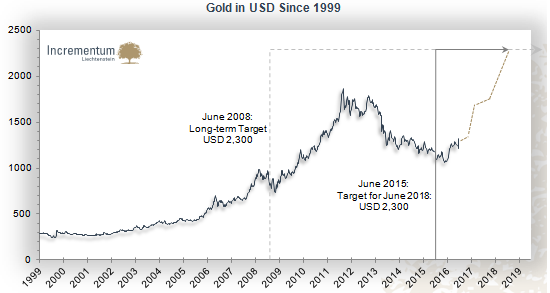
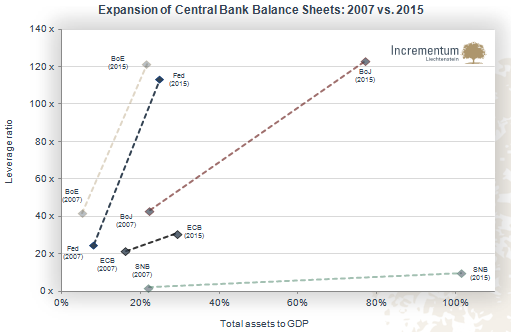
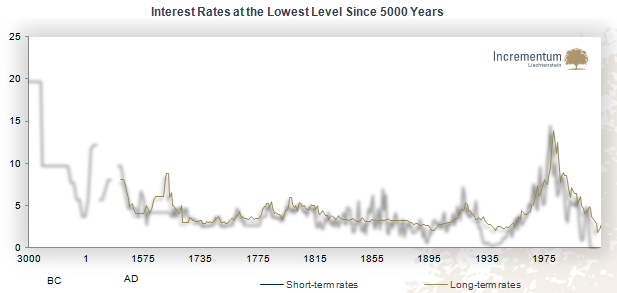
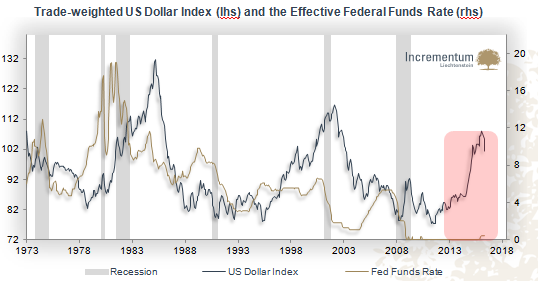
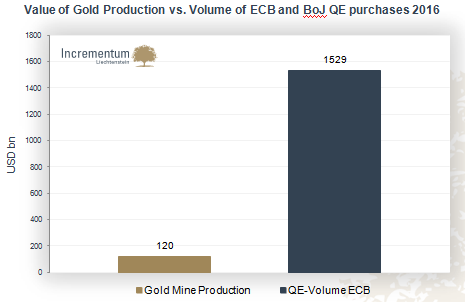
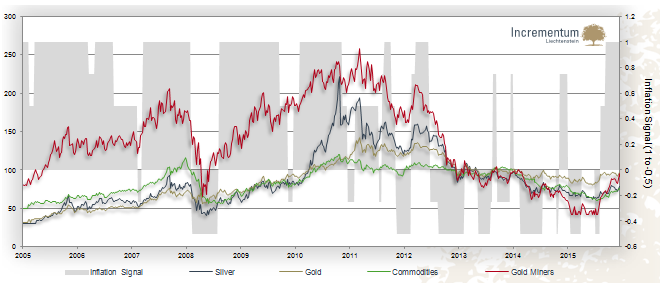

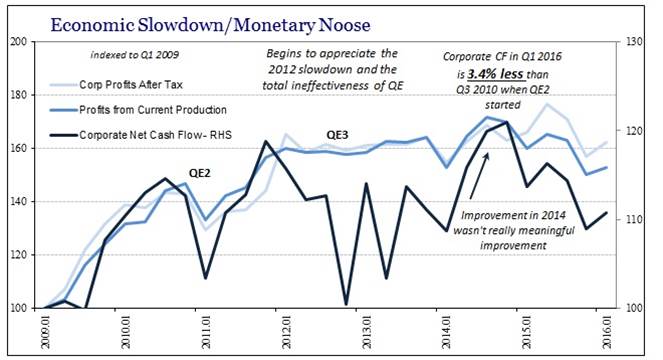
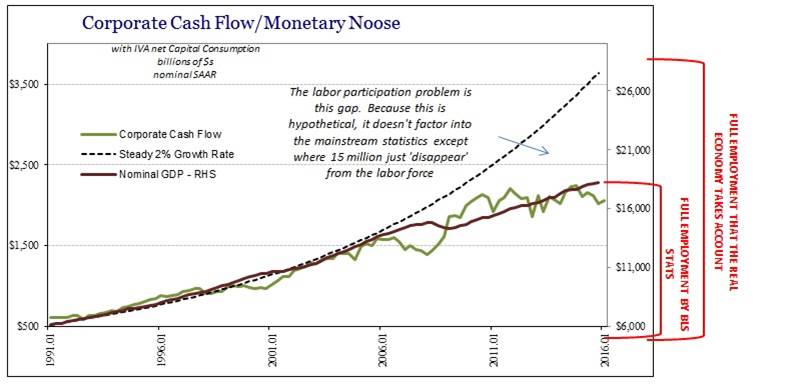
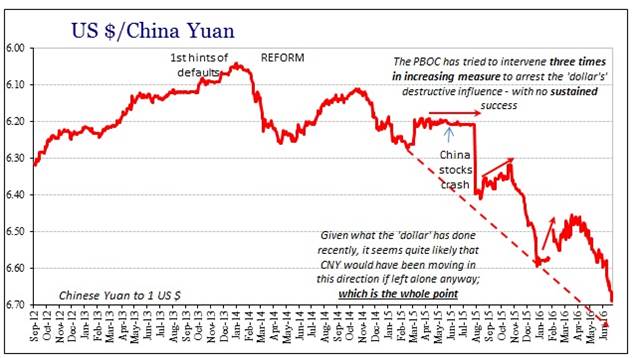
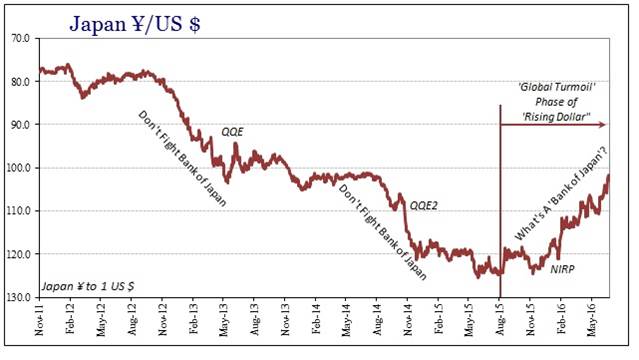








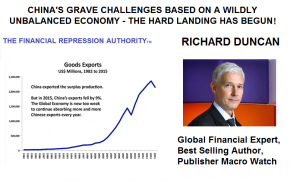


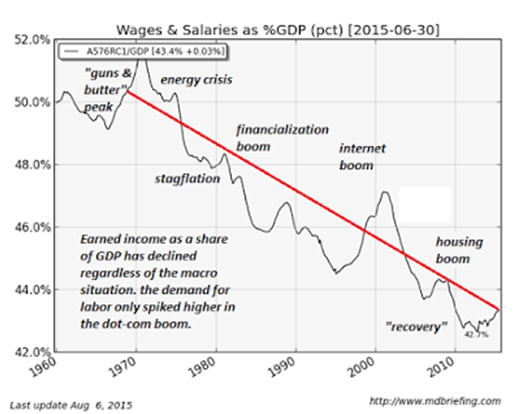
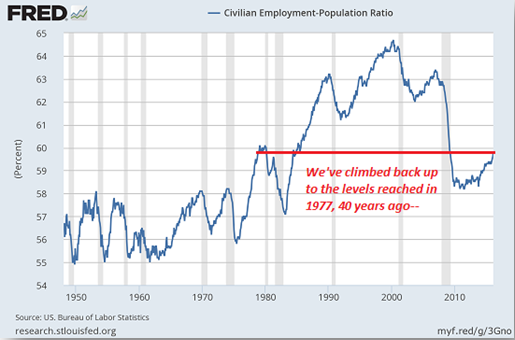
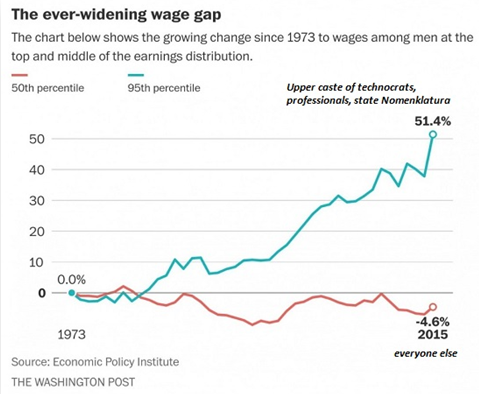
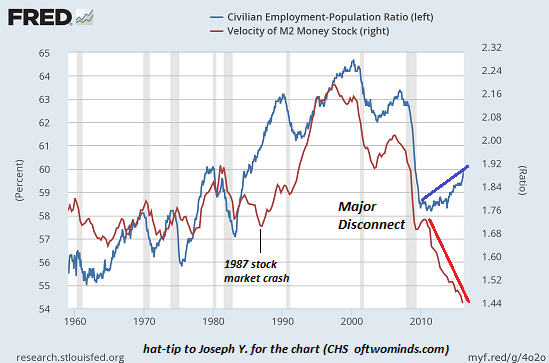



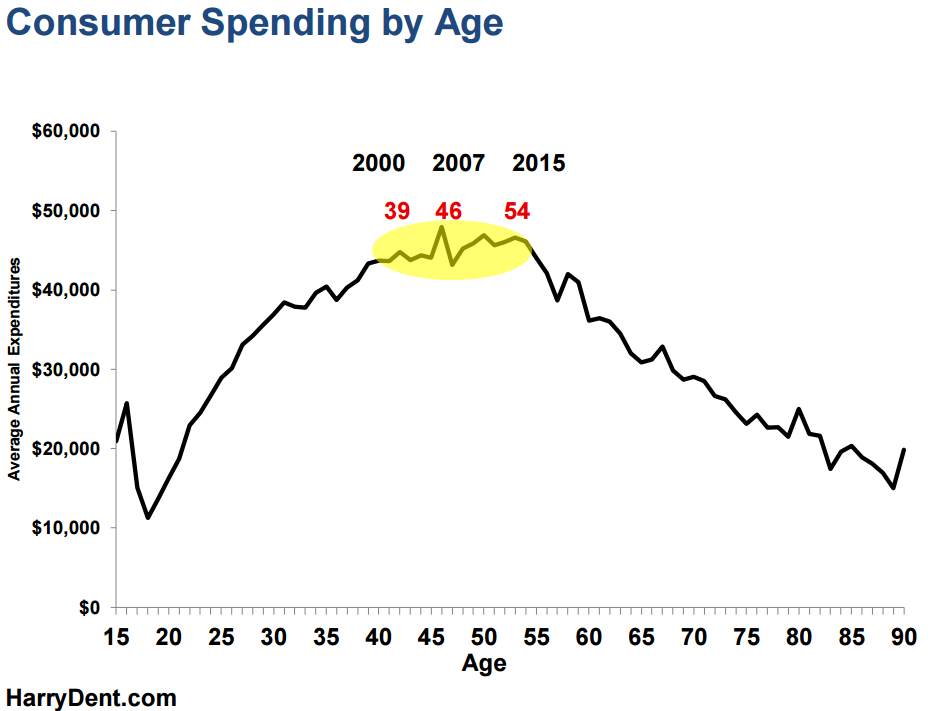
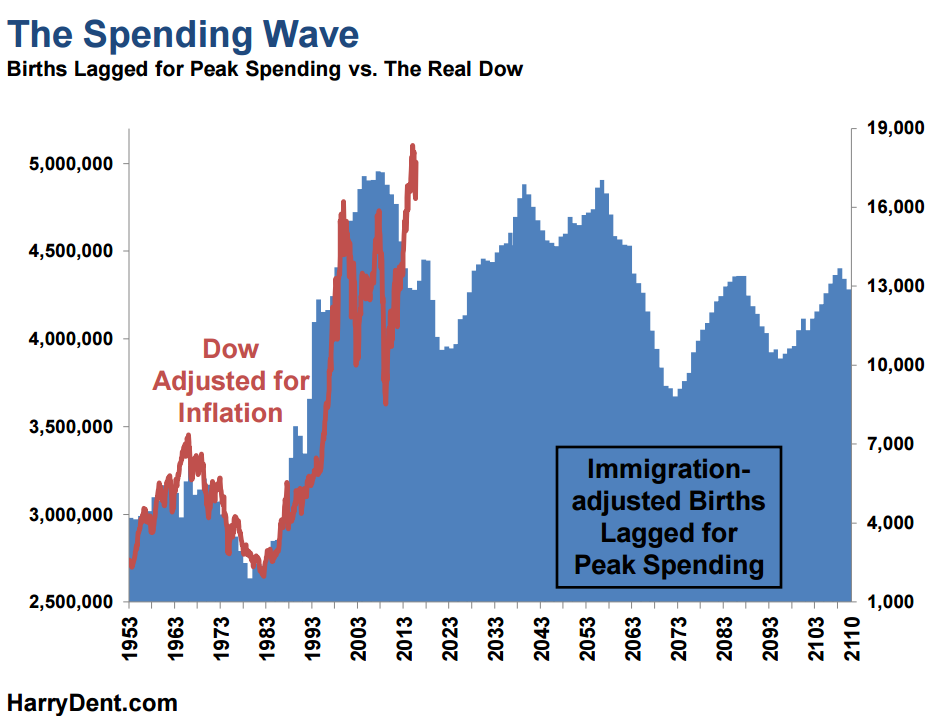
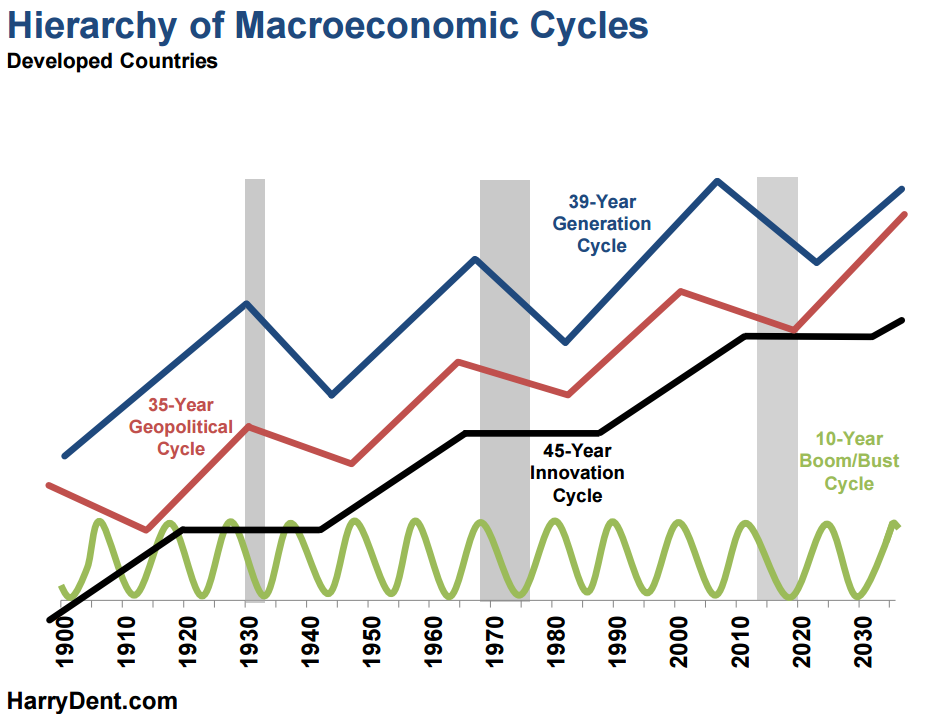
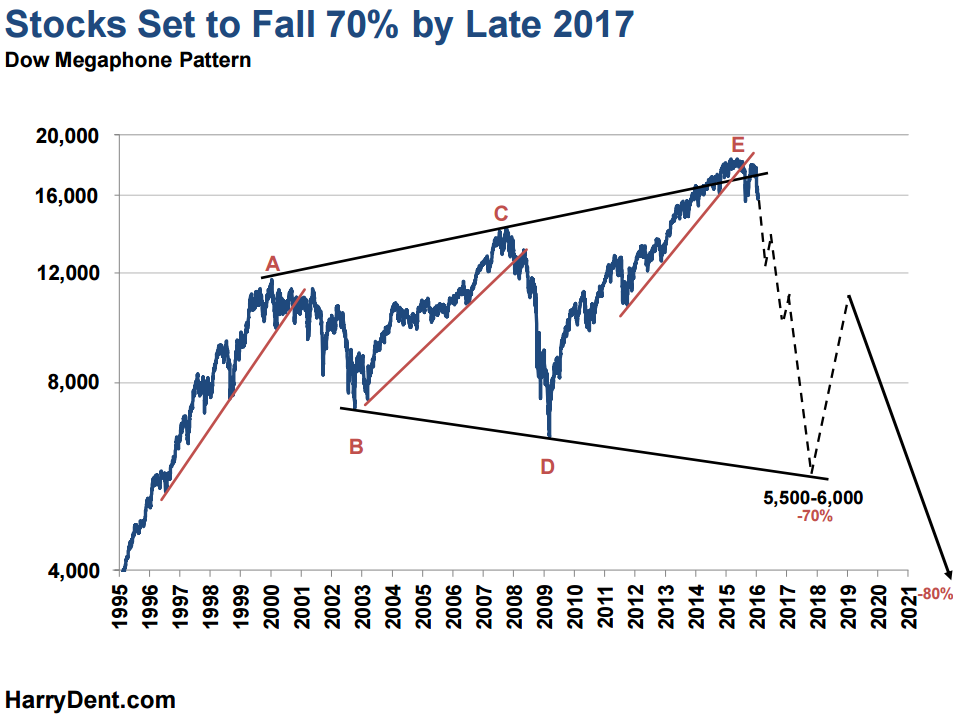
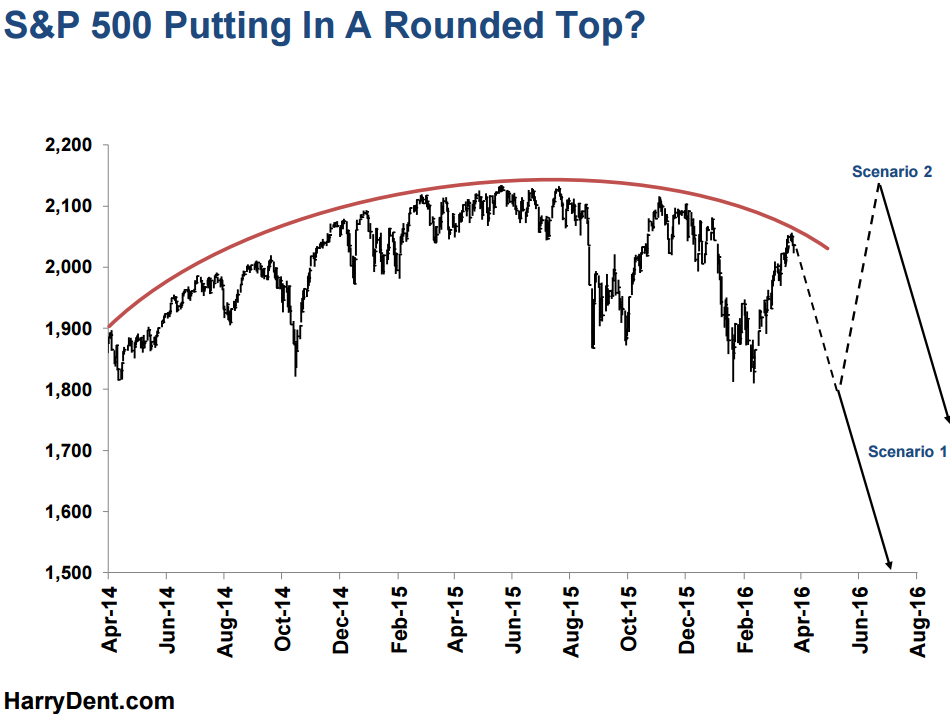

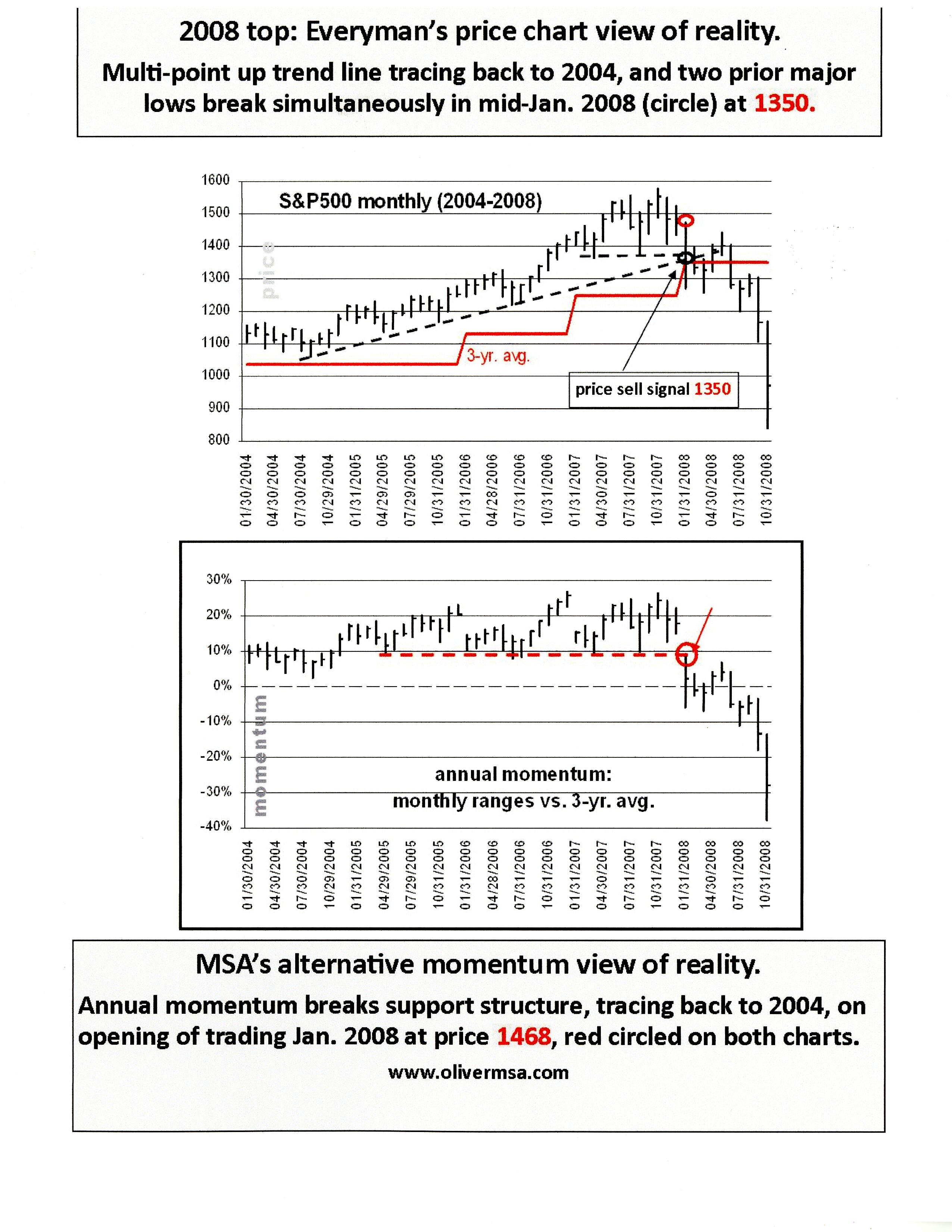
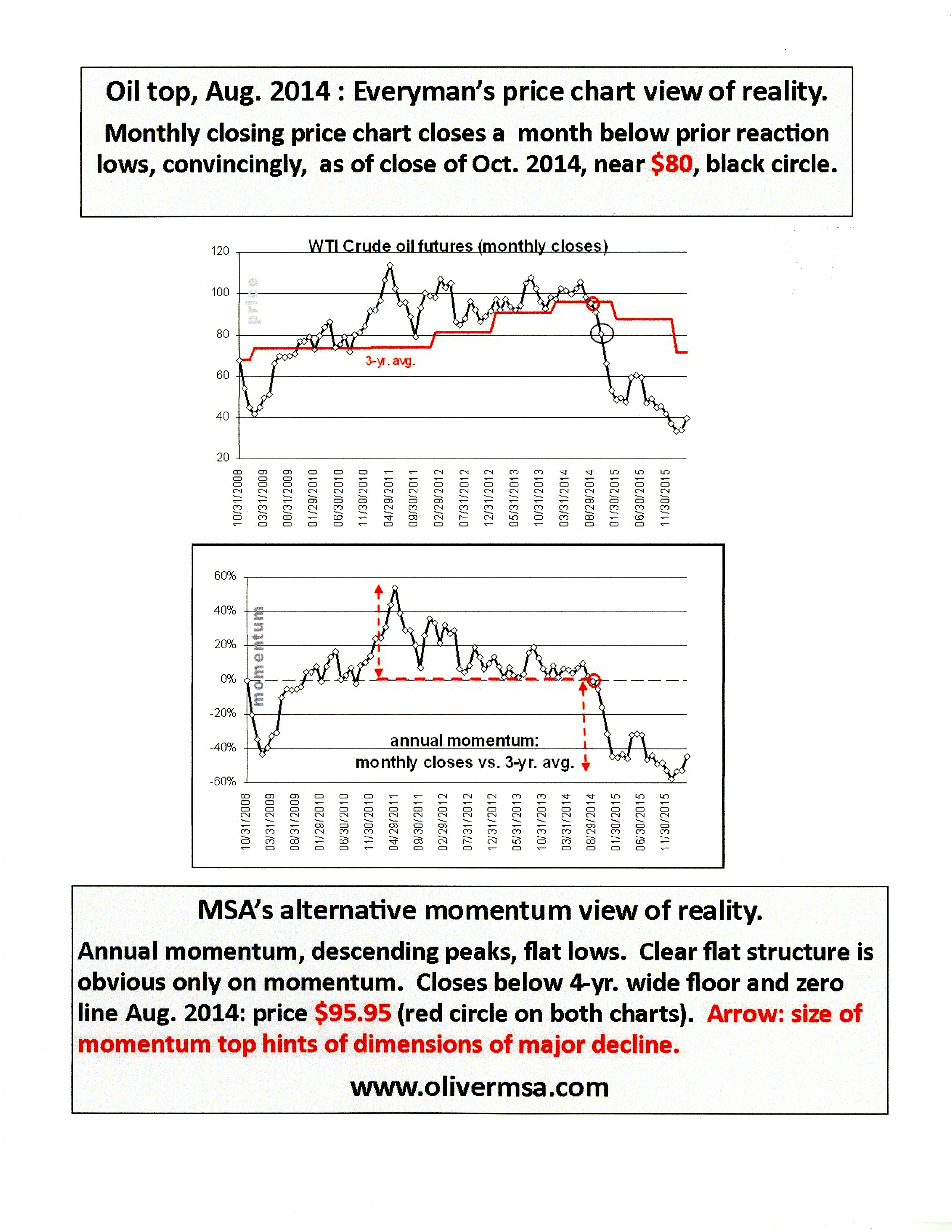

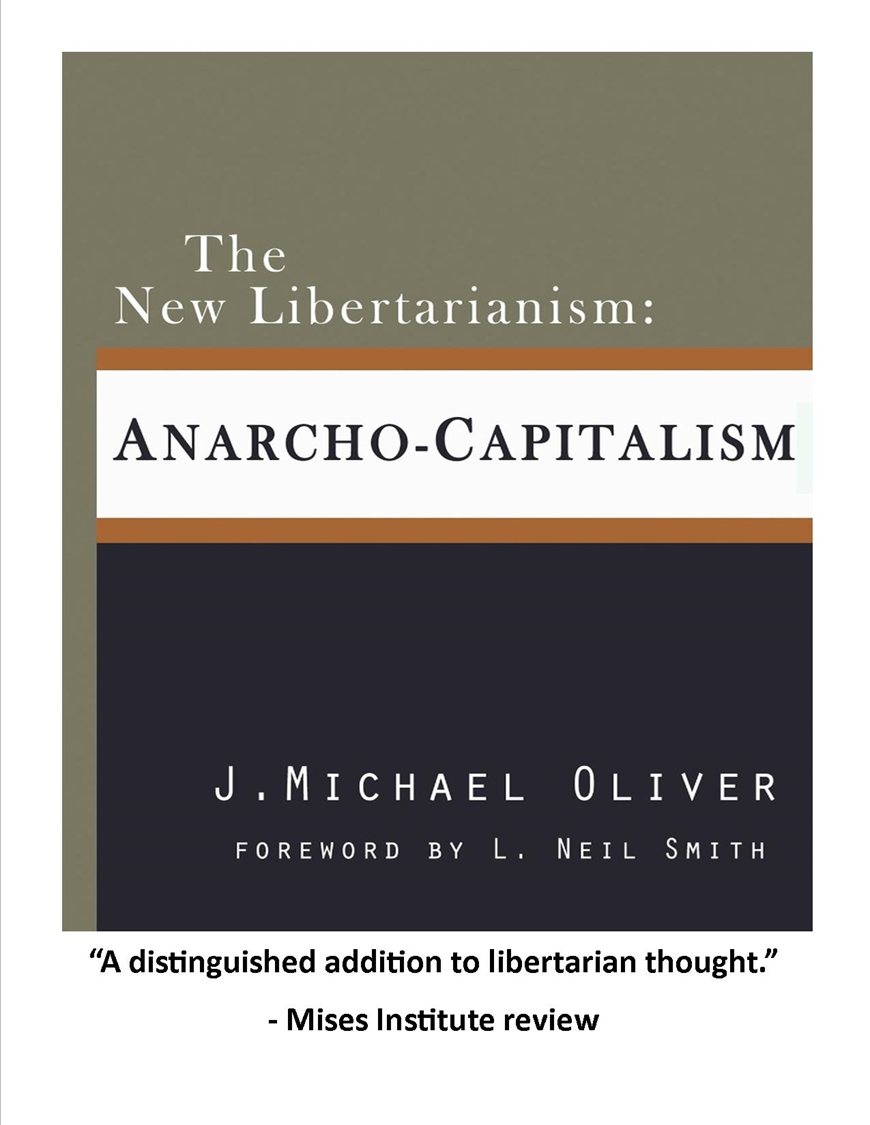
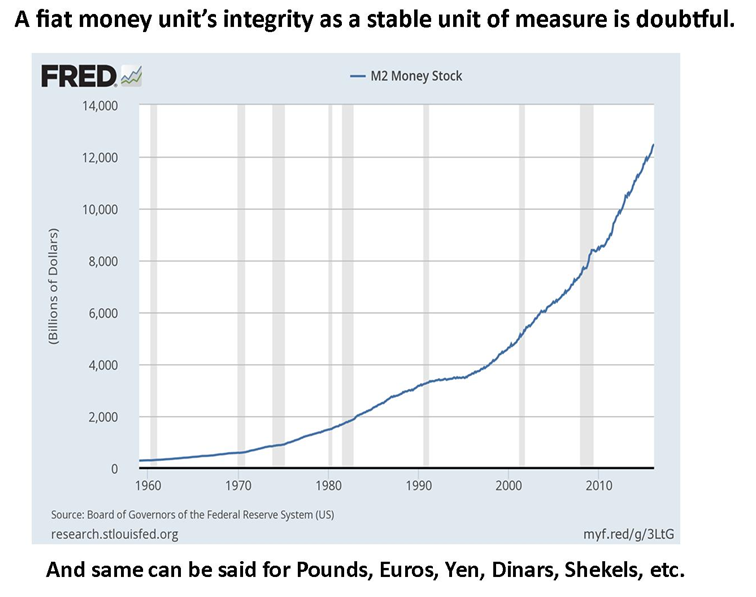




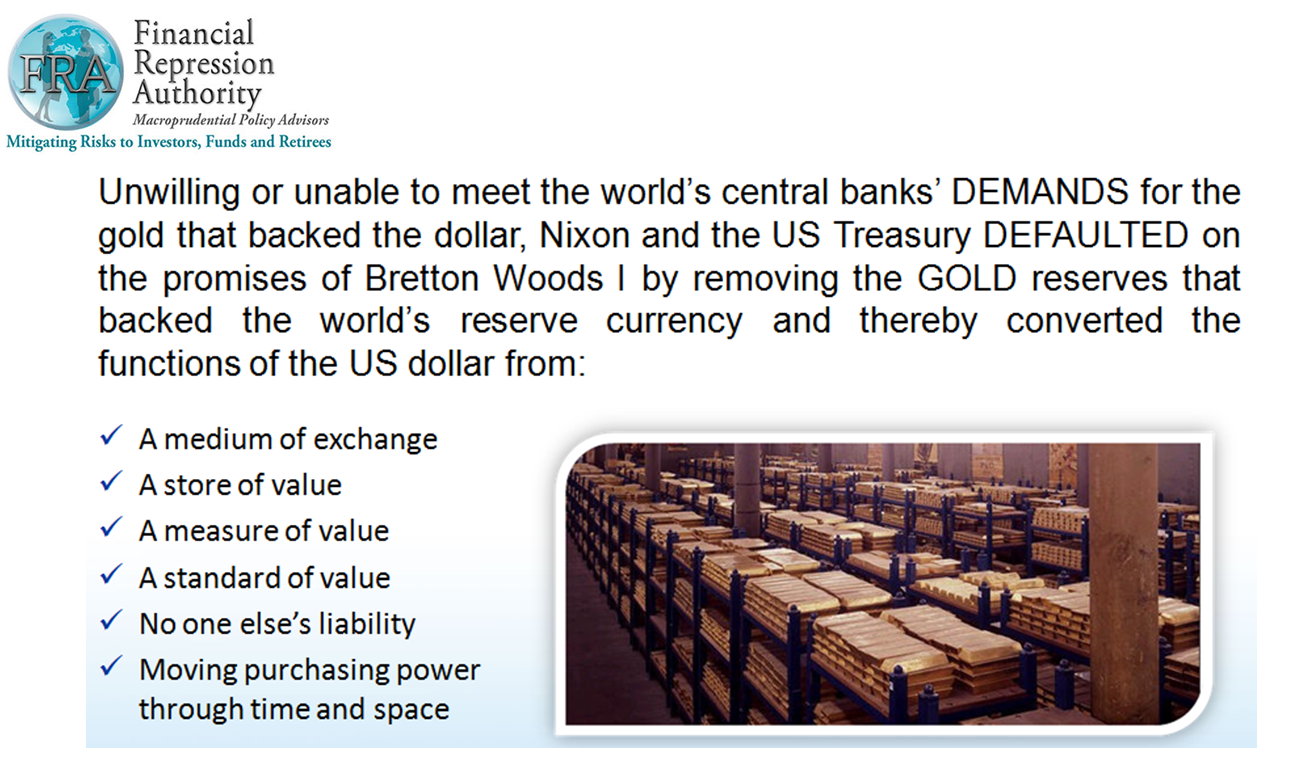
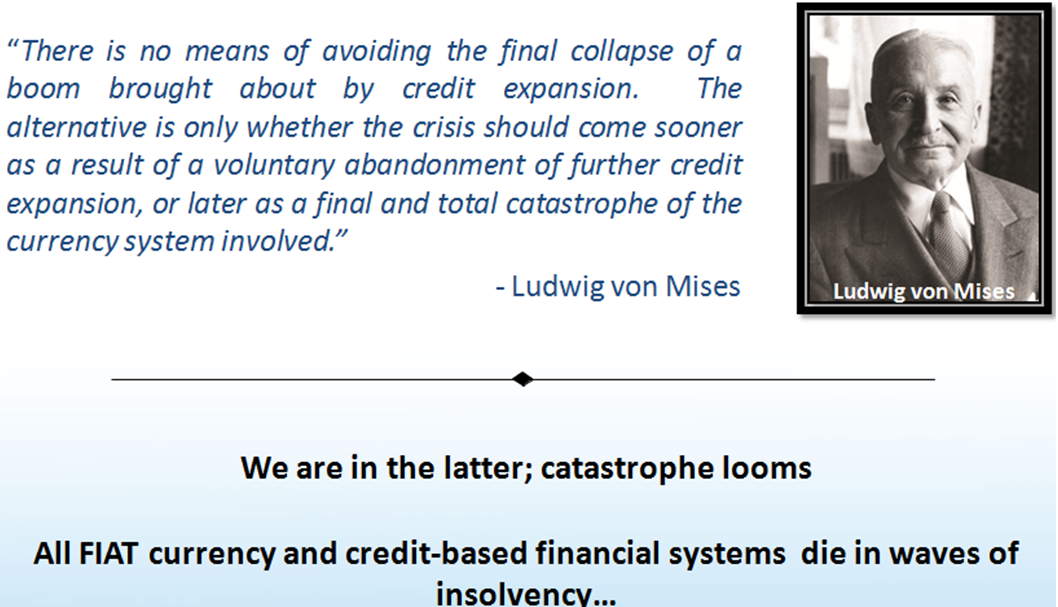
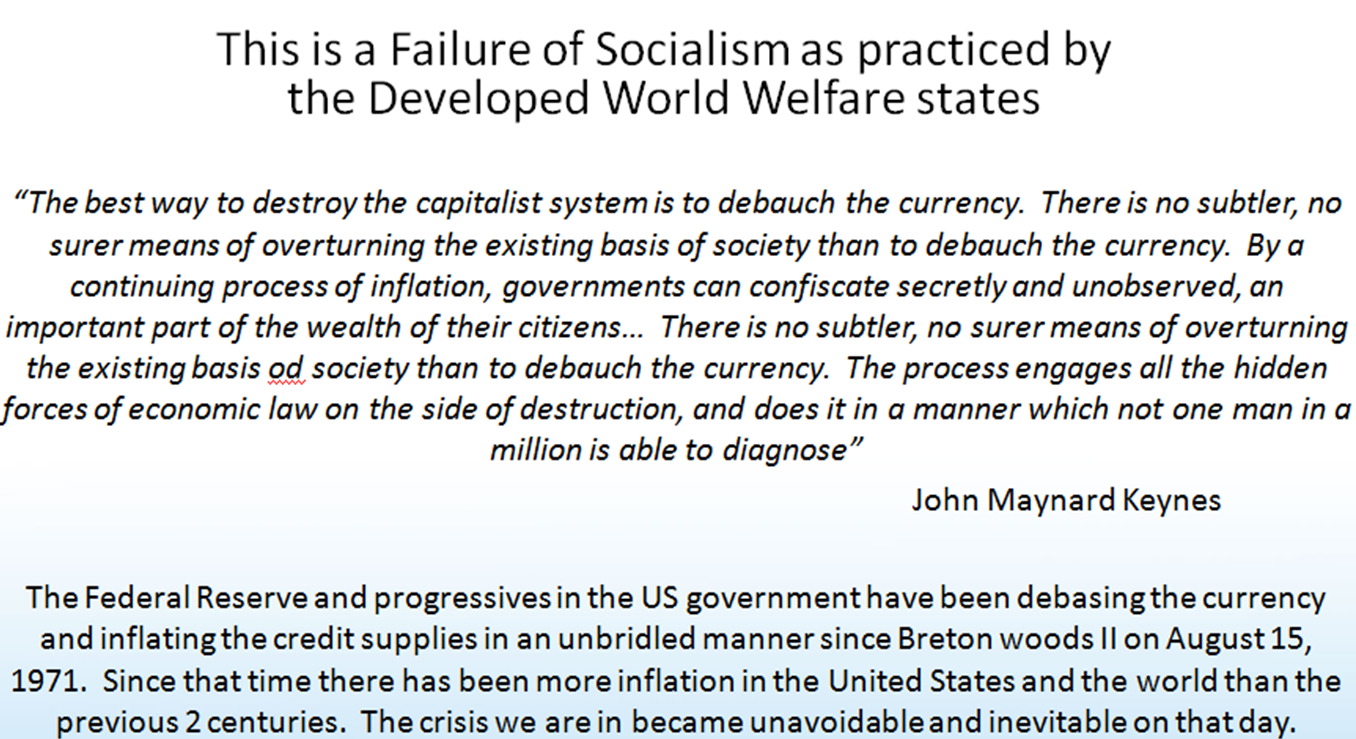
![I believe that banking institutions are more dangerous to our liberties than standing armies. If the American people ever allow private banks to control the issue of their currency, first by inflation, then by deflation, the banks and corporations that will grow up around [the banks] will deprive the people of all property until their children wake-up homeless on the continent their fathers conquered. The issuing power should be taken from the banks and restored to the people, to whom it properly belongs. - Thomas Jefferson](http://izquotes.com/quotes-pictures/quote-i-believe-that-banking-institutions-are-more-dangerous-to-our-liberties-than-standing-armies-if-thomas-jefferson-283953.jpg)