10/24/2017 - The Roundtable Insight: Doug Casey On Cryptocurrencies And On His New Book Drug Lord
FRA: Hi, welcome to FRA’s Roundtable Insight .. Today we have Doug Casey. He’s an American writer, philosopher, investor, and the founder and chairman of Casey Research. He literally wrote the book on profiting from periods of economic turmoil, his book Crisis Investing spent multiple weeks as number one on the New York Times bestseller list and became the best selling financial book of 1980 with over 400,000 copies sold. He’s lived in 10 countries and has visited over 175, today you’re most likely to find him in La Estancia de Cafayate (Casey’s Gulch), an oasis tucked away in the high red mountains outside Salta, Argentina. And recently he’s been writing a series of fiction books as part of a series High Ground Novel Series. The one that is most recent I guess isDrug Lord and just wondering if you’d like to start on that to give us some idea what that book is about, what the meaning and message you’re intending to convey? Welcome, Doug.
Doug Casey: Thanks, Richard I appreciate it. I’m talking to you today from Aspen, Colorado which is where I usually spend the northern summer, and the rest of the year I’m usually down in Argentina and Uruguay. But talking about Drug Lord, it’s the second to the series of 7 novels and when I decided to do novels as opposed to nonfiction is that it’s a different audience, different people buy fiction then buy nonfiction number one. And number two, you can say a lot of things in fiction that you really best not say in nonfiction, and that’s why I decided to do this series. Last year we completed- because I’m working with my coauthor John Hunt who’s a medical doctor who doesn’t really want to be a doctor anymore for all kinds of obvious reasons, Speculator. Which what we’re trying to do is take unjustly besmirched and highly politically incorrect occupations and we form their reputations. So last year was Speculator, which is about a bush war in Africa and a gold mining fraud and so forth and talks about the theories of speculation. This year Charles, after seven years running, or Charles Knight, our hero decides to get into the drug business. Both the legal drug business regulated by the FDA and the illegal drug business that’s kind of regulated by the DEA. And I think its quite interesting because its instructive as to how the drug business works and all these books are morality tales of course. So, we show that you can be a good guy in the illegal drug business dealing in things that are highly illegal. So that’s Drug Lord and I think you’ll find it a very very good read.
FRA: And what type of message did you have in mind in this particular book? Like is there something that you wanted to convey in general?
Doug Casey: Yeah, of course. I’m a philosophical anarchist and I don’t believe that the state as an institution serves a useful purpose or for that matter even have a right to exist. So, I’m naturally for the full legalization of any kind of drugs. The argument that I make is basically that your primary position, the thing that you own most personally, is your own body. And of these government officials to try to dictate what chemical substances you can or can’t use is insane, it’s immoral, and it creates huge distortions in the marketplace. It’s just like what they did in the 1920s with alcohol when they tried to dictate that no one could drink in the U.S. and all it did was double or triple the size of the liquor industry and give the mafia a way to become the creature it is even today. So, everything the government does along these lines is counterproductive. Of course, as far as drugs are concerned, I’m a believer in Aristotle’s golden mean, it’s that some things are- everything is good in moderation and all things. And I don’t advocate that people take potentially destructive drugs such as heroin and cocaine, although our hero Charles Knight comes up with a marvelous new drug which could actually change the face of civilization but that’s another story. But these things shouldn’t be illegal and people forget that before Harrison Act was passed in 1914 that all these things were completely legal. A grade school kid could go down to the corner drugstore and buy heroin or cocaine and it was not a problem, nor was drug addiction a problem in the country. So almost everything the government does whether it be drugs or anything else turns out to be counterproductive.
FRA: What do you make of the trend in the cannabis industry now?
Doug Casey: Ah this is a very interesting thing, it’s going to be huge. I’m not personally a big fan, personally, I don’t do drugs and I generally choose a company of people (inaudible) why? Because most of these popular recreational drugs including alcohol if you would, cloud the mind and keep people from thinking clearly as well. And the problem with pot has always been that it clouds the mind. So, I’m not a huge fan of it personally. But huge medical uses which have been suppressed so far which are coming to the floor and so people that you know some people it just takes the edge off of them psychologically and they don’t have to get goofy by taking too much of it. So, the answer to your question is there have been scores and scores of marijuana stocks that have come public in Canada primarily where cannabis is going to be legal nationwide shortly and its legal now for practical purposes, just as it is in many states in the U.S. right now. But it’s going to be big. I think that the amount of pot grown in North America and the rest of the world after its legalized is going to multiply by a factor of 10, so this is a great place to be at the moment if you can find a quality company run by ethical guys. Yeah, pots going to be big and people are going to make fortunes on these stocks. And of course, many of people have already made fortunes on them and as a result, there are a lot of frauds out there in the cannabis space, but that’s true when anything becomes too popular, the frauds just always step in.
FRA: Interesting. And another big event happening these days is what’s happening in Spain, Catalonia, what do you make of what’s happening there?
Doug Casey: I think its absolutely wonderful. My ideal scenario would be to have 7 billion nation-states on the face of this planet. As I said, I’m a philosophical anarchist, I don’t believe the space has a right to exist. But what is happening in fact, this is what I like to see, but what’s happening, in fact, is that nation-states all over the world now are starting to break up. It’s not just Catalonia and Spain, the Basque region just north of Catalonia I think might be next on the runway for becoming an independent movement. And throughout Europe, there are a couple score of independent movements. For instance, in the Venezia region around Venice, in Lombardy around Milan, Sardinia, even the Pharaoh Islands belonged to Denmark. And of course, Scotland, I think that’s going to come back as an issue for independence. I think it’s great, if you’re going to have a nation-state, then the nation-state should at least have people that share ethnicity, culture, language, perhaps religion so that they’re similar, they share values. If it’s a multicultural enterprise where they don’t share any of these things, then the state just becomes a vehicle for theft of the group that gets in charge of the government. So, I think this a step in the right direction with Catalonia, that’s the good news. The bad news is that most of these independent movements are run by doctrinaire socialists, of course, all European politicians are doctrinaire socialists, but these people they tend to be even more doctrinaire. But I think it will work out very well in the long run.
FRA: And from the perspective of Spain, could this be a blueprint or a precedent on how indebted governments may act in the future against some of their regions or just the private sector in general as for example the pension crisis unfolds entitlement programs crisis unfolds?
Doug Casey: Oh yeah, you’re absolutely right, Richard. Because I think the main reason that the government in Madrid doesn’t want to see Catalonia break off is because Catalonia sends money, twice as much money, to Madrid as Madrid sends back to them in the form of national services. So, Catalonia is like a milk cow for the Spanish government and of course they don’t want it to go away. They want to keep it there, keep it producing so they can allocate the goods. And of course, this is all the more reason why the Catalonians want to break off, but the fact that the Spanish government in Madrid has clamped down so hard and so violently against the Catalans, I think its actually going to, I think reinforce the Catalans so that even the ones that don’t want to see a doctrinaire socialist Catalonian government are probably still going to vote for it simply because they’re so angry at being exploited by Madrid. And eventually I think that even after Catalonia splits off and like I said the Basque region will probably be next anyway, they’ll probably go to more free market style policies and become realistic. Because you can only have a socialist country where there are others to exploit. If we had 7 billion little nation-states in the world, there would be no socialism. Because how can you exploit yourself?
FRA: Yeah, exactly. And from considering your views on the economy and financial markets and the geopolitical landscape, what is on your mind today? Do you see any trends taking shape?
Doug Casey: Well I’ll tell you what’s really surprised me, and this has been true for several years now. It’s that after the world economy entered the eye of the gigantic financial hurricane in 2007, or entered leading edge of the financial hurricane we’re in, in 2007. And then we went through the leading edge in 2008 and 2009 and now we’ve been in the eye of the storm which has been papered over by not just trillions, but hundreds of trillions of new currencies units created not just by the U.S and Europe, but China, Japan, and all the little countries too. And that’s poured oil on the water and what I fear is that even now as we speak we’re entering the trailing edge of the hurricane and it’s going to be much longer lasting and much worse, and much different then what you might recall from 2008 and 2009. So, I think this is a good time to batten the hatches down, I mean the fact that the DOW is trading at new all-time highs and interest rates are still at or near zero, or I think they’re still below zero in some places, actually, as metaphysically impossible as that seems. I think that this isn’t a cause for rejoicing, this is really like the tidal wave going out before it comes in and washes away everything. So, it’s a good time to batten down the hatches and I don’t like the idea of being involved in the stock market or the bond market. Which isn’t just a bubble, it’s a hyper bubble, it’s a super bubble right now the bond market. So that’s my feeling on the economy in general.
FRA: In what ways will this sort of second part or a second phase of the financial crisis be different from the first phase?
Doug Casey: Well, things really went over the edge back in 2007 and 2008 and 2009 as a deflationary collapse. If the governments hadn’t created these trillions of new currency units, you would have seen the collapse of not only Lehman but Goldman Sachs and AIG and Chase, Morgan, all of them, they all would have collapsed. And that would have been deflationary in nature, we would have seen something that would have resembled 1929, it would have been a deflationary collapse. But they forestalled that and this time, since they’ve already shot most of the arrows in their quiver with ultra-low interest rates, increasing and printing up trillions and trillions of new currency units they called quantitative easing, it’s kind of cute that they make up a phrase like this and everybody just parents it rather than just say inflating the currency. I think that what we’re going to see this time around though is going to be much higher levels of inflation. Because all that money went into the financial end of the market as opposed to the consumer end of the market. So, its created a number of bubbles, stock market bubbles, bond market bubbles, real estate bubbles they’re a number of many many cities around the world. So, when those bubbles break, I don’t know the currency, we’re going to see, I think we’re going to see very high levels of inflation. So, it’s going to be very ugly for the average guy I think.
FRA: And speaking of bubbles, a lot of people see a bubble in the cryptocurrencies, what are your thoughts on cryptocurrencies?
Doug Casey: Yes, that’s very interesting. I was introduced to them about, oh how long ago was that? 2013 when somebody actually gave me a physical Bitcoin when I was in Argentina. It was worth $13 at that time and now the bitcoin is worth 5,600 something in that area today. Good news-bad news, look initially I snookered myself. I liked the idea of it as a private currency, a fiat currency created out of nothing, true, but with a limited number of units, unlike these national fiats currencies. And I missed at the time, the value of these cryptocurrencies. I missed the fact that they are excellent transfer devices. In other words, they obviate the SWIFT system which is expensive, which is slow, which is unreliable, where all your money has to go through New York, its horrible. By using cryptocurrencies to send money across borders, its private, instantaneous, cheap. So, this is a really really big thing, this is what gives Bitcoin and others its value. Like gold has value because its one of the 92 naturally occurring elements, so it has many many uses and more everyday in a high-tech world. But the cryptocurrencies are A primarily a transfer device, and then there’s a second thing that I failed to catch back then and that was that 2/3s of the people, 3 quarters of the people in the world live in 3rd world countries. Where if they want to save, if they want to produce more then they consume and save the difference, you’ve got to save ridiculous things like Zambian Quatches and Argentine Pesos and ridiculous fiats currencies like that. And when they save them, they’re all inflated badly and they’re worthless outside of their home country. But if they save in Bitcoin, its got the same value everywhere in the world, so this is a very big deal. So, I’ve become a convert, cautiously because it is bubbly. Anything that’s gone up 300 times in a few years kind of looks bubbly, but I can see why the bubble going to get a lot bigger. So, the answer to your question, I mean I was a recent investor in something called Hive blockchain which is about the only publicly traded company that mines these cryptocurrencies, this thing’s gone from $.30 to $30 in the last six weeks, I expect it’s going higher. So, it’s a bubble, but it’s going to get to be a bigger bubble, Richard.
FRA: And so, the value you see is being based on the payment transfer utility, but also you sort of referencing as a store of value as well?
Doug Casey: Yes, especially for people in the third world, two-thirds of the human race which don’t really have the opportunity to bank, not that the banks in those third world countries, Africa, Central Asia, places like that, are worth saving in. They’re all insolvent and the local currencies are horrible so this is a boon for the average guy in the third world, this is a very big deal. So, this is the two things, transfer device and a savings device for third world people. Now I don’t know how it’s going to end because eventually there’ll be a Bitcoin version 2.0 and what happens to version 1.0? Does anybody want it? Is everybody going to dump it all of a sudden? So, there’s risks, there’s dangers here. But right now, the trend is still up, the bubble is going to get bigger. In principle, it’s an excellent idea. And its also, I’ve got to point out, it’s going to draw peoples attention to the nature of money. Which people don’t think about, they only thing they’ve got their local currency or the dollar. But then they see oh, Bitcoin, why is Bitcoin worth something? And eventually, it’s going to grow their attention to gold because eventually there’s going to be one of these cryptocurrencies that will become very popular that launches instantaneously going to gold to silver and so forth. So, it’s going to expose a lot of flaws in the current monetary system, it’s good from every point of view.
FRA: Do you see governments getting into cryptocurrencies perhaps as a way of doing away with cash or implanting negative interest rate policies for example?
Doug Casey: Oh yeah, unquestionably that’s going to happen. It’s happening now, all these governments want to get rid of cash. Cash is only paper but at least paper cash allows you privacy, secrecy, it lets you transfer things and own things that are unbeknownst to the authorities. So, they’re trying to get rid of cash, they’re trying to get rid of the U.S. $100 bill, they’re getting rid of the €500 note, they want to get rid of even the U.S. $50, the U.S. $20. So, they’re going to come out, and some governments have come out already with their own digital currencies. And it’s a disaster when governments do that because they will manipulate them and inflate them but worse than that, they’ll know where everything you have is, everything you buy and sell, they’ll know absolutely everything about you financially. And they will control you totally, they can just shut off your iPhone and you’ve got nothing. So as wonderful as cryptocurrencies are when the government gets a hold of them they’ll corrupt and destroy them like everything else, so it’s a huge danger also.
FRA: Wow, great insight as always. Doug, how can our listeners learn more about your work?
Doug Casey: Well, they can go to www.internationalman.com, that’s one website. And the other website is www.internationalman.com they’re both totally different with different products, we have lots of excellent free articles posted on them and so forth, they’re good websites. So, people should check in there and send me a note if you’ve got any reactions or whatever at either of those websites.
FRA: Great, thank you very much, Doug, for being on the show.
Doug Casey: Well, thank you, Richard. And I hope that a few listeners decide to go out and pick up a copy of Drug Lord
Transcript written by Jake Dougherty <jdougherty@ryerson.ca>
Disclaimer: The views or opinions expressed in this blog post may or may not be representative of the views or opinions of the Financial Repression Authority.
09/29/2017 - The Roundtable Insight: Yra Harris and John Browne On The End Game For Europe, The Euro And The ECB
FRA: Hi, welcome to FRA’s Roundtable Insight .. Today we have Yra Harris and John Browne. Yra is an independent Floor Trader, successful hedge fund manager, a global macro consultant trading foreign currencies, bonds, commodities, and equities for over 40 years. He was the CME Director from 1997-2003. And John is the Senior Market Strategist for Euro Pacific Capital, he’s a distinguished former member of Britain’s Parliament who served on the Treasury Select Committee as Chairman of the Conservative Small Business Committee. And also as a Principal Advisor to the British government on issues relating to geopolitical matters. He’s worked for Morgan Stanley as an investment banker and he’s also worked for other firms, Barclays Bank and Citigroup. Welcome, gentlemen.
Yra Harris: Thank you, Richard.
John Browne: Thank you, thanks for having me.
FRA: So today I thought we’d discuss the implications of the recent elections in Germany on the EMU, the Euro, ECB policies, financial markets, and the European economy. Your thoughts? I guess we can start with Yra, what you think happened and what are the implications?
Yra Harris: Well you know Richard, we’ve talked about this and you know I’ve written quite a bit about it over longer than I care to think about, but the results were to me a phenomenal loss for Merkel because she not only slipped from the vote totals but it was a very big slap in her face. And like in the Brexit vote, they want to sell it as anti-immigration and I think it’s so much bigger than that. I think this part of the vote .. and if we go back to when the AfD first began, I think in 2013 when it was founded by various economists, the issue is far more financial than anything else. Yeah, the AfD attracted some fringed wackos as we might call them, but most importantly, the Free-Democrats resurrected themselves. I think this is a pretty big statement as to how Germany will face what Macron has been trying to push down, I would say Macron and Draghi have been trying to push down the throats of German taxpayers but of course, it never had the okay from German voters. So, I think that this has a long way to play out, it was a very important vote .. the biggest winner from here may be Theresa May. But we’ll leave that for further discussion.
FRA: And John, your thoughts?
John Browne: Well, I’m very interested by what Yra said because I think you’re absolutely right. Theresa May may be the biggest winner of this because Merkel is very pro-German industry and that points towards a mutually favourable Brexit from Germany at least. And Germany really runs the European Union, although it’s meant to be everybody, but basically Germany runs the whole show. And that’s a very important thing that Yra mentioned. I agree with Yra that Merkel had a big loss, she was elected as forecasted but there was nobody else, she’s weakened significantly. I mean the interesting thing was that combination, again getting back to what Yra said, it wasn’t all immigration. It was partly to do with the financial environment. The Alternative für Deutschland, the Alternative for Germany, went from 0 seats to 88 and the Freedom Democratic Party went from 0 to 69 seats. 132 seats against Merkel’s 217, so it’s a big block in there. And it’s going to sober a lot of the left wing in Germany, the Greens lost and the Left both lost seats. And so, I think that’s very interesting in my view and I agree with what Yra said. I think its going to boost the thing for Brexit because Merkel is going to be favourable to a good deal with German business. As far as the ECB is concerned, I think there’s going to be continued press for EMU, the European Monetary Union. The Euro has faired fatally basically because it doesn’t have a unified economy and so, each threat to the Euro is going to be used by the European elite to force closer and closer fiscal unity on the way to becoming a superstate. And talk about undemocratic, I mean I’d call it the Euro Soviet. So, a good reason is they say they offer a parliament, which is duly elected and I think quite fair with proportional representation, but of course they give that parliament no power, just as happened in the Soviet Union. And the other thing is they’re already talking now immediately of giving huge amounts of money for electoral reasons rather then taking money away from the politicians to be elected, making it less of a money game, they’re going to give much more. But only to parties that fully support the European ideal, the parties that go against it will have no funding. So, it’s becoming less and less democratic and right down the road of what I think justly called the Euro Soviet. And I think regarding the Euro, it’ll be used as a weapon to increase togetherness and of course a superstate. As regards commodities and things, what we’re living with masses of money, masses of credit and liquidity that’s falling value, bonds are going up because of zero interest rate policy and quantitative easing. And equities have risen on this thing, hugely, record highs in both bonds and equities all over the world. But of course, that is all organized by the swamp. If the swamp starts to get eroded, then the reverse is going to happen. Bonds are going to be probably the biggest bear trap in history, equities are going to be a problem and of course commodities and precious metals will rise, certainly in dollar price and also in value. And so, I think the whole thing depends on how effective it is to get rid of the swamp. Realizing both parties in Britain and America that have ruined the countries in the last hundred years. If you take an actual number of it, in 2014 in January when the Fed opened its doors, that dollar today, it would be only worth, it other words two cents of that dollar would buy a present dollar. The Fed has devalued the dollar by over 98% and in those days, there were 8 Dollars to the Pound, and now there’s 121 .. And this has been done by the swamp which is both parties and the question is, how long will it take for reality to dawn? Whether they can put it off with another type of QE, giving people money, not even QE but just giving us all a cheque like the Republicans did under Bush. But a massive cheque, like $10,000 a piece or that sort of thing, to fend off that awful day that reality may dawn.
FRA: Your thoughts, Yra on this and the possibility of fiscal integration in the EMU?
Yra Harris: Well, it’s like John and I have been talking our whole lives. But he uses this term the European Soviet, and you know Richard I’ve talked about it quite a bit so John, I don’t know if you know Bernard Connolly but he’s a very dear friend of mine. So, when I hear you throw that out it reminds me of his great book, The Rotten Heart of Europe. But I’m going to answer your question Richard, this is all about the fiscal harmonization, this has been the program pushed by the likes of George Soros and what I call the Davos crowd and I don’t mean that as a conspiratorial, that’s just what they’ve been pushing. And now Mario Draghi has a very serious problem. And the speech yesterday was horrendous and stupid, he should have cancelled that press conference that he had scheduled before the German election because its just not going to happen that fast. And it puts Draghi now as I would say the only game in town. Which is why these people or those people including Peter Boockvar and I, have gone back and forth on this. There will be no quantitative tightening yet from the ECB because Draghi is now going to be in a bigger hurry to keep piling on sovereign debt onto the balance sheet of the ECB because only through that effort can he synthetically create the Eurobond that they’re craving for. So keep loading it on, keep loading it on, and then they’re going to the Germans and go “well you can’t possibly not be the guarantor of this bond, you have to. We have all this debt piled on the ECB, you’re going to have to be the one who has to guarantee this.” Otherwise we go into a massive debt default and the world goes into a major Depression. That’s what’s happening and this is all being done by Mario Draghi and if Mario Draghi hears this broadcast and he wants to go head to head with me and argue this, I relish the day.
John Browne: Well I totally agree with Yra. And it’s interesting, I was an investment banker in London and we were asked to be managers of a Eurobond issue. Not a Euro like the currency, but European Bond Issue .. everyone wanted to do it in Europe except for Germany .. Germany said, “we’ve got terrific concerns about inflation from the Weimar we will never forget it, and we certainly are not putting the German signature to a European bond.” And I personally despite all the talk and the movements that are taking place, believe that is at heart in the average German. I mean what Germany has done since the Weimar is to say “Okay, you German women and men work hard, save your money, and we as the government will ensure that saved money is still worth the same as when you put it in. Unlike the Anglo – American governments that have stolen from every saver.” And so, I think Germany, now that Merkel is weakened severely by most interestingly right-wing parties effectively. Both financial and immigration wise, I think she’s going to be under bigger and bigger pressure not to put the German signature to that Eurobond. And I think that’s been pushed back and this is of course is a big problem for Draghi whose been depending on it and it’s going to become a tremendous issue. Germany, as Yra said, is going to be faced with collapse on the one hand if they don’t sign, but a collapse of support politically if they do sign. And I personally think Germany would stand in the long run to win by not signing a bond to hell, because that’s going to go for the birds. I mean its going to just follow the Sterling and the Euro down the drain. And we’ve got bigger challenges then just the rest of the world. We got China that’s now issuing a forward contract in oil, measured in Yuan, which the Yuan will be convertible into gold. So, if you buy your contract for Yuan and then sell it for Yuan at a profit, you can convert all those Yuan back into gold. Now that’s going to really challenge the prime reserves status of the dollar and that’s a huge question mark. And if they do it for oil, what not other important international commodities like copper for example. I think we’re facing severe challenges and China is just waiting her time to strike. Whereas we’re spending fortunes on military equipment, China is spending it on making sure that she’s going to win economically and financially. And as the greatest generals have said, the greatest way to victory and power is to put your enemy in a position where they have to capitulate without firing a single shot. And I think that’s what China will do.
FRA: And John, do you think that there’s a possibility for the ECB to begin to buying Germany equities if German bunds become scarce in the overall ECB asset purchase program?
John Browne: Yes, absolutely. They’ll do anything above the law, around the law, they have no laws. They would do anything to save that Euro against the disaster that I see coming unless the Germans back it. And the price for Germany backing it is German rule of the European Union. Which Germany tried three times an empire, Franco-Prussian war, first World War, second World War. Each time and I think they’ve now realized that the Deutschmark i.e. money, is the key and the key to this is either the Deutschmark or the Euro to win their empire which will be Europe. And Britain is hopefully going to be leaving it.
Yra Harris: I think that John is exactly right and the Chinese are interesting to watch. More interesting is the amount of dollar borrowing that Chinese corporations and individuals are doing, Chinese real estate markets, they’re doing these huge dollar bonds. And I’m paying attention to that because first, it puts the Fed in a terrible situation and this is I think where John goes with not having to fire a shot, because the Fed, you know Bernanke beats his chest to talk about how great he’s been and how great it was. I think Janet Yellen has done a much better job by the way, but he just kept adding on and adding on and adding on, and this money had to go somewhere. And it went into the borrowings of, of course emerging markets. So, we’re so borrowed up in dollars now that if the dollar, if the Fed were to move here aggressively, which they’re not going to do, but we’ll create they’re favourite counterfactuals and let’s say they do that. The rally to the dollar would be fairly severe, especially because Europe is going nowhere now, so the dollar would rally more and because there are all these borrowings in dollars which means people are short dollars essentially, it would put a huge rally to the dollar which would wreak havoc across the Emerging markets, and it’s the Emerging markets that are now driving the global economy. Don’t believe the nonsense of European growth, I still see European unemployment hovering at 10% and I’m being kind because I’m using their numbers, the United States has tepid growth at best. So, it’s the Emerging markets and if they were to get into a situation where the dollar became expensive and the amount of dollars that they’d have to go raise to start paying just the interest on the debt. It would cause a very severe contraction. And that’s with the Chinese, I can’t agree with John more, it’s interesting to see who is hoarding gold here. And again, people say oh you’re a gold bug, I’m not a gold bug and I listen to John, he’s not a gold bug. But I’m not a Fiat currency bug either because I see the games that they play. So, I don’t love any of any investment that much, there’s nothing that I see but I just try to protect myself and to see where the world is going to have to go to. So, I’m in total agreement with what John is putting out there. And the ECB, Mario Draghi is the most dangerous person right now in the world, right now. Because he’s in a hurry and he’s now lost his key supporter who was Angela Merkel. Merkel is really going to have problems and if you follow the news today Schäuble is already out as Finance Minister which means that its going to be Lindner who’s the head of the FDP who gets the Finance Ministry and he’s already drawn a line in the sand that he won’t go to for fiscal harmonization in Europe. So, this now gets very interesting and nobody is even talking about the fact that Schäuble is going to take the Presidency in of the Bundestag which I haven’t written about but I’m going to write about it this afternoon or later .. You’re going to have Schäuble, whose a fiscal conservative at heart, you’re going to have Lindner .. I think this now gets very interesting.
John Browne: That’s what I think, that’s fascinating what you say, I totally agree with you about Bernanke, Yellen, and those things. China of course has been borrowing hugely in dollars, of course has got a lot of dollars in terms of securities and Treasury bonds as its second largest holder after Japan, well of course the Fed is the largest holder with about 4 trillion, Japan is about 1.05 and China’s about 1.02 trillion and it ties with Japan for being the second holder. And of course, they will be paying back any debts they borrow. It’s like balancing, by borrowing dollars they’re balancing the dollars they own, which I think is entirely sensible. And even if they borrow more then they have, if they borrow more then 1.02 trillion, they’re going to be paying back in peanuts! And so, I see that as a great strategy for Japan. Regarding gold, its rumored, I mean we’re told America has 8300 tons of gold in Fort Knox, and it may still be there .. but nobody knows who owns it anymore. Its rumored and I say rumored, that already over the last five years China’s been accumulating gold by all means possible, through shipments and out of London through Switzerland and so on, that its now the largest holder and now has more gold then America, but that’s a matter for rumor. But I think they’re very gold conscious, and in the end, I think they see a totally depreciated dollar which they will be paying back the excess debt, they can write off the debts they have against the dollars they own and then they can pay the overspill of the debt in depreciated dollars relying on gold. And I think that’s a serious risk for the dollar and the dollar still is one of the most important things in the whole world economy. And so, if the dollar really collapsed it would create mayhem in the world. That’s why people are buying Bitcoin and all this stuff. I mean the average Joe who elected that Doctor yesterday in Alabama over the established swamp Republican, if people are getting sick of it, and that’s why people are saying if big banks like J.P. Morgan won’t even allow us to hold cash in our own safe deposit box, what we’re paying for. They’re now dictating we can’t hold, we can’t hold cash and all that sort of thing. They’re moving to get rid of cash? Well lets get into Bitcoin or gold or precious metals or something where we actually own the thing. And although I think some of these cryptocurrencies are highly speculative and have had fantastic gains recently, but I think highly speculative, that the people are going for it in desperation to get out of clutches of big government, swamp government that’s just robbing them blind.
FRA: And John, what are your thoughts on the current status of Brexit and the potential for other exits in the EU, EMU?
John Browne: Well first of all I thought May, I saw her first speech and met her very briefly. I thought she was terrific when she got in and even when the Brexit vote happened last summer, 2016 I mean. And she was strong and everything. But then she was advised by these two incompetent people to go for an election trusting the polls which were all wrong on both the Trump election and the Brexit vote and to trust those polls. And she went in and got heavily defeated in the polls, she’s still in the government but she’s severely weakened .. I thought her speech in Florence last week was very weak, I mean offering to pay, Britain is the European Union’s second largest contributor, why on earth should Britain pay anything? Let alone billions of dollars and she sort of gave way a bit on that, I thought that was disgraceful. And also lengthening the time of the transition. We want to stick strictly to the two-year transition so that if people want to have a divorce where the divorce is put off until after the financial arraignments, which is the reverse of any other human thing, you have the divorce first and then talk about the finances. They want the reverse. I think that’s obscene for Britain which was the second biggest contributor is outrageous and she’s giving way and that worries me .. this is just as Yra said right at the beginning, I think Merkel’s election has actually strengthened her hand a little. So, she’s almost back to where she started a week ago. But still it’s a touchy business, and you ask what of the other things? I think the European Union if Britain wants to stop Britain getting out, its largest contributor and everything else and I think there are only four countries where Britain enjoys a trade surplus, all the rest have trade deficits, have trade surpluses with Britain. So, it would be a severe blow both tradewise and economically if Britain leaves and they want to make sure Britain doesn’t leave .. they’re going to tie Britain down and punish Britain as an example to anyone else like Spain, Italy, Greece, who wants to leave, or Poland. You can’t leave, you’re going to be crucified, look what we did to Britain, and Britain was rich. And we still smashed her. And so, it’s a huge thing ahead of us now and until this Sunday I felt very depressed that May had given away so much, but then with Merkel’s erosion of her vote I’m feeling slightly more bullish.
FRA: And Yra, your thoughts on the potential for other exits in the EU, EMU?
Yra Harris: 100% I agree with him 100% their going to be punished, to be made an example and the Brits don’t really realize how good they are getting out because when you go to fiscal harmonization if they go to that, and I think it was a weak possibility before I think it’s been much weakened, it’s going to cost them a fortune. Anybody who has any money and the Brits have money. And why do I know that? All you do is have to open your eyes and look to see what’s going on with who is funding through the individual national central banks in Europe. The Germans are accepting the liability for the entire project and nobody ever asked them. Otmar Issing himself wrote that article two years ago they put it in the FT, he talked about no taxation without representation and this is going to become the battle cry in Germany because you cannot escape from it.
John Browne: Exactly, completely agree.
Yra Harris: First of all I wouldn’t pay them a dime, I’d say to them you know what, come and get it. Come and get it. They couldn’t bomb Libya so I don’t even know what Europeans are talking about. They had to get the ordinates and weapons from the United States to bomb Gaddafi. So, this is not 1914 .. you’re not coming to get it, you’re not getting paid because you’ve gotten all you got from us and we’ve got nothing in return, you’re trying to steal the financial centre of Europe out of London the French have had their eyes on this forever and now they think that they have a free pass at it. I’d give them nothing and tell them you know what, you’re lucky I don’t send you a bill for all the aggravation and all the court costs that I’ve had to endure and all the other things that we’ve had to endure. And John’s point about Germany and Britain industrially being tied into it is absolutely right and the Brits should start playing that up more and more. And if I was May I would turn around and give them a bill and say this is what you owe us for our good offices all the time that we’ve had to put. It’s ridiculous.
John Browne: I quite agree, I totally agree I just like that one point, was when that wrenched man Brown was Prime Minister, no relation to me, he was asked to give the British a contribution of gold into the European Central Bank which was the second largest of course. And he was so ashamed of the thing that he didn’t want the television or news picking up truckloads of gold being shipped to Frankford from London. So, he sold half of Britain’s gold reserves at just over $300 an ounce and lost Britain billions and billions of dollars on that transaction alone just to save his face. So, he could wire the money rather then send it in gold. It moved Britain from being the fifth largest owner of gold down to about the tenth. It was staggering, really. All these countries that save money like Germany and France have large gold holdings .. they all have large gold holdings. Switzerland is trying to get rid of its gold because its Swiss Franc is so strong and they’re trying to do everything to weaken and be like members of the deprecation gang to get their Swiss Franc’s cheaper because it’s hurting their trade. But that’s a false indication, Swiss basically are like the Germans and savers and are sound money people and savers as a result. The American world has turned savers into spenders, and for spenders, depreciated money is the name of the game. Financial dishonesty really.
Yra Harris: Yeah, you know the name of this show is “Financial Repression Authority” .. financial repression – the Fed was number one but now number one of course is the ECB. But to close I just want to pick up with what John talked about with the Chinese hoarding gold. John, I think you will appreciate this, if you go back to I think it was November 2nd 2009, when the IMF had its last gold sale, it sold 200 tons of gold to the Indian RBI at $1,048. Now that’s been a very important level for me. In fact, the last move down in gold stopped at $1,045 and that’s been a very significant level because the Chinese were furious that the IMF sold that gold to the RBI because the Chinese wanted to buy that gold. So that becomes a very critical level of look at all this into what the Chinese truly want to do. And you know what, I think the 3rd or 4th largest gold owner in the world is the IMF even though they cry if they don’t have enough funding, you know I always say oh all those good Keynesians at the IMF and I have no problem with Keynesians, but they have a problem from the gold perspective. Why don’t they monetize that gold and turn it into gold-backed bonds? IMF issued gold backed bonds. And you watch how the Chinese would scoop those up in a minute which is why they won’t do it, because they know who’s waiting there to take and accept that hoard of gold.
John Browne: The net position of gold verses currency is that gold is real money .. It means reality will dawn .. If the central banks of the world are united underneath by making sure reality does not dawn. But history has a habit of eventually something happens and reality does dawn. And of course, one of the countries that’s really interested and very powerful in having reality dawn in the west is China. And that’s why I think China will win this battle without firing a single shot. And it’s a sad thing, I don’t think any shot is going to be used if our currency collapses which is what the real threat is.
Yra Harris: And if we know the Chinese, they’ll be bimetallists and because they got a little evening to settle with the Brits over the silver situation in the 1800s so they’ll probably be bimetallists by that time.
John Browne: Oh yes, the precious metals, but the big boys use gold. That’s why silver is a greater investment at the moment because at the moment if you were to imagine a bell curve we’re on extreme left-hand end very very few people compared to the worlds population own precious metals. And of course, an ounce of gold at $1,300 is a lot of money for the average Joe .. But at $20 for a coin in silver is not so bad. And therefore, the mass market will go for silver and that’s a huge on the bell curve and would drive silver up much faster then gold. But gold is the real money in the end and this will defeat players play.
Yra Harris: Right, and I’ll tell you from a trading standpoint, John and you probably know this, is that there’s not a real precious metal rally that takes place without silver leading the way. That’s a fact. When gold ran up to $1,900 it was silver that lead the first leg of it by a lot. So, I keep waiting for that to happen, somebody has their foot on it but we’ll see.
John Browne: It comes from the average Joe .. If those people are worried about their money they buy silver. And that’s why I still believe in silver so I agree with you entirely.
FRA: Well that’s great insight, gentlemen. I know you have a time constraint John but how can our listeners learn more about your work, John?
John Browne: Well I write for europacificcapital.net (http://www.europac.com/) it’s a website and I write for that and there are a lot of articles and things like that. That’s mainly what I do and I sometimes get asked to go on Fox, CNBC, and CNBC Asia to speak about these things, but I never know when that’s going to happen.
FRA: Great, and Yra?
Yra Harris: You can reach me at Notes From Undergroundor yragharris.com and you click on notes from underground which is where I blog at, but I’m on the Santelli Exchange all the time, and I gotta tell Rick Santelli to get John Browne on! He needs a British voice.
FRA: Excellent.
John Browne: Thank you very much, Thank you very much Yra.
Transcript written by Jake Dougherty<jdougherty@ryerson.ca>
Disclaimer: The views or opinions expressed in this blog post may or may not be representative of the views or opinions of the Financial Repression Authority.
09/12/2017 - The Roundtable Insight: Adam Andrzejewski On Unsustainable And Reckless Government Spending, Deficits And Debt
FRA: Hello, Welcome to FRA’s Roundtable Insight. Today we have Adam Andrzejewski. He is the CEO and founder of Open the Books (OpenTheBooks.com), a government watchdog organization not funded by government, and he’s a national leader in bringing transparency to government spending. Welcome, Adam.
Adam Andrzejewski: Great to be on the program, Richard. Thank you very much for your interest in our work.
FRA: I notice on your website you initially set up homepages as the nation’s largest publisher of community telephone directories?
Adam Andrzejewski: That’s right, I’m probably the only guy you’ll ever meet anymore that actually monetized a yellow page publishing company in the internet age. So I had the good fortune to sell my shares to my brother and an investor from the east coast back in 2007, that was 1 year before the iPhone was invented.
FRA: Wow. And then you ran for governor of Illinois with a pledge to create this organization, correct? The OpenTheBooks.com?
Adam Andrzejewski: So I ran for governor based on my private sector success. And I knew in Illinois, where we ranked high we should have ranked low and where we ranked low we should have ranked high and I felt we needed new blood, a new day. I ran on two things, both of these things we’ll talk about today. A hard forensic audit of all state and local spending, you know evidentiary, follows the money, holds up in court. If you think about it it’s how we caught Al Capone back in the day and Illinois is horribly corrupted on every level and we needed that audit. And that resonated, that idea resonated on the campaign trail. The second idea I ran on was the tagline slogan “Every dime online in real time” aggressive financial transparency. You know I lost the race. I lost about 5.5% of the vote, I’m comfortable with that. But what we knew was the ideas resonated and I’ve carried those forward at our non-profit charitable organization at OpenTheBooks.com.
FRA: Great, and I just want to point out before we get in some of the details on what you’re saying as well as what your organization is doing about what you’re saying. Just want to point out that every fact, statistic, and development that you’re going to mention, we see as the root cause of increasing central bank and government interventions in the economy and in the financial markets. So all of these spending issues, deficit problems, challenges and overall debt levels the challenge by government to control the burden of that debt, we see as a root cause of increasing central bank and government interventions.
Adam Andrzejewski: Well I think the founders of the country thought the same way. They recognized that knowledge is power, they actually wrote transparency into the United States Constitution. It’s article one section nine, and this gives us at OpenTheBooks.com the authority as citizens from the private sector to open the books on government. So it simply says that a regular statement and account of receipts and expenditures of all public money shall be published from time to time. So Richard this is our information, the people own this government spending information and at OpenTheBooks.com our mission is to post online every dime taxed and spent at every level of government across the entire country. We’ve captured 4 billion federal state and local expenditures and it’s 80 cents on every dollar of spending at every level right now. And we have visibility over the course of the next 18 months to get that first very unique data set so you’ll be able to track every single tax dollar from every level of government.
FRA: And today you’ve compiled some very interesting facts and statistics. First on the state of finances in Chicago and Illinois, how that is evolving. And then also for municipalities, other U.S. states. Do you want to bring some of those up?
Adam Andrzejewski: So I think in the city of Chicago and across the state of Illinois, the number one public policy problem that affects the delivery of all government services whether it’s education, housing, the war on poverty, the soft social safety net, medicine, the delivery of healthcare, it’s quite simply the number one issue, is the extreme level of pay perquisites and pensions for public employees. In Illinois this summer we identified 63,000 highly compensated public employees that make more than $100,000 per year. For instance, in the city of Chicago, Rahm Emanuel paid out nearly $300 million worth of overtime last year. And 1,000 city workers got at least $40,000 in overtime alone. You’ve got people for instance, phone operators in the police department that last year made nearly $200,000 because they got $126,000 worth of overtime.
FRA: Wow.
Adam Andrzejewski: You’ve got 4,800 police officers assigned as detectives that made between $10,000 and $126,000 in overtime last year trying to solve the homicides and thousands of shootings in the city. It’s a mismanagement of public resources, it’s a mismanagement of taxpayer dollars and we’re holding Rahm Emanuel accountable.
FRA: And for overall in Illinois as well?
Adam Andrzejewski: Well it’s just out of control across the whole state. So for instance, there are 30,000 Illinois educators that last year got a check for over $100,000, you know paychecks. Now 20,000 of them are actually currently employed in their school district. But the 10,000 of them, they’re out the door, they’re retired on six figure pensions. So look, you can educate kids, or you can pay a massive education bureaucracy. The delivery of government services is conditional on reasonable levels of compensation. What we’re showing in Chicago and across Illinois, they’re just completely out of control.
FRA: Probably the easiest way to do it is, I remember an example given by Martin Armstrong, he basically said if you have 10 government employees and 4 of those retire, that those 4 need approximately say 3 units of retirement pay pensions and all that benefits, you have to hire for the other 4. So you need a budget then of 13 units. You’re going to raise property taxes 30%, you know it’s unsustainable essentially.
Adam Andrzejewski: In the state of California, when we looked at their highly compensated public employees, and by the way, in California we found 220,000 of them. We took a look at one position, and it was a water management position I believe it was in Los Angeles County. And the position was a million dollar a year position because there were two $350,000 pensions that taxpayers were paying out of the pension plan. And then the current one was hired for about another $350,000 on salary. So you had two out the door, one currently working, and $1,000,000 at stake.
FRA: Wow, that’s in California. So you’ve got some examples you’ve sent also on New York?
Adam Andrzejewski: So in the state of New York it’s not much better than Illinois or California. New York has 170,000 public employees that make over $100,000 a year. And look it’s out of control like every other state. For instance, in the New York City public school system you’ve got 700 janitors, they’re called “custodial engineers” they’re janitors in the public schools. And they can make up to $206,000 a year. Now, we took a look at the average principal salary in those New York City public schools, the average principal makes $125,000 and there’s 700 custodial engineers that out earn the average principals salary.
FRA: Have you also taken a look at projections based on the statistics that you have, projections on unfunded liabilities and sort of unsustainability limits?
Adam Andrzejewski: We leave that for the actuaries. Obviously, those are complicated calculations, but we actually read all the reports. So a number of years ago I remember, this is an interesting story about 2012, I wrote a piece based on what I had read in one of the pension system reports. And it was the Illinois teachers retirement system, that at the time had about a $100 billion unfunded liability and today it’s probably about $130-$140 billion unfunded liability. And we wrote that that system very rapidly was going to run out of money. And I remember getting an email from the spokesperson of the system and he said look, this is scaring people, you are wrong, this is factually incorrect retract it. And we wrote him back we said no, here’s the evidence. About a year and a half later an email was leaked from the executive director of the teacher’s retirement system. And he confirmed and every single year to date he confirms that unless something is done with the system, if the employees need to work a little longer, pay them a little bit more, receive a little less lucrative cost of living adjustment, if these things are not done, the system very very rapidly in the early 2020s will run out of money.
FRA: And so if we look at how governments are coping with this, you know how are they reacting, what draconian measures they are currently resorting to, can you identify some of those measures currently and in the near future?
Adam Andrzejewski: Well I think Illinois is a great example of this. And you know its taxes for as far as the eye can see. So for instance right now there’s huge uproar is in Cook County, Illinois. And that’s the country where- Chicago is encompassed by Cook County. They’re taxing everything, they’re even taxing soda pop. They didn’t tax the Starbucks drinks and things like that, they tax the soda pop. And so regular rank and file people are just in revolt. The soda pop tax in Cook County has a lower poll approval rating then president Donald Trump has in Cook County. It’s very very interesting. So whether it’s ever escalating property taxes, whether its taxes on businesses for a headcount of employees, if they can think of a tax they’re putting in a tax. And of course, that’s what driving everybody out of here, Illinois loses businesses. We’re a very narrow state, there are actually five geographic state borders, we border five states. And it’s very very easy just to move a few miles and jump over a state border to a different state for a future of prosperity.
FRA: And also on sort of a government taking over everything, the militarization of federal agencies, can you go into that?
Adam Andrzejewski: Well I think that once you can’t pay your bills when you have ever escalating taxes, when you have a regulatory regime that continues to regulate everything, tax everything, at a certain point- you know the federal government has 36,000 lawyers enforcing those regulations? Now only 12,000 work for the Department of Justice pursuing crime and criminals. So you got 24,000 federal lawyers enforcing the regulatory states of America, and that’s why people feel over-regulated. So after you grab legal power, and somebody has to enforce the regulations and the taxation. What we have shown, and we broke this on the editorial page on the Wall Street Journal, our honorary chairman is Dr. Tom Coburn, the former U.S. senator from Oklahoma, and we wrote a piece that broke our oversight report. The piece was entitled, and many people still remember this piece, it was called Why does the IRS Need Guns? And there were two major findings in our oversight report, now these were the federal agencies outside of the department of defense. So we found 67 federal agencies bought $1.5 billion in a 7 year period of guns, ammunition, and military style equipment. And 53 of those agencies were not a part of homeland security or the department of justice. These 53 agencies were rank and file, traditional, regulatory, paper pushing agencies like the IRS, like Health and Human Services, like the Animal Health Inspection Services, like the Veratrin’s Affairs. So we found that an IRS special agent can carry an AR15, the Health and Service agents are trained on the same special weapons platforms that our Special Forces military warriors use. They’re trained by the same vendors to use those weapons, and it goes on and on. I just want to point out, Richard, that the second finding in that report was equality as interesting. We quantified for the first time 200,000 plus federal officers with arrest and firearm authority. And that exceeds the number of United States marines at 182,000.
FRA: Wow, amazing. And in terms of what’s happening, you referenced earlier some of the time frame considerations, any idea on how this unfolds timewise? I know Chicago Illinois is sort of fairly the first to have these challenges, but how do you see it playing out between other municipalities, other cities, and states across the country?
Adam Andrzejewski: So, if they follow the lead of Illinois, they’re going to be in trouble. Obviously, the Illinois legislature just hiked taxes with no underline spending reform, the budget they passed with the tax hike is still $1 Billion underfunded. And taxes went up from roughly about 3% to, it was about a 67% tax increase. So the fundamental reforms weren’t there. We had racked up $15 billion worth of unpaid bills, and now Wall Street is going to bear the financing of those bills. To date, Main Street has financed it just waiting to get paid. But now, as of last week, Governor Bruce Rauner has said that he’s going to bond out $6 billion of the $15 billion of unpaid bills. So look, every single day in the state of Illinois we look more and more like Puerto Rico and as a matter of fact, we might be worse than Puerto Rico.
FRA: Wow. And all of this is also causing brain-drain and wealth-drain. Just before we started you gave the example from your hometown.
Adam Andrzejewski: So back in the late 1970s, I grew up in Kankakee County which is about 100 miles south of the city Chicago. And I grew up in a fairly rural area, our County had 100,000 people, and we lost our two main manufacturers. And nearly overnight the population dipped from 100,000 to about 75,000 people. And it took over 20 years before the population recovered. And it was even more than the loss of jobs, it was moral decay. Before I ran for governor in 2010 I took a look at the number of sex offenders in the city of Kankakee and it was 126. And I looked at a similar size town just north of Chicago, and they had 1. So not only do the jobs leave, but capitalism is the best system for honing an individual, keeping them engaged within communities and preventing decay of all types.
FRA: I guess all of this is quite negative, but what your organization has been doing is quite positive, serving as a beacon of light. Can you go into some of the activities that your organization is doing about these developments?
Adam Andrzejewski: Yes. So one of the major issues and lack of transparency at the federal level is the federal pensions and retirement annuities. And with the federal pension systems, taxpayers are on the hook for a $3.5 trillion unfunded liability. But right now Richard, you and I, we have no right to know, we have no ability to see who the retiree is, how long they worked, what they put into this system, what taxpayers put into this system, and what that retiree receives in retirement. We have no ability to look at the federal agencies to see who is confirming the most for instance 6 figure retirement pensions. And we have no right because all of this pension data is not subject to the Freedom of Information Act. And so we have legislation that we’ve put together with Florida Congressman Ron DeSantis and it’s a great bill. The bill is called Federal Pension Disclosure Act and it already has 10 sponsors in the house, in congress. And we’re optimistic that this will pass the house and we’re looking for Senate sponsors. So this would open up all of that. I mean wouldn’t you like to see Lois Lerner, she was the IRS boss who is rumored to have retired on full pension benefits? She allegedly led, she plead the fifth in front of congress and she allegedly led the targeting scandal of the conservative and tea party groups ahead of the 2012 election for Barrack Obama. I just think all of this needs sunlight and that’s just one of the areas that we are aggressively moving forward to open up.
FRA: Now a lot of people have pointed out the potential for a movement to the far left. I mean you mentioned capitalism just a few minutes ago and there may be some misunderstanding by the millennial generation of the current economic system, especially in the light of what happened during the financial crisis and the causes of that. Do you have any initiatives that can reach out to the millennial generation?
Adam Andrzejewski: Yes we actually use the latest in technology to display all this data. And millennials love having the tools and the ability to hold the political class accountable. So I think it’s a generation that naturally fits our mission and vision of empowering citizens with robust facts and hard data. In the year of, fake news is talked about all the time, well this information actually comes from the government, so it’s true. And I think people like having that ability to just circumvent and ask hard questions demand answers and hold people accountable for tax and spending decisions.
FRA: Great, and how can our listeners learn more about your work? And do you have a service or a newsletter they can subscribe to?
Adam Andrzejewski: Yes, so if you come to OpenTheBooks.com all you have to do is, if you want to give me feedback on this interview just do the contact us, and then you’ll have subscribed to all of our services. So that’s just the easy way to do it, is just come to OpenTheBooks.com and send me an email through the “contact us” function.
FRA: Great thank you very much, Adam, for being on the show.
Adam Andrzejewski: Richard, thank you for your interest in our work, I look forward to keeping you updated.
FRA: Great, and we’ll end it there. And yeah Adam, we’ll do this again. It will be interesting to see how this continues to evolve. And especially on the reaction by governments, what they’ll do, and also perhaps maybe if the federal government steps in to do like a bailout of the states, if that’s going to happen in some way. So it would be interesting to see how this evolves.
Adam Andrzejewski: It really is, and we’re going to be there for it. I mean you and I, we’re young we got a lot of years to go and this probably in states like Illinois won’t take too long. I mean you know the levels of debt, the levels of spending, the lack of- the political structures that have been cemented in place just ensures that all of this continues to a race to the bottom. So it’s not a question of if, it’s just a question of when. And you know the trend can continue for a good bit. But at the end of the day it does stop, and when it stops it’s going to be a painful experience. And I don’t think it’s going to take that long.
FRA: Right, actually I was just talking this morning with an economist who’s originally from Argentina and now is working in Canada. And all the economic devastation down there, he mentioned how prevalent and how the Austrian School of Economics is in trying to sort of bring back the economy positively from down there. So they’re sort of much ahead of the evolutionary process if you will then where we’re at now in the US. I know your partner Matt, he takes a very close view of the Austrian School as well.
Adam Andrzejewski: Right, right. No, I kind of looked at things through more of a political frame. So what I hear or what I see is just further genius of the system instituted by the founders. So it’s conditioned on federalism. So the laboratories of the states, they try out all these different ideas. The successful states over time where a lot of people want to live have the better ideas. That’s what you’re seeing, you’re seeing people moving from California and Illinois and New York and they’re going to states like Texas and Florida. And those states eventually grow in political power, in federal power and the states with bad ideas, they die. And they become less powerful over the course of time. Now, things are so bad in some of these states, you know California is the most populous state and Illinois is the fifth most populous state and New York is the third most populous state. I mean, can these states bring down the good old United States of America before federalism rights the ship? And I think that’s an open question. Federalism may be moving too slow to help us this time.
FRA: Yeah, that’s a very interesting observation.
Transcript written by Jake Dougherty <Jdougherty@ryerson.ca>
Disclaimer: The views or opinions expressed in this blog post may or may not be representative of the views or opinions of the Financial Repression Authority.
09/11/2017 - The Roundtable Insight: Alasdair Macleod And Jayant Bhandari On The Rising Synergistic Asian And European Economies
FRA: Hi, welcome to FRA’s Roundtable Insight. Today we have Alasdair Macleod and Jayant Bhandari. Alasdair is head of research for GoldMoney and an Austrian economist. He has a background as a stockbroker, banker and fund manager. Jayant is constantly traveling the world looking for investment opportunities, particularly in the natural resources sector. He advises institutional investors about his findings. He worked prior 6 years with U.S. Global Investors in Texas, a boutique natural resource investment firm, and also for one year with Casey Research. He also is a follower of the Austrian School of Economics. Welcome, gentlemen.
Alasdair Macleod: Thank you for having us.
Jayant Bhandari: Thank you very much, Richard.
FRA: Great, today I thought we’d do a discussion on currencies, commodities, cryptocurrencies, what’s happening there. An update from India, and also just what monetary policies are doing by the major central banks, some recent writings by Alasdair in that regard. So to kick things off, just wondering Jayant if you want to give an update, we were just talking about the recent announcement by the Reserve Bank of India?
Jayant Bhandari: Richard, a very funny thing came out a few days back by the Reserve Bank of India. Firstly, the reality is that in this electronic age, when you have deposited all the money into the banking system the government should have released the effect of the demonetization very soon after the end of December 2016. And I’m talking about the demonetization process that has started in November 2016. Now a few days back they came out with a new saying that 99% of the demonetized currency had been deposited with the bank by the end of March 2017 which basically means that more than 100% of the money in circulation was actually deposited. Which basically if you try to understand what this means is, not only legal tender was deposited, the counterfeit currency in circulation also ended up getting deposited with the banking system. So not only did the banking system of India completely failed to stop corruption or black money, they actually converted counterfeit currency into legal currency. Now also if you read the recent news releases, they have also come out with the latest survey reports, which now tell you that the economic growth has fallen to 5.7% which is now much lower than that of China. And it clearly shows that the Indian economy is now starting to stagnate. In my view, it was stagnating 6 months back and it’s actually regressing in my view. Two more things before I go complete my response here Richard. Most of the growth can be attributed to destruction of the informal economy and transfer of that economy to the formal economy. Which in real terms means that they are destroying the economy, not improving the economy. Also, a huge amount of GDP increase is a result of massive increase in government spending. Which is of course as you and I know is not sustainable and it’s actually not helpful to the economy or to the society. So there are constantly negative news coming out of India right now.
FRA: Your thoughts Alasdair?
Alasdair Macleod: Well I find that fascinating. It doesn’t surprise me, before we came on we were just sort of remembering last time we spoke about this, and I think you Richard agreed this is going to be economically destructive. Yet the Reserve Bank of India count money has been sorted, which means that there’s got to be some money that which money in there. And the economic growth figures has been fiddled with. There is no way that you can destroy the money and then expect a growth of any sort to occur because economic growth or contraction is purely a reflection of the money SKIP Economic growth simply collapses. It seems to me that what’s happened is that the figures have been filled one way or another, as Jayant suggests, to come up with something that looks reasonable in the circumstances. I wouldn’t believe for a moment that there’s been economic growth of 5.7%. I don’t actually hold any SKIP. Is completely meaningless, because you can’t get at what is going on in the economy, whether it’s progressing or not. I would say that that figure is completely false and anyway pretty meaningless.
FRA: Jayant, what has been the effect on the currency? The exchange rate and purchasing power and inflation/deflation?
Jayant Bhandari: So food prices in the country have now started to rise. So if you remember, Richard, when we talked initially soon after demonetization, I was telling you that food prices had fallen drastically. Food prices were down about 50% or so. That seems like good information to most people, but the reality is that food prices fell so much because poor people were unable to feed themselves. Hundreds of millions of people had lost their jobs, and they had no option but to reduce the food consumption. Now that also meant that farmers could not really make money, and they did not sow properly for the next season which now means that food prices are now increasing across the country. So that is the harm that has been done to the inflation/deflation situation. Deflation happened for the wrong reason and now inflation is happening for the wrong reason in the country.
FRA: And what has been the effect on gold prices in rupee terms locally?
Jayant Bhandari: So Indian currency has surprisingly done very well in the last 7 months. Now, these are all in the short term. I don’t think should pay attention to the currency prices because these changes tend to be noise. And there is another thing that is happening that Western institutional investors continue to be very euphoric about India; the reason why they keep pumping money into the Indian stock market. And as a result of that more Western money keeps flowing into India which has helped the Indian currency. Now another thing that is happening is the situation with gold and Bitcoin. Bitcoin is being bought by Indian states, a lot of people now come to me asking about Bitcoin and a lot of people have increased their consumption of gold. They have also increased the storage of gold in Hong Kong, Dubai, and Singapore. This is what rich Indians are doing, so in my view from what I see, gold consumption has gone up and Bitcoin consumption has gone up in that country as well.
FRA: And you were mentioning earlier about the rise of other metal prices like the base metals over the last year period, can you provide some commentary on that, Jayant?
Jayant Bhandari: Well I mean this is, of course, a good sign in my view that China continues to consume a huge amount of commodities. Which in my view underpins the future of China which is that China continues to grow. And I continue to be very optimistic about China and therefore commodities and I continue to be optimistic about gold, but for the wrong reasons which is that many of the third world countries continue to stagnate and suffer as a consequence of bad policies.
FRA: Alasdair, your thoughts on the rise of base metals and how that relates to the precious metals?
Alasdair Macleod: I think Jayant is absolutely right about China. China if you like, is a mercantilist economy. It’s driven, if you’d like, by policy from the center. And the policy from the center on various 5-year plans, and they’re on the thirteenth 5-year plan now, is basically to create an industrial revolution throughout Asia. At the same time, the spice route spice road projects the OBOR project is beginning to cut down substantially the transcontinental shipment times. There’s an enormous number of trains now going between China and Europe. And we’re now in a position where SKIP can put a brand new car on a train, ship it over to China on that train and have it in a showroom in Beijing in 15 days. That time is going to come down too, around about 10 or 12 days eventually and probably in the not too distant future. And this compares with sea transport times of at least 30 days for the same thing. At the same time, you have companies in Europe like Zanussi Italian white goods manufacturer. They’ve got factories in China and they’re shipping their white goods by rail now in contain raised shipments. And again they’re getting the benefits of their goods coming into Europe within literally almost a fortnight out of the factory. Now, this is very very beneficial and China is in effect driving the economy of the whole of the Europe and Asian continent. It’s becoming particularly visible in the Asian part, it is becoming more visible in the European part. The German economy is going like a train, it really is. Other Eurozone economies are if you’d like, they don’t have the manufacturing porous but nonetheless, they are beginning to recover. And this is really the story I think for the next 2 or 3 years at least as far as Europe is concerned. So when it comes back to base metals, the demand for base metals I don’t think we’ve seen anything yet. There is another aspect of this and that is the currency aspect. What China basically wants to do is to do away with using the dollar as a settlement currency for her trade. And she’s made enormous strides to achieve this end. And there will come a point where she will take a view on her reserves, which total roundabout $3 trillion equivalent, most of it is in dollars and about a trillion of it is invested in T-bills and bonds, treasury bonds and so on. There come to view about that relative to other currencies. And I think we’re on the edge of China reducing her reserves in favour of buying base metals because she needs copper in particular. She’s redoing the whole of her electric metalwork, her grid. Air conditioning is a huge market in China. And the building of these cities, I mean we think these are just castles in the sky, but they’re not. Actually what China is doing by building these cities is she is seeking to rehouse huge numbers of people, up to 200 million people is the plan, where the get redeployed from low-value agriculture and that sort of subsistence existence into these satellite cities where they will be redeployed in manufacturing. You know in all the sort of activities if you’d like that go with the modern economy. The Chinese economy, it is becoming rather like the European economy if you take a 5-year view on it. It’s going to become service driven, you’ve got middle classes and all the rest of it. And middle classes want things like air conditioning, they want electricity that works. And so this is the demand for copper that we’re seeing. And when it comes to all the construction, the railroads the improvements that are going on, the industrialization of the whole of Asia, that’s where things like iron and steel come in. And of course, you have all the other metals. Golds relation to this, well there are two ways of looking at it I think. The first is that the price of base metals, the price of anything energy as well, is a lot more stable over the centuries measured as gold as it is in paper currency. And I think that’s a very important point to bear in mind. So if you see the base metal complex rising in price, then it is likely that that will put an upward stimulus on the price of gold as well measured in paper currencies. And the reason for that is that its paper currencies that are losing their purchasing power, not gold. So that’s the first point. The second point that I would make about gold is that if China is serious about doing away with the dollar, the Yuan as currently constituted is not a satisfactory substitute for the dollar. So what she must do is offer trade partners if you’d like, the ability to settle in something else. And this is where gold comes in. We’re seeing this on the futures exchanges in Shanghai. There’s a Yuan contract already on the futures market for gold, the next contract that’s coming in, and it’ll come in by the end of this year, is a Yuan contract in oil. So what this means is that a country like Iran who exports a lot of oil to China, because Iran doesn’t want to use the dollar and she is restricted very heavily on what she can do with dollars, she doesn’t want anything to do with the dollar, she doesn’t necessarily want to take Yuan. So what she’ll do is through the futures exchanges she’ll cover her shipments, the payments that she expects her shipments to China through the futures market. First of all converting oil into Yuan, and then another futures contract converting Yuan into gold. And this is going to produce I think a demand for gold which will not be satisfied by China indecently, it will be satisfied through the markets, deliveries through the market which will put quite a drain on global gold resources. So this is another way in which China is going to move away from settlements in the dollar and that is to provide the facilities if you’d like as an entrance stage for her trade partners to accept payment in effect in gold by bridging through the futures. Eventually what she has got to do is she’s got to formalize the relationship between the Yuan and gold. And that I think will happen in time, how long is difficult to say. All I can say is that the moment that is done, almost actually the moment that Iran can go and just literally sell oil to China in return for gold by using the mechanism of the futures markets, then this is almost like a financial nuclear attack on the dollar. And I do see the dollar is very very vulnerable to this. The timing on this I think in a sense has been speeded up by the election of Donald Trump, because that’s produced a huge air of uncertainty in international trade relations. America is isolating herself in this. But I think that the Chinese, they will move cautiously but watch North Korea, watch Afghanistan, that’s another thing. Also watch the relationship between China and Russia which is very very close. And I think Russians might have some input as to the timing on when they if you’d like pull the rug out underneath the dollar. So I think we’re living on sort of a cliff edge if you’d like as far as the dollar is concerned and this is a fascinating time. And I think anyone who basically doesn’t hold any gold or silver for that matter which is a geared play on gold in financial terms, I think could find themselves with egg on their faces. So it’s a very interesting time and I would be very positive I think on what’s going on, on base metals and also on gold and all to do with China. China is developing the most amazing economy for the whole of Asia. I think Europe is a major beneficiary, Europe will overheat very quickly on this by the way so there’s got to be a very sharp reversal in monetary policy by the ECB. But guess who’s not in the game at all? And that’s America. America has just isolated herself from the gold game and she’s sitting there thinking what to do about it.
FRA: Jayant, you spend a lot of time in Asia, do you see the same type of dynamics from your perspective as Alasdair has elaborated on?
Jayant Bhandari: I’m certainly extremely bullish on China, I go to China quite often and I have talked with you about this several times Richard. I continue to see good growth taking place in China. And I see whenever I go to villages, towns, and cities in China I see improvements. Sidewalks get constructed, coffee shops come up, the coffee shops get cleaner and more hygienic as time passes by. So China is actually improving consistently as time has gone by. One thing very interesting to add to what Alasdair was talking about is to look at the currency chart, the comparison of the Yuan with the U.S. dollar. Now, two years back people were starting to feel very pessimistic about the Chinese currency, they were thinking China was going to start regressing or stop growing. And Chinese currency actually did continue to fall for about 1.5 years. But then people don’t really talk much about the Chinese currency because since the beginning of this year, Chinese currency has improved massively and has gained back at least half of the losses it has made in the earlier 1.5 years. So this is also a reflection of the fact that Chinese economies actually doing quite well.
FRA: Alasdair, you’ve recently written about the Jackson Hole speeches of Yellen and Draghi, omitting commentary about the burning issues of the day. And you list a few of those, one is the question: why is the ECB injecting 60 billion per month if the great financial crisis is over? In the same writing you also indicate in reference to the Fed normalizing interest rates: will take nominal rates only 1-2% to set off another financial crisis. So how do you see things playing out? Do you see what you just mentioned earlier as putting more pressure on the ECB and the fed?
Alasdair Macleod: Yes, I do. I think the importance of the China story is that everybody has got commodities to export, everybody who has territory if you’d like on the Euronation continent is going to benefit from what China is doing. America is not, America doesn’t have any friends really in the trade sense. She’s even turning around under NAFTA and telling Canada and Mexico: “we don’t like this arrangement, we’re going to rejig it”. They’ve already given up on any sort of trans-Atlantic and trans-pacific idea. I mean this is absolutely crazy, America has isolated herself. Where this translates into economic performance is that I view the U.S. economy as still being in a recovery stage from the great financial crisis, and by that I mean the credit cycle. The next phase of the credit cycle is the one of expansion. The expansion of credit, when banks actually start competing to lend to the 80% of the economy, which is the medium size and smaller business. We’re not there yet I think in America, and we probably will never get there because of the trade policies and the isolationism of President Trump. But Europe is a very different thing, Europe is turning around very very quickly. And I noticed in the Jackson Hole speech that Mario Draghi made, he made reference to the time difference in terms of recovery between the Eurozone and America. And he got it completely wrong, he said you’re ahead of us in the recovery. No, Europe is actually ahead of America. Europe is now expanding very rapidly, we’ve yet to see it really I suppose, in normal statistics, but the anecdotal evidence-and if you just watch what’s going on and you just look at the situations. I mean I described the situation for a company like SKIP. There is a major Italian company, whose doing incredibly. Got the most manufacturers, particularly the German manufacturers, I mean this is amazing. And the interest in Europe is actually going to go one further, very soon I think you will find that Germany SKIP for the Eurozone. And what that means is there will be a break with the American lead NATO arrangement. Whereby America says “This is who we’re going to have sanctioned, and everybody is going to fall in with us,” I think this is going to stop. And this is terribly important because SKIP. Mario Draghi and the ECB doesn’t seem to recognize SKIP. Here we are, we got banks who despite money at the ECB, have a negative interest rate of -.4% the interest rate from the ECB is 0% so you’ve got somewhere between negative interest rates and zero rates. They are doing quantitative easing of 60 Billion Euros a month. And they’re still doing this. And in my judgment, in a credit cycle, they have moved from recovery and they’re moving into expansion. Monetary policy in the ECB is completely inappropriate for what’s going on. So I see the big shock, if you’d like, by the end of this year has got to be a complete SKIP fast, by the ECB when it comes to monetary policy. We’re already getting wind of this, the Euro has risen from I don’t know, 1.05 against the dollar it’s now currently knocking at 1.20 to the dollar. And of course you’ve got all the manufacturers in Europe turning around and saying “oh the currency is too expensive, how dare you raise interest rates and make the situation worse” so the ECB’s got itself into this hole, which so often central banks who are behind the curve find themselves. And this is going to be very very difficult for them. First of all, stop QE SKIP. Also, and that is with the dollar declining, eventually she’s going to have to think quite seriously about raising interest rates to avoid a huge great debt problem in the economy. Which really means that over in debated business are going to find that the cost of money starts going against them and they are going to start failing. So it’s an interesting one you go back to the Eurozone, you also got the problem SKIP and the banks are all up to their necks at the moment in government debt. And that government debt is wildly overvalued. It’s overvalued on the basis that the ECB is in there buying relatively scarce bonds pushing down yields. The moment that stops, there are going to be huge great losses on the Italian banks, all the losses that they haven’t dealt with from the financial crisis. So I can see the worst nightmare I think for a central banker is that we move from this sort of this recovery phase, which just rumbles on and rumbles on and rumbles on. They don’t have to raise interest rates, they ignore things like unemployment and inflation sort of stays somewhere around about 2% and you know everybody is happy with that. If you actually get an expansion of credit because things are going like a train or beginning to go like a train, SKIP because I think must hope that we are in a permanent stage of repressed recovery. But I don’t think that’s going to be the case unfortunately with the Eurozone because of the Chinese stimulus across the whole of the Asian continent.
FRA: And so from this, what is your outlook on the Euro, the U.S. dollar, and gold prices?
Alasdair Macleod: Dollar down, gold prices up, Euro up. I think there’s going to come a point where the Euro- I don’t know whether the Euro outpaces gold or not. At the moment gold is outpacing the Euro I mean if you look at gold measured in Euros, it’s only up by about something like 3% something of that this year, it was actually down 2% until fairly recently. So basically to answer your question, I think that gold is going to go up. One thing that really really light a fire under gold I think is when the Chinese come in with the oil to Yuan contract on the futures market. And then you’re going to get Russia, you’re going to get Iran, you’re going to get various of the oil producing Asian countries using that facility to not buy dollars, but to just sell their oil for gold. And I think that’s going to make a huge difference.
FRA: Jayant, your views on ECB policy and Fed policy and your outlook for the currencies and gold?
Jayant Bhandari: Well I’m very optimistic about the gold price and virtually every sign tells me that gold is going to go up. Not only the monetary policies but also what I see as stagnation I see happening, economic stagnation in the third world countries, except for China of course. Also, the North Korea situation is very likely to continue to push the gold price up. I might add some comment on Canada, Canada has recently increased the interest rate. And as we know the housing prices have been going up continuously in Vancouver and Toronto. And the Canadian society is hugely in debate, the private debts are huge. So it will be amusing to see what happens if Canada continues to keep the interest rate at what they have now declared or actually increase it going forward.
FRA: Interesting, great insights gentlemen. Just wondering how our listeners can learn more about your work, Alasdair?
Alasdair Macleod: Well, I publish an article every Thursday, around about midday I guess in Eastern Standard Time. You can access it by the website, or the other way to access it is open an account and we’ll send you an email. But basically yeah, I publish an article once a week on the Thursdays. I also do a market report on the Fridays. And what I try and do is look as dispassionately as possible at both what’s going on if you’d like in the futures market, the physical markets, if I have good information. And I don’t rely on charts at all on that. I mean what I will do is I’ll quote charts because other people use charts. But I try to get to the nitty grittiest of what the balances are and you know, where the interest is in market. And that’s quite fun, that’s on Friday, I write that on a Friday before we get the commitment of traders figures so it’s a slight leap in the dark, but anyway those are my two things, regular contributions if you’d like.
FRA: Great, and Jayant?
Jayant Bhandari: Everything I do, Richard, is on my website http://jayantbhandari.com/
FRA: Great, thank you very much. We’ll do another session again, thank you, guys.
Alasdair Macleod: Thank you.
Jayant Bhandari: Thank you very much for the opportunity, Richard.
Transcript written by Jake Dougherty <Jdougherty@ryerson.ca>
Disclaimer: The views or opinions expressed in this blog post may or may not be representative of the views or opinions of the Financial Repression Authority.
07/09/2017 - The Roundtable Insight: Ronald-Peter Stoeferle On “In Gold and Bitcoin We Trust”
FRA: Hi, welcome to FRA’s Roundtable Insight .. Today we have Ronald-Peter Stoeferle. He is managing partner and investment manager at Incrementum. Together with Mark Valek, he manages a global macro fund which is based on the principles of the Austrian School of Economics. He’s also the co-publisher of In Gold we Trust report, and that is the focus of our discussion today. Welcome, Ronnie.
Ronald-Peter Stoeferle: Richard, thanks for being here again.
FRA: Great to have you. And so today we thought we’d do a focus on the report in terms of the highlights, the key messages as you see them. So just wondering about that if you want to give us a high-level broad overview?
Ronald-Peter Stoeferle: Well just to give you a quick note on the report itself, we’re publishing it for the 11th time now so I started writing the report when I was a research analyst at Erste Group in Vienna, and then I set up my own company together with some colleagues from Switzerland and Mark Valek who’s from the institutional fund management side. And what we try to do with this In Gold we Trust report is we want to deliver what we call the holistic view. So we don’t care about the annual supply demand of gold itself because we found out there are factors that are much more important for a gold price development such as opportunity costs, such as real interest rates, inflation, the debt situation. We also write about mining stocks, about the technical analysis, about the capital structure, very much based on the Austrian School. We’re writing about financial repression, the war against cash for example. We’re writing of course about Bitcoin and its advantages but also disadvantages over gold. We had a fascinating interview with Dr. Judy Shelton who is an economic advisor to Donald Trump. We’re writing quite a lot about the history of our monetary system, so as you can see it’s always quite a read, this year we had more than 160 pages. But if you don’t have a weekend or a whole vacation to spend reading the report, there’s also a compact version.
FRA: Yeah, it’s quite an international recognition with 1.2 million readers and is used extensively as a reference work for everybody in the precious metals sector.
Ronald-Peter Stoeferle: Yeah only this year, and we published it on the first of June, we had more than 1.2 million readers already. We were quoted in 60 countries all over the world from Phuket, Mali, Vietnam, of course, China, India. So we’ve got readers everywhere and it seems people are interested in the topics that we’re writing. And that makes us honestly very proud and is also good motivation to invest and dedicate so much time and energy into this publication.
FRA: Great, so let’s get started. You’ve been very kind in providing a number of slides that we will make available on the website in the write-up, so you can link to the website to download that. And we’ll also do a summary that will interweave the slides as a transcript. And so I urge all the listeners to look at that and that can form the basis of our discussion today. So you’ve got an executive summary slide that highlights the key messages if you want to start with that, that would be great.
Ronald-Peter Stoeferle: Yeah of course. Well, I think even though nobody is really interested it seems in gold at the moment, I think last year we made the lows, I think we’re at the beginning of a new bull market, very early stage. Gold was up 8.5% last year and since the beginning of 2017 we’re up again, I think in dollar terms it’s slightly less than 8% now. The important thing is that we’re up in basically every currency. But nobody is really recognizing it, Mark called it once a sitting bull. It’s a bull market that nobody is recognizing, and the bull market will get going. Now the question is, what’s the trigger going to be? And from my point of view, the trigger will be a U-turn by the Federal Reserve. Once the market realizes that the emperor has no clothes, I think this will be the point when gold will really pick up momentum. And from my point of view, we’re pretty close to that. We’re seeing that inflation numbers, price inflation is way too low. So the Fed will have a hard time continuing rising rates. We’re seeing many signs that the U.S. economy is actually doing much worse than the mainstream economists see it. And therefore I think this in combination with the U.S. dollar that made its highs and that is at the beginning of a new bear market. And this is actually what Donald Trump, he says it very openly, he wants and he needs a weak dollar. He’s very very open about it, it’s no secret. So I think this is a very good combination for gold. Actually also given the fact that the sentiment at the moment is so low. So from a technical point of view, it’s interesting, yesterday marked the seasonal low in gold. So from a seasonal perspective, we’re having quite some tailwind in the next couple of months. I think the sentiment is negative and so I think from a short but also from a long-term point of view I think it’s an excellent setup.
FRA: Yeah, exactly. And I think as well that the idea that everybody has been expecting fiscal policy, fiscal stimulus policy. But it hasn’t really happened yet or not much. There was talk about infrastructure spending but it’s either been delayed or there hasn’t been much of it. So maybe monetary policy might still be the only approach by central banks and governments. Your thoughts?
Ronald-Peter Stoeferle: Yeah I mean I was kind of wondering that. Actually last year gold had a tremendous run and then came Donald Trump. And from one point to the other, the markets change was such a big reversal. And there was so much confidence in Donald Trump, you know the reflation trade and so much hope for fiscal stimulus. But so far nothing really happened, I think it’s a complete disaster. He didn’t deliver on anything that is really important actually. So from my point of view, there will, as soon as the market or the economy gets weaker and there’s lots of signs Richard. We’ve got retail sales being very weak, we’ve got lots of numbers from the industrial sector being weak, we’ve got text receipts basically stagnating, we’ve got most importantly from my point of view credit growth for commercial loans but also for consumer credit is very very weak. And other sales of course. So from my point of view, we’re already in the downturn. So the Fed is actually tightening into the weakness as Jim Rickards always says. And therefore I think we will see this U-turn by the Federal Reserve. They will talk about lowering rates again, they will at some point consider implementing another round of QE. And believe me, 85 billion won’t be enough, it will have to be above 100 billion per month of course because there’s a declining marginal utility. And of course, as soon as the recession fears come up there will also be massive fiscal stimulus. So I think, and this is really going to be the point when gold will probably go a few hundred bucks higher within a couple of days or weeks.
FRA: In your executive summary you reference an exclusive interview with Dr. Judy Shelton, the economic advisor to Donald Trump. Can you speak to that?
Ronald-Peter Stoeferle: Yeah, it’s definitely one of the highlights of the report I would say. I’ve been following Judy Shelton for a while now, she wrote some really good books, for example Fixing the Dollar Now is a tremendous book, and A Guide to Sound Money is excellent. And I think it was really really encouraging to see that she was on the transition team of Donald Trump. Now I think many people get that wrong, she’s not like, and she said that to us, it’s not like their talking every day about implementing the gold standard. But I think that within the Trump administration there’s quite a lot of people actually knowing that many of the flaws that we are having and many many of the issues and problems are basically coming from our monetary system. So I think it was very interesting to see a speech by the vice president for example where he talked about sound money. We called the chapter in the report, we called it: Good-bye Dollar, hello gold? And we quoted Donald Trump for example quite often as well. He said, for example, I think we’ve never really heard it from a U.S. president in the last couple of decades probably, he said we used to have a very solid country because it was based on a gold standard, we don’t have the gold, other places have the gold. He said that the dollar is too strong, our companies can’t compete with them now because our currency is too strong and it’s killing us. So I think this is also one of the impressions I had after talking to Judy Shelton. I think sooner or later there will be a point in time when, probably on a weekend, there’s going to be some sort of speech by the president that the dollar will be weaker. I don’t know, 20-30% due to whatever reasons, but I think that the U.S. to succeed with this reindustrialisation, they actually will need a significantly lower and weaker U.S. dollar. And of course, on the flip side, that’s going to be a very very positive environment. And we know that this would really kick off the currency wars, because what would the Japanese do then? What would the Eurozone do then if the U.S. significantly weakened their currencies? I think they would basically imitate that and against what you value against hard assets and especially against gold.
FRA: You’ve got some very interesting slides in terms of charts showing monetary surrealism, so the combined balance sheets of major central banks vs. the gold price. So it shows while the Fed has leveled off a bit, the other central banks of China, Switzerland, Japan, Europe are still increasing. Do you think there will be sort of a realignment of the gold price to that trend as there was for many years as shown on your chart?
Ronald-Peter Stoeferle: Yeah, there’s a strong correlation between gold prices and the direction of the monetary aggregate, so sooner or later this will happen. We should not forget, we also got in the report that actually the gold backing of the U.S. dollar is very close to its all-time lows. So actually due to all this money printing, gold got significantly cheaper in monetary terms. And as you can see here on the chart, I mean we really crunched the numbers very thoroughly and we thought that we had miscalculated it so we double checked it. But the number is right, so the largest central banks only in the first quarter printed the amount of 1 trillion, so 1,000 billion U.S. dollars just in one quarter. And they printed it out of thin air of course, and I think therefore it’s no wonder that stocks, real estate, of course bonds are at or close to the all-time highs because of this massive monetary inflation that leads to asset price inflation. Now just to give you one perspective, or one comparison, what you could do with this 1 trillion of money printed just in one quarter, you could buy 20 Big Macs in Switzerland which is according to the Big Mac index the most expensive worldwide. You can buy for every person on earth, 20 big macs in Switzerland out of this I think 7.5 trillion people living at the moment. Perhaps a bit smarter investment would be you could buy one Ducat coin, it’s a beautiful coin from Austria which is one-tenth of an ounce of gold for every person on the planet. Just from the money that was printed in one quarter. Of course, we would recommend the ladder, buying the gold and not the big macs, but I think this gives you a perspective about this as we call it monetary surrealism. And we all know that basically, the central banks printed themselves into a corner, and they won’t get out of that because as you can see most countries really desperately need a weak currency. And as you’ve said the Federal Reserve their printing is kind of leveling off, the consequence is a very strong dollar which is obviously negative for the U.S. economy and for inflation numbers because it’s acting disinflationary or actually deflationary. So that’s some sort of a spiral that is getting out of hand, and this is a very very dangerous game, and basically a game that nobody will win.
FRA: Another very interesting chart here, commodities vs. stocks lowest relative valuation since 1999. I know in the financial technical analysis world, analysts will look to commodities or gold in particular as a leading indicator for commodities. So this is an indicator that there showing a bottom for gold as well as commodities. Your thoughts?
Ronald-Peter Stoeferle: Yeah I mean I think as you know the Austrian School has got a different view when it comes to prices and it says there are no fair values and so on. So prices are always subjective and therefore for us it’s important to focus not only on absolute prices but also on relative prices because one of the most important laws in finance and in the economy is probably the mean reversion. And as you can see on this chart, commodities vs. stocks were at the lowest level, we only had that twice in history, we had that in 1971 and we had that in 2000. So on a relative basis commodities are just extremely cheap vs. stocks. Of course, that means we’re far away from the median which is 4.1, we’re far away from the highs that are between 8 and 9 in this ratio. And of course this can happen in different ways, it can mean that commodities stay stable and stocks fall off the cliff, that can happen. It can happen with stocks being stable and commodities going through the roof or it can happen in both ways, so stocks going weaker and commodities going stronger. But what I want to say is there’s probably more from a relative perspective it’s just a more obvious trade being long commodities vs. stocks and I think we should not forget that last year despite a very strong dollar, the dollar I think the dollar index made a 40 year high, something like that. But still, many many commodities were actually really strong despite the fact that the dollar was that strong as well. So I think that’s a very positive sign and also similar to gold, this is a bull market that’s in the making that’s probably very very early, and as soon as price inflation will become a topic I think people will start getting bullish on commodities again.
FRA: Yeah and speaking of bull markets, you have on the next slide the comparison between the 1970s gold bull market and the 2000s bull market still ongoing. Your thoughts on that?
Ronald-Peter Stoeferle: Well, of course, bull and bear markets are never the same. However, there’s quite a lot of similarities and then we showed this chart already in the last couple of gold reports and what you can obviously see is that this bull market is definitely longer than the 70s bull market.
But there’s quite a lot of similarities because there was this big mid-cycle correction in the 70s from 1974-1976 when gold sold off from $200 down to $100 when disinflation was the name of the game, when everybody was gaining confidence in the U.S. economy again. And then we showed that last year there was a great article in the Wall Street Journal in I think August 1976, and you could really see the same article nowadays again. It’s just really bad bashing of gold and why it’s useless, and so we know what happened afterwards, gold went from $100 up to $850. So I think there’s quite a lot of similarities, I think in the 70s of course the big driver of gold was negative real interest rates and high inflation. And I think this is going to be the big driver going forward again because as you know we need negative real interest rates more than ever because the debt situation is getting out of control. So I’ve always said the level, as well as the direction of real interest rates, is the most important driver of gold. And if one believes that due to the debt situation we cannot afford high real interest rates again, then I think the consequence must be being bullish on gold, and that’s basically one of my main assumptions.
FRA: And the next few slides describe what you were talking about earlier in terms of how the Fed is becoming boxed in, the potential for a recession and the rate hike cycles, how that links with recessions. Can you provide some insight on those slides?
Ronald-Peter Stoeferle: Yeah, of course. That’s out of one of my favourite chapters in the report, it’s called: White, Grey, and Black Swans. And we’re starting off this chapter with a fantastic quote by Ray Dalio, the founder of Bridgewater. I don’t know if it’s still the biggest, but one of the biggest hedge funds out there. And he said, “The two main risk factors for the average portfolio are less than expected growth and more than expected inflation.” And for us, some sort of stagflationary environment similar to the 1970s is definitely in the cards. And as I’ve said before, from our point of view, a recession will happen in the U.S. sooner or later. Of course, that’s quite an easy call. And don’t get me wrong, a recession is from our point of view something normal, something healthy within a business cycle it’s like breathing in and breathing out, you need both parts. And a recession although it hurts, it hurts on many participants, it lays the foundation for a sound recovery, for a more healthy system actually. But I think the most interesting number in that chapter was that we checked on Bloomberg and it said out of 89 analysts that are surveyed by Bloomberg, not a single one, not a single economist currently expects a GDP contraction in 20017, 2018, or 2019.
So nobody is seeing a recession within the next few years and everybody basically thinks we’re going to see growth rates between 2.2% and 2.4%. That’s such a strong consensus, I’ve never seen something like that before. And of course, if the positioning is that strong, if everybody is sitting on one side of the boat, there will be tremendous opportunities and tremendous moves as soon as people are switching to the other side of the boat. Meaning okay, there are recessionary fears and recessionary tendencies coming up, this will be a moment that it’s going to be very interesting in financial markets. And I think that there’s quite a lot of signs and we’re quoting some of them in the report. First of all, we’re seeing as I’ve said before, quite a lot of numbers are actually showing us that a recession will happen sooner or later. Another one of my favourite charts it shows the interest rates since 1914, and actually in the past 100 years, 16 out of 19 rate hike cycles were followed by recessions. Only three cases turned out to be the exception to the rule.
Now we’re in a hiking cycle and I actually think that the tightening already started when Ben Bernanke announced tapering. So we’re seeing a tightening environment for quite a while now. And this normally leads to recessions or a combination of a recession and major market disruptions. Then we’re seeing this massive artificial asset price inflation. I mean the idea was that there was some sort of wealth effect meaning due to rising stock prices and real estate prices it would trickle down and then everybody would do well and will start spending. It didn’t really work that way, we all know that this wealth effect is something that economists want to see but it’s actually not really happening. So from our point of view, we’re in the everything bubble. It’s not only specific sectors of the market, now it’s real estate, it’s stocks, especially tech stocks, it’s bonds of course which are all at their all-time highs and being what we call the everything bubble. So this makes it even more dramatic than the subprime bubble or the tech bubble of 1999-2000. So this shows that the next recession or the next crash will probably make the preceding ones look like a kindergarten party. We’re seeing that consumer debt levels are extremely high and we’re seeing a massive slowdown in monetary growth which always leads to recessions. We’re seeing that the duration of the economic upswing is already extremely long. So although Janet Yellen said recently in her lifetime we won’t see any financial crisis again and so on, I think the duration of this boom or this upswing that we’re seeing, it’s already very very very long. So should the current economic expansion go for another 23 months, it would actually become the longest in history. So therefore I think that there’s quite a lot of reasons actually that we will enter a recession sooner or later, from my point of view sooner. And this will have massive consequences for financial markets and also massive consequences for gold of course.
FRA: And the next couple of slides are very interesting, you talk about gray swans and their possible effect on gold.
So you’ve got a table showing different gray swans and the effects on the U.S. dollar and gold prices. One slide also mentions a gold swan of high leverage showing where China is relative to other past events, financial events, financial crisis’s, Russia, Argentina, Mexico. Can you speak to that and do you see the possibility of one or more of these gray swans happening?
Ronald-Peter Stoeferle: Yeah, of course. I think that’s the beginning of the chapter, by definition it’s impossible to anticipate a black swan because if it would be possible then it wouldn’t be a black swan. For grey swans, this is something highly unlikely but this can kind of be anticipated. And you know what’s happening in China at the moment it’s just a massive credit bubble and the Peoples Bank of China reacted in 2008 and 2009 acted much much more aggressive than every other central bank so they acted much more aggressive than the Federal Reserve, then the ECB, even then the bank of Japan. And of course it leads to growth, but low-quality growth. And from my point of view just from an intuitive GDP perspective their up 210% which we’ve never seen in a let’s say emerging market in the last couple of decades. So, of course, this might go on a bit longer but it’s already really extreme. So this is probably going to be a credit crisis in China, would be some sort of a grey swan. We also got some other grey swans like stagflation, a scenario that we are talking about for quite a while now. And we dedicated a big chapter in our last book to stagflation which would basically be the pain trade for every investor, especially for institutional investors because times of strongly rising inflation and weak growth are actually the worst environment you can imagine for bonds, as well as for stocks. And the only asset classes that do well in the stagflation environment are actually gold and silver and commodities, especially energy and soft commodities. What else do we have as a grey swan? A political crisis in the U.S. some sort of impeachment of Donald Trump, probably not unlikely. A geopolitical escalation, well we had a very interesting discussion with Jim Rickards quite recently and he very openly said he expects a war between the U.S. and North Korea in 2017 or 2018 at the latest. So he’s absolutely sure about that. That makes me pretty nervous actually because we’ve got no idea how that’s going to develop, if it’s going to be just the U.S. against North Korea, I don’t think so. This is actually really really dangerous and I don’t know what this might mean for the U.S. dollar, perhaps a stronger dollar. Not sure about it but I think it would definitely be inflationary and it would be a positive environment for gold. Then we’ve got hyperinflation I think the effect on gold would be negative but only for nominal prices.
FRA: This would be hyperdeflation, right? Hyperdeflation.
Ronald-Peter Stoeferle: Hyperdeflation, yes. The nominal prices wouldn’t do really well but on a real basis, I think it would be an excellent environment for gold. An inflationary boom of course, strongly positive for gold and negative for the U.S. dollar. And the monetary reset, actually something that also Judy Shelton is talking about, and something that will happen sooner or later, it’s inevitable. There will be a reset, there have always been monetary resets in economic and monetary history. And in every reset gold played a major role. And I think this is also the reason why the big guys like the U.S. but also the Eurozone but also the Chinese, the Russians and so on. They all hold massive amounts of gold and those nations that don’t hold too much yet, especially the Chinese and the Russians, they’re constantly accumulating gold. And Rickards said if you want to play poker with the big guys, you have to bring enough chips to the table. And those chips are actually gold. And Therefore I think that within the context of a monetary reset there will be a revaluation of gold, I’m absolutely sure of that.
FRA: And that seems to be a key message theme of your report in terms of dollar, de-dollarization, goodbye dollar hello gold. So those are the next few slides, how is this happening? What is the mechanism, is it through geopolitical alliances in Asia along the Silk Road route or like the Shanghai Corporation Organization counsel there, the sort of NATO of the East if you will, is it happening through that mechanism or how do you see that playing out?
Ronald-Peter Stoeferle: Well the thing is there’s actually so much going on at the moment, it’s really hard to follow and we had our advisory report discussion yesterday with Luke Gromen who’s writing Forest for the Trees it’s a tremendous newsletter focusing on those topics and I think there’s just so much going on at the moment. For example, with the first oil contract trading in Chinese Huajin now, it will start at the end of July. We’ve got the whole Qatar crisis which is no coincidence, I think it’s no coincidence that Donald Trump’s first trip abroad, that he went to Saudi Arabia and they signed like a $300 billion deal on aircrafts and military equipment. I think that the big picture is extremely interesting and we’re seeing this de-dollarization for a couple of years now. And I think it’s now definitely picking up momentum because we’ve got the Shanghai gold exchange which is becoming more and more important. I think that gold plays a key role for the Chinese, the Chinese don’t want to develop or implement a reserve currency, but a trade currency. And so many things are happening at the moment, bilateral trade agreements between the Chinese and basically every important emerging market, new stock exchanges and trading platforms being set up. There’s just so much going on at the moment, but I think we’re seeing this de-dollarization and of course the central role of the U.S. dollar plays a crucial role for financial markets. And I think that this is also something that Judy Sheldon mentions, there will have to be some sort of new agreement because the U.S. they actually realized that they cannot afford the current situation and they need a significantly weaker dollar. So the big question is if the new currency system architecture will be introduced through a former process like a conference in a G20 framework, G20 is actually meeting now in Hamburg, or through a revaluation of gold reserves by the market. Will the U.S. adopt a proposal of Judy Sheldon and issue for example gold backed bonds? It can happen. Or perhaps, the U.S. will join what we call the Euro model and will it mark its gold reserves to market? Because the Eurozone gold reserves on a quarterly basis are marked to market in the U.S. they’re still valued at I think $42 for some reason. Or a third way would probably be, will the rest of the world just abandon the valuation of gold reserves based on market prices and follow the U.S. into a system of fixed exchange rates similar to some sort of classical gold standard? So we’ve written a couple of pages about that and there’s still so much to follow regarding those topics. I think it’s really interesting to follow at the moment what’s going on with the big picture, especially Russia, China, and the U.S. and as I’ve said before I think that gold will play a major role in that game.
FRA: And you’ve got a slide on in Bitcoin we trust, playing on the in gold we trust report. Your thoughts on the cryptocurrency movement? Bitcoin, do they have value, are they seen as a currency, are they seen as a store of value or simply a payment system? And how does the value and the utility of gold as a currency compare to Bitcoin and other cryptocurrencies?
Ronald-Peter Stoeferle: Well, first of all, I think that if you read the white paper by Satoshi Nakamoto there are many similarities and I think that they really want to create some sort of digital gold. For example, stock to flow ratio but also the logo and some other terms like “mining” Bitcoin. That already shows that the creators of Bitcoin, they actually have gold in mind. And they’ve got a sound understanding of money, they know the Austrian School of Economics. So I think there’s many similarities, there’s also many many differences. For example, gold has a track record of many of thousands of years, Bitcoin’s been around for only a couple of years. But I think that you know, from my point of view, first of all what I love about the whole discussion is, and I said that in the discussion with Yra Harris a couple of days ago, I love the fact that people are actually thinking and talking about money again. What is money? What are the characteristics of good and sound money? So that’s definitely very positive.
I don’t know if Bitcoin will be around in 2 or 3 years, probably yes. I’m pretty sure that all of those ICOs that are happening at the moment that probably 95% or 99% of them are rubbish and they won’t be around in a couple of years. But the market will decide which currencies to choose and I think from an Austrian point of view, we’re seeing competing currencies and market participants are deciding if they prefer to hold or pay with Bitcoin, gold, euros, dollars whatever. So I really want to let the market decide. But I think we should not forget, we should not underestimate the fact that Bitcoin and the cryptocurrencies, they didn’t go through a business cycle yet. So we actually don’t know what the characteristics of Bitcoin and other cryptocurrencies will be in a massive downturn, in a recession, in a crash. Will Bitcoin significantly stronger or weaker? Richard, I don’t know, I can imagine both ways. So this is going to be interesting, but for us in Incrementum, at the beginning, it was just from an intellectual point of view just interesting. But we’re developing quite a lot of things in the crypto space, and you should expect some big news from our side regarding Bitcoin and cryptocurrencies. Because as I’ve said before, it is some sort of digital gold. And I think of course Bitcoin faces several hurdles, but I think the technology that is being developed now will change many industries. And there will be losers and there will be winners of this technological process and of the innovation, we try to be on the winning side of course.
FRA: And let’s close our discussion with the last slide you have scenarios for the gold price. So you list four scenarios, A, B, C, and D. And then you circle C and D, indicating I guess what’s likely to happen, scenario C and scenario D. Just what are your thoughts, why do you think that? And scenario C is showing prices from 1,400-2,300 U.S. dollars per ounce, and scenario D is 1,800-5,000 U.S. dollars per ounce.
Ronald-Peter Stoeferle: Yeah, well of course the Austrian School is quite different when it comes to forecasting because it’s basically, and that’s a very modest call I would say, it’s impossible to forecast the future. You can analyze what’s happening and you can read from history of course and make assumptions but it’s impossible to forecast the future. And this is also why we’re thinking in scenarios and we’re weighing those scenarios. And of course there’s the Goldilocks scenario when everything is just going fine, we’re seeing perfect inflation rates below 2%, we’re seeing high growth, everything is fine, deleveraging and so on. Then you probably don’t need any gold and this would lead to gold price between $700-$1,000. This is basically the scenario that many market participants expect at the moment. Then there would be scenario B which is muddling through, with weak growth but inflation not really picking up. We wouldn’t see any real monetary nominalization so rates would rise but not significantly, there would be talks about this quantitative tightening but we all know that it’s kind of a joke. In this environment, we’re seeing gold between $1,000 and $1,400. And then scenario C and scenario D, and scenario C is the inflationary boom. High growth and high inflation, probably some sort of stagflationary environment. Then gold could go up to $2,300. And D, scenario D would be the adverse scenario. When there would be a contraction or recession, there would be another round of QE significantly higher than the round before. And we don’t know what else central bankers have in their toolbox, probably negative rates, probably more financial repression. There’s probably many more things to expect, buying stocks, whatever. And in this environment, that’s obviously the most positive environment for gold, we would see it between $1,800-$5,000. So for the timing, we say this is our scenarios for the term of Donald Trump, until 2021 if there’s no impeachment or anything else. So those are basically the main scenarios that we’re having but I think what is also really interesting if you’re taking it from a different perspective and if you ask yourself, when will I not need any gold in my portfolio? And our assumptions would be you don’t need any gold in your portfolio when the debt levels can be sustained or are reduced, when the threat of inflation is small, when real interest rates are high, when the confidence in monetary authority is strong, when the political environment is steady and predictable. When the geopolitical situation is stable, and when governments deregulate, markets simplify tax regulations and respect civil liberties. From my point of view, unfortunately, we don’t see any of those points. And therefore I think gold should be in every portfolio. And if it’s 2%, 5%, or 50%, it just depends, it depends on your scenarios, on your risk taking, on your time horizon and so on. But I think one should definitely own gold at the moment.
FRA: Well that’s great insight, charts, and analysis. How can our listeners learn more about your work, Ronnie?
Ronald-Peter Stoeferle: Well we’ve got a completely new web page https://www.incrementum.li/ where we’ve got a journal with all our publications. You can sign up for free for our in gold we trust report, we’ve got a special web page just dedicated to the in gold we trust report with an archive where you can find all the prior issues of the report, it’s ingoldwetrust.report. And of course, we’re regular guests at your services. So yeah, just google it up and find out more about what we’re doing, what we’re thinking and what we’re actually also selling our clients.
FRA: Great, thank you very much for being on the program, Ronnie.
Ronald-Peter Stoeferle: Thank you, Richard, thanks for inviting me. It’s been a great pleasure, thanks.
Podcast will be posted shortly ..
Transcript written by Jake Dougherty <jdougherty@ryerson.ca>
Summary
Today we are joined by Ronald-Peter Stoeferle. He is managing partner and investment manager at Incrementum. Together with Mark Valek, he manages a global macro fund which is based on the principles of the Austrian School of Economics. He’s also the co-publisher of In Gold we Trust report, and that is the focus of our discussion today.
Key messages from the report
We seem to be at the very early stage of a new bull market. Gold was up 8.5% last year and since the beginning of 2017 it has continued to rise, gold is up in basically every currency. It’s a bull market that nobody is recognizing and it will get going. We’re seeing price inflation is way too low, so the Fed will have a hard time continuing rising rates. There are many signs that the U.S. economy is actually doing much worse than the mainstream economists see it, and the U.S. dollar is far too strong. Donald Trump says very openly that he wants and he needs a weak dollar, it’s no secret. So there is an expectation that the dollar will become weaker in the near future. This is a very good combination for gold also given the fact that the sentiment at the moment is so low. Gold has an excellent setup both from a long-term and a short-term perspective.
Commodities vs. Stocks
Gold is typically a good indicator of commodities, and the valuation of Commodities vs. Stocks are at their lowest relative valuation since 1999. The Austrian School has got a different view on prices, it says there are no fair values. So prices are always subjective and it’s important to focus not only on absolute prices but also relative prices because of the mean reversion. And as you can see on this chart, commodities vs. stocks are at a historically low level.
We’ve only seen levels like this twice in history, in 1971 and just before 2000. So on a relative basis commodities are just extremely cheap vs. stocks. We’re still far away from the median which is 4.1 and we’re very far away from the highs that are between 8 and 9 in this ratio. The ratio can even out in a few different ways. Commodities could stay stable and stocks could fall off the cliff, or stocks could be stable and commodities go through the roof. Or it could be a mixture of both with stocks becoming weaker and commodities becoming stronger. It’s also important to remember that last year despite the dollar index making a 40 year high, many commodities were actually really strong. So that’s a very positive sign and also similar to gold, this is a bull market that’s in the making. As soon as price inflation will become a topic I think people will start getting bullish on commodities again.
An Incoming Recession
A survey by Bloomberg showed out of 89 analysts that are surveyed, not a single one currently expects a GDP contraction in 20017, 2018, or 2019.
So nobody is seeing a recession within the next few years, and many of them expect growth rates between 2.2% and 2.4%. Despite all of this confidence, there are still many signs a recession may indeed be looming. We’ve got retail sales being very weak, lots of numbers from the industrial sector being weak, and most importantly credit growth for both commercial loans and consumer credit is very weak. Another one of my favourite charts it shows the interest rates since 1914, and actually in the past 100 years, 16 out of 19 rate hike cycles were followed by recessions.
Only three cases turned out to be the exception to the rule. Now we’re in a hiking cycle and I actually think that the tightening already started when Ben Bernanke announced tapering. We’re seeing that consumer debt levels are extremely high and we’re seeing a massive slowdown in monetary growth which always leads to recessions. The duration of the economic upswing is already extremely long, should the current economic expansion go for another 23 months, it would actually become the longest in history. So there’s quite a lot of reasons actually that we will enter a recession sooner or later, and maybe sooner rather than later. And this will have massive consequences for financial markets and also massive consequences for gold.
Future Scenarios For The Gold Price
Forecasting future prices using the Austrian School is quite different than using more traditional methods because they recognize that it’s nearly impossible to forecast the future. You can analyze what’s happening and you can read from history and make assumptions, but it’s impossible to perfectly forecast the future. This is why it’s so useful to think in scenarios and weigh those scenarios. Scenario A, or the Goldilocks scenario, is when everything is going well within an economy. We’re seeing perfect inflation rates below 2%, high growth, deleveraging and so on. You probably don’t need any gold in this case and we would expect gold to be priced between $700 and $1,000 per ounce. This seems to be the scenario that many market participants expect at the moment. Scenario B, muddling through, expects weak growth but inflation not really picking up. We wouldn’t see any real monetary nominalization so rates would rise but not significantly, there would be talks about this quantitative tightening but we all know that it’s kind of a joke. In this environment, we’re seeing gold between $1,000 and $1,400 per ounce. Scenario C is the inflationary boom, high growth, and high inflation, probably some sort of stagflationary environment. Then gold could go up to $2,300 per ounce. Scenario D would be the adverse scenario, when there would be a contraction or recession. There would be another round of QE significantly higher than the round before and we don’t know what else central bankers have in their toolbox, probably negative rates, probably more financial repression. This is the most positive environment for gold, we would expect to see it between $1,800 and $5,000 per ounce. We say this is our scenarios for the term of Donald Trump, so until 2021 if there’s no impeachment or anything else. However, if you’re taking it from a different perspective and if you ask yourself, when will I not need any gold in my portfolio? Our assumptions would be you don’t need any gold in your portfolio when the debt levels can be sustained or are reduced, when the threat of inflation is small, when real interest rates are high, when the confidence in monetary authority is strong, when the political environment is steady and predictable. When the geopolitical situation is stable, and when governments deregulate, markets simplify tax regulations and respect civil liberties. Unfortunately, we don’t see any of those points happening today. And no matter the scope, it seems one should definitely own gold at the moment.
If you would like to learn more about Ronald-Peter Stoeferle and Incrementum you can visit https://www.incrementum.li/ where you can find a journal with of their publications. You can sign up for free for the in gold we trust report, they’ve got a special web page just dedicated to the in gold we trust report with an archive where you can find all the prior issues of the report.
Summary written by Jake Dougherty <jdougherty@ryerson.ca>
Disclaimer: The views or opinions expressed in this blog post may or may not be representative of the views or opinions of the Financial Repression Authority.
06/25/2017 - The Roundtable Insight: Charles Hugh Smith On Central Bank Buying Of Equities
FRA: Hi, welcome to FRA’s Roundtable Insight. Today we have Charles Hugh Smith, America’s philosopher. He’s a leading global finance blogger and author. He’s the author of nine books on our economy and society including A Radically Beneficial World: Automation, Technology and Creating Jobs for All. Resistance, Revolution, Liberation: A Model for Positive Change, and The Nearly Free University and the Emerging Economy. His blog, http://www.oftwominds.com has logged over 55 million page views and is #7 on CNBC’s top alternative finance sites. Welcome, Charles.
Charles Hugh Smith: Thank you, Richard. That makes me seem larger than I actually am in real life.
FRA: You’ve got a great blog, I mean I read it avidly. A wide range of topics from a very philosophical perspective
Charles Hugh Smith: Well thank you. Yeah, we’re living in extremely interesting times and it’s a struggle to contextualize all the information and news that we read you know? Like how does this fit together? And that’s one of the topics that we’re going to discuss today, how does this all fit into our era and the global economy?
FRA: Yeah so I thought today we might take a look at Central Bank buying of private assets, in particular equities. But there’s also buying of corporate bonds as well. What exactly is the extent of that and potential implications to the economy, to our overall economic system, moral hazard issues in terms of what that means philosophically?
Charles Hugh Smith: Right, right. I think we all know that Central Banks have been buying just immense sums for like over 8 years now of sovereign bonds, corporate bonds, and more recently corporate equities either directly in specific companies like the Swiss Central Banks been buying Apple and Amazon I know. And then the Bank of Japan has been making huge purchases of ETFs, you know exchange traded funds which are basically index funds, pools of corporate equities. But nonetheless, enormous purchases of private sector equities which is unprecedented in a non-crisis situation.
FRA: Yeah, they’re some statistics out there that indicate this year alone there’s been so far somewhere between one and two trillion of financial assets purchased by Central Banks, especially the European Central Bank and the Bank of Japan.
And a certain subset of that includes the buying of equities. And it’s not just those Central Banks, its Central Banks such as the Swiss National Bank as well. So those are major buyers of equities and the ECB is focused on corporate debts, so specific company bonds.
Charles Hugh Smith: Right, and let’s discuss that a bit. So to explain as I understand it, and I’m not an expert, but as I understand it when Central Banks go to buy corporate bonds, they can go to the marketplace. They might be buying bonds that were issued a year or two or three years before by the corporation right? It’s the open market for corporate bonds. Or recently it appears they’ve been buying directly from the issuer, from the corporation. And this is quite a bit different because they’re basically funding corporations by snapping up their bond issuance without even going to the marketplace where they’d have to compete with other buyers and sellers and the market would price the risk factor in that bond. And so they’re really overstepping the market by buying directly from corporations. Do I have that basically right?
FRA: Yeah, I mean there’s all kinds of risks that come from this. I mean you can think of the distortions to the market in terms of valuations, price discovery, risk, the price of risk if you will. And then overall the associated issue philosophically is does it make sense for governments to buy specific company assets? Are they not then picking and choosing particular companies over above other companies? You know favouring certain companies by buying their stocks, by buying their bonds and not others, versus others.
Charles Hugh Smith: Right, and I think before we started recording you used the phrase “picking winners” right? And of course, all the stocks their buying are winners as long as their buying.
And I’m looking right now at a chart that showed the Central Bank balance sheet for the last say about 9 months and then the FANG stocks, you know the Facebook, Apple, Netflix, and Google. And they’re extremely correlated, extremely correlated.
So it suggests that Central Banks are buying these hot very large cap tech stocks and in a way, picking them as winners. Because if there’s steady buying by Central Banks in the hundreds of billions of dollars, then you basically created a floor under all these stocks that the Central Bank has picked as winners and that’s distorting the market. I recently wrote a piece that tried to describe a fairly subtle, at least to me, dynamic which is the markets are based on transparent information being available to all participants, right? And so when insiders say have an information asymmetry, like they know something the rest of us don’t, then of course that’s considered illegal because they can then benefit from that asymmetric knowledge. And so the market requires a free flow of information if it’s going to have the necessary foundation for price discover, risk assessment, pricing of risk and so on. So when Central Banks are setting a floor under the stocks they’ve picked as winners, they’ve actually deprived the market of essential information. And so my view is when you rob the market of information, then you’ve crippled all the participant’s ability to make a realistic assessment. And this may be part of the reason why we see stocks just lofting ever higher is there’s no information that would suggest risk might be rising beneath the surface because of all this Central Bank buying. So they’re basically stripping out the essential information from the market. And that’s making the market kind of beneath the surface much more fragile and much more unstable because the buying and selling is not an open market, it’s intentionally favouring a few large kept stocks. So we have to ask, what happens if Central Banks ever stop buying for whatever reason? What happens if the market starts falling? The Central Banks will sell, are they going to be bag holders or they’ll hold forever and buy more? I mean all these issues are unprecedented, right? Because in the past, Central Banks would famously buy the market in crisis. You know like when the market was crashing or going through a severe downturn they would institute the plunge protection team, right? Which would go in and buy enough equities or bonds to seize up the market and stop the crash and reverse that. And then all the computer programs would recognize the reversal and jump in and start buying. And so that kind of plunge protection team buying is one thing, but here we are eight and a half years into a supposed recovery, and they’re still buying a trillion and a half dollars in five months? I mean that’s unprecedented.
FRA: Yeah, and in terms of being able to get out, that’s a good question but maybe they cannot get out or they don’t want to get out. I mean you got issues of the baby boomers retiring, they may be looking to sell their stocks. So who is going to be the buyer in that case if there’s a large selling by the baby boomers? Pension funds as well, if there were to be a large selloff in the markets that would negatively severely affect the pension funds insurance companies. And the governments don’t want to have to bail those guys out like they had to bailout the banks back in the first financial crisis. Your thoughts?
Charles Hugh Smith: Right, well Richard we recently spoke about the millennial generation and some of the issues connected with it. And you’re absolutely right, as sort of a generalization, it’s fairly clear that the millennials income is lagging from previous generations and they have much higher student loan debt. So they’re not going to be able to fund their IRAs and 401Ks to the same degree as previous generations because even if they’re frugal they’re having to devote a lot of their income to pay down their student debt. And so that suggests there’s not going to be any secular movement generationally to buy equities because millennials simply don’t have enough money to buy a lot of equities to counterbalance the tremendous selling that will be going on over the next ten years as baby boomers retire and start drawing on pension funds which as you say have been invested in equities and will now have to be unloading them in order to fund their retirees. So if the Central Banks are going to replace an entire generation and all the pension funds globally, then they’re going to be owning a significant percentage of the entire bond stock market. And I’ve read numbers and I don’t know if they’re accurate or not, but apparently the bank of Japan owns roughly 30% of the entire Japanese equity market already. I mean that’s a significant percentage. And so what happens when that goes up to 50% or higher? And as you said before we started recording you used the term “financial alchemy” and there is an element, isn’t there, of what I call perpetual motion machine. The Central Banks just create money out of nothing, then they buy equities and bonds, and they can continue to do that with apparently no friction. There’s no risk and no friction, but is that really true?
FRA: Yeah, that’s a good question. I mean from the perspective of the Central Banks, if we look at the Swiss National Bank SNB, their driving factor of doing this, buying equity’s is a tool in the Central Bank policy tool chest in terms of trying to maintain their currency. So there’s a tendency for the Swiss Franc to get stronger. So by buying in particular U.S. equities you’re essentially buying the U.S. dollar thereby decreasing the strength or the value of the Swiss Franc. So what is essentially happening is a sort of financial alchemy. Whereby the Swiss National Bank is printing money out of thin air and then using that to buy real assets, stakes in real companies. I mean this can go on ad infinitum until they own all companies that are publicly listed.
Charles Hugh Smith: Right, right and then that’s an interesting point you raised about the sessity of Central Banks to maintain their currencies or in many cases attempt to devalue their currencies to keep their exports up. And so that’s certainly a driver for purchases of U.S. dollar based bonds and stocks. And of course, that also offers the benefit to other Central Banks of great liquidity, right? Like you can buy quite a bit of U.S. treasuries and unload them without pushing the market around much.
And the same is true of huge large kept stocks like Apple or Google and so on. So it’s interesting how stocks, equities, and bonds have become tools of currency manipulation. But the currency market is so much larger than bonds and equities, and of course, bonds are larger than equities. And so we see this sort of pyramid where when you’re going to play around with currencies you’re dealing with several trillion dollars moving around every day and then you move up to the bonds and it’s smaller and the equities are considerably smaller. I think that again it’s raising the risk in the equities market because the amount of capital that could be moving into stocks and bonds from Central Banks is unprecedented in size. And so we have to ask, what is the consequence of that in a crisis situation? Will Central Banks then have to buy another $5 trillion worth to stem the market crash? Or how are they going to respond? If they start selling then that alone can trigger a serious decline because they have now become buyers of size.
FRA: Yeah, we have several charts that we’ll put up on our write-up showing a very strong correlation between the level of Central Bank buying and the associated markets, it’s quite correlated.
Charles Hugh Smith: Right, and if we look there’s a chart that I submitted, it’s called total system leverage, it’s from Real Investment Advice. Total system leverage which is really a proxy for liquidity provided by Central Banks and then GDP.
And we see that Central Banks have generated a tremendous increase in total financial system leverage, you know credit and liquidity. And yet GDP has been in a secular downtrend since the 80s. And so we’re also in a situation where the Central Banks are taking these unprecedented actions of interventions and manipulations in the market and yet actual growth is still declining. So we’re seemed to be getting less actual growth for the buck, right? For the Central Banks, there’s a definite element of diminishing returns in their purchases of private equities and bonds.
FRA: And there’s also another interesting study that was put into the Wall Street Journal EBSCO, they have some interesting results whereby what they did as a pole and they came up with a figure of 80% of Central Banks plan to buy more stocks. So this came out earlier at the beginning of the year. And then they did some survey on asking what areas equities, corporate bonds, government bonds, deposits with Central Banks and so on in terms of asset classes. They looked at the net percentage points of Central Banks saying whether they will increase or decrease future allocations in each asset class. And equities came right up at the top, plus 80. Corporate bonds number two at plus 43. So those are the two asset classes where there’s a focus by the Central Banks. And then after those two asset classes are government bonds, so that’s quite interesting. On the decrease side are deposits with Central Banks and deposits with commercial banks, so that’s quite interesting results.
Charles Hugh Smith: Yeah Richard that is extremely interesting. And it obviously speaks to the current uptrend shall we say in global stocks. And so clearly if Central Banks have prioritized buying equities, that’s very likely a driver of the current reflation as it’s called. And so what do we do in that kind of situation? Well, the easy thing to do it just go long equities and ride the thing higher, right? But how long can that go? And that of course is an open question.
FRA: Yeah that’s the big question, where is this all leading to? Does it end? Or due to the need to implement their monetary policies will Central Banks even perhaps accelerate their buying of equities? Not so much for trying to get ownership of companies but just as a tool in their policy chest of implementing policies. So if there’s sort of more currency devaluation, competitive currency devaluations in the world going on and the need for quantitative easing for monetizing debt. I mean this whole process can accelerate I think.
Charles Hugh Smith: In my view what the Central Banks are doing is creating a widening divide between the actual real economy of sales, profits, and productivity that once drove equity valuations. And so now the more it’s based on Central Bank buying then there’s a gulf that’s widening between the real economy and the stock market. And Central Banks view the stock market as a singling device, that’s part of the reason for this purchasing as you say, it’s to support equity valuations held by pensions but it’s also to signal to everyone that the economy is healthy because the stock market keeps going up. And so as the real economy stagnates and falters and the stock market keeps rising, then the stock market starts losing its signaling capacity because people will eventually catch on that the stock markets rising from Central Bank purchases but the real economy is stagnating or in decline. And so there’s a certain element of trust in this whole idea that a market is an open transparent market. And if you lose that trust and people think that it’s just being manipulated as a signaling device, then the Central Banks may lose that whole belief of the general public that the stock market actually does reflect the real economy. And so once that trust or faith has been lost, then the stock market is no longer a reliable signaling device and the Central Banks will kind of have been revealed as the power behind the curtain.
FRA: Yeah, exactly. Okay, that’s great insight Charles thank you very much. How can our listeners learn more about your work?
Charles Hugh Smith: Please visit me at http://www.oftwominds.com and you can read free chapters of my books and take a look at my archives and see what I’m coming up with in terms of solutions.
FRA: Excellent, excellent great insight and we’ll be having another discussion in about a month.
Charles Hugh Smith: Yes, look forward to it Richard, thank you very much.
Transcript written by Jake Dougherty <jdougherty@ryerson.ca>
Disclaimer: The views or opinions expressed in this blog post may or may not be representative of the views or opinions of the Financial Repression Authority.
06/20/2017 - The Roundtable Insight: Brett Rentmeester On Cryptocurrencies In An Era Of Financial Repression
FRA: Hi, welcome to FRA’s Roundtable Insight. Today we have Brett Rentmeester, he is the president and Chief Investment Officer of WindRock Wealth Management. He founded WindRock Wealth Management to bring tailored investment solutions to investors seeking an edge in an increasingly uncertain world, he’s a veteran in the industry. He was a founding partner of Altair Advisers, a $3 billion investment firm and he served on the Investment Committee with a specialty in alternative investments opportunities. Prior to that, he was a manager at Arthur Andersen, helping to build their Investment Advisory and Private Client Services practice. He’s a CFA and also earned a Chartered Alternative Investment Analyst designation and he has an MBA from Northwestern University’s Kellogg Graduate School of Management. He also has activities as a philanthropic donor in areas of serving as the founding Board Member of the Northwestern Center for Integrative Medicine and a member of the Major Gifts Committee of the Edward Hospital Foundation in Naperville. Welcome, Brett.
Brett Rentmeester: Hey thanks for having me, Richard.
FRA: Great, today we would like to discuss with you a topic that you have keenly on your mind and that is in the area of cryptocurrencies. First, before we begin would you like to give a disclaimer?
Brett Rentmeester: Yeah, I think it’s important to just mention that we’re going to be talking about the theme cryptocurrencies in general, and in no way should this be considered investment advice in that people are always encouraged to talk to their investment advisors. The interviewee personally owns cryptocurrencies including bitcoin and ethereum.
FRA: Great, thank you. And so yeah, we’d like to go over a number of developments in the cryptocurrencies space. What’s happening and the technology behind that, the blockchain technology, what are the advantages of the technology, the power, the features that it is bringing to the economy? And what are merging applications that you see coming about? Also, we can go into a bit on the actual cryptocurrencies, your thoughts on Bitcoin, Ethereum, and others.
Brett Rentmeester: Sounds great.
FRA: So I guess to begin with can you give us an overview of cryptocurrencies in terms of the history and evolution?
Brett Rentmeester: Yeah, and it’s a great place to start because what we find is there’s a lot of misunderstanding. And as you and I were talking earlier, Richard, it is quite analogous to the early days of the internet. And when you think back to the perception in say 1994, if you said the word internet, most people had heard that word but probably associated it with this idea of some online college chat room. And then a couple years later they realized that it was a great place to find information and now they’ve realized that it’s changed the whole world and most business models along with it. So we think cryptocurrencies are really at that same stage, that the first reaction is people have heard of Bitcoin but associate it either with criminal activity or maybe think of it as internet monopoly money. But then they dig deeper and they find there is something to Bitcoin which is pretty unique which we’ll talk about, and then as they get past Bitcoin they realize Bitcoin is really just the beginning of this whole wave of cryptocurrencies and blockchain technology that’s going to change a lot of how businesses operate globally. So when we go back in the story of Bitcoin which was the first cryptocurrency, it dates back to 2008, and we think of it most easily as a sort of virtual money and payment system. So if you think of payment systems like PayPal or Western Union, you know it’s got some of those elements. And it was started by a mysterious founder that nobody really knows named Satoshi Nakamoto. And by owning Bitcoin you’re essentially owning a piece of the system, which again some people associate with a store of value, but at its core, it’s a payment system globally. But the real key behind Bitcoin and all these cryptocurrencies is the technology which is referred to as blockchain. And what’s really interesting if you think of Bitcoin is, compared to a bank, if you go to a bank and try to get your money, we’re long past the days where they go to the vault and pull out real physical money. It’s really a private accounting ledger, that the bank has, and they’re the middleman and they have to give you access to your money. Well, Bitcoin has taken that and made it a public accounting ledger. Something that’s transparent that gives you control of your own money where instead of having a bank as a middleman, it’s really a system that’s peer to peer. So the system’s maintained by all of these users and a group of people referred to as miners that help audit the system. So every transaction is seen in the light of day and it takes a number of people almost auditing it to confirm a transaction. So you get rid of the bank and the middleman. And what this really creates and has created in Bitcoin is this idea of a trustless system. The idea that for you and I to transact, I don’t really need to know who you are or trust who you are as a person, do my background check, all I need to know is I need to trust the Bitcoin system itself that if I’m receiving a payment from you that the payments been received, or I’ve sent the payment to you. So in this way it’s really revolutionized money and payment systems because now I don’t need a bank, I don’t need a middleman standing between me and my money. So as I mentioned earlier we’ll go into some of the tenants of blockchain in more detail. This movement is really much bigger than Bitcoin. Bitcoin is kind of the beginning, the application of a payment system and maybe a store of value. The next big wave in the development was really the founding of Ethereum in 2014. Which in layman terms I’d call kind of a technology protocol or open source systems where developers can actually build applications or so-called smart contracts that are using blockchain technology in different business applications to get rid of the middleman. So this time not in banking and money transfer, but in other industries where we’ve long relied on a middleman or gatekeeper in the middle that’s taking a fee. So it’s almost like a Microsoft operating system for blockchain applications, and that’s given way now to really a rush of new companies in almost every industry.
FRA: And you’ve kindly provided a couple of interesting charts which we’ll make available in the write-up, the transcript to this interview discussion on Bitcoin and Ethereum very interesting fact that you have there is that the total market capitalization attributed to Bitcoin and Ethereum is 73% out of a total number of cryptocurrencies of over 700, that’s quite fascinating.
Brett Rentmeester: Yes, yes absolutely. And yet the entire space is only about $100 Billion which although a big number, pales in comparison to some public companies out there. So it’s really in its early innings.
FRA: And so, what is exactly blockchain if someone was to ask, inquire. What is the nature of that technology? Is it sort of like a secure spreadsheet? Like an Excel spreadsheet that’s secure in some way?
Brett Rentmeester: Yeah, well I’m not a programmer but conceptually I think it’s an accounting ledger. It’s a record keeping mechanism, a program, an algorithm that’s keeping record of all transactions. So if I send Bitcoin to you it’s transacting that I used to be the owner of that block on the chain or node and now you are. So it’s a way to make something where you used to need a middleman keeping tally of all of that to allowing a computer program to do it. But really the genius behind it is empowering the users to verify transactions. So if you and I have a transaction, before it can complete it takes a certain number of users that are active and supporting the network, those are referred to as miners, almost like gold miners in a gold analogy, to actually audit and confirm that transaction. So it’s almost like I can feel secure in the fact that we made a transaction in Bitcoin and I got my money because a dozen people did an audit on it before it could go through. So the chance of them all colluding or something happening is pretty low. That’s the best way I can describe it to someone who’s not a programmer.
FRA: And what are some of the emerging blockchain applications that are currently out there and that are coming out in the near future?
Brett Rentmeester: Yeah, well I guess to give a little perspective to that, maybe just back to the internet analogy for a minute can kind of give the framework of what’s coming out because obviously the internet is probably the most sweeping technology of our time, and it did liberalize information sharing and collaboration. But it had two primary problems that blockchain helped solve. The first was, even though it’s the system we all use, it’s still controlled by big corporate users. Meaning if you’re on YouTube, YouTube gets most advertising revenue, not the posters of content or the active users. Same thing with Facebook, most of the economics go to Facebook the company, not the most value add users and active users. We’ll talk about how blockchain solves that, but the second thing with the internet is everything went digital in the world, but we still don’t have a way to feel great about the security of data. So cybersecurity is still a huge issue. So what the blockchain has allowed and where these businesses are popping up are in a couple of areas, but blockchain has allowed: 1 the power to come back to the hands of the people as we’ve talked about. So, instead of Facebook getting all the economic benefit, there are models out there now where the users get the most economic benefit. If you post a video or an article and it has a huge amount of hits, you’re actually going to be rewarded in the token or currency of that system. And if you’re a contributor and you make value added comments you’re going to get a reward; it’s not going to go to a platform provider like YouTube or Facebook. So I think that key concept of it being peer to peer has a real power to it, because fundamentally it cuts out the middleman, and we’ll talk in a minute about other areas, but I think social media is ripe for this. The idea of these are peer to peer social networks, why are all the economics going to be companies? So again, this is as you and I talked from a financial repression perspective, this is a very empowering concept because it’s putting control back in the hands of individuals and really away from governments and big companies because they’re not needed as the middleman. The second big problem of security, we think the blockchain helps solve. I don’t want to say it’s an unhackable technology, but let’s call it virtually unhackable. Meaning there’s no corporation, no CEO, no central server that can be hacked. It’s literally a web of users, a whole ecosystem where the blockchain is copied and replicated on all the user computers such that if one or two computers or one server is infected with a virus, it’ll be identified by the remainder of the network. So it’s possible to be hacked, but it would be much harder than today where people are hacking into single servers. So when you start going one step deeper on what are the applications coming out, we talked about some of the social media ones, and they go by names like Steemit and LBRY credits and SingularDTV – I mean there’s all these upstart ones that are replicating YouTube and Facebook and other things. And again incenting the users and the content providers. There’s also people out there in the esteem of giving power back to the people of allowing you to earn money on things you have to lease out. One of the more interesting ones is Golem where if you have extra computing power you can basically lease it out and somebody can garner all the world’s computing power into probably the biggest supercomputer in the world. And you, the person lending out your CPU power in getting incentive for it in Golems coin or token. So you’ve got some really innovative things, you’ve got gaming coins coming out, the idea that maybe fantasy sports, maybe normal gaming will start rewarding winners and users using their own coins. So you have this whole element of peer to peer coins and things that we’ve already got natural networks. On the other side though, back to the cybersecurity, we talked about the issues of sensitive data and all these hacks and cybersecurity issues we’re finding. And so I really believe any sensitive data in the future is going to run through some sort of blockchain technology. Now that may be blockchain technology developed by private corporations for their own company, maybe some of these other applications. But you’ve now got companies out there trying to use blockchain to make healthcare records unhackable, you’ve got companies out there like Storj coin (note: I keep say companies but I’m really referring to coins or tokens) where their trying to create an unhackable cloud storage service. So if you’re backing stuff up, personal information, pictures, things to the cloud, that can’t be easily hacked in the way it can today. Those are two things that I think solve the issues you talked about, but this idea of a trustless system in eliminating the middleman goes even further and can disrupt almost any industry with a middleman. So think of industries like real estate where you’ve got escrow companies and title companies, all these people in the middle of a transaction just to make sure you’re both good parties and both parties makes good on their promises. Blockchain technologies could end up eliminating all of those middlemen in the future. Or even things as common as stock exchanges today, I mean why can’t there be a global network of peer to peer users trading Apple stock where there’s no middle centralized exchange taking a fee from every transaction. Now, I think you might have a couple of thoughts with the regulatory issues with that, but conceptually this idea of getting rid of the middleman. Instead of seeing all these IPOs on Wall Street where Wall Street takes a huge fee, we’re starting to see this new phenomenon referred to as Initial Coin Offerings (ICOs) which are these businesses coming out and not paying fees to Wall Street, but coming out and issuing a coin, almost like a crowdfunding where people that put money in get a coin which inherently is a piece of the system. So the value in the coin is you own a piece of the platform. And interestingly enough, Richard, this year alone the initial coin offering market has raised $327 million whereas the venture space has invested $295 million in these technologies (source: Coindesk). So you’re starting to see this initial coin offering market take off and maybe that’s the future of fundraising. Again, unless there are regulatory issues that pop up but they haven’t thus far.
FRA: That’s all fascinating. So this represents potentially incredible opportunities in a number of areas?
Brett Rentmeester: Yes absolutely. And it’s really just beginning so you know irrespective as to whether somebody wants to be an investor in this space I think you can step back and think about our economy today and look at industries that are likely to be disrupted and think critically about what to do about it if you work in one of those industries. Or it could be an opportunity for entrepreneurs to disrupt many industries.
FRA: And a key point on these blockchain applications is that a number of cryptocurrencies can be applied to each application, we’re not mandated to use Bitcoin or fixed upon one cryptocurrency. It’s all likely to be interoperable, your thoughts on that?
Brett Rentmeester: Yeah well that’s right, I mean that’s what makes it so exciting, it’s true entrepreneurial spirit at its best. Bitcoin right now is, by market cap, the largest payment store value system, but this is technology so it doesn’t have to stay that way. Just like Myspace disappeared and Facebook came out of second or third place or wherever it was, it is uncertain who will be the winner. But because these are not corporations and centrally controlled enterprises these platforms as I’ll call them evolve themselves meaning Bitcoin today and Bitcoin five years from now could be very different things. And it’s really up to the Bitcoin user base and again these more active miners who are maintaining the system and collectively kind of voting to make changes to see what things evolve. So if there’s an upstart coin that’s competing with Bitcoin, Bitcoin itself could decide to change to be more competitive. So it really is this amazing free market experiment right now that’s a little bit like the Wild West. And I mean that’s part of the caution because you’ve got a lot of ideas being funded that are simply ideas. And you’ve got other businesses that might be great ideas but are at the very beginning. Now again if we were critical and went back and looked at the first week of YouTube being out there and the early days of Facebook, I’m sure it would leave a lot to be desired too from where they’re at today. But it is an area that’s highly volatile and very exciting, but it’s definitely the Wild West.
FRA: So if we focused down on the actual cryptocurrency landscape, what does that look like today in terms of the types of cryptocurrencies, what they are, and what their potential is?
Brett Rentmeester: Right now by most counts there are about 750 cryptocurrencies, so more than anybody probably thinks there are. But collectively, it’s only about $100 billion of value. So again, imagine if you could have gone back in the early days and someone told you all Internet stocks together are $100 billion, it may seem like a big number but now that we sit here today in 2017, if you could have bought the internet for $100 billion you would have done it. So I think there are a lot of companies, there’s only a handful with scale right now, and that’s why when you cited earlier Richard that Bitcoin and Ethereum together are over 73% of that market capitalization they’re the big ones, but the space is just beginning. I mean a lot of these coins a lot of these ideas I’ve referenced are things that have just come out in the last six months. So this is brand new. So just like YouTube started with a couple million dollars invested and it’s now probably a $10 billion plus enterprise within Google, you know some of these things will likely be big disrupters. Now that’s not to say that the entrenched powers won’t evolve and try to engrain blockchain technology in their systems as well, but I think what makes this exciting and so disruptive is that the whole concept is peer to peer. That means users and content providers should get paid, and not just the corporations. So I think it’s a fundamental shift we’re seeing. You know, we’re seeing a lot of people really interested in blockchain and not quite sure how to navigate the space as they look into it because it is brand new.
FRA: And what is the potential evolution? Do you see governments getting into this in terms of establishing cashless societies based on cryptocurrencies by using government based cryptocurrencies? And will governments allow the use of non-government cryptocurrencies like Bitcoin or BitGold, other types of cryptocurrencies, do you see that happening?
Brett Rentmeester: Yeah, I mean you’re right. The risks out there, the primary risk is what governments do because there is no telling how far they can go to stop it. But I use the same analogy back to the internet, even if they wanted to stop the internet, could they have? I don’t know. And would they have shot themselves in the foot so much by giving up that economic benefit? So it’s tough to say, I mean the central banks andgovernments we know want control. On the other hand, right now you’re starting to see more and more countries kind of throw the towel in and say we can’t control this because it’s not a central entity it’s not just something local, it’s a global market. So if we shut it down in America and everybody else adopts it, they have a huge technological lead over us. And so you’ve seen some really interesting developments, you saw Russia go from very adverse to all these cryptocurrencies to being very open about it. In fact Putin just met with Vitalik Buterin, the founder of Ethereum I think last week, so that’s an interesting sign. Japan just on April 1st made Bitcoin legal tender, you know as good as the yen in the country, so think of that impact. So if you’re a Japanese investor under that system and burdened with that debt with negative interest rates, you’d think everybody would put a piece of their money in something like that. And you’ve even got countries like Australia slated this summer to make Bitcoin and other cryptocurrencies legal tender. So I don’t know, you would think it’s one of two things. Either governments are letting this happen to allow people to become used to a cashless thing and then might come in and try to enforce their own system, or they’ve conceded they can’t control it. I don’t know, do you have a point of view on that?
FRA: I think that it’s likely that the cryptocurrencies which are based or regulated within the financial system and perhaps privatized would likely be allowed to coexist with government based cryptocurrencies. So if you have a cryptocurrency like BitGold which provides compliance to regulations within the financial system, even though it is outside of the banking system, it does comply with the banking type of regulations for deposits. So I would say in that case the governments would allow those types of cryptocurrencies to coexist. And in that sense, it’s better to have or to be into cryptocurrencies which are either backed by some type of commodity like gold or perhaps just private based relative to government fiat based cryptocurrencies.
Brett Rentmeester: Right, but it does bring up a good fact. I mean given that the fractional reserve banking system is so over-levered, globally, but just thinking about the U.S. for a minute if everybody put 5%-10% of their money in Bitcoin or some other cryptocurrencies, the whole banking system implodes on itself. So you’re right, it’s really unknown forces ahead. But right now, even in the U.S. there hasn’t been a big move to crack down on it. I mean even though it’s not treated as currency and tax-free, it is given capital gain treatment for long-term holding which is more beneficial than some other assets. So I don’t know, again I’m back to it’s a global world, so a country that chooses to really crack down on it faces a big technological disadvantage relative to other countries that are endorsing it. And so I think you’re going to have a race for countries wanting to endorse it. But maybe the risk is a big global clampdown at some point, it’s hard to say. But for right now the future looks really bright from a technological point of view.
FRA: What are your thoughts on these cryptocurrencies as being stores of value? Do you see them as more of payment systems? Are they deriving a lot of their value from the ability to move money around? Like many have pointed out the use of Bitcoin by Chinese and China looking to diversify outside of China in terms of their asset holdings? So perhaps some of the value has been derived from that utility value, being able to move money around. What are your thoughts on that? Is it a real store of value?
Brett Rentmeester: Yeah, well it’s an excellent question because I think one of the biggest questions most people new to this space have is why do these things have any value? Explain to me why Bitcoin is worth what it is, or Ethereum. And so when you step back, I guess the way I view it is owning a coin, a Bitcoin or an Ethereum token, is essentially owning a piece of the platform they’ve created. So it’s not that different then if Facebook, instead of being a public stock had Facebook coin. And if you owned 10% of the Facebook coin it was like you own 10% of Facebook. So I view it very analogous to owning equity. It’s almost like you own a piece of the system. So if the system is Bitcoin and you believe it’s a valuable payment system and more people will come on board, that in of itself is a form of store value. Now, that may be different than owning gold and other things, I don’t think we have to say they’re the same, they’re not, but just say it’s a payment system for a moment. The current market capitalization or size of Bitcoin is about $43 billion, so it’s grown a lot, it’s done tremendously well. But the market capitalization of PayPal, another payment system is $61 billion. Visa is $211 billion. So I step back and say, okay is the value assigned to all of Bitcoin reasonable? It sure seems like it to me, because I would imagine Bitcoin’s got the potential to be much much bigger than PayPal, and probably surpass a lot of these credit card valuations over time. So I look at it that way, but it is a hard thing to assess. Same thing with Ethereum, I don’t have the number in front of me I think there may be $34 billion, but you compare that $500 billion for Microsoft, you know could they be the next “operating system for blockchain applications” they could be, they may or may not be. But you know I think you have to look at value on a relative basis and acknowledge that what you’re really owning when you own a coin is a piece of the system. I think once you get to that level of understanding, it’s a little easier to think about how value works and why people are assigning value to these tokens or coins.
FRA: So is it in a bubble or is it just volatile just like the other currencies?
Brett Rentmeester: Yeah, I think it’s just inherently volatile because it’s unregulated and it’s the Wild West and it’s got a trajectory that’s going to happen quicker than the tech boom did. So if technology stocks started surfacing around 1994-1995 and ran to 2000, so five to six years, maybe this is a tighter cycle. I think we’re going to see a bubble perhaps, but I don’t think we’re there yet. And I say that because in all the anecdotal evidence we get we find that still, most people don’t really understand this space. In polling people almost nobody’s an investor even in Bitcoin and Ethereum. If you really ask 1,000 friends that are pretty well to do with money, very few people actually have money in. So I think the space from an investor point of view has been dominated by kind of techies. People that knew the technology and got involved early and get it. Or some traders. And it’s a difficult space to navigate, it’s not as easy as just going to your Fidelity account at least today, or Schwab and just buying the stock, you have to navigate these private exchanges, you have to hold it in these things called private wallets, there’s a lot of security issues you’ve got to be aware of. So it’s a pretty treacherous thing, it’s taken us a long time as investors to get up to speed on how you navigate it. So I think given how rough the landscape is of doing it, it just seems to me like the demand side is just beginning. That if the door starts opening for easier ways for people and institutions to put money in, you’re going to see the demand side grow and you’re also going to see the supply side grow as these disruptive businesses shake up other industries. So I think again the analogy’s pretty good with the internet boom, you’re going to see probably a big boom ahead. And somewhere down the road, you’re going to see a washout of a lot of the ideas that should have never been funded or really had no use. So like the modern day Pets.com, some of that. But out of those ashes will come the Facebooks, the Googles, the Amazons and everybody else. So, it’s going to be a highly volatile area, but I think for people that are looking for the next growth engine in the world, there’s no more exciting place than this. I think the blockchain tsunami has really just begun to sweep over the world.
FRA: Yes, and as you mentioned, we are in the second inning only. And also you mentioned this technology will revolutionize almost every business.
Brett Rentmeester: Yeah, it’s pretty remarkable. The more time I spend on it the more excited I get about the prospects for blockchain and in all the applications in the future. So I think for those people that aren’t taking the time to really understand it, they’re missing something arguably as big as the internet revolution where they can take the time and understand it today they will have such an edge ahead.
FRA: Well great, thank you very much for your insight, Brett. How can our listeners learn more about your work?
Brett Rentmeester: Yeah, they can go to https://windrockwealth.com/ that’s our wealth management company, we have a research and analysis section. Or they can reach out, I’ve got a long email but it might be in the reposting. I’ll leave my phone number which is 312-650-9593. We’re investors in this space and we spend a lot of time understanding the structure of the space, and it’s very unstructured, like we said it’s the Wild West. So anybody dabbling in it needs to be very careful, but by the same token, it’s a very exciting space to be part of.
FRA: Excellent, great, thank you very much Brett.
Brett Rentmeester: Thank you Richard.
Transcript written by Jake Dougherty jdougherty@ryerson.ca>
Disclaimer: The views or opinions expressed in this blog post may or may not be representative of the views or opinions of the Financial Repression Authority.
06/04/2017 - The Roundtable Insight: Jayant Bhandari On The Economic Effects Of Going Cashless
FRA: Hi, welcome to FRA’s roundtable insight today we have Jayant Bhandari. Jayant is a specialist in the natural resources sector, he travels the world looking for investment opportunities in this sector. He advises institutional investors about his findings and he worked for 6 years with U.S. Global Investors, a boutique natural resource investment firm, and also for one year with Casey Research. Welcome, Jayant.
Jayant Bhandari: Thanks very much for having me, Richard.
FRA: Great, so I thought we’d start with an update on the situation in India, as you know we’re trying to keep an eye on this as what’s happening there could affect other locations or could evolve in a similar way in terms of what’s happening to physical cash and the currency there. Any updates from your end?
Jayant Bhandari: Sure, though Richard, as I have talked with you in the past, on the 8th of November 2016 Indian Prime Minister demonetized 86% of monetary value of cash in circulation. The result was that the economy started to stagnate, this was my experience and this has been my experience in the last 6-7 months. The World Bank, the IMF, and the Indian government continued to claim that Indian economy was actually starting to do better. Now, yesterday they came out with new numbers and they now accept that the economy is starting to show signs of the stagnation. Instead of the economy growing at 7.5% according to them, it is now growing at only 6.1%, again according to them. In my view, the growth is negative not even positive. I see, as I have repeatedly said on your show, India is actually becoming a police state. And this police state is going to be a horribly chaotic place because Indians are very chaotic people. Trying to propose a totalitarian system on this country will lead to a disaster in India.
FRA: And you see the Totalitarian approach as being indicative from the developments on physical cash, is that directly related to that? And in turn is that what is causing the slowdown in the economy?
Jayant Bhandari: Well, that is one part of the story in a country where 95% of consumer transactions are cash based transactions. You cannot really impose internet and banking on these people, this led to a massive slowdown in the economy. Now Richard, one funny example I want to tell you about and that will give you a glimpse of what is actually happening; I bought a New Delhi to London plane ticket two months back, I paid for it using my debit card, not my credit card because I refuse to have a credit card in India. The money left my bank account, I got no ticket. And no one knows where my money is today two months after the event.
FRA: Wow.
Jayant Bhandari: Now in a society like this, you can’t really impose digitalization and banking because Indians are not capable of, and it’s totally not structured for high-tech movement of cash, they have to have physical cash to do transactions, physical cash invariably will come back into existence. But in the meantime, Indian government will have destroyed the economy, lives of hundreds of millions of people, old people are going hungry in my opinion because food prices continue to be half as much priced as they should be.
FRA: So what are the trends at this point or recently in the areas of the inflation-deflation situation in terms of inflation on food prices or consumer prices in general? And also the trend in the currency strength or value as well, like what is it relative say to the U.S. dollar, any trend you are seeing there?
Jayant Bhandari: Sure, so what has been happening with inflation is that this has because of demonetization it has created a deflationary environment. People are simply not buying anything. Now, deflation is a good thing as long as it happens because of excess supply. The reality with India is that deflation is happening because of significant reduction in demand. People are simply not buying anything that they don’t need right now. But that also includes food now, so this deflation is a horrible deflation which is destroying businesses and the economy. And I keep meeting the small businesses who tell me that they are shutting down, not just because of the cash crunch, which is a major part of course, but regulations have increased, the rapaciousness the corruption of the bureaucrats has increased very significantly. Now the other side of this story is the Indian stock market is booming and Indian currency has gained a lot of value in the few months. Now firstly talking about the stock market, the stock market is not necessarily correlated with the growth of the economy which a lot of people erroneously believe. Now the thing with the stock market is that people’s cash is stuck with the bank, so they have really no option but to buy stock. At the same time there is an increased bullishness about India in the Western countries which is completely wrong, these people will eventually lose a lot of their money but because they have continued to send more money into India, Indian currency has improved and the Indian stock market has improved but as I said, Indian economy is stagnating and in my view, passing through a negative growth rate right now.
FRA: And what about inflation? Do you see consumer price inflation happening? Any trends there?
Jayant Bhandari: Well it will eventually happen because once they have destroyed the economy, once businesses are shut down, the supply won’t be there anymore. So inflation has to happen, and also the cost structure of creating everything has gone up because of the rapaciousness of the government, the bureaucracy and the regulation and the enforcement of digitalized cash on people. Which people are incompetent to use if at all the system works which has increased to cost of doing business, eventually it will lead to huge inflation in my view, but for the moment its deflation but this is only in the transitionary time, and that is mostly because the mint has been destroyed, it’s a horrible sign for the future of the economy in my view.
FRA I see, and what about elsewhere in Asia? Any trends there in terms of an economic slowdown or inflation-deflation, other parts of Asia?
Jayant Bhandari: I see the same thing in the rest of the Asian countries; Sri Lanka, Thailand, Myanmar Pakistan, Bangladesh, Nepal, they are all starting to stagnate, the East is blowing up. So I think that the economic future of these countries is not good at all, the only place where I see optimism and actual growth happening that’s in China, Korea, Singapore, and Hong Kong.
FRA: In what areas is that growth happening?
Jayant Bhandari: In China I see growth happening everywhere, in the infrastructure the investment continues to exist. I think the cities the manufacturing continues to grow, consumption of commodities continue to grow in China. Now the reality is that the perception among resource investors is that China is slowing down and Chinese demand for these commodities is falling, which is actually not true. What is happening is Chinese consumption of commodities continues to grow, the problem is that we have increased supply more than the demand has increased in commodities, hence the destruction of pricing of commodities. But the Chinese continue to buy a lot of commodities, and maybe they have reduced the chasing of iron ore, but that’s only because recycled steel is now coming back to the market which means that iron ore needs might have fallen off a bit, but that is not a result of a fall in economic growth, it’s just a result of increased recycling.
FRA: From that perspective, what opportunities are you seeing in the natural resources sector, are there opportunities in Asia or elsewhere in the world?
Jayant Bhandari: Again, China is still heading growth around the world in my view. And in both cases, in the case of precious metals and in terms of commodities. Commodities because they continue to grow, China is putting into place this one road, one belt road. Which is the Chinese attempt to link countries in Asia and Africa economically which I think will be a great thing for these countries because China is the only country in my view which has the capability for leadership among the third world. So commodity consumption I think will continue, I just hope natural resource investors do not pump up the supply more than the demand goes up. At the same time, in my view precious metals consumption will continue to grow in China, not actually because of volatility partially because of increased political risk, but mostly because the Chinese need to diversify. These people are diversifying their world for the very first time really. I mean, China was a completely closed economy 30 years back, it’s only in the last 10-15 years the Chinese are internationalizing themselves. It’s not necessarily a bad sign in my view, neither is it a sign of their increased fear about China, but they are merely diversifying. If you and I become rich, we want to diversify.
FRA: And will this leadership by China still be maintained given their current challenges with lots of government and corporate based debt? You know the shadow banking system, the non-banking sector has a lot of non-performing loans, and then overall there’s a problem with the wealth management products in terms of a potential bubble there from sort of a Ponzi nature of WMP products. Any thoughts there? Like will China still be able to maintain their development on the Silk Road?
Jayant Bhandari: I think that China will continue to grow. And the reason is that the rest of the emerging markets are in much much worse shape. Look at what’s happening in Venezuela, Brazil, which actually comprises almost half of South America, more than half of South America probably. Yes, there are problems with China. There’s a shadow banking system, there’s a problem with corruption in China, there’s a problem with overcentralized politics of China. But really, China has continued to grow for the last 30 years and this must mean that overheating must have happened in parts of the economy and parts of the society and politics. Corrections will happen, but again it’s a centrally managed system. I don’t think they will have a major crisis anytime soon. They will be able to deal with some of these smaller issues, they do have to deal with too much credit given to state government-run companies, and all those kind of things. But I think China has the capabilities and the resources to deal with the short-term crisis. In the long term, certainly, but who has seen the long term? In the long term maybe there will be more problems.
FRA: And in terms of investment opportunities, which countries in Asia, Southeast Asia, East Asia do you see as offering opportunities in different areas?
Jayant Bhandari: I love China. I love China I invest in China, I invest in China via Hong Kong. Hong Kong is a great place, Singapore in my view continues to be a great place. Singapore and Hong Kong continue to be places where the wealth goes to for protection. I also like Australia and New Zealand, I think both these countries despite that they are very socialistic in their orientation, have done a lot of good work in their countries and their societies are relatively stable societies far from the problems of the world, problems of the western world, problems of Europe and huge problems of the emerging markets in my view.
FRA: And are the opportunities in areas of industrial commodities or agricultural commodities or other sectors of the economy?
Jayant Bhandari: In Australia and New Zealand, yes. Australia continues to grow big at providing a huge amount of commodities. Iron ore, coal, gold and the rest actually to China and the rest of the world. And these commodities have been extremely helpful to Australia in terms of the growth in their economy. They have also been able to attract a lot of wealthy, good investors and migrants into Australia where it might not have been the case with Europe. So yes, I think natural resources continue to be a big part of Australian economy today.
FRA: Moving to North America, we were talking just before our discussion began today on what’s happening politically and the ramifications of that on the economy. Can you bring us up to speed? What’s recently happened politically in British Columbia, Canada?
Jayant Bhandari: Sure, Richard. I’m currently in Vancouver and it’s very sad to see that as much as 17% of the votes in the recent provincial elections went to the green party. Now the vote green probably made the party very attractive to a lot of people, 17% which is a massive increase from less than 1% that they used to get in the past. And it is twice as many votes than what they got in the last elections. So there’s a huge shift towards the left in British Columbia from what I see. Now, the results will be that the next government will very likely be a leftist government, a combination of the Green party and NDP which is left to the center party. Now, these people have already promised in their election manifesto that they would want to kill Kingdom Morgan gas pipeline which is going to be a pipeline from British Columbia to Alberta. Now, this is supposed to be a $7.5 billion pipeline and they want to destroy construction of this pipeline despite that most of the permits have already been issued. They also want to destroy a hydroelectric project in British Columbia, they want to increase minimum wages to $15.00 per hour in British Columbia, and they want to impose massive taxes on foreign buys of properties in British Columbia. So far there’s a 15% tax on foreign buyers just in Vancouver, now they want to make it 30% and they want to impose it across the province. These are not good news in my view for the future of British Columbia.
FRA: Wow, 30%. In Ontario, the percentage has gone to 15 like they have there now. Is this having any effect on the Canadian housing market? Is there any indications it’s slowing down or prices are falling?
Jayant Bhandari: Well from what I have seen in the media, no the prices aren’t necessarily falling, they did stagnate for a while when they imposed the taxes, but from what I see, the prices continue to go up. So no, it hasn’t really made any real impact onto the housing market.
FRA:And coming back to our point on the movement to the left in British Columbia, do you see this as a trend overall in North America, a sort of backlash if you will against the recent elections in the U.S. with U.S. President Donald Trump, we are apolitical, we don’t take sides but just what are your thoughts on that? Do you see as we mentioned on other shows a potential for a movement to the far left in the sense of socialism perhaps led by the millennial generation?
Jayant Bhandari: I think that’s actually happening Richard. And it seems to me from whatever number I see that most of the leftist votes tend to come from relatively educated urban people. Richard such an irony because educated people should know better that socialism does not work and it is the free market that has given us all these nice things that we enjoy in our lives. But I guess urban environment and schooling system has a dyadic effect on people’s minds, it makes them simplistic in their thinking, they start to forget about second order consequences. And the problem is, when I wake up in Vancouver and when I switch on my light, they always switch on. And so life becomes so predictable in rich technologically advanced countries, particularly in urban centers, but people tend to become simplistic because they don’t really have to deal with chaos on a day to day basis. I don’t know how you can change that, but simplistic thinking also leads to leftists, because the promises of leftists are simplistic promises, and they look attractive to simplistic people.
FRA: And what would be the effects of this on the economy, economic development, and the financial markets in North America?
Jayant Bhandari: Well I am, Richard, optimistic about Trump, I think he’s trying to change a few things. I am increasingly pessimistic about Canada. We have to remember Canadian currency has fallen about 30%-35% or even more in the last four or five years. This has seriously hurt the Canadian economy I guess, now that of course has made Canada more attractive to foreigners, foreign tourists, foreign investments, and foreigners who want to buy housing in Canada. But despite just the short term gain for Canada economically, it might come at a huge cost in the future. Given that now we have leftist governments in many provinces, many important provinces like Alberta, British Columbia, and of course in the federal government with Justin Trudeau, who in my view has no understanding of economics or pretty much anything actually.
FRA: And what about just overall like in the U.S. North America? Do you see this as a trend and a negative effect on the economy, slowing it down?
Jayant Bhandari: I think so, yes. I think people in the western world are becoming increasingly leftist, and we also have to accept that most of the migrants who have come to the Western society tend to predominately vote for the left, the left in any governments, and they want to covert the Western governments into many governments. And that means that our politics is increasingly becoming leftist and you go to the government offices, government offices are over-represented, have a higher proportion of migrants working in government offices then the proportion of migrants in the society. So I think there’s a clear trend in the society in all of the west to become increasingly leftist, and this will have a harmful effect on our society going forward.
FRA: And how would the emerging pension prices, government in particular government pensions, especially in the U.S. initially before Canada, although it’s likely to affect Canada as well. Is this all going to be exacerbated by that in terms of these trends happening and an overall slowdown? There’s been some recent reports like the wealthy are now leaving Connecticut due to the pension crisis already, so do you see that happening?
Jayant Bhandari:Well from what I read it does not look like as if people are really going to have access to their pensions 10-15 years from now, and maybe much sooner than that. So, people who are hoping to benefit from their pensions in the future, it’s probably not going to happen. Particularly when unemployment is increasing hugely in the west, peoples need for welfare from the government is increasing. So government really does not have the resources to continue to give money to people when the tax revenues might actually start to fall at a certain point in time given mostly stagnant economies in the western society.
FRA: Great insight, wow that’s great as always Jayant, how can our listeners learn more about your work?
Jayant Bhandari:Richard, I have a website, www.jayantbhandari.com/ and everything I do is on that website.
FRA: Great, thank you very much once again, thank you Jayant.
Jayant Bhandari: Thanks very much for the opportunity Richard.
FRA: Yup, we’ll do it again, thank you, take care.
Disclaimer: The views or opinions expressed in this blog post may or may not be representative of the views or opinions of the Financial Repression Authority.
05/16/2017 - The Roundtable Insight: Charles Hugh Smith On How Financial Repression Is Affecting Millennial Generation Values
Charles Hugh Smith is an author, leading global finance blogger, and America’s philosopher we call him. The author of nine books on our economy and society including A Radically Beneficial World: Automation, Technology and Creating Jobs for All, Resistance, Revolution, Liberation: A Model for Positive Change, and The Nearly Free University and the Emerging Economy. His blog, http://www.oftwominds.com has logged over 55 million page views, probably more by now, and is #7 on CNBC’s top finance sites.
Last time we talked about the commercial real estate bubble and we thought today we’d do a special focus on the millennial generation and how financial repression through repressed interest rates and quantitative easing has resulted in asset bubbles that ultimately have affected the millennial generation in terms of their values, how they look at the economy and life and the way they’re conducting themselves in the economy: what they’re facing in terms of the housing market and the job situation.
Many millennials are carrying student loan debt, nowadays a small student loan debt is $25,000-$30,000. If someone can escape with a bachelor’s diploma and onlyhave $30,000 in debt, they’re considered to have done quite well. But in reality, that’s a pretty large debt for somebody who doesn’t even have a full-time job yet.
In cases where the central state guarantees any sort of lending and the lender can’t lose money because the government will step in and cover any losses, there’s a huge incentive to lend out to marginal borrowers and to really push every loan you can. And that’s exactly what we have with student loans: anybody that is breathing can get a student loan in an immense amount, and these are non-recourse loans right? Talk about financial repression, you can’t take them to bankruptcy court or reduce them in any way short of a few government programs. The interest rates on student loans are not that low, sometimes they’re as high as 7.5%-8.5%, so millennials have that burden on them right from the start.
Many of the millennials grew up seeing their parents under a lot of financial stress mostly due to the bubble pop global financial meltdown in 2008-2009. So this has made them very wary of debt. And consumer debt still continues to climb. The total consumer credit owned and securitized chart shows a minor dip in the 2009 time frame, but has since rocketed even higher by another 1.2 trillion.
Marc Faber explores the concept that the millennial generation is much more risk adverse. We can see why, they’ve observed the damage and the stress and the losses that can result from taking on way too much debt and not having enough income or collateral to support it. So, they’re very cautious about taking on gigantic mortgages that their parents did and buying new cars and adding debt on top of debt on top of debt. And so as a generalization, they’re less willing to take the risk of taking on a gigantic mortgage, and I mean by that in the $700,000-$800,000 range, right? That risk aversion, it carries several potential consequences. One that was being discussed in the essay was that there’s less entrepreneurial activity for the same reason: why risk everything on a business that might fail?
Seattle and Portland top the list of where students would like to move after college, based on various surveys. And according to the Case-Shiller home price index, these two cities now have exceeded the 2007 bubble in terms of housing valuation.
And many other favoured cities that are attractive to millennials like the San Francisco Bay area is also exhibiting this enormous home valuation bubbles or expansions. So then that raises the question, what are the millennials going to do? I don’t think there’s any evidence at this point to presume that the millennials are going to suddenly in some magical point in the future start making a lot more money and be able to afford overvalued housing. There’s no evidence for that, all the trends are the opposite: stagnating incomes and a millennial income trend that will stay sub-par, below that of previous incomes for decades to come.
Joel Kotkin, who studies demographics and the economy, thinks millennials do want to buy and own homes, but they’re only willing to do so if they can afford them. So the opportunities could lie within some of the smaller cities. For example, a house in Columbus Ohio, which is a classic college town in the upper Midwest can sell for less than $50,000.
It will also more difficult for the millennial generation to inherit their parents’ home, because the cost of retirement is so high, and most of their parents are forced to sell their homes instead of just giving it to their children. Housing is becoming increasingly expensive to build due to government fees and regulations on building in most cities, and government programs merely subsidize this process at a cost to the taxpayers; and rent control has been a disaster because that immediately kills off any new construction and reduces the incentive for land owners and landlords to maintain their property because their income is fixed.
Because of this, we’re seeing many innovative alternative housing solutions such as the tiny house movement and retro-fitting dying malls, using them used for housing instead. In addition, there’s an increasing trend of millennials moving towards smaller cities and working at home, telecommuting, and utilizing internet online based businesses. Because of this, local governments that are willing to accept innovations and ease building regulations are the ones who are more likely to prosper.
Richard: Today we have Charles Hugh Smith. He’s an author, leading global finance blogger, and America’s philosopher we call him. The author of nine books on our economy and society including A Radically Beneficial World: Automation, Technology and Creating Jobs for All, Resistance, Revolution, Liberation: A Model for Positive Change, and The Nearly Free University and the Emerging Economy. His blog, http://www.oftwominds.com has logged over 55 million page views, probably more by now, and is #7 on CNBC’s top finance sites. Welcome, Charles.
Charles: Thank you, Richard. That’s an introduction that’s going to be hard to live up to. I’m a beginner here, we’re just exploring interesting topics okay? I don’t have all the answers but we have some interesting topics.
Richard: Great insight as always, and last time we talked about the commercial real estate bubble and we thought today we’d do a special focus on the millennial generation and how financial repression through repressed interest rates and quantitative easing has resulted in asset bubbles that ultimately have affected the millennial generation in terms of their values, how they look at the economy and life and the way they’re conducting themselves in the economy: what they’re facing in terms of the housing market and the job situation.
Charles: Right, and you know Richard it’s hard to know where to start, but I think we could profitably start with the basic context of the economy and the millennial generation. And so in terms of financial repression, perhaps the one key sector that we need to look at is student loan debt because so many millennials are carrying student loan debt, and you know a small student loan debt is like $25,000-$30,000 if someone can escape with a bachelor’s diploma and only have $30,000 in debt they’re considered to have done quite well, but when you think about it that’s a pretty large debt for somebody who doesn’t even have a full-time job yet.
Richard: Yeah, mine was $13,000 I think when I came out, $13,500
Charles: Wow that was very low. And nowadays, 10 times that is not uncommon especially if you go to graduate school. And so we all know why this is but it’s worth touching on because the financial repression part is when the central state, you know the central government and its central bank, when the central state guarantees any sort of lending where a lender can’t lose money because the government will step in and cover any losses. Well, then there’s a huge incentive to lend out to marginal borrowers and to really push every loan you can. And that’s exactly what we have with student loans: anybody that is breathing can get a student loan in an immense amount, and these are non-recourse loans right? Talk about financial repression, you can’t take them to bankruptcy court or reduce them in any way short of a few government programs such as if you join the government service and then you get a reduction and so on. So it’s like the financial system on financial repression steroids. And so they’ve really tasted the worst of neoliberal banking, the interest rates on student loans are not that low, sometimes they’re as high as 7.5%-8.5%, and then the higher level education system, which is supposed to be concerned with educating the youth have just gorged on all this free money, built fabulous buildings on campus. And the administration, I just looked at this statistic, the number of administrators in higher administration in America went up 34 fold in like 30 years where the number of students barely rose, or that was much more modest. So anyways this is like the worst possible combination of financial repression and state guarantees, and so the millennials have that burden on them right from the start.
Richard: Yeah, just trying to get out of the gate in terms of leaving the nest or getting a family formation how can they do that? How can they buy a home or a car, just getting out, right? A lot of them have difficulty even getting a job even given the large amount of debt to begin with.
Charles: Right, right. And you sent me several interesting articles talking about the impact of the last decade’s financial stagnation on the millennial frame of mind or their value system. And of course, a lot of them grew up seeing their parents under a lot of financial stress, during the bubble pop global financial meltdown in 2008-2009. And so this has made them wary of debt and again just for context, consumer debt continues to climb, and this of course is mostly people who are older than their early twenties, it’s hard for them to acquire much more debt than their student loans. I have a chart here from the St. Louis Fed, and it’s the total consumer credit owned and securitized. And it shows a minor dip in the 2009 time frame, and then it’s rocketed even higher, it’s rocketed another 1.2 trillion.
So I think that the millennials are well aware that the entire system, not just the student loans that they’re under, but the entire system is incredibly burdened with debt.
Richard: And so how does this resulting in their views, their values, how they’ve grown up, and what they see as prospects for jobs, and just where to live in general, does it make sense to live in the inner city or out in the suburbs exurbs?
Charles: Right, right. Well one of the essays you sent me was an excerpt from Marc Faber’s recent essay kind of exploring the concept that the millennial generation is much more risk adverse and we can see why, because they’ve seen the damage and the stress and the losses that can result from taking on way too much debt and not having enough income or collateral to support that debt. So, they’re obviously wary of taking on these gigantic mortgages that their parents did and buying new cars and adding debt on top of debt on top of debt. And so I think as a generalization, they’re less willing to take the risk of taking on a gigantic mortgage, and I mean by that in the $700,000-$800,000 range, right? You and I were speaking, a one million dollar house in Toronto or Vancouver or Seattle or the San Francisco bay area or Boston; you know you name it, I mean a million bucks you have to put down a quarter million, and so you’re on the hook for $750,000 that’s a lot of money. And so that risk aversion, it carries several potential consequences. One that was being discussed in the essay was that there’s less entrepreneurial activity for the same reason: why risk everything on a business that might fail?
Richard: Yeah, I mean the millennial generation is the least entrepreneurial.
Charles: Right, and that’s at odds with this sort of tech hub environment in which the assumption is here’s a bunch of 23-year-olds or 25-year-olds starting a billion dollar company in the living room. But that’s actually just the bleeding edge of a generation that’s generally risk adverse. So then we go look at housing, and I submitted a couple of charts that showed two of the millennials favourite cities at least judging by surveys of where you’d like to move after college, Seattle and Portland are quite high on that list. And according to the Case-Shiller home price index, those two cities now have exceeded the 2007 bubble in terms of housing valuation.
And I think that many other favoured cities, cities that are attractive to millennials like Austin Texas and San Francisco Bay area, I mean there’s a lot of other places that are exhibiting the same kind of enormous home valuation bubbles or expansions to the point that only the top earners can afford that, and so then that raises the question, what are the millennials going to do?
And so Joel Kotkin who’s a demographer, you know studies demographics and the economy, his view is millennials do want to buy and own homes, but they’re only willing to do so if they can afford them. And so that basically eliminates most of the super desirable core city centers of Seattle, Portland, Austin, San Francisco and so on, and Boston, Brooklyn, Manhattan you know. And so where do they go to buy a home? And his theory, he proposed that they are willing to move to the suburbs if that’s where it’s affordable. But my question on that is, I don’t think that suburban homes in super desirable urban areas like greater Seattle and around Austin, around the San Francisco Bay area, those houses are not much cheaper than the core houses, so I’m sure that that’s really an opportunity. So I kind of think that the opportunities at least in North America are in smaller cities. In the range of 50,000-100,000, maybe a quarter million residents, not these megalopoleis. And the only millennial I know, well I know a few millennials that have purchased homes, one bought a house in Portland for I think it was around $400,000 or $450,000. And they both work and they had a condo that had purchased a while ago so they had some equity. And then another couple bought a house in Columbus Ohio, which is a classic college town in the Midwest, the upper Midwest for less than $50,000. Now this was not a large house, and it was an old house, and you know it needed some work and all that. But I mean we’re talking about a house for less than 50,000 roughly a tenth of the values of these hot desirable core cities. So that raises some interesting investment questions about where the millennials going to go and where is real estate going to be desirable to them.
Richard: Yeah and it also factors into who are the baby boomers going to sell to, because if there’s nobody there or no demand to buy these houses due to lack of income or insufficient income, that could also pose some challenges to baby boomers looking to sell their house nest egg.
Charles: Right, I think that’s a huge demographic question that I haven’t seen any really good statistics on because of course most of the boomers are still in their late 50s or 60s, early 70s and they’re not yet to the point where the older generation like the boomer parents, the so-called silent generation, which has sold their houses or given them to their offspring, their adult children. But we’re talking about such huge numbers, and just for context, in general roughly two-thirds of the baby boom generation owns homes, about 65%, low 60s. So there’s a large percentage of the boomers who own homes, and typically they bought these homes when they were younger and had families and so there’s going to be a huge incentive for them as they age to unload these houses. And in the good old days when there was more family wealth, they might have been able to afford to basically give that house to their children, and then retire somewhere else on their income. But now, with the cost of retirement so high, and I know because I’m 63 and my mom is in a retirement home so I know if you can get into $4,000 or $5,000 a month on assisted living that’s usually quite reasonable and it can go as high as $7,000 $8,000 $9,000 a month. So almost everybody facing that kind of sum of money is going to have to sell their house in order to liquidate their equity in order to retire on that. So they’re not going to be able just to hand the keys over to their adult children. So that’s a question that I don’t think we know the answer to, but if millennials can’t buy the boomers house at the current value than basic supply and demand economics suggests that prices will have to fall to the point at which they’re affordable to millennials. Which in many areas suggests a 50% drop, right.
Richard: Yeah, yeah exactly. I mean they may be initially thinking perhaps I’ll just get the house through inheritance and therefore I can focus my current income on things like coffee at Starbucks and looking for trips to Machu Picchu or something, you know Patagonia. This is where their values and emphasis seem to be. So they might be saying let me just spend that money there and then I’ll eventually get the house. But the house is now likely going to be needed for retirement by the baby boomers, is what you’re saying.
Charles: Right, and so they won’t be able to inherit. The parents are going to be selling that house in order to extract the equity to retire on or downsize. In which case they’ll be competing with their children for affordable housing, small apartments and that kind of thing. So the other key element here is what can we expect in the future for millennial incomes? And every indication that we have currently, statistically, is that millennials are making considerably less money at the same age compared to the gen X and boomers made in their early to mid-20s and early 30s. And what we do see is a great concentration, a skewing of national income to the top 1% and 5%. I mean this is well established that the top 5% what we might call the techno-crack professional entrepreneurial class, is their income is continuing to grow ahead of inflation and expenses, but everybody else below that, their income is stagnating. I don’t think there’s any evidence at this point to presume that the millennials are going to suddenly in some magical point in the future start making a lot more money and be able to afford overvalued housing. There’s no evidence for that, all the trends are the opposite: stagnating incomes and a millennial income trend that will stay sub-par, below that of previous incomes for decades to come. So I don’t think there’s any magic bullet on that, and if we look at what’s the other magic bullet in financial repression armory, well it’s lowering interest rates to zero. Hey, we’ve been there for 8 years, right. Or near zero, and mortgage rates below 4% were basically unprecedented lows and they’re starting to click back up above 4, 4.5. So we’ve already used up all that ammunition about lowering interest rates to near zero, to push mortgages down to make very overvalued homes affordable, that’s done. In fact, the trend suggests we’re at a bottom there and mortgage rates may continue to click higher and put another sort of pressure on the incomes of millennials.
Richard: Yeah, so the repressed interest rates is sort of affecting a large number of age groups because the inability to get sufficient income off of fixed income assets and investments as baby boomers retire, looking maybe more to go into bonds or fixed income type of investments, with the interest rates being so low, that’s very difficult. And therefore maybe you go to the house and reverse mortgage and all that. But at the same time that’s all secondarily affecting the millennial generation as well so there’s not much discussion in that regard, you know how repressed interest rates have negatively affected the millennial generation.
Charles: That’s right, that’s right. If you’re a borrower, if you’re a saver then of course you’re receiving very little income. And that’s hurt the older generations which have been saving money for their retirement.
But the millennials who are the borrowers of student loans and auto loans and so on, other than the teaser rates that have been offered for auto loans, if you’re paying a student loan or a credit card, I mean the interest rates are sky high still, they’re very high. As we know credit cards are often 15%-16%. And so the millennials aren’t really getting an enormous benefit from this so-called zero rates because much of their debt is not at 1%. Yeah, you can get a 1% auto loan if you qualify, but most of the debt out there is at much high rates.
Richard: Yeah, exactly.
Charles: So, Richard maybe one of the key questions here going forward is, what happens to the United States, and perhaps we can include Canada with at least the high value cities of Toronto and Vancouver where young people that just have regular normal income jobs are priced out of buying a single family homes in those areas. What happens to the society and the economy when people can’t afford to buy a home, that they’re just renters? I mean what impact does that have socially, economically, and politically? I don’t think we’ve really explored that too much. And what Joel Kotkin was arguing against was the idea that oh the millennials will be perfectly happy to be renters their whole lives. And he was suggesting that well maybe that’s just a happy story without any actual basis, maybe they’ll be quite angry that they can’t afford to buy a house.
Richard: Yeah and just the sense of ownership that goes along with that, I mean there’s some other points that go to that regard in that Marc Faber article where he references a number of authors, so that we talked before about the risk aversion that’s infecting even now corporate America in terms of in the old days there was budgets for doing research and development. And now it’s being more money is spent on legal compliance and human resources instead and less on training less on research and development. That’s also related to the fall in entrepreneurial activity, innovation. And then Marc quotes Edward Gibbon in terms of how it ended up like in Athens in Greece in the ancient history where in the end more than they wanted freedom, they wanted security when the Athenians finally wanted not to give to society, but for society to give to them, when the freedom they wished for was freedom from responsibility, then Athens ceased to be free. And so that is a big issue in terms of what could happen resulting from the spirit of risk aversion and a sense of greater entitlement from the government.
Charles: Yes, that’s an excellent point, Richard. And kind of following that up, Joel Kotkin also mentioned that there’s a generational conflict brewing in land use and how we provide housing how we build housing. And as we all know that the last I’d say 20 some years has been dominated by nimbyism, like not in my backyard right. Don’t build any new housing, don’t build any high-density housing, don’t build a new complex by my house, right. And so that has really stifled construction in a lot of cities, especially those with very little open land left. And then, of course, the local governments have raised the fees on building, and so it can cost I think the number that he mentioned was $50,000 per unit just for the development costs, you know the permits and sewer connection, and you know there’s a $10,000 fee for everything right. For each item, and so if it costs 50,000 just to get a permit basically before you’ve even spent a dollar on the land, and then the whole process is dragged down so you spend two years basically paying interest and principal on the land you purchase before you actually get permission to build. All these things have made it so the housing that is built is super unaffordable. And so if we’re going to look at the millennial sort of tendency some people say towards socialism, like well the government is the entity that can fix this, if we look at what the government has done with housing, for instance rent control has been a disaster because that immediately kills off any new construction and reduces the incentive for land owners and landlords to maintain their property because their income is fixed. And the other thing that the government has done in response to this affordable housing crisis is it’s built so-called affordable housing, but the vast majority of cases that is merely subsidizing housing. In other words, it still costs $250,000 to build that tiny apartment per unit. And then the taxpayers subsidize $150,000 of it, making it affordable. But that’s only a subsidy, they didn’t do anything to lower the cost of construction or ownership. And so obviously there’s extreme limits on that kind of thing. And so many cities end up patting themselves on the back for building like 400 units because this subsidy cost is so extreme. And so maybe what the millennials could do, and I don’t know if there’s any potential for this, but if they took a political voice, they might do better than instead that government builds subsidize housing that just adds burden to the taxpayers, maybe they can overturn a lot of these super restrictive codes and nimbyism, you know that’s choking the construction of new affordable housing.
Richard: Yeah I think the regulation issue is big, and it’s also affecting if you look at the positive side of some of what’s happening, like this move towards tiny houses where you have maybe 160-1,000 square feet type, very small houses that can be almost like mobile homes. And then maybe the retro-fitting also of dying malls to have them go into housing, to housing developments to be retro-fitted from malls and just other things like containers that are being retro-fitted into houses as well, all of that. But there’s a lot of regulations in many communities that prohibit that type of thing to happen in terms of putting these tiny houses on property.
Charles: That’s right, there has to be a change in as you say the regulatory spirit of the law, and that’s a political process. But you know, Richard, to speak briefly in an investment potential here, where is there an opportunity here for people that want to participate in this huge demographic economic housing shift we’re talking about. Well, just anecdotally, I can’t give you national statistics, but just from people I talk to, it seems like the opportunity is in these small cities that have some assets. In other words, they have a port, you know they’re on the seacoast or they have a riverfront or they have some state universities, these kinds of assets that tend to be institutional or profoundly economic. Those small cities seem to be where the millennials can afford and where they’re interested in revitalizing. I was speaking with another blogger podcaster, and he was saying Buffalo New York, which was for quite a few years considered a poster child for urban decay upstate New York. And he said it’s actually becoming a happening place because young people are moving there and opening brewpubs because it’s cheap. And so I think the key here is to find places where housing and commercial space to open a restaurant of café or some sort of business, if you can find a place with super cheap rent super cheap housing you can buy for like I said in a neighborhood of $40,000 $50,000 $60,000 $70,000 $80,000 than that’s going to be a magnet for young people for the affordability and as we all know the trend for many decades has been the artist and creative types will go to a rundown neighborhood or town and then they will revitalize it because it’s affordable to them. And so that may be the opportunity going forward, is in smaller cities that have some assets, and by that I mean compared to a place that was dependent on one auto assembly plant, and so when the plant closes the whole place is shut down and there’s no other assets to draw on. But if you have institutions then there’s some foundation there that can support a revitalization and so just people have told me Buffalo New York seems to have some magnet potential and Columbus Ohio is two examples and I’m sure there’s many others, dozens. And so if I were a real estate investor I would start looking at places like that.
Richard: Yeah, no I think you’re right. And that’s also consistent with the trend towards a move to the center, the so called fly over America land between the coasts in the interior in the Midwest where there was places that have been very depressed, Buffalo, maybe Detroit. Very very low cost and the cost base is already beginning from a very low point. But at the same time you’ve got resources, you’ve got land, arable land for agriculture potential. And then the potential for fiscal spending on infrastructure, so you’ve got the Midwest that has the potential there, where it’s traditionally played a role. So that sort of whole manufacturing infrastructure agriculture in the interior of the U.S. that trend. And certainly, people moving out of California for various reasons in high-cost areas, highly taxed areas, going more towards the favourable areas in the interior.
Charles: Yes, absolutely, and you mentioned agriculture and arable land, well I also just, I don’t know them personally but through other millennials I know it turns out there’s quite a few millennials who are homesteady. In other words, they’re buying abandoned farms or they’re buying rural land and starting to raise pigs and chickens. And again, the cost is so much lower, and I want to make a last point here which is this could be a global trend. In other words, it may not be isolated to the U.S. or North America. Because I know, again anecdotally, that there’s evidence of this in Japan. Which is highly urbanized, highly expensive, you know basically housing is not affordable in Kanto plain around Tokyo. That there’s millennials there who are just giving up their full-time job, moving to these abandoned villages, or almost abandoned, there’s only a few old people left, and they’re renting these beautiful old farm homes for like 200 bucks a month including the land around it, starting a garden, and then they’re working part time online. Because a lot of them they’re illustrators or they’re graphic designers, or they’re programmers. And so that’s that other aspect of our economy, what I call the emerging economy or what a lot of people call the fourth industrial revolution, the digital economy for a lot of young people with technical skills, they can work anywhere. So they can actually afford to live in a small town that’s super cheap and just work part time online. So there’s a lot of positive things that the government can’t destroy here with over regulation. And there may be ways to get around the damage of the financial repression. And so anyways, those are the potential positives.
Richard: Yep, exactly ending on a positive note that through some type of regulatory reform process as we discussed earlier together with innovative ideas on housing in terms of tiny houses, container housing, retrofitted malls, with the trend of working at home, telecommuting, internet online based businesses, the whole retail sector, malls dying but everybody setting up businesses that are online through Amazon or Shopify. Maybe that’s the positive trend to allow more affordable housing and opportunities.
Charles: That’s right, that’s a good summary Richard because if it’s not affordable it’s not going to work for the millennials. They’re not interested in overextending themselves on debt. And so it has to be affordable and that’s where the opportunity is for everybody who wants to be part of this, I think is to provide affordable retail space and affordable housing and get in on that as you say with things like tiny homes. And maybe my final comment would be, the local governments, the local city governments, and the county governments who get in on this are going to prosper. The ones who allow tiny homes and make it easy for young people to start businesses, low-cost low fees, they’re going to prosper. And everybody who is in this high regulatory barrier, high cost, high expenses, overregulation, they’re going to die. And we already see that, and I’d say Chicago is probably a good prospect for a city on the way down from just too many expenses and overregulation. So, yeah.
Richard: Well, that’s great insight Charles, and how can our listeners learn more about your work?
Richard: Great, and we’ll do another session on another topic in about a month.
Charles: Yes, looking forward to it.
Richard: Great, thank you very much, Charles.
Disclaimer: The views or opinions expressed in this blog post may or may not be representative of the views or opinions of the Financial Repression Authority.
04/26/2017 - The Roundtable Insight: Richard Duncan On A Recipe For Disaster
Richard Duncan is the Chief Economist at Blackhorse Asset Management in Singapore. He is the author of numerous books including, The New Depression: The Breakdown of the Paper Money Economy, andThe Dollar Crisis: Causes, Consequences, Cures, an international bestseller that predicted the current global economic disaster with extraordinary accuracy. Since beginning his career as an equities analyst in Hong Kong in 1986, Richard has served as global head of investment strategy at ABN AMRO Asset Management in London, worked as a financial sector specialist for the World Bank in Washington D.C., and headed equity research departments for James Capel Securities and Salomon Brothers in Bangkok. He also worked as a consultant for the IMF in Thailand during the Asia Crisis.
Richard has appeared frequently on CNBC, CNN, BBC and Bloomberg Television, as well as on BBC World Service Radio. He has published articles in The Financial Times, The Far East Economic Review, FinanceAsia and CFO Asia. He is also a well-known speaker whose audiences have included The World Economic Forum’s East Asia Economic Summit in Singapore, The EuroFinance Conference in Copenhagen, The Chief Financial Officers’ Roundtable in Shanghai, and The World Knowledge Forum in Seoul. He runs a blog called https://www.richardduncaneconomics.com/ where he has a video newsletter service called Macro Watch, which is available to our listeners at a 50% discount using the code word: authority
I coined the term ‘Creditism’ to describe an economic system driven by credit creation and consumption, in contrast to Capitalism, which was driven by investment and savings. Creditism replaced Capitalism when money ceased to be backed by gold nearly five decades ago. But Creditism requires Credit growth to survive. The evidence presented in this video suggests that Creditism is in crisis globally because Credit is no longer increasing fast enough to drive global growth, even with record low interest rates. It is not possible to understand the global economic crisis without taking account of the exhaustion of Creditism.” – Richard Duncan
Current Creditism trends:
Once we stopped backing money with gold in 1968, the nature of our economic system changed very profoundly. Credit growth became the driver of economic growth. When we were still on a gold standard, there were constraints as to how much credit could be created, but after we stopped backing money with gold, all those constraints were removed and credit absolutely exploded. Total credit or total debt in the United States first went through one trillion dollars in 1964, and now it’s 66 trillion.
So it’s expanded 66 times in just over 50 years. This extraordinary explosion of credit in the US has completely transformed the global economy. It ushered in the age of globalization, it allowed countries like China to be revolutionized from a very poor, developing country, to the second largest economy in the world. What I’ve seen is even adjusted for inflation, every time credit has risen by less than 2% in the US going back to 1950, the US goes into a recession. And the recession doesn’t end until we get another big surge of credit expansion. So it’s crucial to be able to forecast credit growth if you want to be able to understand what’s going to happen in terms of economic growth. And it’s been very weak since 2008; we’ve now hit the point now where the private sector, the households, are so heavily in debt that they just can’t continue taking on new or additional debt to make credit expand enough to drive the economy.
So this is the real point: once credit started to contract in 2008, the global economy began to spiral into a new great depression. And it was only the expansion of government debt that prevented that from occurring. US government debt has more or less doubled since 2008, it is roughly $19 trillion now. It was the expansion of government debt that kept total credit expanding, and that prevented the world from collapsing into a depression.
The key as to what is going to happen next to the US economy and the global economy is interest rates. Interest rates are crucial to the future of Creditism as I call it. Going back to 1980, interest rates in the United States have gone down very steadily.
The 10-Year US Government Bond Yield in the early 80s was as high as 15% and now it’s gone down to around 2.2% today. And as the interest rate fell, this made borrowing more affordable, so the Americans were able to afford more debt. They became increasingly indebted, and we can see this by looking at the ratio of total debt to GDP in the United States. Now when I talk about total debt or total credit, I mean all the debt in the country. The government debt, the household sector debt, the corporate debt, financial sector debt, all debt. In 1980, it was only around 150% total debt to GDP, now it’s about 350%. So as credit expanded, the credit growth drove the economic growth in the United States. And as the US economy expanded, US imports from other countries grew, and that drove the global economy.
As interest rates have fallen, Asset prices have gone up. The stock market, property market, bond prices, they’ve all gone higher as interest rates have gone lower. The best measure of total wealth in the United States is household sector net worth.
Household net worth is now $90 trillion, it’s gone up by 60% since the post-crisis low in 2009. The reason this wealth has expanded is that the government and the fed took very aggressive action to reflate the global economy after 2008. The fed and the central banks around the world had interest rates to near 0% and reflated the global economy.
Going back to 1950, the ratio of wealth to income has averaged about 525%. During the property bubble, this ratio went up to about 650%, and of course, the property bubble blew up, and the ratio went back down to its normal level of about 525%. But now this ratio has once again expanded and is now at its back at its all-time peak level at 650% once again. And this is telling us that asset prices are very high, and the stock market is very expensive, property prices are expensive. And that means interest rates now begin to move higher, then asset prices are very likely to fall. So we’re seeing a situation now where interest rates are the key, because if interest rates move higher then credit is going to contract. That’s going to throw the economy into a severe recession, and on top of that asset prices would have a very significant correction or crash, that would cause a negative wealth effect, and that would also cause a US economy and the global economy to go back into severe recession, or worse.
The US budget deficit
When the government borrows money it tends to push up interest rates. For instance, if the government doesn’t borrow anything then there’s less demand for money and interest rates will be lower. But if the government were suddenly to borrow $3 trillion, then that would suck up all the money available in the economy and that would push interest rates to very high levels. So when the government borrows more, it tends to push up interest rates. This is assuming all else is unchanged, but over the last many decades, something very important has changed. Once the Bretton Woods system broke down in 1971, the United States discovered they could run very large trade deficits with the rest of the world. This is important because it means the US will have very large capital inflows. When the US has a large trade deficit, it will have an equally large amount of capital inflows coming into the country to finance that trade deficit. The larger the capital inflows are, the easier it is to finance the government’s budget deficit at low interest rates.
In 2006 we had about $800 billion in capital inflow, and that was enough to finance the entire government budget deficit that year a few times over. So these inflows are very important financing the budget deficit at low interest rates. If Trump is successful in his promises to cut taxes and increase government spending, then it’s going to make their budget deficit considerably larger.
The Capital Inflows are the mirror image of the Current Account deficit. When the Current Account Deficit grows larger, the Capital Inflows also grow larger, making it easier to finance the budget deficit. But, when the Current Account Deficit shrinks, Capital Inflows also shrink, making it more difficult to finance the budget deficit at low interest rates.
President Trump’s plans to force US companies to bring their factories back to the US, to renegotiate trade deals and/or to impose trade tariffs on China and Mexico would all cause the US Current Account deficit to shrink. A smaller Current Account deficit would cause the capital inflows into the United States to shrink, too. Less capital inflows would mean less demand for US government bonds. That would push up interest rates and pop the asset price bubble. So, we must keep a close eye on the US Current Account Deficit because it will determine the size of the capital inflows.
What Could Cause Inflation to Rise?
Inflation has fallen since the early 1980s because increasing trade with low wage countries has pushed down US wages and the price of consumer goods. Now, however, if the US imports less from low wage countries, the price of manufactured goods will rise, US wages will rise, and inflation will rise. Forcing companies to bring their factories back to the United States or imposing trade tariffs on imported goods would cause inflation to increase. Increased government spending could also cause inflation to pick up.
The Undesirable Consequences of Eliminating the Trade Deficit
If the US reduces its imports, the global economy will shrink. If the US eliminates its $1 billion a day trade deficit with China, China’s economy could collapse into a depression that would severely impact all of China’s trading partners, and potentially lead to social instability within China and to military conflict between China, its neighbors, and the US. Additionally, if the US Current Account deficit returns to balance, the global economy will suffer from insufficient Dollar liquidity, which could cause economic stagnation or worse. A reduction of imports from low wage countries would cause US inflation to rise, which would push up US interest rates. The elimination of the Current Account deficit would cause a sharp reduction in capital inflows into the US, which would also cause US interest rates to rise. Higher interest rates would cause credit to contract and a sharp fall in US asset prices, which could cause the economy to go into recession. It could also cause a wave of credit defaults in the US and around the world, potentially leading to a new systemic financial sector crisis.
Moving Forward
The US could stimulate the economy “the old fashion way” by increasing military spending and starting a war, or they could invest in 21st century industries and technologies. We could invest a trillion dollars over the next 10 years in developing renewable, green, solar energy. And if we did that, we could then re-structure the entire US economy, and induce a new technological revolution that would be so profitable, that we would pay off these investments many times over. We could grow out of this crisis, rather than collapsing into a new great depression.
Conclusions
The proposals outlined thus far by President Trump suggest that:
The budget deficit would grow larger (due to tax cuts and increase government spending);
The current account deficit would shrink (due to renegotiating trade deals, bringing US factory jobs back to the US and possibly trade tariffs);
And inflation would pick up (due to increased government spending, higher US wages, pressure on China to push up the RMB and, possibly, tariffs).
More about Macro Watch
Macro Watch is a video newsletter published by Richard Duncan. Every two weeks a new video is uploaded describing something important going on in the global economy, and how that’s likely to impact asset prices. Macro Watch monitors and forecasts credit growth and liquidity to measure and anticipate economic growth. You can subscribe to Macro Watch at https://www.richardduncaneconomics.com/ where you can save 50% with the discount code: authority
Disclaimer: The views or opinions expressed in this blog post may or may not be representative of the views or opinions of the Financial Repression Authority.
04/16/2017 - The Roundtable Insight: Charles Hugh Smith On The Commercial Real Estate Bubble Caused By Financial Repression
“What we’re really discussing is a mismatch between the amount of money pouring into commercial real estate and the actual return on that investment”
We have a large supply of commercial real estate out there but the supply is still increasing, they’re continuing to build and have overbuilt in many areas. Meanwhile, the demand side is low and is still moving downwards. There have been very high vacancy rates in the U.S. specifically in the office and retail sectors.
There is also generational trends in play, there is less demand for office and retail space because millennials are causing the office space standard to rise and retail is more often done online at websites such as amazon. At the same time, there are valuations that are sky-high, even higher than the financial crisis. This could boil over as soon as 2018, but the central banks should have enough tricks up their sleeves to save the system one more time, but they’re running out of rope to do that a third time.
From the podcast:
Charles: The commercial property price index has now exceeded the previous bubble top in the 2007-2008 period by about 25%. So we’ve got a bubble that exceeds the previous high, and that should alert us to the potential for some downside here.
And if we look at commercial real estate loans at banks, then we see the chart is almost just an exact overlay of the price action. In other words, we’ve got more loans by about 25%, basically $2 trillion of U.S. commercial real estate loans. What makes that sobering is if we look at the retail square footage per capita.
We find that the United States has multiples, and so does Canada actually, has multiples of what other countries, advanced post-industrial companies like France and Italy. They have 2 or 3 of square foot per person and the U.S. has almost 25 and Canada has almost 15. So it looks like we’ve got a situation where there’s a lot of leverage debt on an overbuilt sector.
FRA: And you mention also that they’re still building and a lot of places have been overbuilt?
Charles: Yeah, I dug up a chart called Retail Space under Construction, and this was a year ago first quarter 2016, but there are millions of square feet of shopping centers, malls, and specialty centers still under construction.
Now if these are all in extremely hot markets like Toronto, or Vancouver, Silicon Valley, Brooklyn, then of course there’s going to be a demand for this kind of space, but these white-hot markets are fairly limited and so there’s a suspicion that there’s a lot of space being added to an already extended inventory.
Charles: We can see that the residential vacancy rate has plummeted from the 2010 post financial crisis peak. And it’s essentially near zero, around 3% or 4%. But the retail and office vacancy rates are still hovering around 9% or 10% which is way above where they were in 2007 and 2008. So this vast expansion of credit and some of that money is pouring into retail and office commercial real estate, but the demand really isn’t there. And we know that because of these high vacancy rates.
FRA: You also add a chart on commercial real estate credit derivatives which gives an indication of the risk inherent in commercial real estate, is this indicative of rising risk in that sector?
Charles: Right, this chart is credit derivatives and it’s a fairly high-risk series, its BBB not AAA, so this is the kind of credit derivatives that are sensitive to risk and interest rates. And there was a very steep decline, a spike down about a year ago, the first quarter of 2016 in these commercial real estate credit derivatives which showed that there was a heightened sense of “we better get out now” and limit our exposure to the credit derivatives on the commercial real estate sector. And it’s recovered, but it’s recovered to a lower high then it was. It was quite stable all the way through 2015. So this is telling us that the financial people that are exposed to the commercial real estate sector are starting to hedge their bets and starting to pull the trigger to minimize their exposure, which means they see a heightened risk.
Charles: This chart shows how much space employers now provide to each of their employees. And that number is plummeting from 2010 as businesses have to get more efficient, they need less office space. And if you combine that with flex work and working at home and teleconferencing its hard not to conclude that we as an economy are going to need less office space. And in the retail sector, the number of stores closing is at an all-time high, it’s far exceeded the 2008 financial crisis peak.
So what we’re seeing is a huge fleeing and closure of the retail sector, and a lot of subletting going on in the office space sector, so there are corporations and retail business which are shedding space because that space is no longer generating sales and profits.
If you would like to learn more about Charles Hugh Smith’s work, you can visit his website at http://www.oftwominds.com/ where you can look at his archives and read free samples of his books.
Summary written by Jake Dougherty<jdougherty@ryerson.ca>
Disclaimer: The views or opinions expressed in this blog post may or may not be representative of the views or opinions of the Financial Repression Authority.
03/24/2017 - Global Investment and Economic Implications of Current Events
Current events during the last few months have caused overwhelming uncertainty throughout the global economy, and the consequences of this uncertainty are particularly difficult to foresee. In particular, there are two major developments that have global investors on the edge of their seats – a revamping of the Dodd-Frank Act, and a proposed Border Adjustment tax.
The Dodd-Frank Act
The Dodd-Frank Act was signed into U.S. law in 2010 in a reactionary attempt to prevent incidents such as the financial crisis of 2008 from occurring again. The law’s main purpose was to hold banks more accountable for their actions and improve their risk management practices and policies. It also tried to increase transparency between banks and the public, as well as monitor profitable banks to increase their reserve requirement should they become “too big to fail”. The Dodd-Frank act generally makes banks hold more capital, which they’d prefer to invest. U.S. President Donald Trump recently made headlines in February when he said he planned to revise or completely throw out the Act, claiming it was hurting small businesses and small banks.
There would be several major implications for investors if the Dodd-Frank Act were revised or discarded completely. Estimating the consequences of this action requires some background information on how the Dodd-Frank act impacts banks. Below is a chart showing the average return on equity for all U.S. banks with every quarter from 1984-2016 (points shown every year).
Between 1984 and when the Dodd-Frank Act was signed in July 2010), banks made an average of 11.99% on their investments. After the Act was signed, banks’ return on equity fell to an average of 8.63%, meaning on average, banks made 3.36% less equity on their investments per quarter. This suggests that a weakened Dodd-Frank Act would create much more profitable banks on average. It’s also worth noting that smaller banks bear the largest burden from the Act since many cannot afford the external audits required by the Act.
It’s important to note that since the Dodd-Frank Act was signed, the banks’ return on equity only had a standard deviation of .992%, while from 1984-2016, that same figure was a whopping 4.403%. This means that before Dodd-Frank, we would expect, on average, that a banks’ return on equity to deviate 4.403% from the mean each quarter, as opposed to a mere .992% after the Act was signed. This indicates that banks have been a much safer and more consistent investment under the Dodd-Frank Act.
That being said, the 4.403% standard deviation was heavily influenced by low and even negative equity returns in 1987 and 2008, due to economic recessions. It’s difficult to say whether or not the Dodd-Frank Act would have prevented these harsh economic conditions, but it’s reasonable to assume that it would have helped. After all, Dodd-Frank was enacted as a direct response to the financial crisis of 2008.
If the Dodd-Frank Act was changed or revised, a likely target would be the Volcker Rule. A report by the Federal Reserve defines the rule as an intention to “limit bank risk-taking by restricting or prohibiting certain speculative activities,” which limits a bank’s ability to engage in trade that doesn’t benefit their customers. This rule is very unpopular among banks, and eliminating it would mean a massive increase in proprietary trading. In September 2016, the Federal Reserve released an analysis of the Volcker Rule called “The Volcker Rule and Market-Making in Times of Stress”[1] in which they tested how the Volcker Rule affected bond liquidity. The analysis concluded that “the Volcker Rule has a deleterious effect on corporate bond liquidity, and dealers subject to the Rule become less willing to provide liquidity during stress times”. If this rule is eliminated, it could really shake up the financial investment market, and we see a reason to believe that there may not be enough support to keep the rule in place.
It’s difficult to judge the Dodd-Frank Act’s full impact because it hasn’t had to withstand a recession. In any case, reducing the regulations would alleviate the many burdens banks face today by allowing them to give out more loans and make more investments, which usually results in higher profits, but at a greater risk. Despite the increased risk, eliminating or weakening the law would be welcomed as good news by banks and financial investors. To be sure, the extent of their delight will depend on the degree to which the Dodd-Frank act will be changed.
[1] Bao, Jack, Maureen O’Hara, and Alex Zhou (2016). “The Volcker Rule and Market-Making in Times of Stress,” Finance and Economics Discussion Series 2016-102. Washington: Board of Governors of the Federal Reserve System, https://doi.org/10.17016/FEDS.2016.102.
What the Experts think
A great deal of notable investment experts would generally like to ease the burden that Dodd-Frank puts on banks to some degree. Peter Boockvar, the Chief Market Analyst to the Lindsay group, is hopeful the currently unknown changes to the Dodd-Frank act will be able to help small banks. He points out that “Smaller banks have been the most burdened by Dodd-Frank. The bigger banks, they can afford to hire thousands and tens of thousands of the compliance officers. It’s the small banks that have really suffered, and hopefully they get the most relief from any changes.” He also hopes changing the act will result in banks’ lending more. To do this, changes would have to focus on Dodd-Frank requiring banks to hold less of their capital; that way they could lend more.
However, he also points out that this is not an absolute solution to making banks lend more, saying, “We still need a willing lender and a willing borrower, hopefully this will facilitate that.” Yra Harris, a renowned trader with over 30 years of experience in all commodity trading, with additional expertise in currency markets, would prefer the Dodd-Frank act be replaced with Glass-Steagall, a piece of older legislation that would allow commercial banks and investment banks be separated. This would help improve banking transparency in line with Dodd-Frank’s goal, while also avoiding regulation that can once again be very harmful to the small banks.
Even though Dodd-Frank was passed to help prevent a financial crisis, many are afraid that it could actually exacerbate one. As stated before, the Federal Reserve has already concluded that at least the Volker rule makes it difficult to liquidate in times of stress, which could make banks very vulnerable should there be a crisis. Warren Buffet, one of the most famous and successful investors in the world, agrees with this. He has been quoted as saying that “Dodd-Frank has taken away the Federal Reserve’s ability to act in a crisis.”[2] As stated before, we haven’t been able to see what happens under the Dodd-Frank act during a recession, but Buffet believes that in the event of a financial crisis, the Dodd-Frank act could cause the Federal Reserve to be unable to respond effectively.
While most experts agree changing the Dodd-Frank act can be a good thing, it’s important to change the correct parts. The goal of the revision is ultimately to increase lending and investment, and as Peter Boockvar has pointed out, the impact on lending will depend on what’s changed. For this reason, many are reserving judgment until we have a clearer understanding on the areas of Dodd-Frank that will updated.
[2] Quote from http://www.investopedia.com/news/buffett-doddfrank-fed-and-national-debt/
A Potential Border Adjustment Tax
There would be a tremendous impact on the global economy if the Trump administration is able to follow through on its promised Border Adjustment tax. The general idea is that U.S. exports produced domestically would not be taxed, but foreign U.S. imports would be subjected to the nation’s corporate tax. The resulting burden on importers would be offset by a projected 20% appreciation of the USD.
A 20% appreciation of the USD has the potential be very problematic for the rest of the world. The USD is extremely important in the context of global economic dealings. If U.S major trading partners are faced with a 20% appreciation of the USD and a significant Border Adjustment tax, it could cause major harm to the global economy, and be detrimental to worldwide trade. Foreign currencies rely heavily on the USD because of the current amount of debt floating around in USD, which makes it extremely dangerous for it to fluctuate.
In the United States, if the dollar does appreciate as expected, it won’t do so overnight. Between the Border Adjustment tax being implemented and the dollar reacting to the changes, the U.S. may see massive price increases on imported goods, leading to an overall decrease in consumption and spending in the short term.
From a global investment perspective, a U.S. border tax would be harmful to other traders and currencies in the world. How likely is the dollar to appreciate? It’s difficult to say because the U.S. has never had a tax system like this before. Traditional economic models predict some amount of appreciation, but the extent is subject to debate. History shows that the USD has appreciated to these heights before, and been subject to high fluctuations.
One thing is clear: the U.S. government must proceed very cautiously if it does decide to levy a Border Adjustment Tax. Keeping in mind how much debt there is today and how many people rely on U.S. currency, implementing a Border Adjustment Tax has the potential to hurt both the world economy and U.S. economy simultaneously.
Foreign Response
The other factor to consider is how the rest of the world will respond to a Border Adjustment Tax. Many international leaders have made it clear they strongly oppose this tax and are prepared to fight it.
The Telegraph has reported that the EU is already preparing to take legal action against the World Trade Organization (WTO), in what could be one of the biggest cases in WTO history[3]. The Border Adjustment Tax seems to violate the rules set by the WTO, but a lawsuit would likely take many years to settle.
With this in mind, it seems likely that China will take swifter and more aggressive actions. Tax-news.com confirmed that China’s Minister of Commerce indicated that his country would indeed react were the U.S. to impose any sort of border tax[4]. Due to the large debt the U.S. owes China, the Chinese government has the ability to devalue the USD at any point and could use this to offset the tax. China could even impose its own tax on U.S. imports.
China would like to avoid resorting to these extreme measures, as it relies heavily on the U.S. for trade and would be hurting its own economy. Still, the Chinese government has made it clear that it will retaliate in some way if the tax is implemented. The impact of China’s response on the global economy will depend on what actions they choose to take. China’s response could help alleviate the damage the tax might inflict at a global level, but as of right now all we can do is wait and see.
It’s important to remember that we’re looking at this from a global perspective and to anyone besides maybe in theory the United States, a Border Adjustment tax is incredibly dangerous. With that in mind, most economists and investment experts are extremely critical of how the Border Adjustment Tax is currently proposed. In a recent interview, Yra Harris warned of “a massive global slowdown” if the USD did indeed appreciate 20% on top of their border tax. He also warns that one of the most dangerous aspects of this is the massive amount of debt in dollars looming in the current global financial markets. If the USD appreciates by this extent, it poses a huge threat to all of the dollar-denominated debt being held in dollars overseas, “The variable of being the world’s reserve currency puts you in a far different position” Yra Harris adds. In short, much of the world economy relies on the relative strength of the USD and changing it without considering the unintended consequences is very short sighted. Peter Boockvar agrees, saying the tax would cause “a hit to the global financial system would bring on a wave of deflationary liquidation of assets that could really wreak havoc.”
He also points out that almost any way you cut it, the tax is a huge gamble because the U.S. is placing all of their chips in the value of other currencies and the dollar. He goes on to say, “Maybe the Dollar rallies, maybe it takes three years to adjust, and in the meantime the economy goes into recession because the price of goods rises to an extraordinary extent on an economy that’s dependent on consumer spending. And you throw in the $10T of Dollar related debt held by companies overseas that will get killed by the strengthening Dollar. If the Dollar weakens from this border adjustment tax, then the US goes into recession.”
Summary
The stocks for many banks have already gone up in expectation of less restrictive regulations. Whether or not this will be a continuing trend will largely depends on the extent to which banks can take advantage of having more freedom for their investments. The current regulations from the Dodd-Frank Act have caused banks to hold a high volume of bonds. If a change meant that banks would no longer need to hold as much, this could give them the freedom to be able to sell more, thereby raising the supply of bonds. If this happens, we can see a situation where the price of bonds lowers and the yield rises. Although, as Peter Boockvar pointed out, there still needs to be a willing buyer, and it will be interesting to see if the how the U.S. decides to deal with it. They can turn to the central banks to buy them, or when the Dodd-Frank Act is adjusted, they can add brand new regulations or incentives for the retail public to buy more bonds. There’s a very good chance it will come down to the central banks since it seems the main goal of revising Dodd-Frank is to reduce regulation as much as possible. Overall changes to the Dodd-Frank Act is a positive thing for investors in almost all scenarios, as it stands to increase banks’ profits as well as lending and general investment.
For the Border Adjustment tax, at least in the short run, we will likely see an increase in the price of commodities. Oil and gas prices are particularly vulnerable to rise if the tax is passed. In most scenarios, the tax will cause inflation throughout the U.S., but at the same time slow the country’s economic growth. That formula threatens to cause stagflation, which is a scary prospect to the United States, as it finally managed to consistently keep unemployment at a healthy level after the 2008 crisis. However, if this happens it can pose an opportunity for investors who can foresee the resulting inflation. Many investments such as oil and real estate move with inflation and tend to benefit during times when inflation is high.
Although the tax is expected to increase the value of the USD, we’re not sure if this will really be the case or not. This will depend on how the United Sates reacts to the short-term effects of implementing the tax, and how other countries respond. That being said, if the tax is implemented we can generally expect to see a rise in the USD unless others step in to change the scenario.
Author – Jacob Dougherty jdougherty@Ryerson.ca
Disclaimer: The views or opinions expressed in this blog post may or may not be representative of the views or opinions of the Financial Repression Authority.



 10/24/2017 - The Roundtable Insight: Doug Casey On Cryptocurrencies And On His New Book Drug Lord
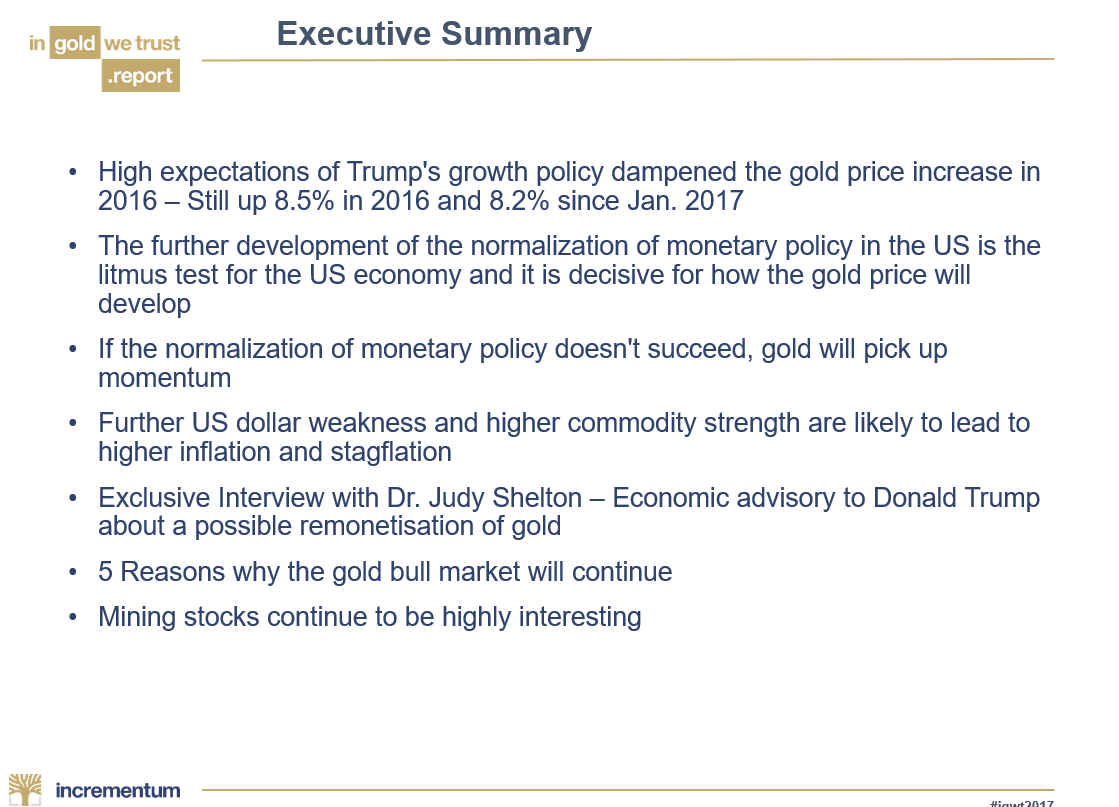
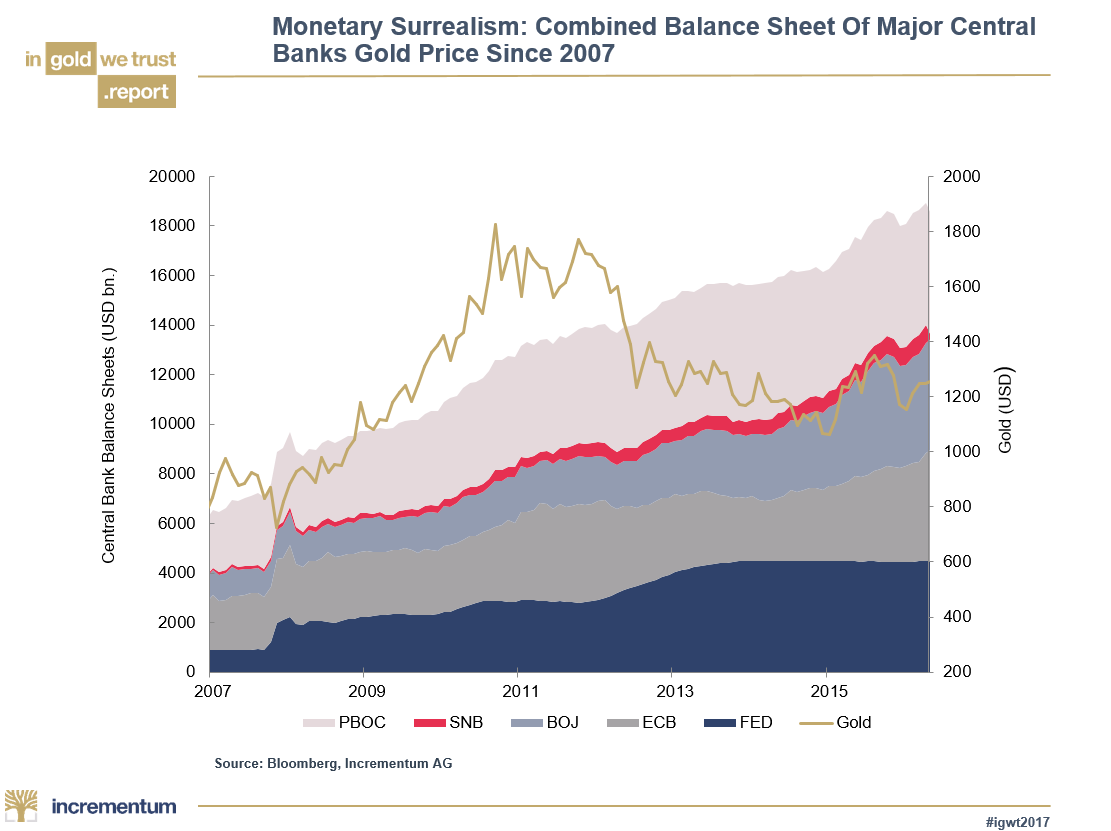
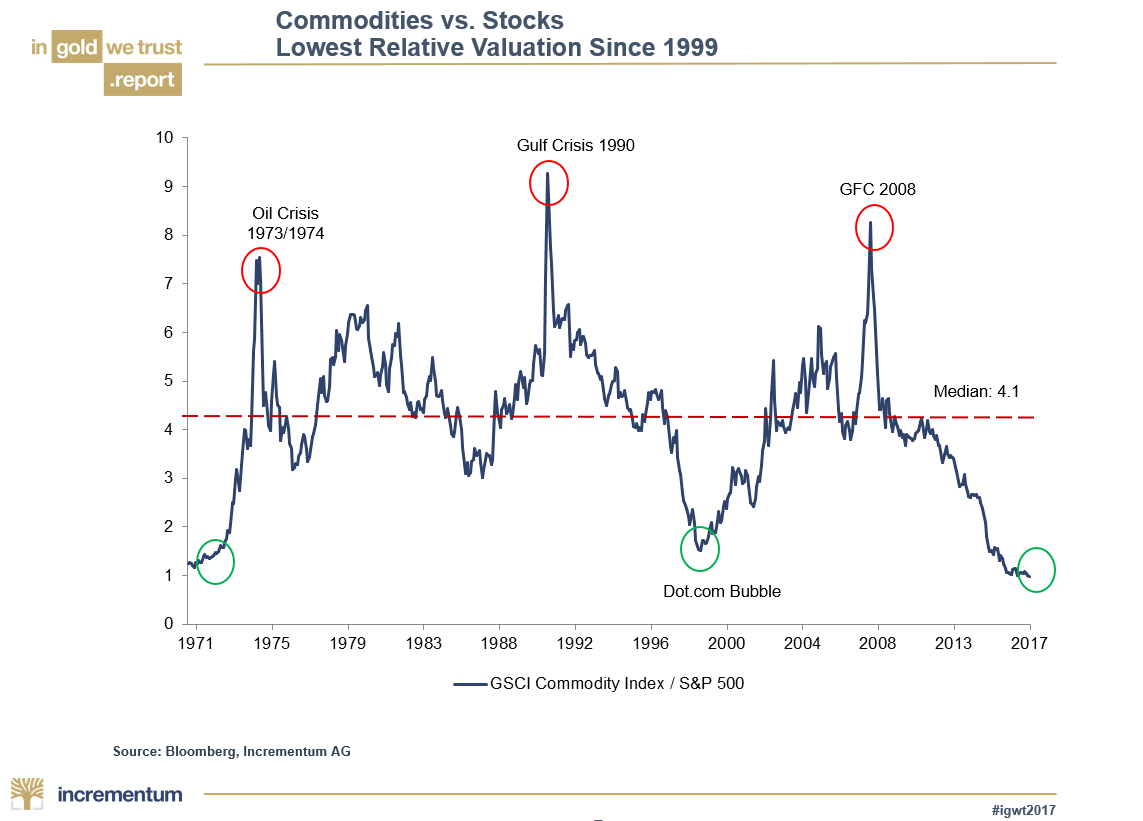
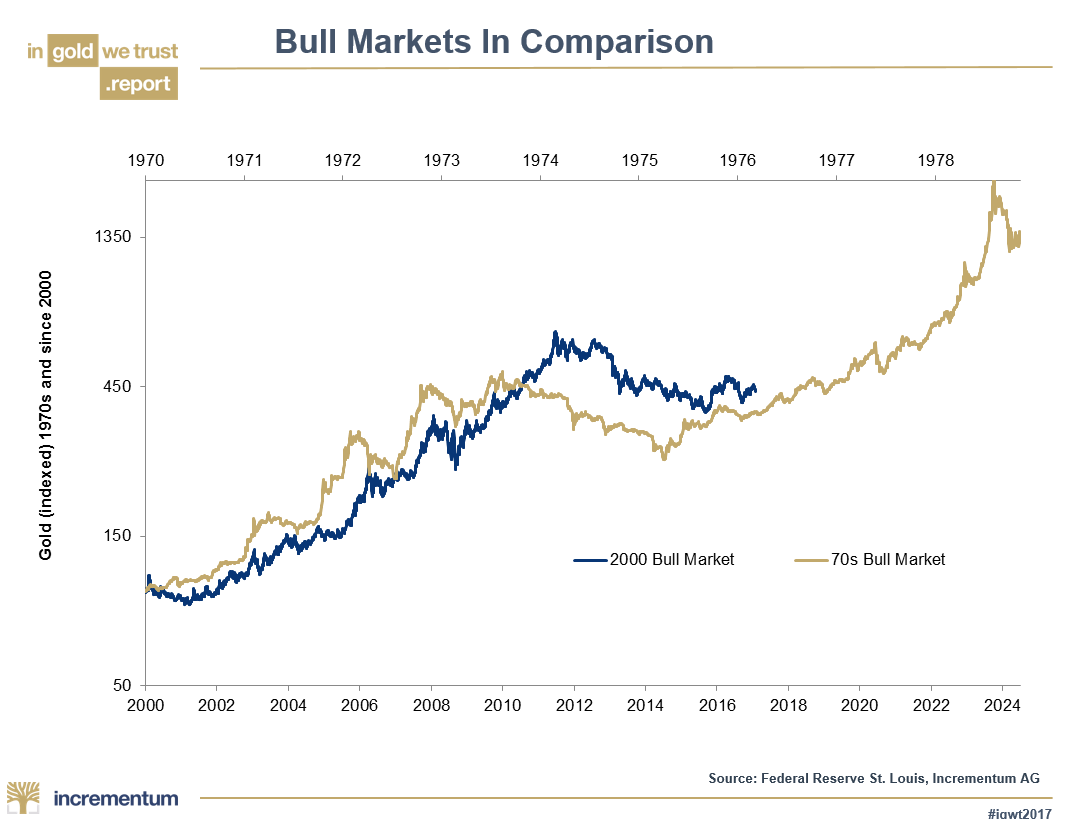
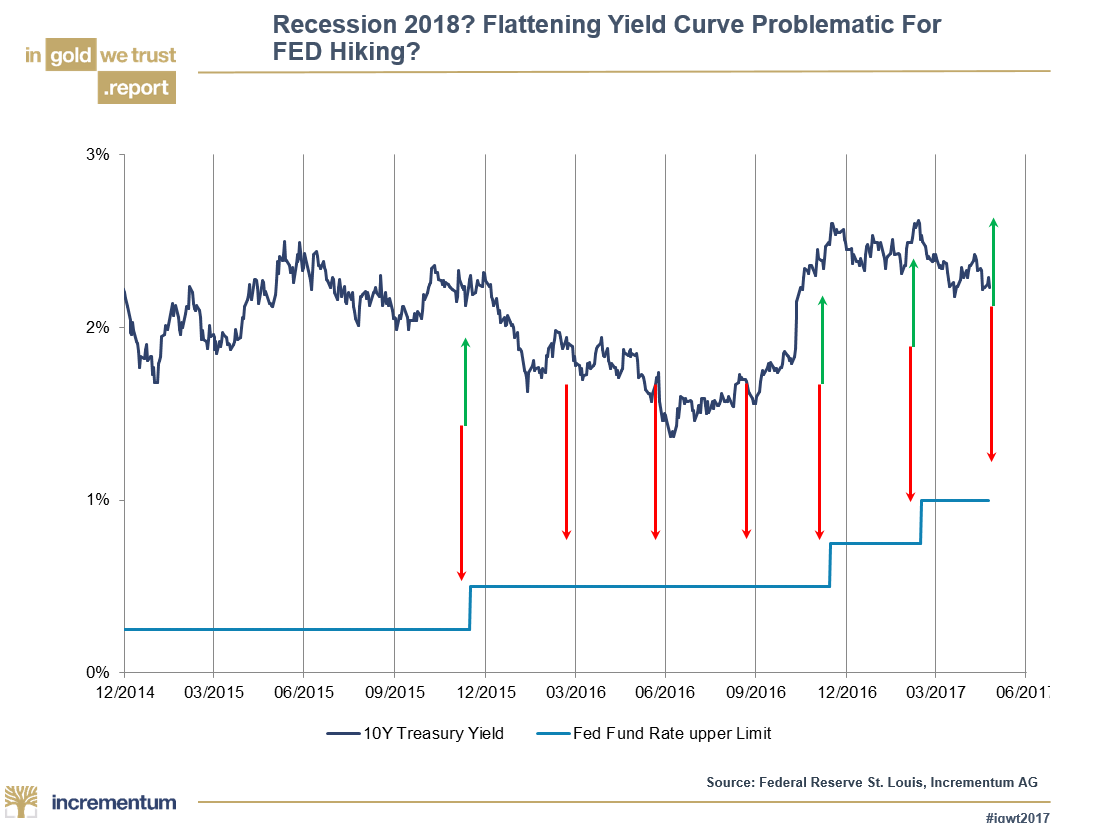
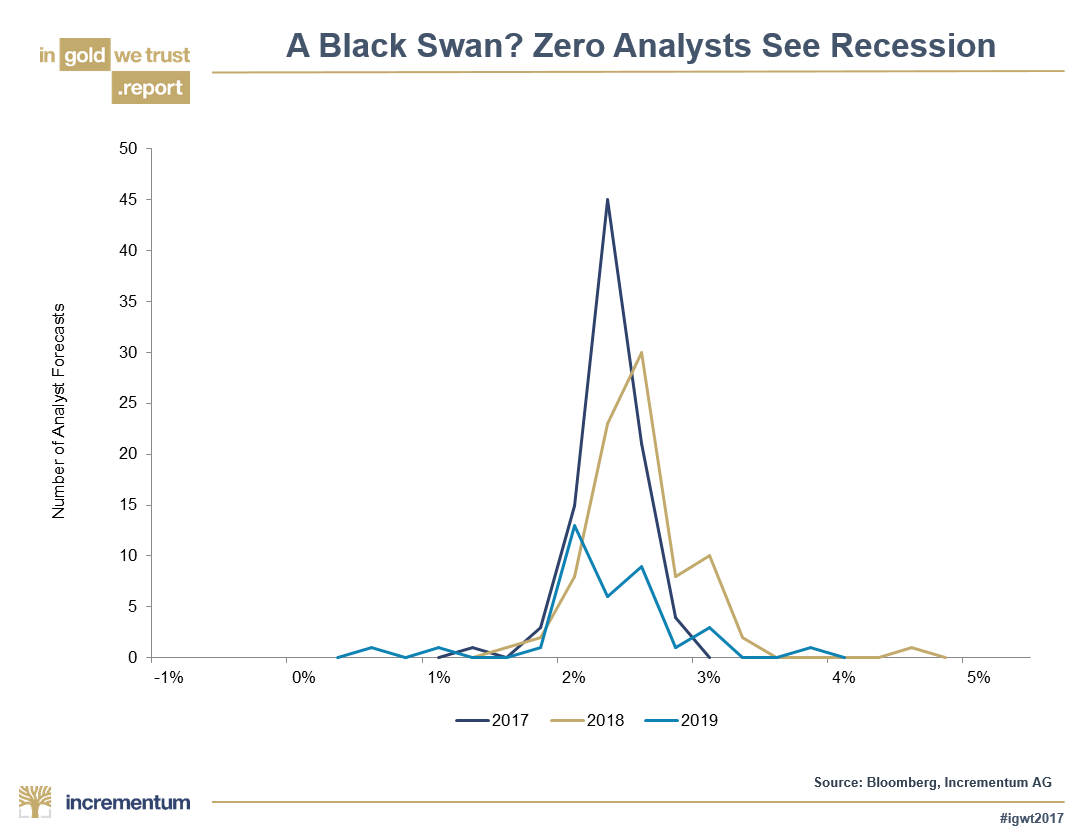
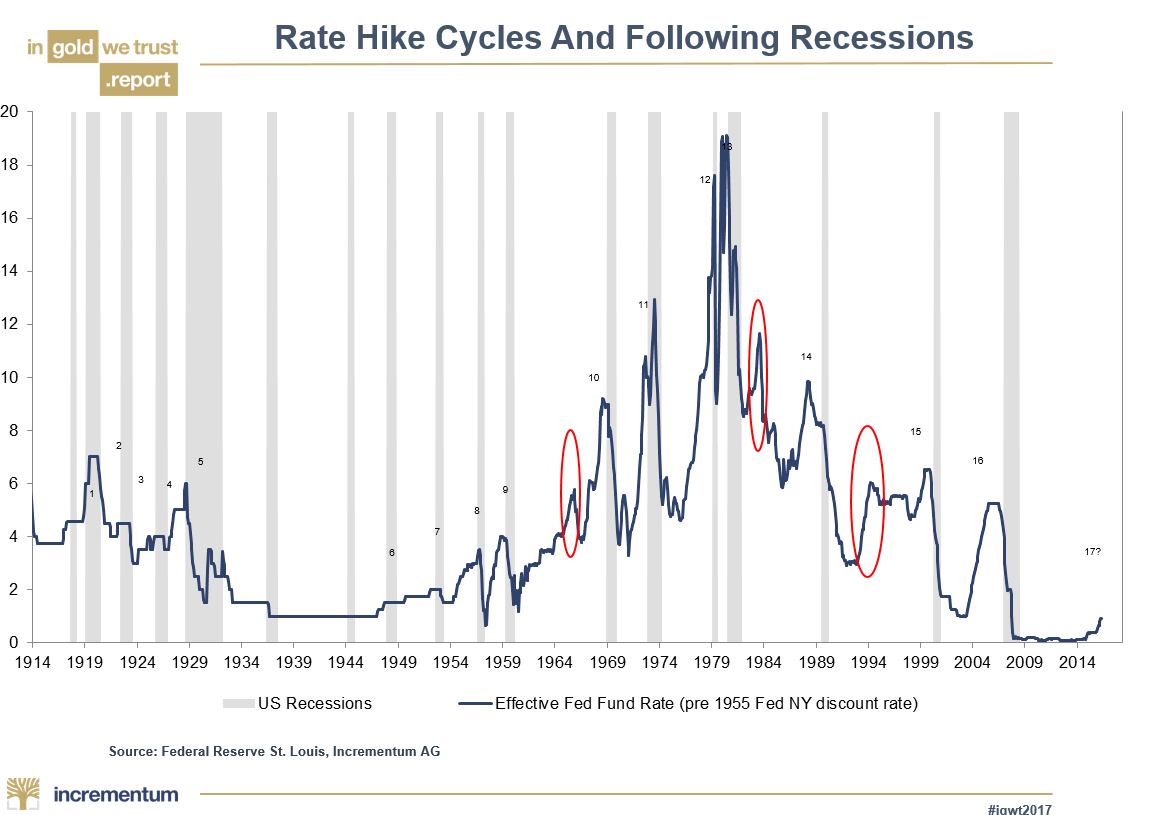
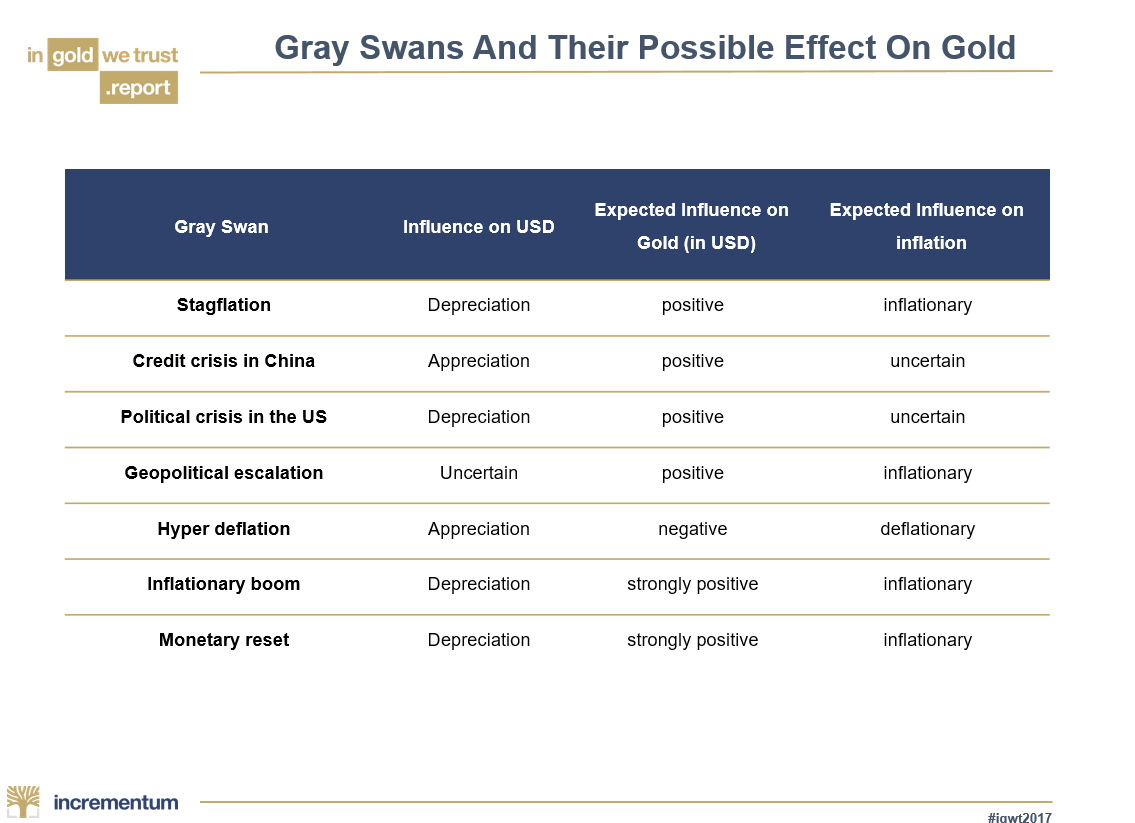
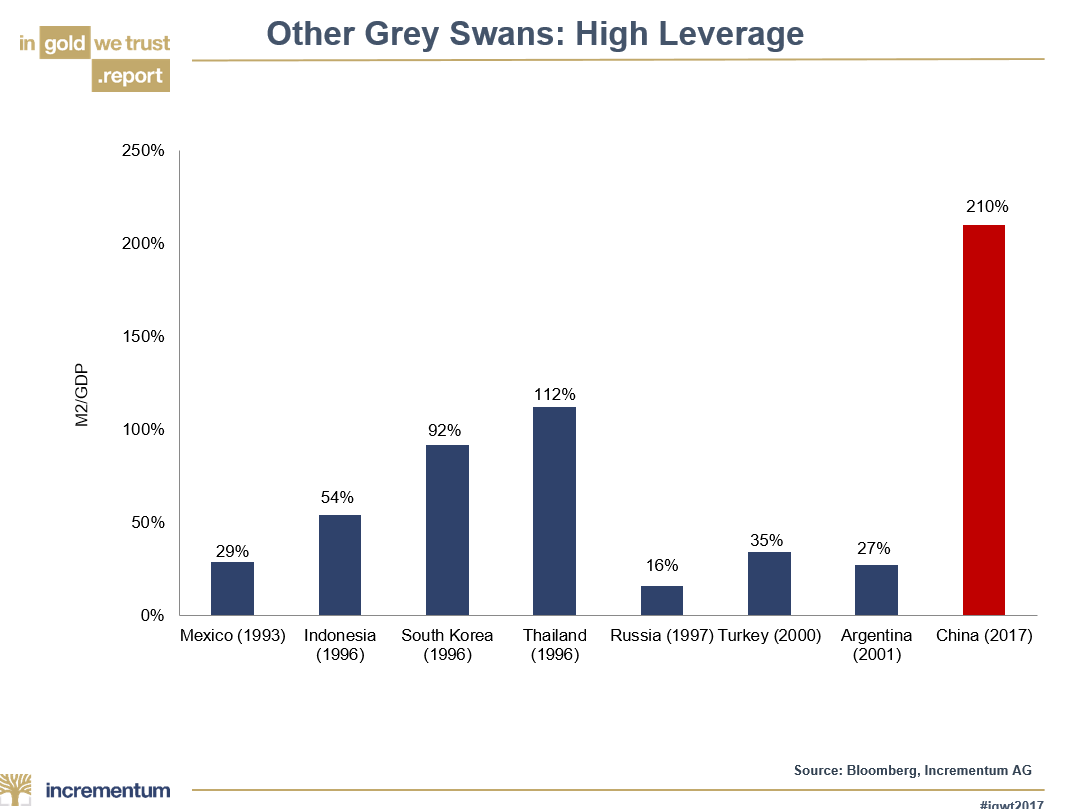
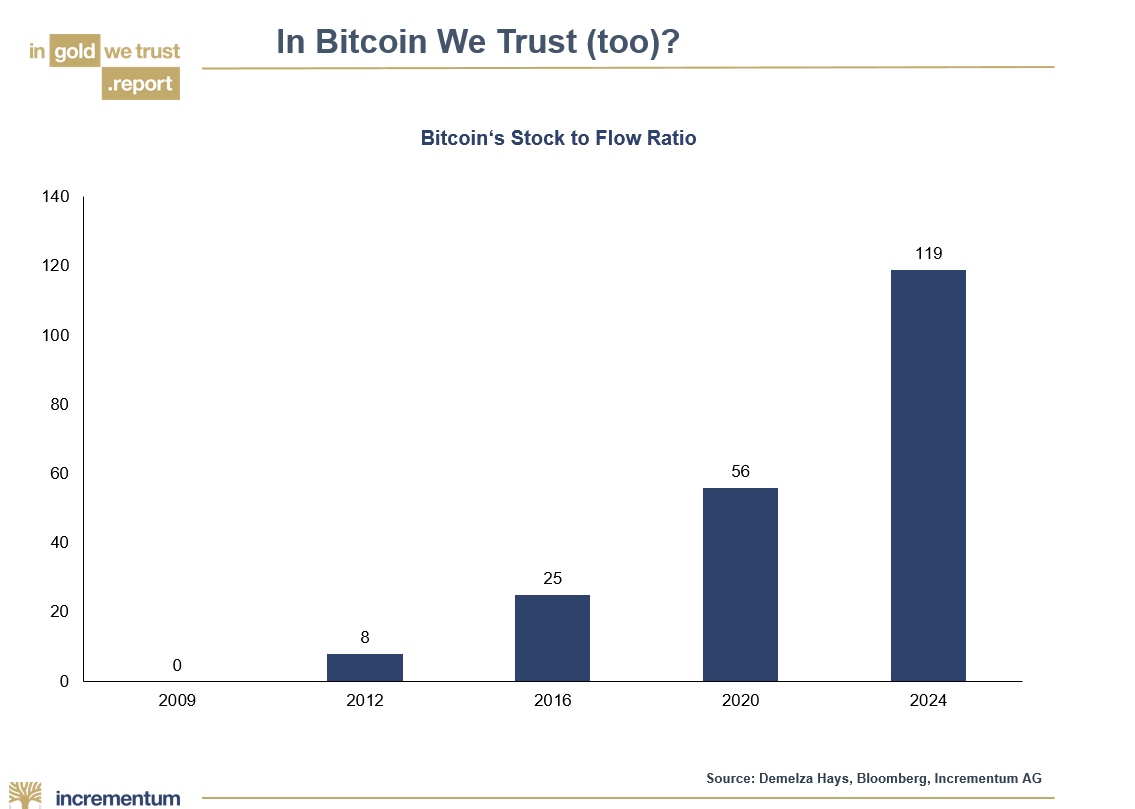
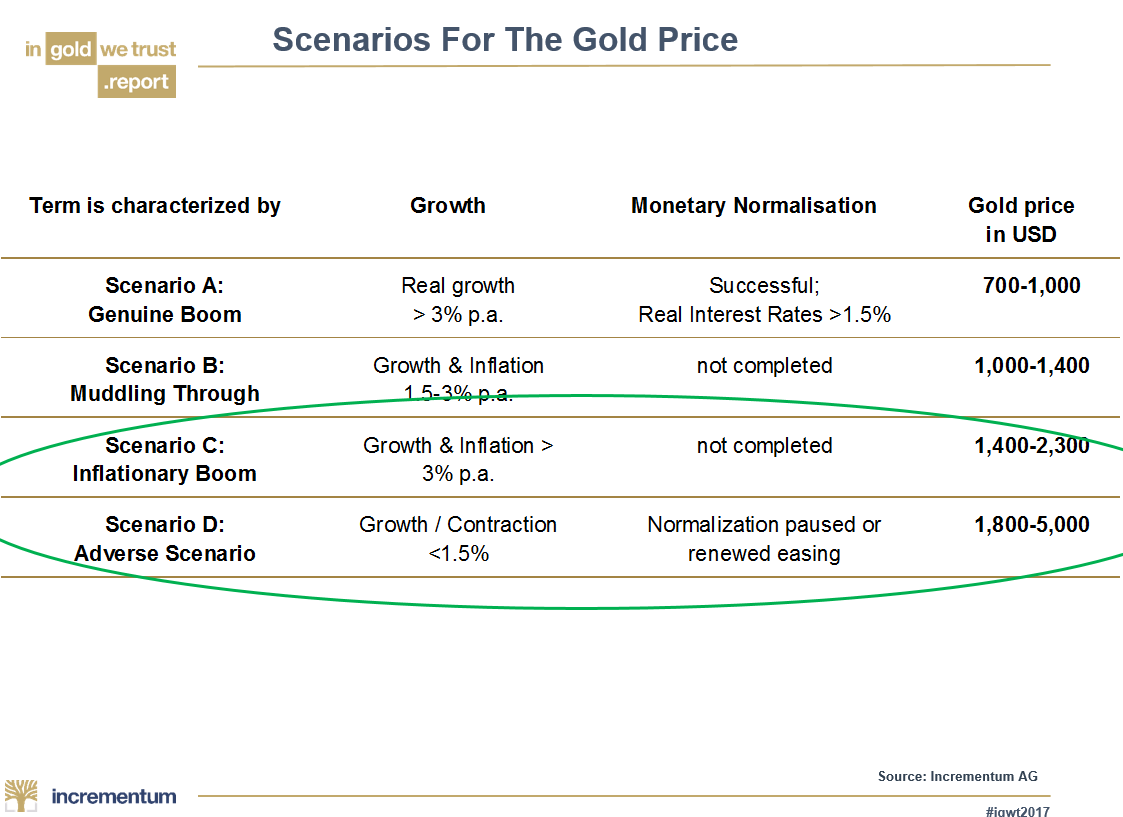
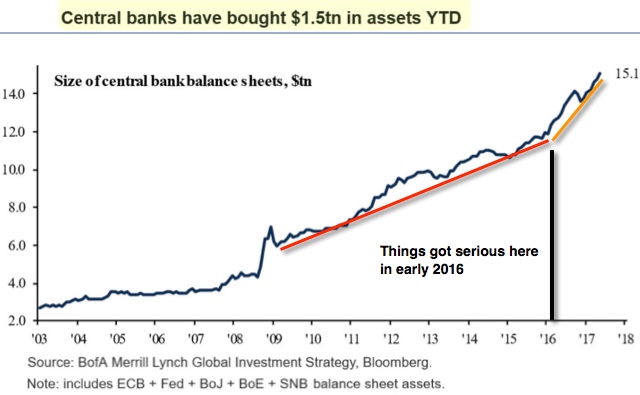
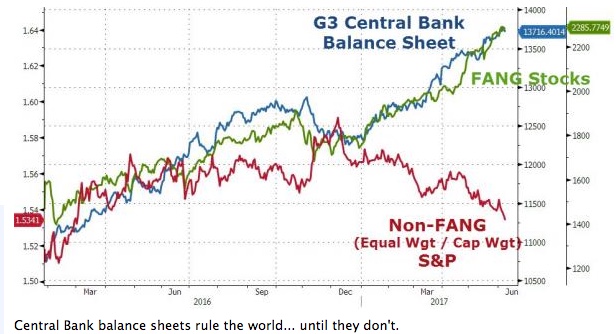
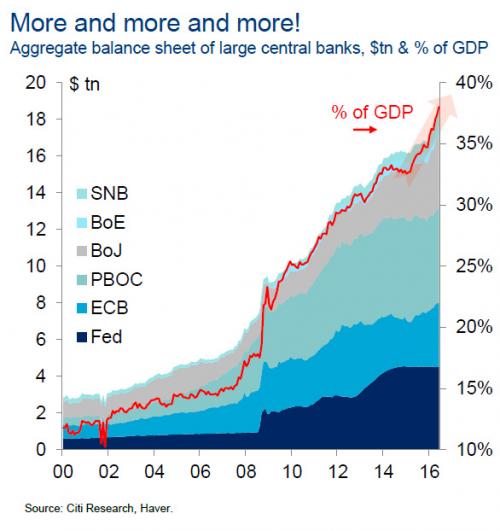
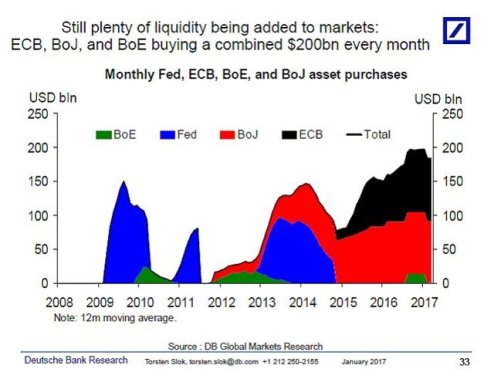
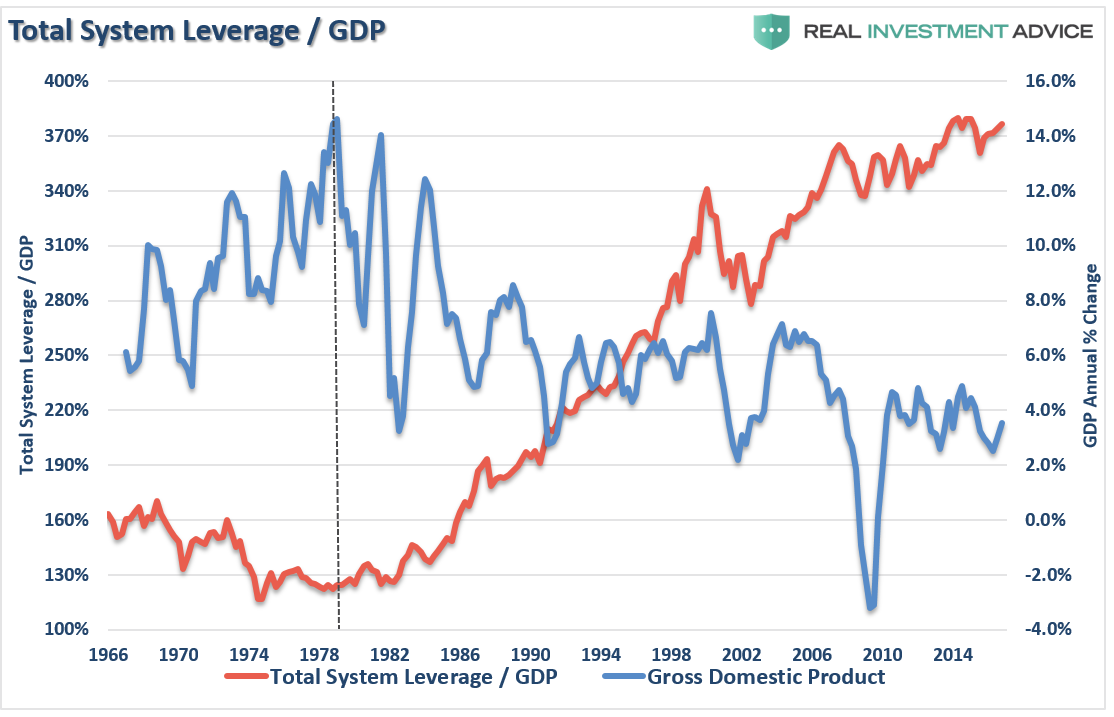
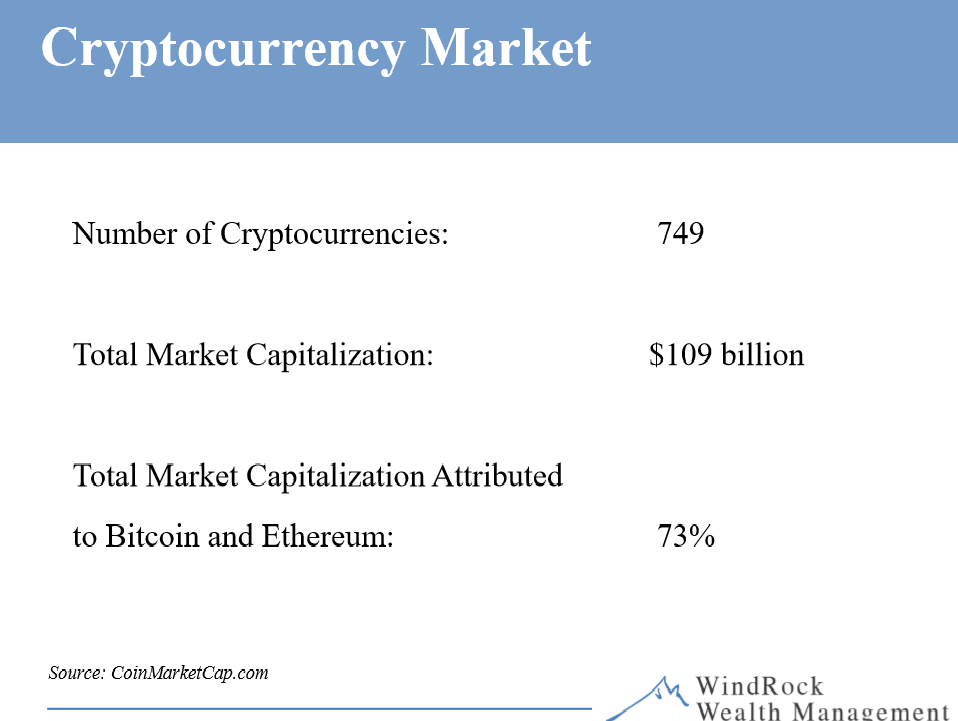
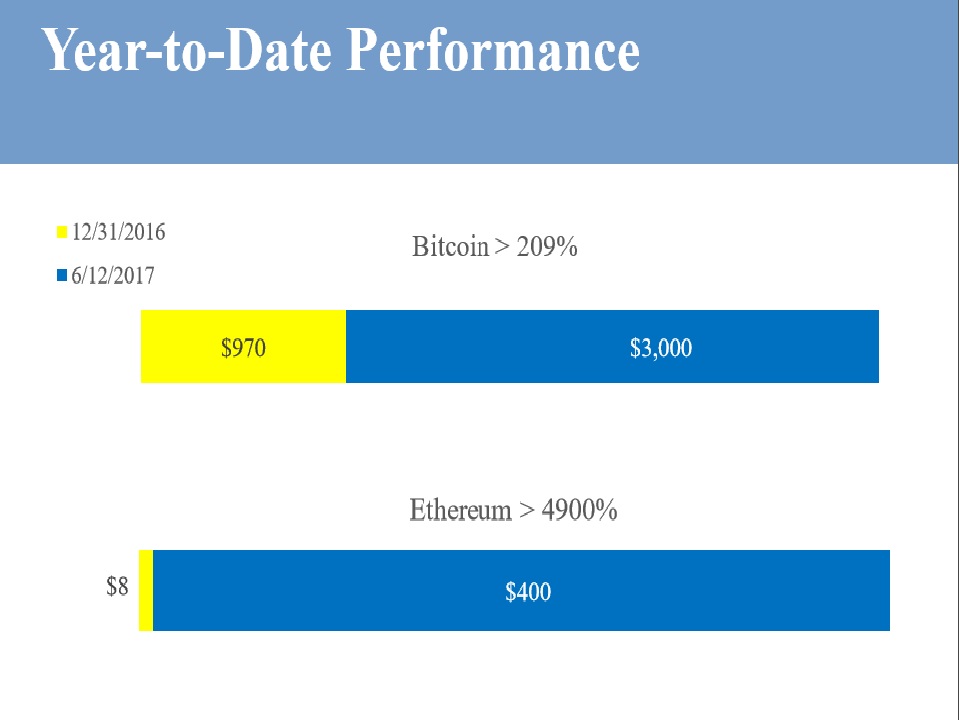

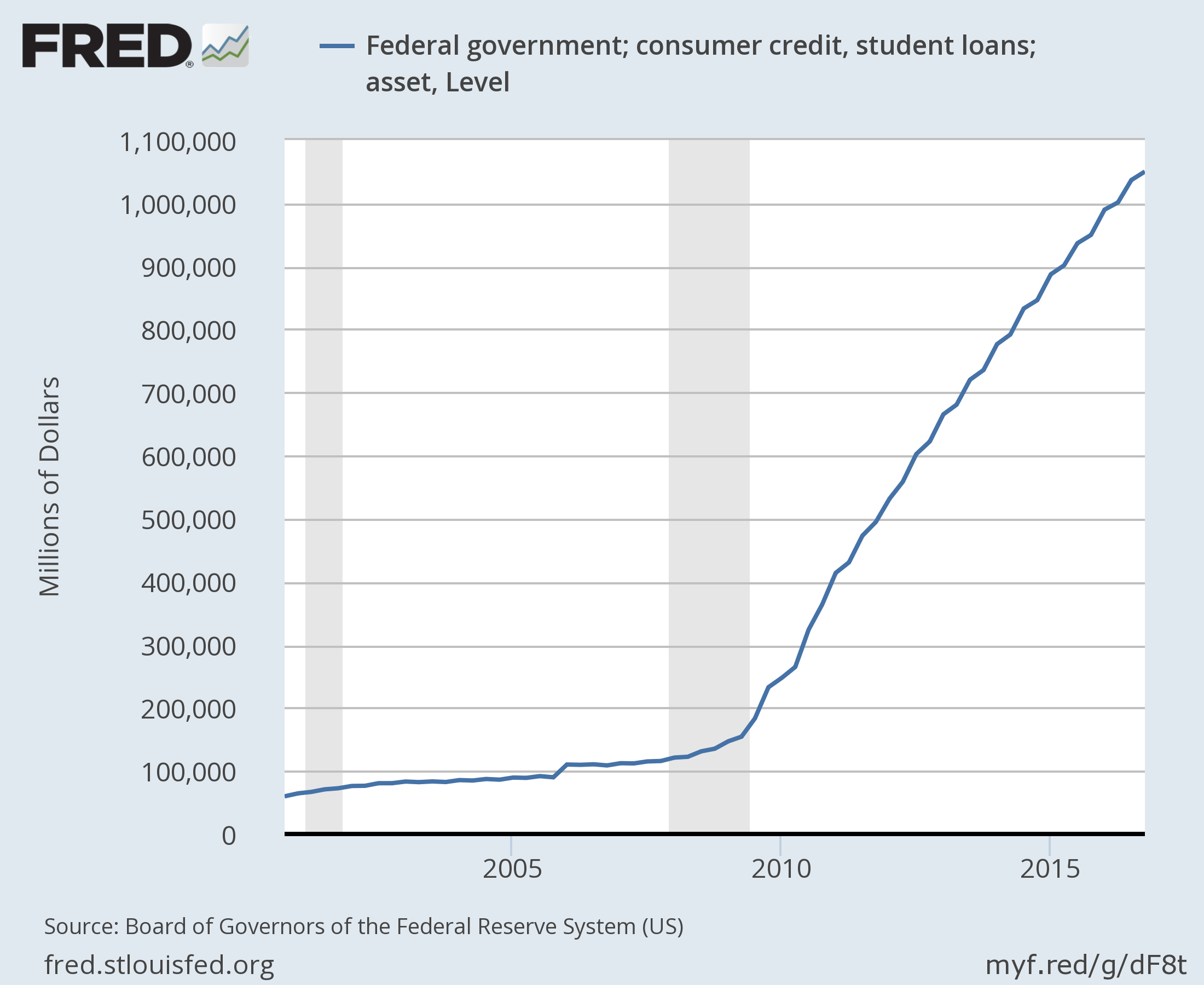
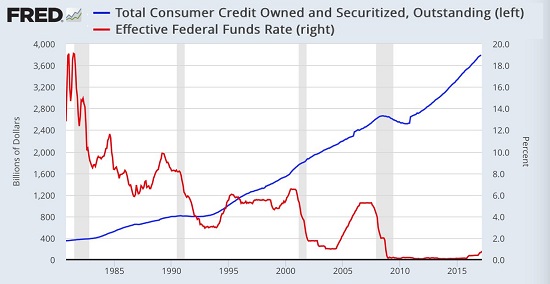
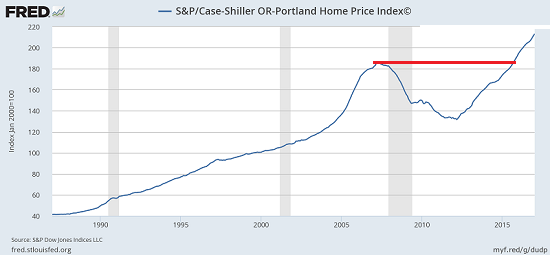
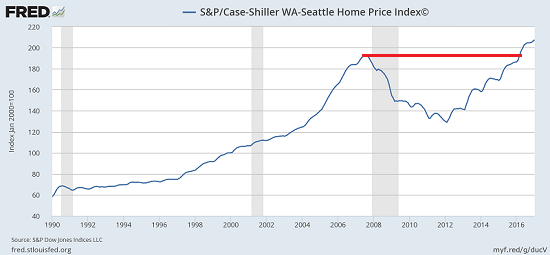
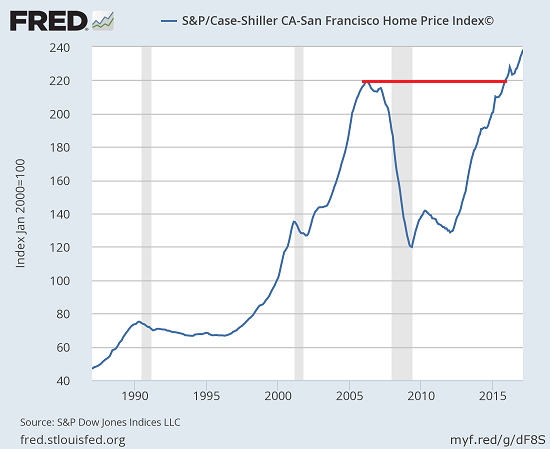
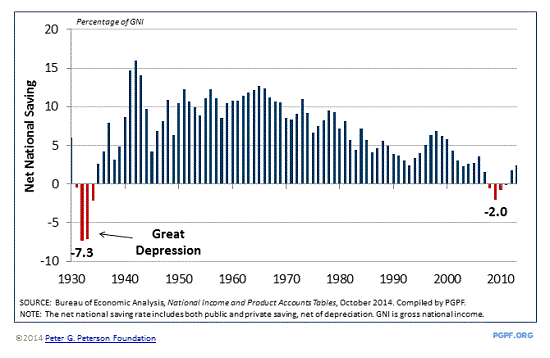
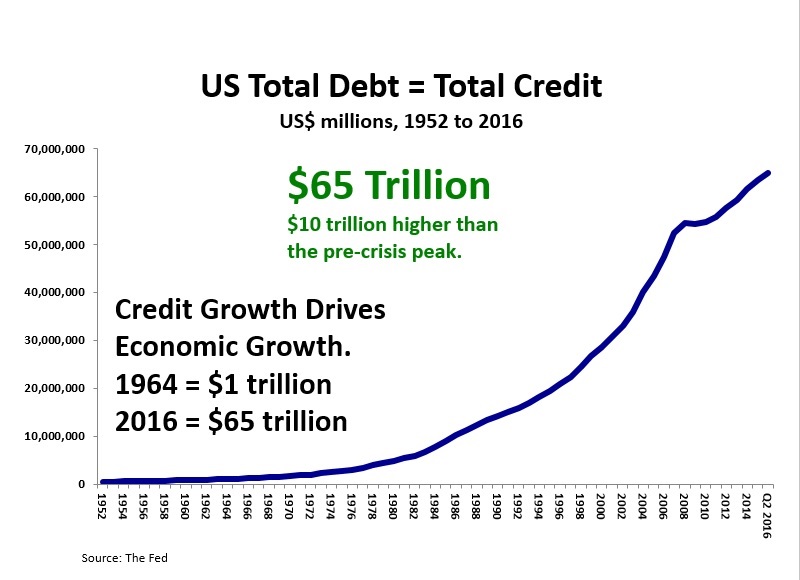
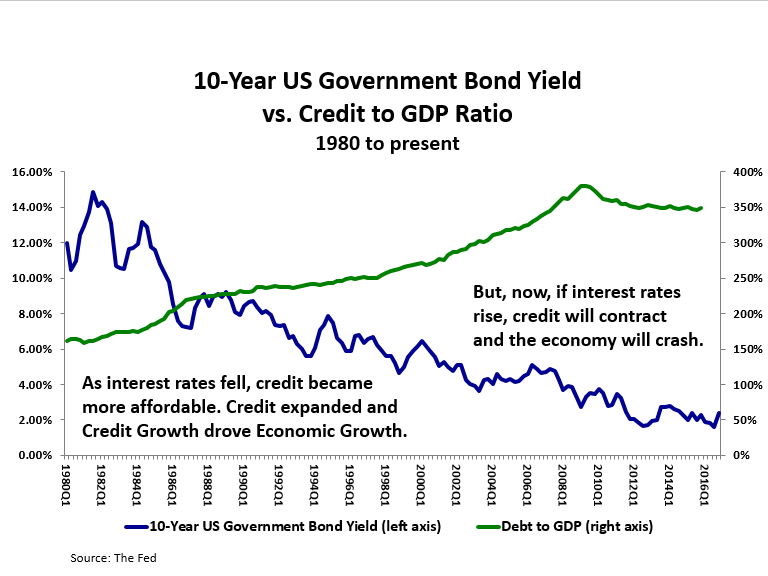
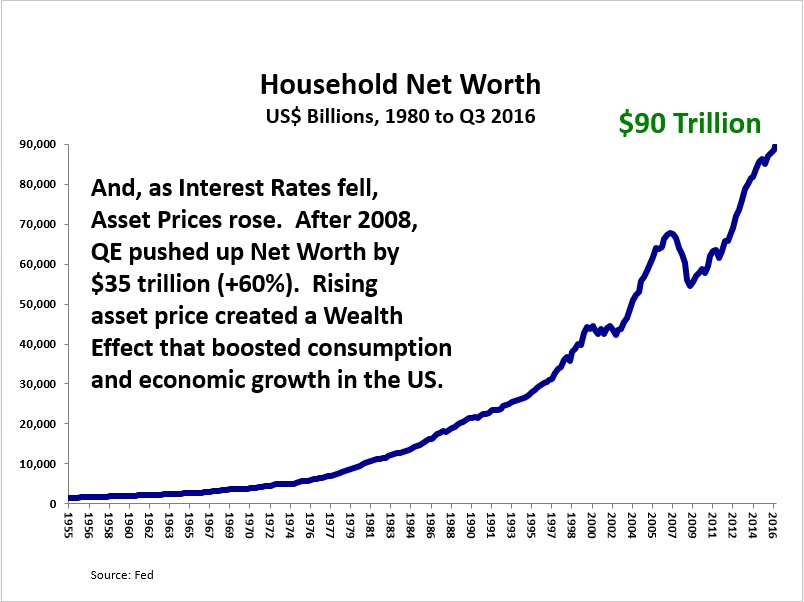
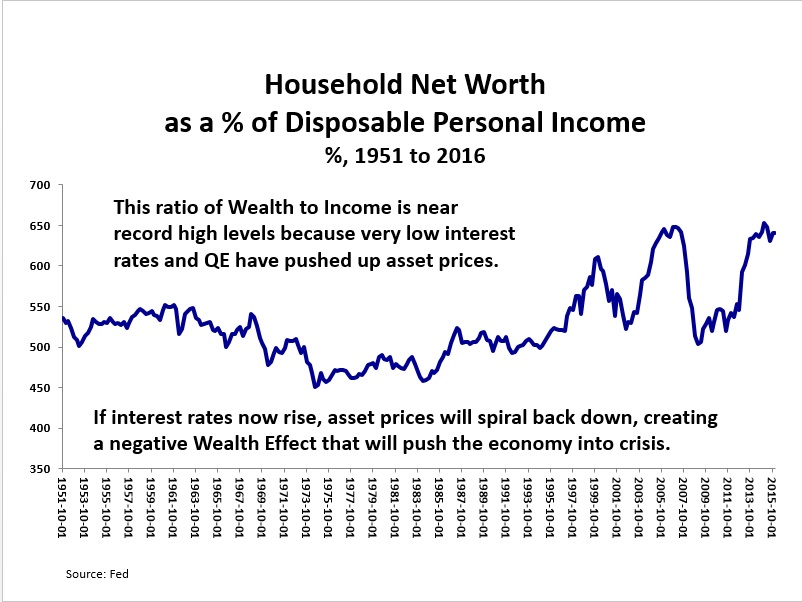
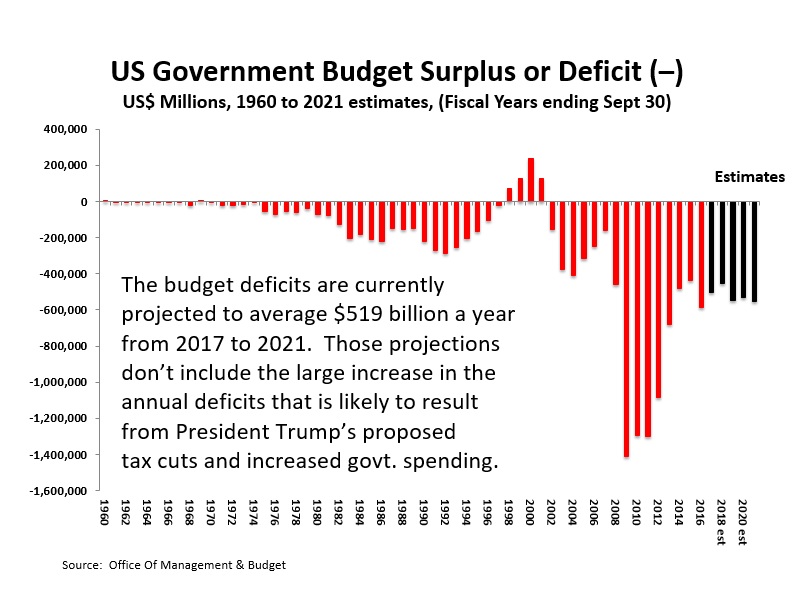
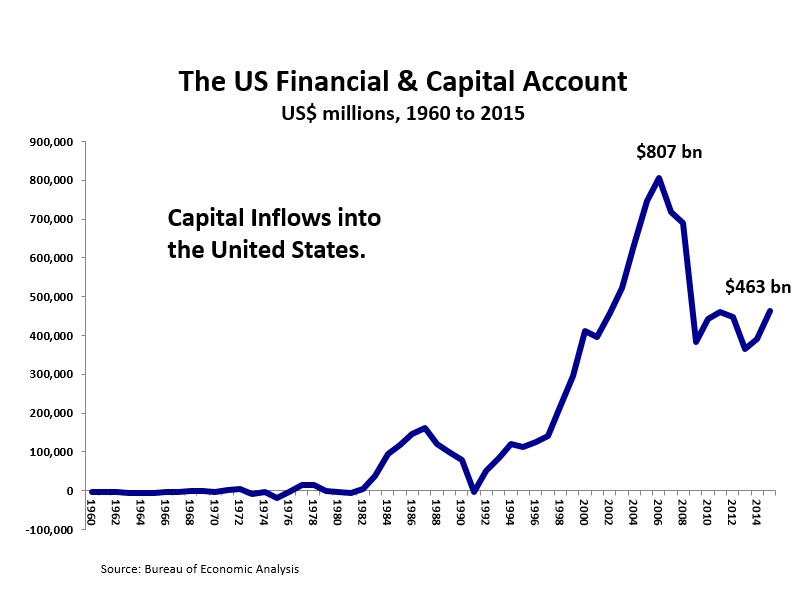
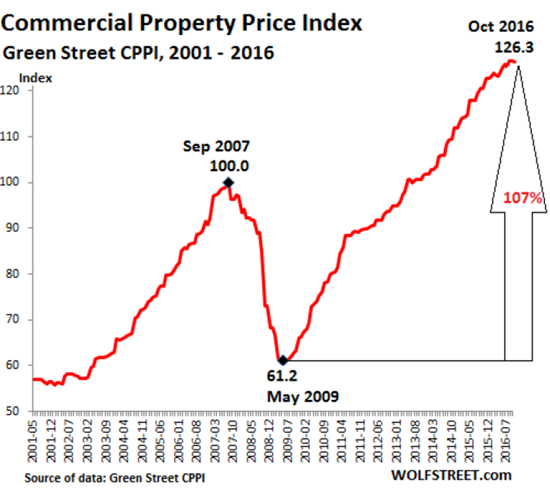
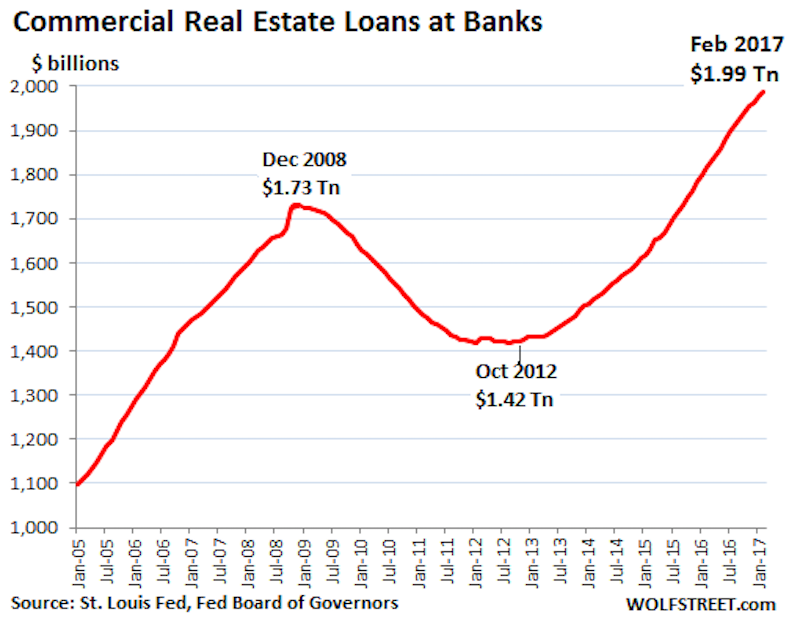
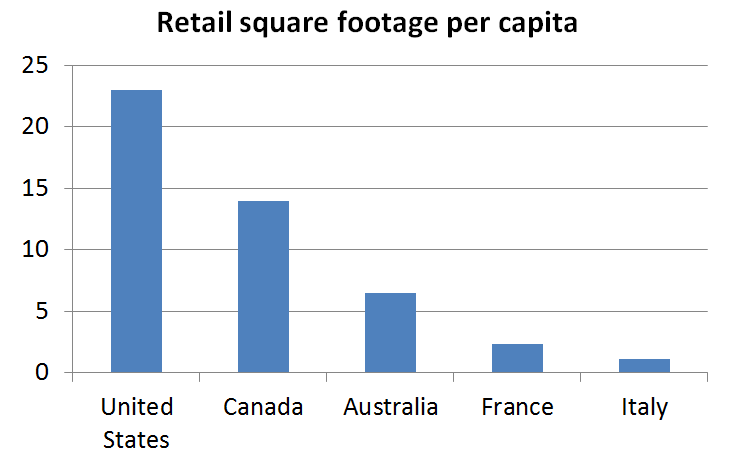
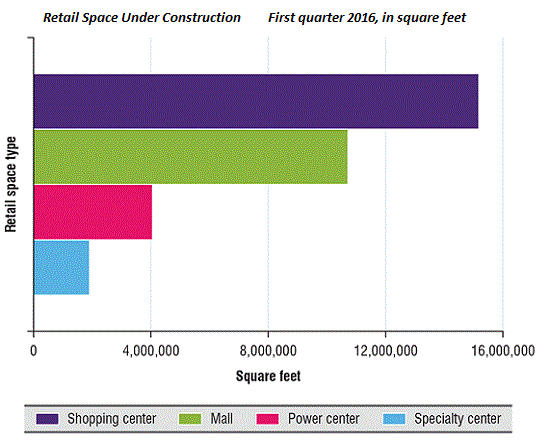
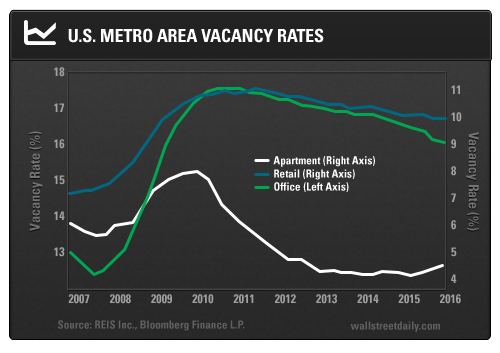
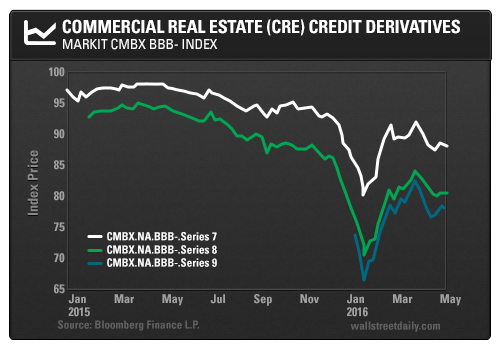 Charles: Right, this chart is credit derivatives and it’s a fairly high-risk series, its BBB not AAA, so this is the kind of credit derivatives that are sensitive to risk and interest rates. And there was a very steep decline, a spike down about a year ago, the first quarter of 2016 in these commercial real estate credit derivatives which showed that there was a heightened sense of “we better get out now” and limit our exposure to the credit derivatives on the commercial real estate sector. And it’s recovered, but it’s recovered to a lower high then it was. It was quite stable all the way through 2015. So this is telling us that the financial people that are exposed to the commercial real estate sector are starting to hedge their bets and starting to pull the trigger to minimize their exposure, which means they see a heightened risk.